


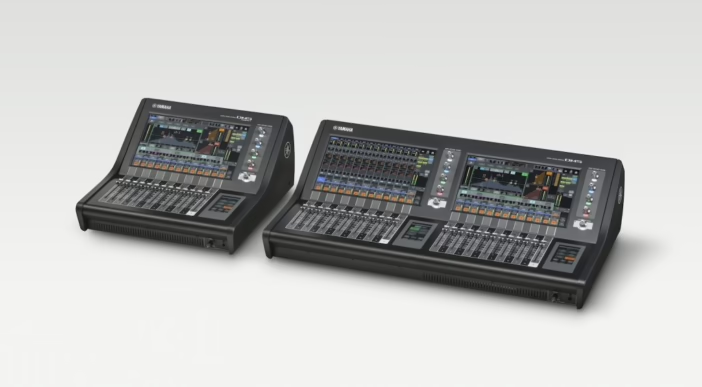
Between 1,000 and 15,000 USD, a compact digital console can now run a real show with a remote stagebox, networked audio and plenty of processing headroom. These are the ones I recommend for live sound in 2026, sorted by use case, with their street prices and their real limits.
- Best overall: the Yamaha DM5, or the Compact version if the budget is tight. The DM7 engine in a format that fits on a FOH table.
- Best value for features: the Behringer WING, 48 stereo channels and 28 buses for under 3,500 USD.
- Most refined small-format console: the Allen & Heath SQ5+, 96 kHz, a 9-inch screen and a workflow you learn in ten minutes.
- Smallest one that does a real job: the Yamaha DM3, 6.5 kg and nine motorised faders.
- No control surface: the Allen & Heath CQ-20B for under 1,000 USD, run from a tablet.
The comparison at a glance
Prices are US street prices before tax, checked on 12/11/2026. European prices in euros including VAT land in the same range, with wide swings depending on promotions.
| Console | Input channels | Buses | Faders | Digital I/O | Street price | Year |
|---|---|---|---|---|---|---|
| Yamaha DM3 | 22 (16 preamps) | 6 mix, 2 FX, 2 matrix | 9 motorised | USB 18 × 18, Dante 16 × 16 on the DM3-D | ≈ 1,699 USD (Standard), 2,199.99 USD (DM3-D) | 2023 |
| Yamaha DM5 | 60 (32 preamps) | 24 mix, 12 matrix | 26 | Dante 64 × 64, 1 PY slot, USB 18 × 18 | 9,999.99 USD | 2026 |
| Yamaha DM5 Compact | 48 (16 preamps) | 24 mix, 12 matrix | 13 | Built-in Dante, USB | 6,999.99 USD | 2026 |
| Yamaha DM7 Compact | 72 (16 preamps) | 48 mix, 12 matrix | 16 | Dante 144 × 144, 1 PY slot, USB 18 × 18 | ≈ 15,000 USD | 2023 |
| Allen & Heath Avantis Solo | 64 (6 local inputs) | 42 | 12 | 2 option ports of 128 × 128 (Dante, MADI, gigaACE, Waves) | 8,999 USD | 2023 |
| Allen & Heath SQ5+ | 48 (16 preamps) | 12 mix, 6 matrix | 17 | SLink 128 × 128, option port, USB 32 × 32 | 4,999 USD | 2026 |
| Behringer WING | 48 stereo (8 preamps) | 28 (16 aux, 8 matrix, 4 mains) | 24 | 3 AES50, StageConnect, 64 × 64 slot, USB 48 × 48 | 3,499 USD | 2019 |
| Midas M32 Live | 40 (32 preamps) | 25 (16 mix, 6 matrix, LRC) | 25 | 2 AES50, USB 32 × 32 | M32R Live ≈ 3,000 USD in a bundle | 2014 |
| Yamaha TF5 | 48 (32 preamps) | 20 aux | 33 | NY64-D slot (Dante), USB 34 × 34 | 3,599.99 USD | 2015 |
| Soundcraft Ui24R | 24 (20 preamps) | 10 aux, 6 FX | none | 22-track USB recording | ≈ 1,499 USD | 2017 |
| Allen & Heath CQ-20B | 20 (16 preamps) | 6 mix outputs | none | USB 24 × 24, SD card, Wi-Fi | 999.99 USD | 2024 |
The consoles in detail
Yamaha DM5 and DM5 Compact: best overall
9,999.99 USD (DM5) · 6,999.99 USD (DM5 Compact) · 2026
The DM5 takes the DM7 engine (96 kHz, built-in Dante, a Premium Rack you can expand with a PY-DSP card) and puts it in a 26-fader surface with two 13.3-inch screens, at 21.5 kg. The Compact keeps the same brain with 48 channels, 13 faders and 13.3 kg: it fits in the boot of a small car. Who it is for: rental companies that want one platform from the bar gig to the 1,500-seat venue, and Yamaha houses whose show files move between DM and DM7. Limits: the price puts it up against bigger desks; 24 mix buses are plenty at FOH but get tight on a stage heavy with monitor mixes; it is a new console and its option ecosystem still has to grow.
Yamaha DM3: the smallest one that does a real job
≈ 1,699 USD (DM3 Standard) · 2,199.99 USD (DM3-D) · 2023
6.5 kg, 16 D-PRE preamps, 22 channels, nine motorised faders and a 9-inch touchscreen: the DM3 fits in a backpack and runs at 96 kHz. The DM3-D adds redundant Dante 16 × 16, which makes it an excellent monitor desk or a spare console on an existing network. Who it is for: small venues, conferences, a band’s monitors, recording and streaming. Limits: only six mix buses, a ceiling you hit as soon as every musician asks for a mix; no expansion slot; two effects processors, thin for a rich show.
Yamaha DM7 Compact: for stages that overflow
≈ 15,000 USD (typical dealer price) · 2023
72 channels, 48 buses and 12 matrices driven by 16 faders and two screens: the DM7 Compact brings the DM7’s processing power without its 23.5 kg. Dante 144 × 144 at 96 kHz, a PY slot, a built-in dual power supply and the optional Broadcast and Theatre packages. Who it is for: theatres, musicals, TV studios where monitor mixes come by the dozen. Limits: at this price, 16 faders mean working in layers; it is beyond most rental budgets; the extra buses are wasted on a five-piece band.
Allen & Heath Avantis Solo: the DM5’s direct rival
8,999 USD · 2023
The Avantis Solo is the Avantis cut down to 12 faders and a 15.6-inch screen, with the same 64 channels and 42 buses on the 96 kHz XCVI core inherited from dLive. Two 128 × 128 option ports take Dante, MADI, gigaACE or Waves. Who it is for: engineers who want lots of buses in little space, at FOH or monitors, and rigs already built around Allen & Heath stageboxes. Limits: only six local analogue inputs, so a stagebox is mandatory; a single screen; 17.5 kg, heavy for 12 faders.
Allen & Heath SQ5+: the most refined small format
4,999 USD · 2026
The SQ5+ replaces the SQ-5 with a 9-inch touchscreen, 17 faders, 16 preamps, the SLink 128 × 128 port and SQ-Drive recording up to 32 tracks, at 11.2 kg. The 96 kHz XCVI core and latency under 0.7 ms remain the range’s strengths, with one of the fastest workflows to pick up. Who it is for: all-round rental companies, 300 to 800-capacity venues, places where several engineers take turns. Limits: 12 mix buses is little next to the WING; Dante, SoundGrid or MADI need an option card; a used SQ-5 will do most of the job for far less.
Behringer WING: best value for features
3,499 USD · 2019
48 stereo channels, 28 stereo buses, 24 faders, three AES50 ports, StageConnect, a 64 × 64 expansion slot and a 48 × 48 USB interface: at this price, nothing beats it on paper. Routing is unusually flexible and the 10.1-inch screen makes navigation pleasant. The WING Compact (2,799 USD) and WING Rack (1,799 USD) use the same engine. Who it is for: bands that tour with their own console, live recording, rental companies that want as many buses as possible. Limits: 48 kHz only; 24 kg; navigation takes time before it becomes fast; only 8 local preamps.
Midas M32 Live: the touring workhorse
M32R Live ≈ 3,000 USD depending on the bundle · 2014
Twelve years after its release, the M32 is everywhere, and that is its strength: everyone knows how to use it, show files travel, AES50 stageboxes can be rented in any city. 32 Midas PRO preamps, 25 buses, 25 motorised faders and a 32 × 32 USB interface on the Live version. Who it is for: house engineers who host many visiting crews, festivals, rental companies. Limits: an ageing architecture; a small screen with no touch; the more compact M32R Live loses 16 preamps and 8 faders.
Yamaha TF5: the easiest to hand over
3,599.99 USD · 2015
33 faders, 32 preamps, a touchscreen and the TouchFlow logic: the TF5 is the console you can hand to a visiting engineer without fearing the worst. The NY64-D slot adds Dante, and the 34 × 34 USB handles multitrack recording. The TF3 (3,099.99 USD) and TF1 (2,499.99 USD) are smaller versions of the same desk. Who it is for: community venues, houses of worship, music schools. Limits: a 48 kHz engine showing its age; effects behind the WING; 20 kg for a console in this class.
Soundcraft Ui24R: FOH in a suitcase
≈ 1,499 USD · 2017
No surface: the Ui24R is controlled from a browser on a tablet, phone or computer, with no app to install. 20 Studer-designed preamps, 22-track recording to a USB drive and built-in Wi-Fi make it a formidable tool for bands that mix from the floor. Who it is for: self-sufficient bands, monitors run by the musicians themselves, small recordings. Limits: no physical control if the network fails; built-in Wi-Fi to back up with a proper access point on stage; a platform that no longer evolves much.
Allen & Heath CQ-20B: best surface-less mixer under 1,000 USD
999.99 USD · 2024
16 preamps, 20 inputs, 2.6 kg, USB 24 × 24, an SD card slot and built-in Wi-Fi: the CQ-20B sits at the foot of the stage and runs from the CQ-MixPad app. The gain and feedback assistants help when you do not know the room. Who it is for: small bands, conferences, small venues. Limits: six mix outputs, so few monitor mixes; no network expansion; it aims at autonomy more than finesse.
Two previous-generation consoles remain good deals: the QSC TouchMix-30 Pro (about 1,499 USD, list price), fully touch-driven, and the PreSonus StudioLive 32SC (about 2,199 USD, list price), a live and studio hybrid.
How to choose: the criteria that really matter
- Bus count before channel count. A 48-channel desk with 12 buses runs out faster than a 40-channel desk with 25 buses once monitor mixes pile up. Count monitors, effects and matrices before looking at inputs. For splitting pre and post-fader sends, see our guide to sends.
- The audio network. Built-in Dante (DM5, DM7 Compact), AES50 (WING, M32), SLink or gigaACE (Allen & Heath): the protocol decides which stageboxes, monitor desks and rental stock you can use.
- Sample rate. 96 kHz (Yamaha DM, Allen & Heath SQ+ and Avantis) against 48 kHz (WING, M32, TF): the gap shows mostly in latency and processing behaviour, less in raw sound.
- Physical faders. A surface-less mixer costs little but demands solid Wi-Fi; under 12 faders you work in layers, worth knowing before the first gig.
- Weight and size. Between the CQ-20B (2.6 kg) and the WING (24 kg) lies the difference between one bag and two people to unload.
- The ecosystem. Show files that move between consoles, stageboxes from the same brand, engineers around you who know the platform: often more decisive than the spec sheet. The analogue versus digital debate is covered in our dedicated guide, and the general method in how to choose a mixing desk.
My take
The DM5 is the Yamaha I had been waiting for since the DM7 arrived: the same engine, finally in a size that fits anywhere. Its real rival is not the WING but the Avantis Solo, and the choice between the two comes down to the network you already run. On a tight budget, the WING remains unbeatable for raw features, provided you accept 48 kHz and a learning curve. For a venue where several engineers take turns, the SQ5+ gets my vote: nothing is hidden on it.
Frequently asked questions
Yamaha DM5 or Allen & Heath Avantis: which one?
They play on the same field. The Avantis Solo offers more buses (42 against 24) for a similar price; the DM5 brings two screens, 32 local preamps and built-in Dante with no card. With a Dante rig, the DM5 is simpler; for the maximum number of monitor mixes, the Avantis wins.
What is the difference between the DM5 and the DM7?
The DM5 uses the DM7 engine with fewer channels (60 against 120) and fewer buses (24 mix against 48, 12 matrices on both). The DM7 targets very busy stages; the DM5 covers the vast majority of shows for about a third of the price.
DM5 or Behringer WING?
The WING costs nearly three times less and offers more buses. The DM5 runs at 96 kHz, has built-in Dante and shares the logic of Yamaha’s large consoles. For a band touring with its own desk, the WING is enough; for a rental company hosting pro crews, the DM5 is more reassuring.
DM3 or DM5: should you move up?
Yes as soon as you go beyond six monitor mixes or 16 sources on stage. The DM3 is perfect in a small format, but its six mix buses fill up fast. The DM5 Compact is the logical step between the two.
How much does the Yamaha DM5 Compact cost?
The US street price is 6,999.99 USD as of 12/11/2026, against 9,999.99 USD for the DM5. European prices including VAT are in the same range in euros.
Changelog
- 12/11/2026: first version of the guide. Eleven consoles compared, prices checked the same day, arrival of the Yamaha DM5 and DM5 Compact and the Allen & Heath SQ5+.