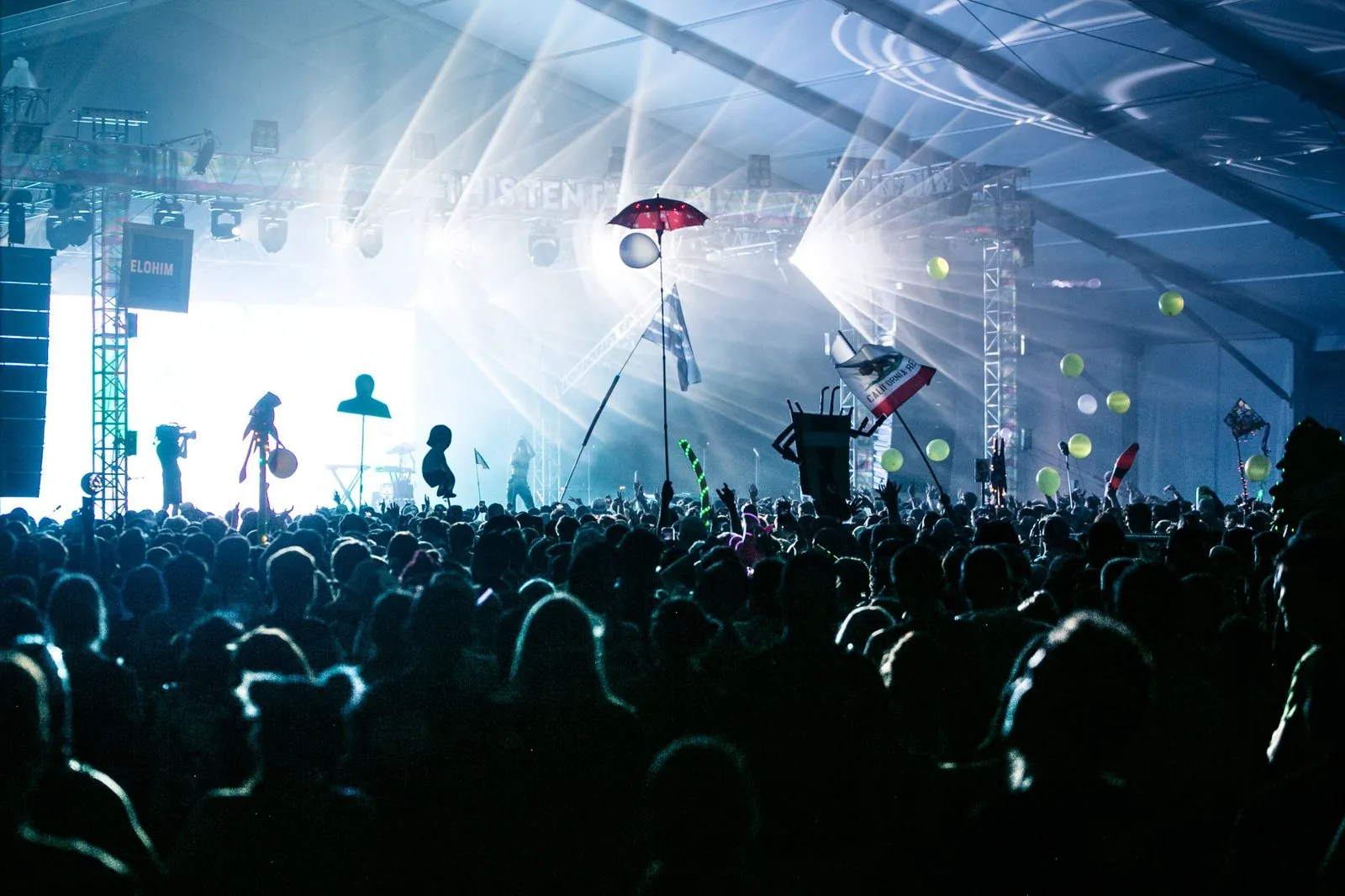
On a festival stage, bands follow one another with fifteen- to thirty-minute slots between sets, sometimes less. The schedule is held to the minute, and one late stage pushes back the rest of the night. The changeover is that exact moment when the stage is cleared, re-patched and re-checked while the audience waits. Done well, it goes unnoticed; done badly, it is seen and heard. The good news is that speed does not come from improvisation, but from organisation prepared long before doors open.
It is won before doors open
A fast changeover is prepared the day before, on paper. Each band supplies its tech rider, stage plot and input list; the stage manager centralises them and builds a shared patch, designed so that two neighbouring acts share as many lines as possible. If you discover a band’s stage plot during its changeover, you have already lost. The tech rider and stage plot are the stage manager’s raw material, and the patch and stagebox follow directly from them.
The guiding idea is to freeze a single patch sheet for the stage, where inputs 1 to 8 stay the drums, 9 to 12 the bass and keys, and so on, whatever the band. Differences are handled on the last, free lines. The less you re-patch between bands, the faster you go.
Two risers taking turns
The festival’s signature trick is the rolling riser. A band’s drums and part of its backline are built and wired in the wings on a wheeled platform while the previous band is still playing. At the changeover, you roll off the riser that just played, push on the one that is ready, plug in a pre-labelled multicore, and most of the wiring is done in one shove. Two risers taking turns are enough to turn a twenty-minute changeover into an eight-minute one.
The rest of the shared backline, the amps, the wedges, the mic stands, stays put from one band to the next as much as possible. Every cable carries a label, every floor position is marked with gaffer tape. A well-marked stage goes back up in the dark, identically, without thinking.
A patch shared between two consoles
FOH and monitors work from a shared stagebox, whose mic signal is split by a stage splitter to feed both control positions without one disturbing the other. Over audio-over-IP, this sharing happens on the network, but the logic is the same: one source, several destinations, controlled input gains. The FOH console and the monitor console see exactly the same patch, which makes snapshots interchangeable from band to band.
One snapshot per band
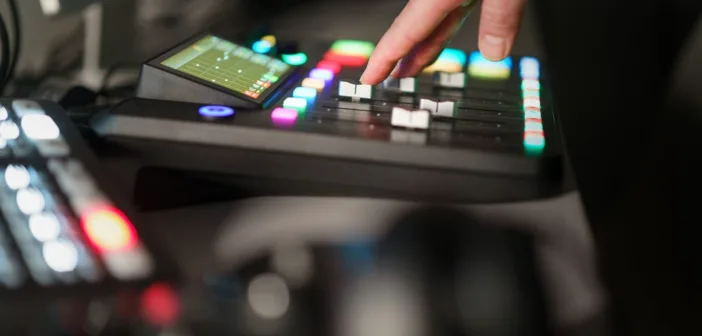
On a digital console, each act has its snapshot, prepared in advance and recalled at the push of a button at the changeover. Gains, EQ, groups, effects and sends come back instantly to the incoming band’s setup. This is where offline prep pays off: a mix partly won in advance, clean starting points, and a line check that only confirms rather than builds.
When re-patching, the line check verifies every input, mic by mic, before handing the stage over. Thirty seconds of method beat feedback on the first song. Check the sensitive sources first, vocals and monitors, then sweep the rest in patch order.
RF frequencies, one plan for the whole day
Wireless mics and in-ears from several bands coexist on the same stage and sometimes on neighbouring stages. A frequency plan coordinated for the whole day avoids dropouts mid-set: you scan the site in the morning, reserve compatible blocks per stage, and each band gets its assigned frequencies. Nothing is worse than a transmitter that works at soundcheck and drops at the show because a neighbour switched theirs on.
The human ballet
A good changeover rests as much on the crew as on the gear. Each tech has an assigned post, drums, stage left, stage right, FOH, and knows exactly what to do on the cue. Intercoms link the stage manager, FOH and monitors to synchronise the moment the stage is handed over. You rehearse this sequence at the start of the day, empty, the way a crew rehearses a manoeuvre. Speed comes from rehearsal, not from rushing.
My take
The changeover is the job nobody notices until it goes wrong, yet it decides how comfortable the whole night feels. The gap between a stage that holds its schedule and one that falls behind rarely comes down to talent, almost always to preparation: a frozen patch, snapshots ready, risers marked with gaffer tape. Investing in a second rolling riser and an hour of empty rehearsal pays off more than the sharpest reflexes. The crowd will never know you turned six bands around in two hours, and that is precisely the point.