The Super Bowl halftime show runs about twelve minutes. In that time, the audio chain has to serve two audiences that never hear the same thing: the tens of thousands of spectators in the stadium and the hundred million-plus households in front of a television. Those two sounds do not come from the same console, and that is where it all plays out.
Three worlds for one live broadcast
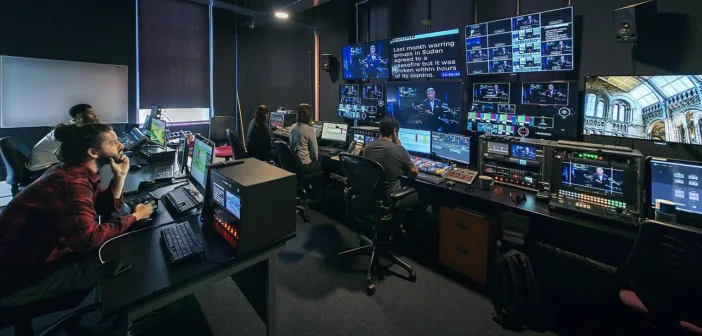
A televised game is first the sound of play: commentary, field mics, stadium announcements. At Super Bowl LX in February 2026, that part ran, according to Sports Video Group, on a pair of Yamaha Rivage PM5 consoles, with Jack Bowling at the game-audio front of house. Then comes the halftime show, a full music production built on the field in a few minutes. On top of all that, a broadcast mixer builds the sound you receive at home, different from the sound played in the bowl. At Super Bowl LIX, Front of House credited Dave Natale and Alex Guessard at the halftime front of house and Tom Holmes on the broadcast mix.
The Quantum338 at the heart of halftime
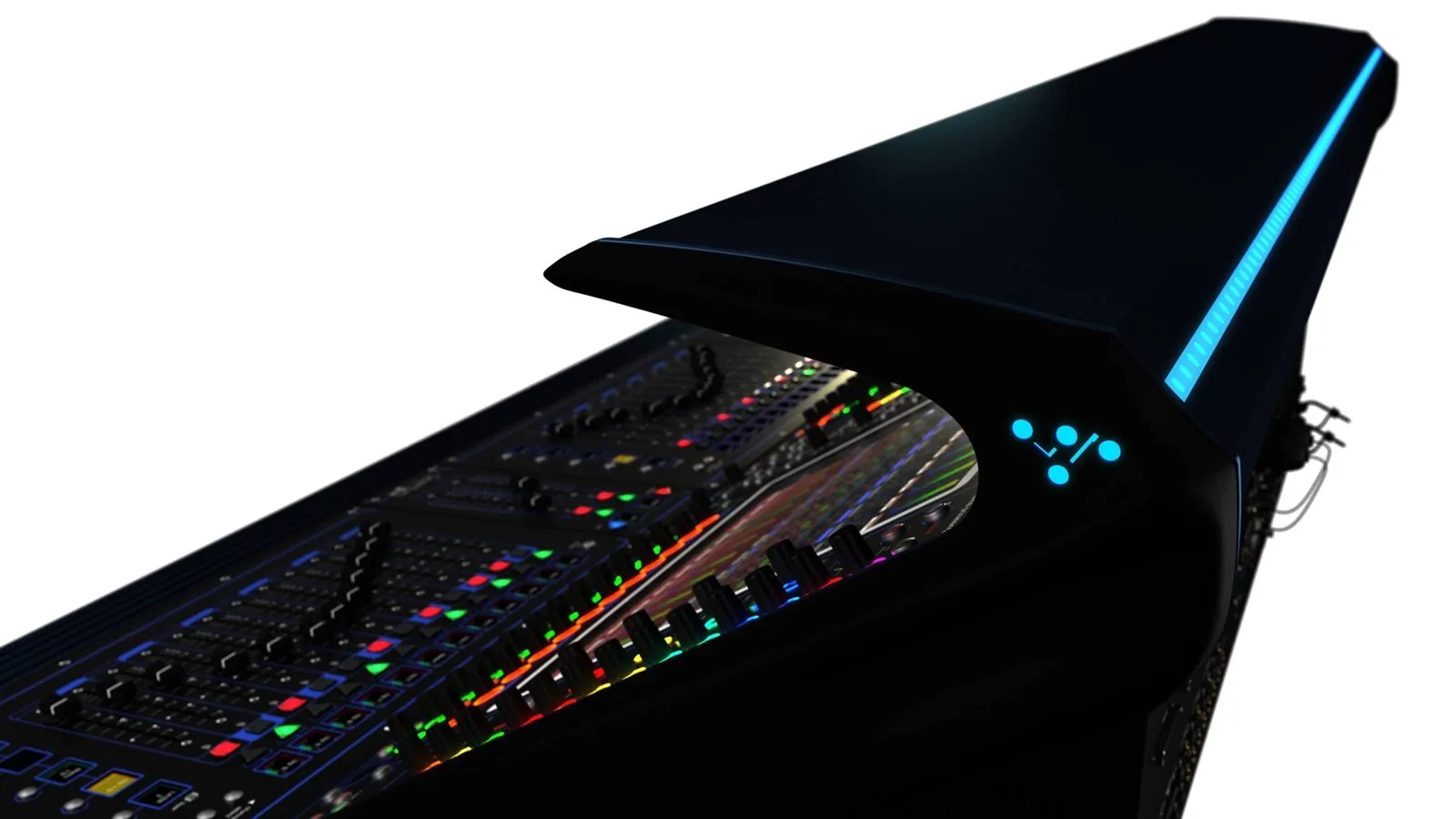
For the show itself, the long-standing audio vendor, ATK Audiotek, relies on DiGiCo Quantum338 consoles, at front of house and at monitors alike for Super Bowl LIX. The Quantum338 is no casual pick: it is a high-end touring desk, whose processing headroom and recall flexibility let a crew reload an entire setup with one press between rehearsal and showtime. Its spec sheet sits in our console database, as does that of the Yamaha Rivage PM5 used on the game side.
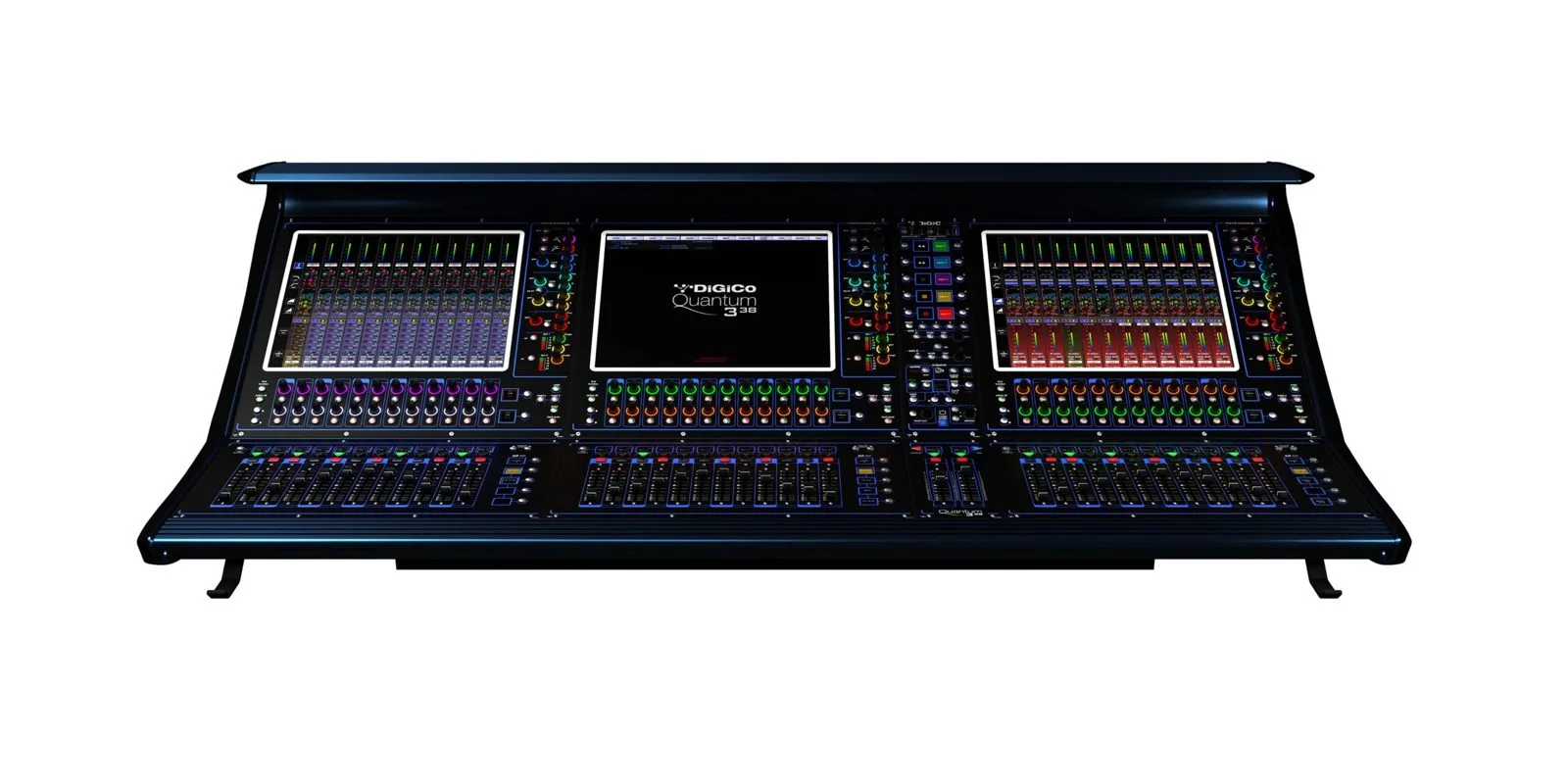
The real challenge is not mixing, but reloading fast and safely. Everything is prepared and scened in advance, so the team only has to recall the right scene when the rolling stage carts reach the grass. One slip in the recall, and the most-watched live broadcast of the year wobbles.
Hundreds of wireless links on a crowded spectrum
The show’s true technical headache is radio frequency. Handheld mics, headset mics, in-ears for artists and dancers: it all runs on RF, in a stadium already saturated by wireless cameras, intercom and press. According to Shure, Super Bowl LVIII used 164 P10R bodypack receivers for in-ear monitors alone, and the Axient Digital AD4Q receivers ran in Quadversity and frequency diversity to survive dropouts in the Las Vegas RF environment. A few editions earlier, at Super Bowl LVI, the rig still held with four PSM1000 systems and forty-one P10R receivers: the ramp-up alone tells the story of wireless inflation at this kind of event.
Coordinating that fleet calls for a flawless frequency plan. Our guide to planning RF frequencies for wireless explains scanning, intermodulation and compatible groups, and the Axient Digital 1.6 update shows how Shure tools these very large setups.
In-ears, headsets and stage debuts
For the artists, everything rests on in-ear monitoring: on an open stage swept by the crowd and the stadium sound, wedges have no place and ears become the only reliable reference. Our comparison of wedges versus in-ear monitors lays out that call. At Super Bowl LX, Bad Bunny’s performance also doubled as a showcase for a new product: the Shure SM39 headset mic, praised by front-of-house mixer Alex Guessard according to Music Connection. A halftime show often plays that double role, artistic stage and full-scale test bench for stage gear.
The sound you hear is not the stadium’s
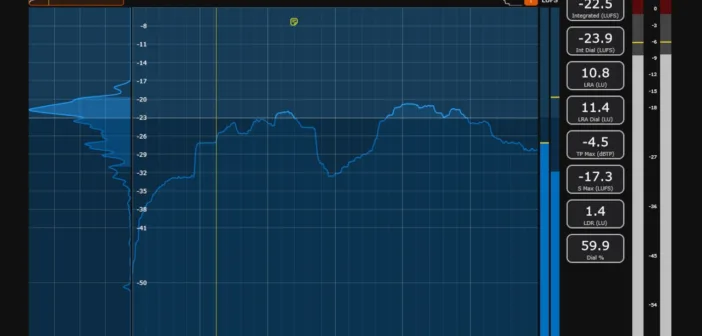
That leaves the least-known link: the broadcast mix. The acoustics of a full stadium, with its reflections and delay, have nothing to do with a living room. The broadcast mixer does not simply tap the front of house: he rebuilds a balance meant for the television and the soundbar, managing perceived level across the whole air time. That is the loudness compliance work our feature on broadcast loudness describes, and it is also why the show sounds so clean at home while the stadium itself roars.
Sports Video Group, Super Bowl LIX and Front of House, Super Bowl LX detail the crews and technical choices of these editions.