The GENE 616 looks like no recent drum machine. No backlit pads, no steps tapped onto a grid, no sample bank. Instead you get a hand-made wooden case, front-panel sliders and fully analog circuitry from Gene Synths, the brand run by the musician known as LA Priest. The instrument owns its choices: everything is set by hand, and the sound comes from the circuits, not from memory.
Four generators, two sections
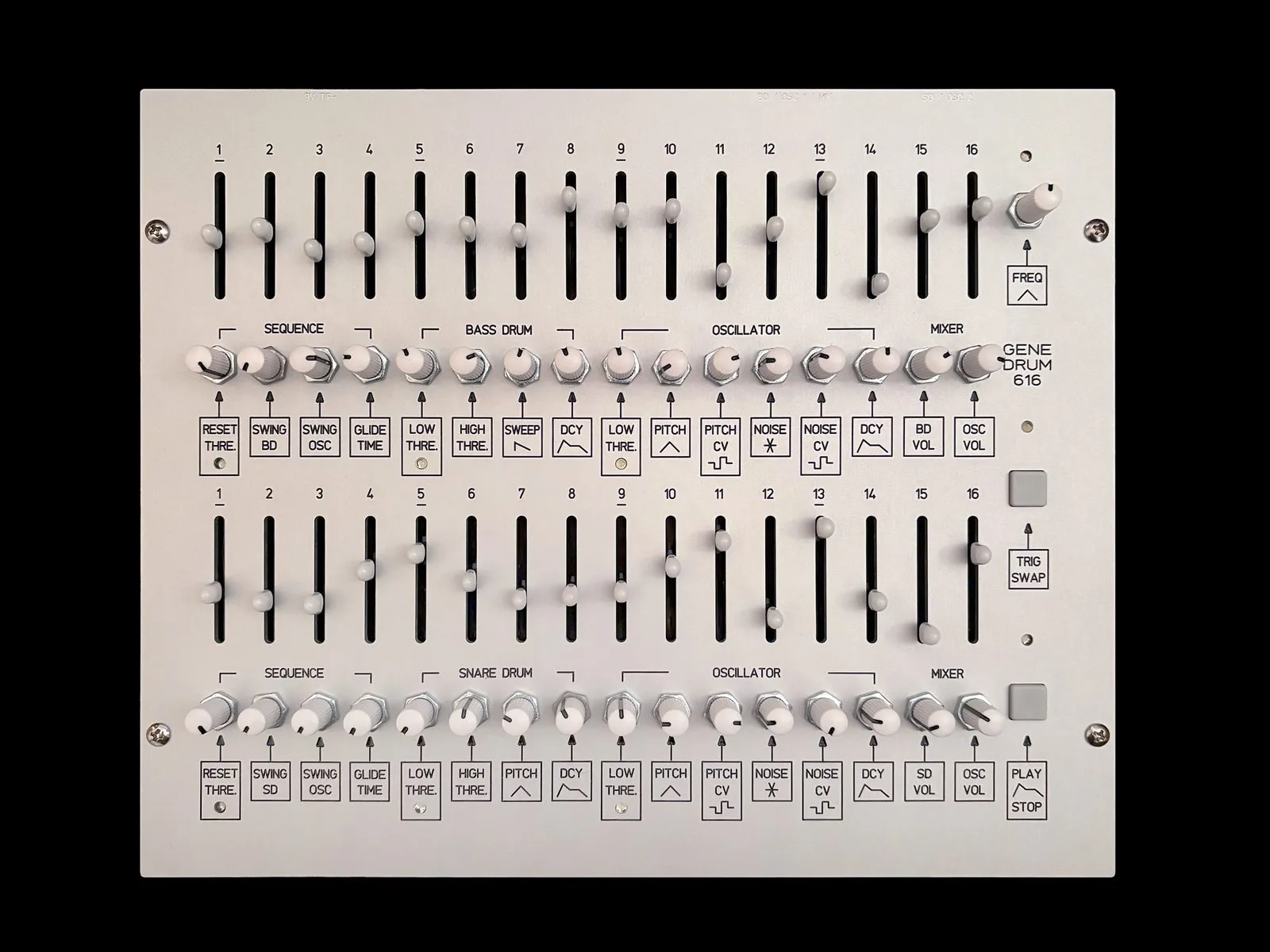
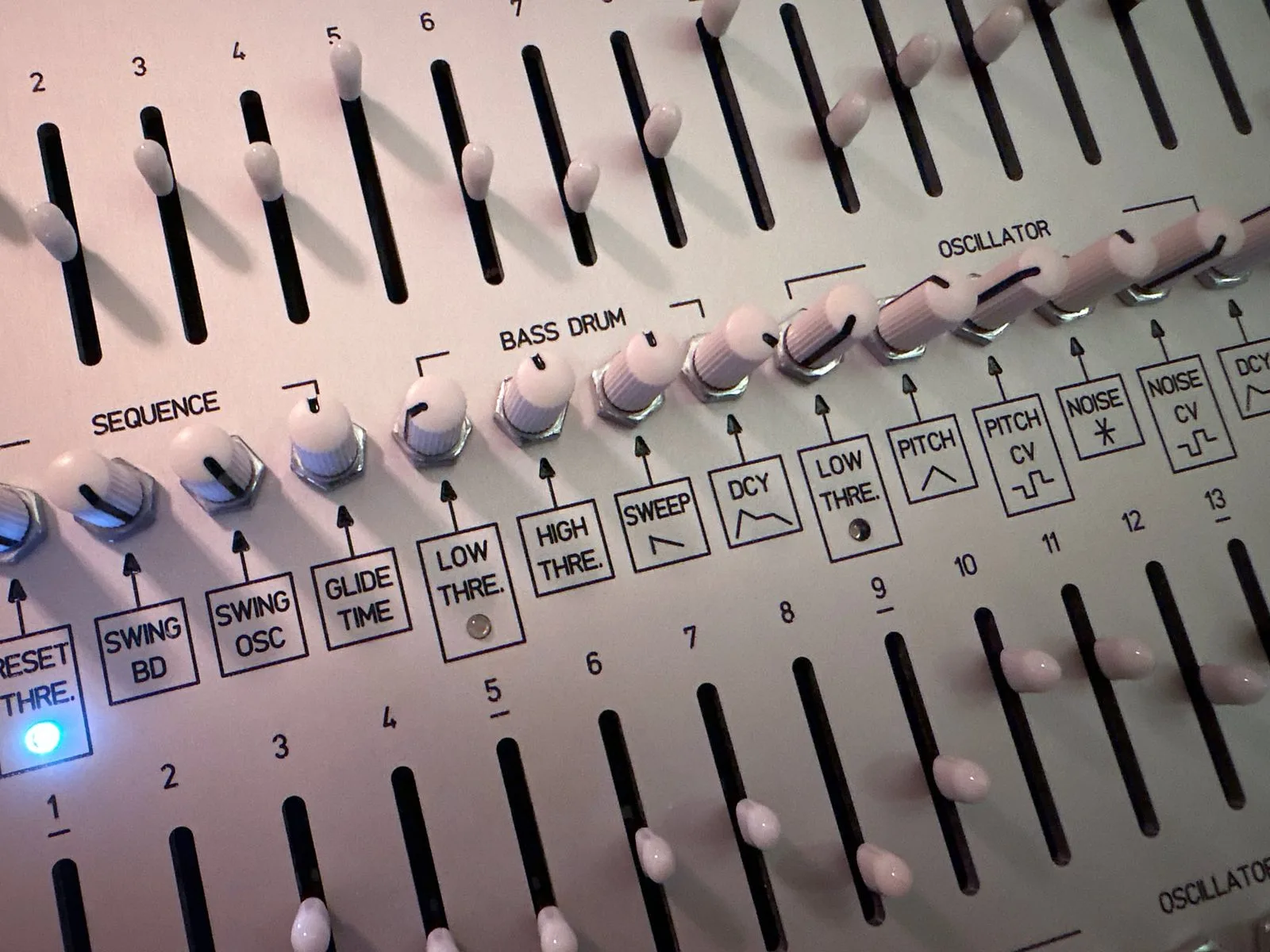
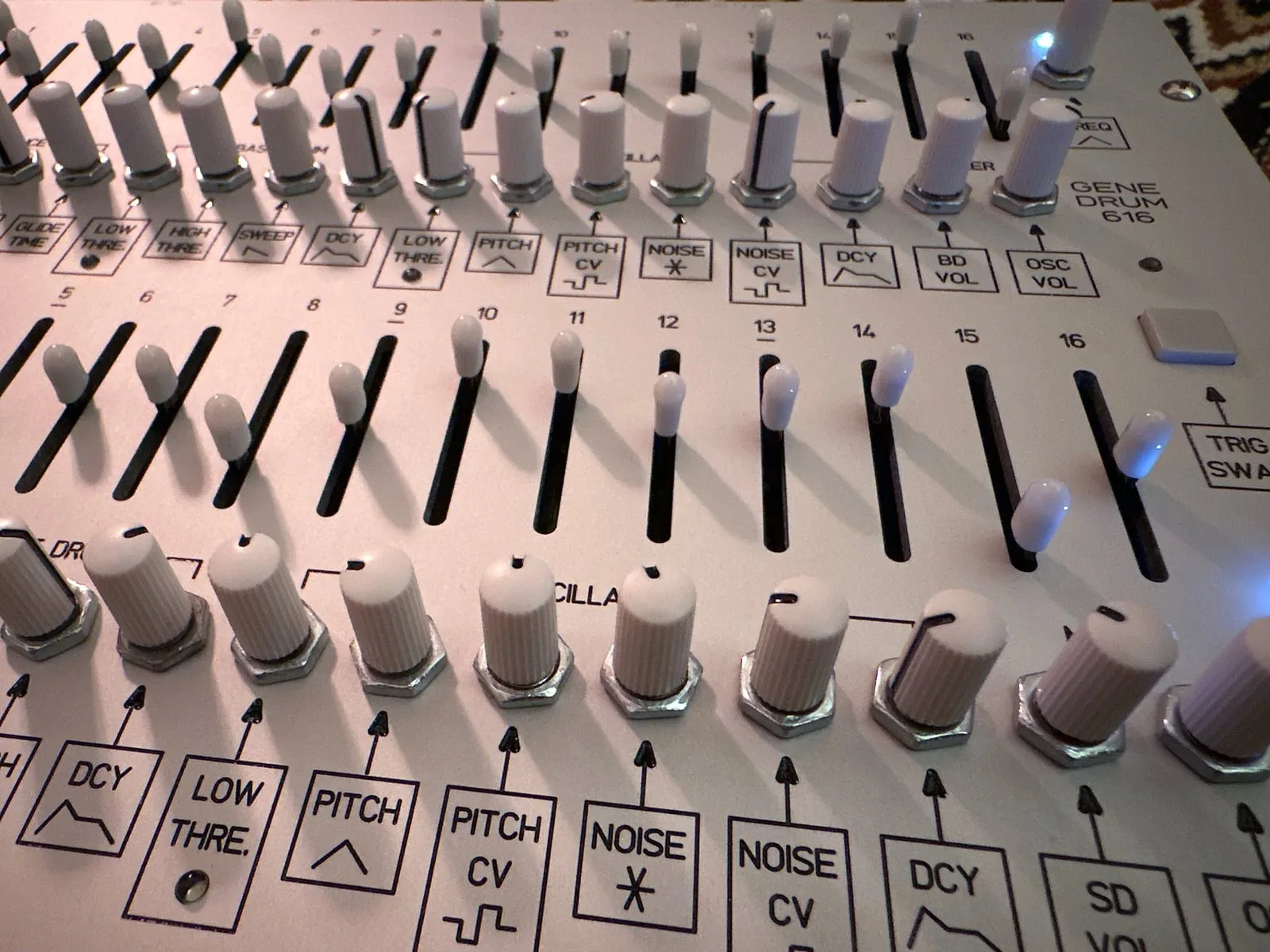
The machine splits into two stacked sections. The upper section pairs a bass drum generator built on a modified analog bridge-T circuit, with pitch sweep time and decay, and a multi-waveform oscillator with pitch, noise and decay controls. The lower section mirrors it with a transistor-based snare generator and a second oscillator. That is four percussion generators in all, each with wide voltage control over pitch and noise.
Two switchable germanium-diode overdrive circuits let you dirty the signal when you want to. That germanium saturation delivers the rough grain analog-drum fans chase, far from the clean output of digital machines.
Two slider sequencers and polyrhythms
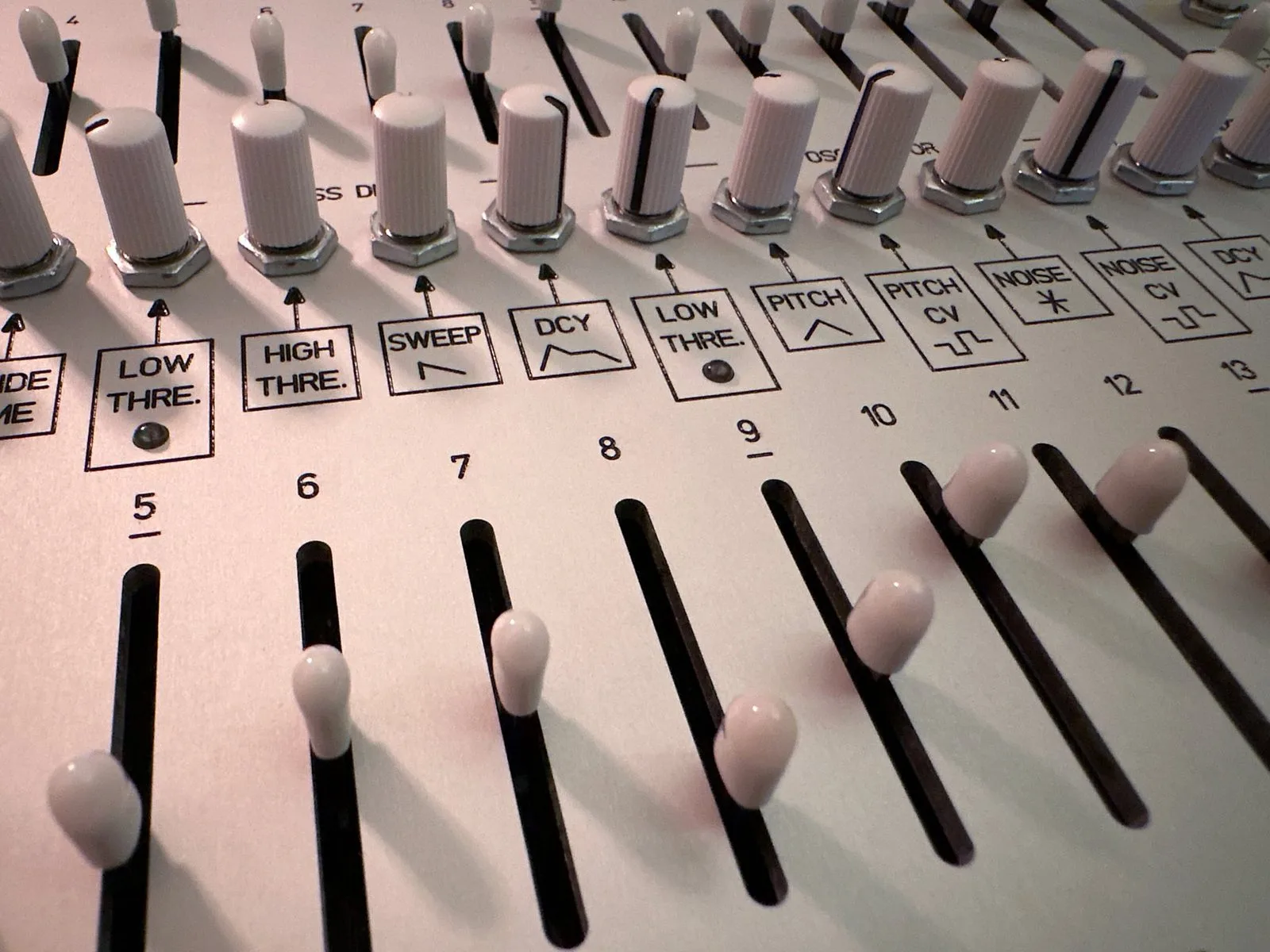
The heart of the GENE 616 is its two analog CV and trigger sequencers, one per section. Each has 16 steps with 16 voltage sliders and a reset-threshold control. Pattern length is continuously variable: fully clockwise, the sequencer plays all 16 steps in sync; lower down, it shortens the pattern, and the two sections then run at different lengths. That is where the polyrhythms promised by the brand name come from.
Each generator also has high and low threshold controls that set the slider travel able to trigger it. Swing, quantized to stay in sync, applies independently to all four generators and can reach 100 percent. At that setting, some configurations stretch the sequence to 32 steps or more. A glide time per sequencer, a Trigger Swap function and the option to decouple the sequencer from the generators round out the rhythm section.
Connectivity and philosophy
For connections, the GENE 616 stays loyal to the modular world rather than MIDI, which is absent. There are two 6.35 mm jack outputs, marked LEFT/MONO and RIGHT, with the upper and lower sections summable to mono on a single cable. A single stereo output is offered on request. Depending on the chosen version, connectivity grows with external clock and reset inputs plus extra CV inputs and outputs.
That CV openness places the GENE 616 at the centre of a small system: it syncs to a Eurorack sequencer, takes control from external voltages or triggers other modules. The approach recalls voltage-controllable analog performance mixers such as the Union Audio area.6, made to play music live rather than program it.
Key points
- Fully analog stereo drum machine, with no memory, presets, screen or samples.
- Four generators: bass drum (bridge-T circuit), transistor snare, two multi-waveform oscillators.
- Two 16-step analog sequencers, variable length, swing up to 100 percent, independent glide.
- Two switchable germanium overdrives, wide CV control, no MIDI.
- Hand-made wooden case, $2,424 / £1,799 / €2,199.88 incl. tax, available to pre-order.
The swing toggle and independent pattern length place the GENE 616 among machines that make a sequence breathe instead of locking it down. If the topic speaks to you, our guide to groove, swing and quantization explains the mechanics. In the analog percussion field, the Dreadbox Alecto explores a neighbouring path in Eurorack format.
My take
The GENE 616 does not try to please everyone, and that is its strength. No screen, no project recall, no MIDI: you play with your hands and live with the setting of the moment. The price reserves it for players who know why they prefer voltage sliders to a step grid, but the sonic promise is clear, from analog punch to slowly drifting polyrhythms. The real question is long-term ergonomics: a machine with no memory rewards those who enjoy starting from scratch, and frustrates the rest.