Synthux Academy, the small Dutch outfit behind a string of DIY synths and open-source tools, is back with the Audrey III. It builds on the idea that drove the Audrey II, released in late 2024: making sound not from oscillators, but from tamed audio feedback. The headline change is simple. One voice becomes three, and the instrument finally gets a full effects chain.
A synth that starts from no oscillator
Forget waveforms, wavetables and samples. The Audrey III has none. Sound comes from a feedback loop you push until it self-oscillates, exactly like a guitar howling in front of its amp. Synthux leans on Karplus-Strong synthesis, a model that mimics a plucked string by running the signal through a delay line. Put the headphones on, raise the feedback, and a drone settles in. Power down, power back up, and the drone returns to the same place.
Playing happens through touch plates. A press triggers the feedback, which fades when you let go. A MIDI keyboard or an external sequencer can drive it too. Better still, a stereo input feeds an outside source into the feedback engine, where it mixes with the loop and comes back transformed. It shares the textural appetite of granular synthesis, but the inner logic is closer to physical modeling, as on the Modartt Airteq.
Three voices instead of one
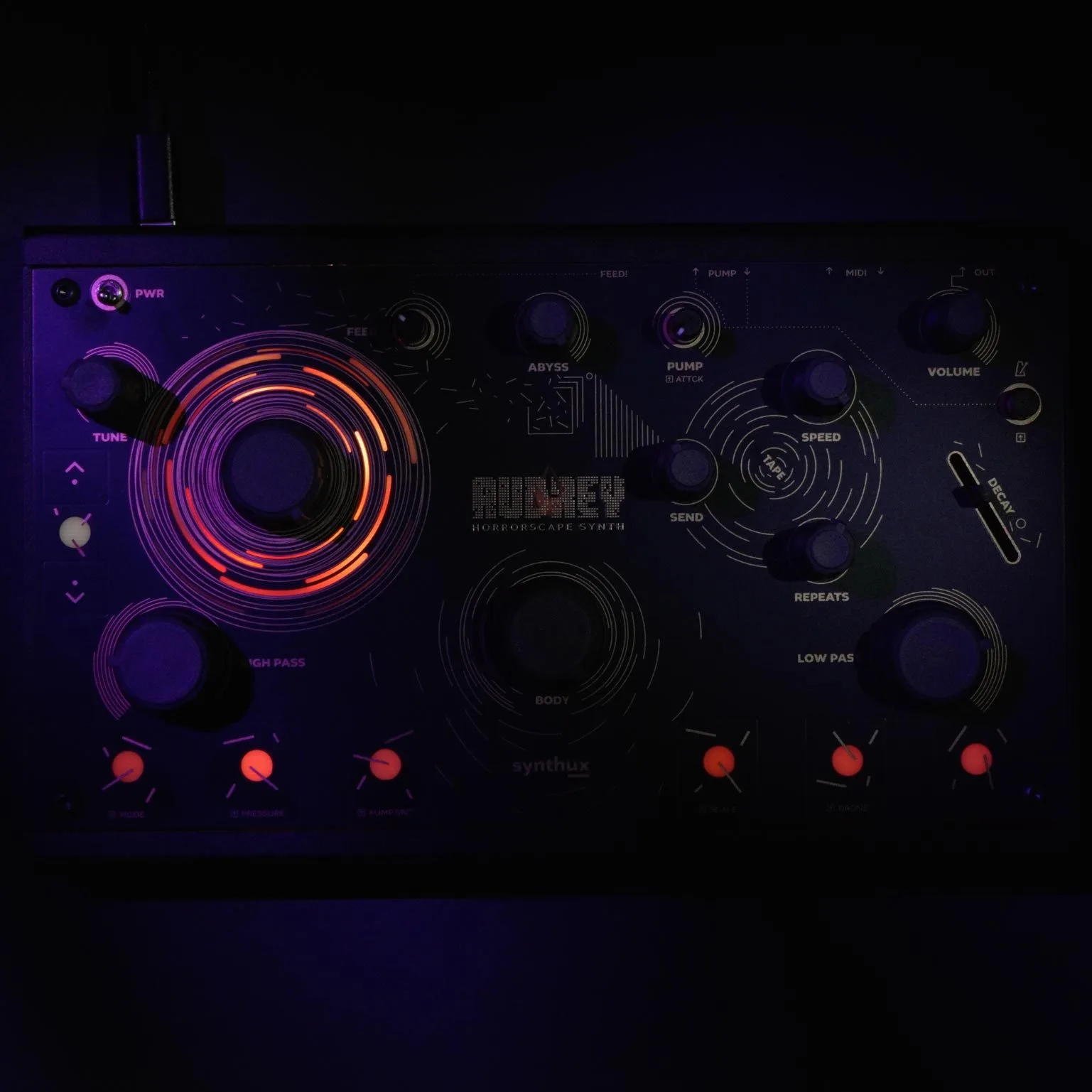
This is the real jump over the Audrey II. The first version offered a single voice of feedback string synthesis. The Audrey III stacks three. In practice that means chords, thicker pads and beating between voices that opens up harmonic ground the mono version could not reach. For an instrument whose charm is controlled instability, three feedback sources influencing each other give you a lot to work with. If polyphony is the part you want to understand, we broke it down in our guide to monophonic, paraphonic and polyphonic synths.
A real effects chain, at last
After the feedback engine, the signal now runs through a filter, a stereo tape echo, a reverb, then an output stage with sidechain compression, the classic pumping effect, set by tap tempo. The whole path stays stereo. In other words, the raw, chaotic feedback arrives shaped: you can filter it, spread it across the stereo field, make it breathe in time. The Audrey II often needed a pedal or a plugin behind it to stay listenable for long. The Audrey III stands on its own.
An interface you play with your fingers
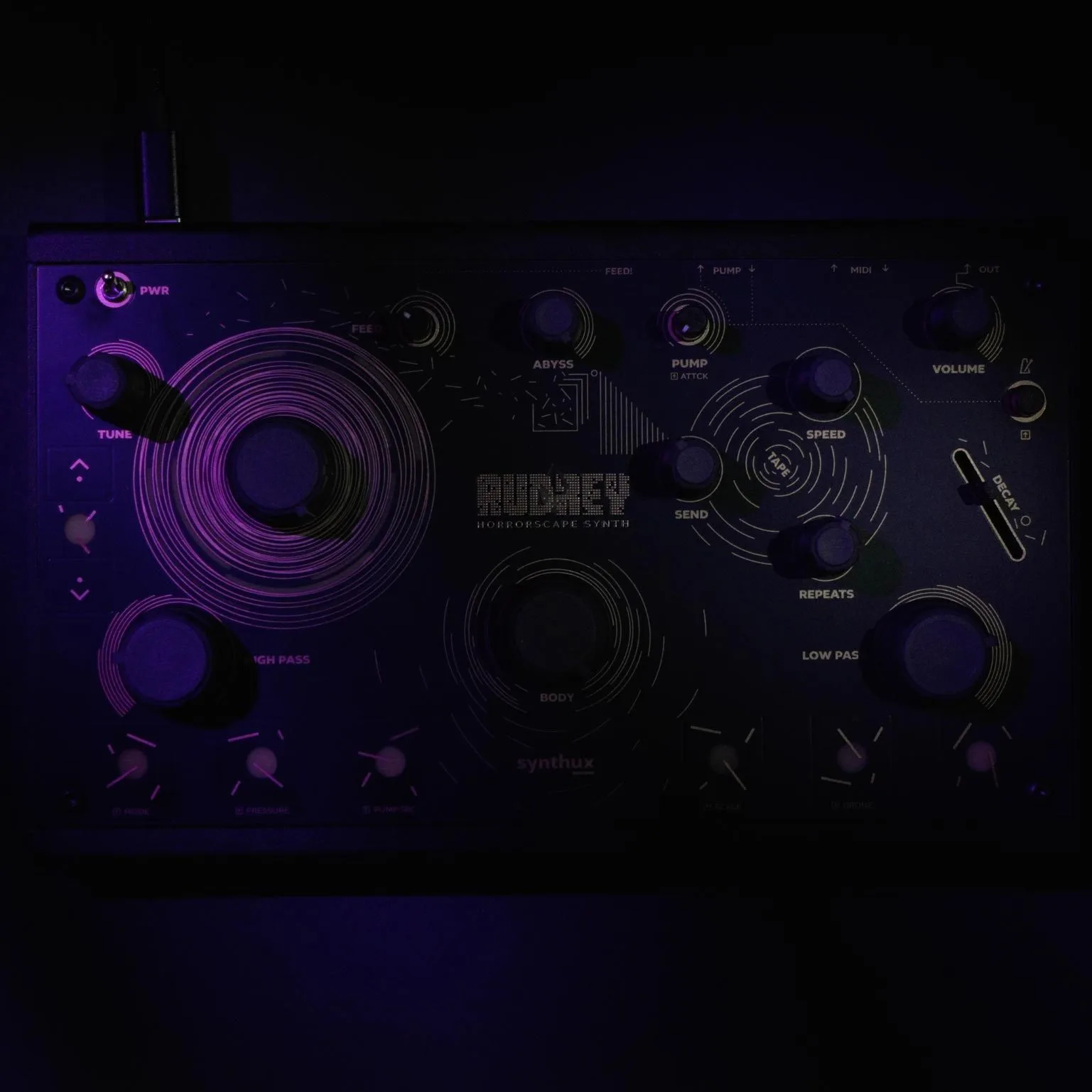
The front panel carries twelve knobs, one fader and eight pressure-sensitive touch plates. LEDs react to the sound in real time, and there is no menu to dig through: everything sits under your hands. For connections there is a stereo input, a headphone and line output on 3.5 mm, MIDI in and out on TRS type A mini-jacks, sync in and out, and USB-C power. The enclosure is aluminium, in the spirit of the brand’s Spotykach looper. As usual at Synthux, the project is open source, in the lineage of Nick Donaldson’s work at Infrasonic Audio: the code and the design are open to anyone who wants to tinker.
Price and availability
The Audrey III is available for 499 euros, shipping from the Netherlands. For reference, the Audrey II sold for 399 euros plus VAT assembled, or 299 euros plus VAT as a DIY kit. So the step up costs a little more, but it brings two extra voices and the whole effects section, which changes the nature of the instrument rather than simply refreshing it.
My take
Feedback as a sound source is a radical, wonderfully alive choice. The Audrey II stayed a slightly one-track curiosity. By moving to three voices and folding in a filter, echo and reverb, the Audrey III turns into a genuine stage and studio instrument, not just a drone box for sound designers. The 499-euro price puts it against more conventional, more versatile synths, and you will need to enjoy the unpredictable. But for anyone after a texture that sounds like nothing else, and a machine that answers to pressure like an acoustic instrument, there is little else like it.