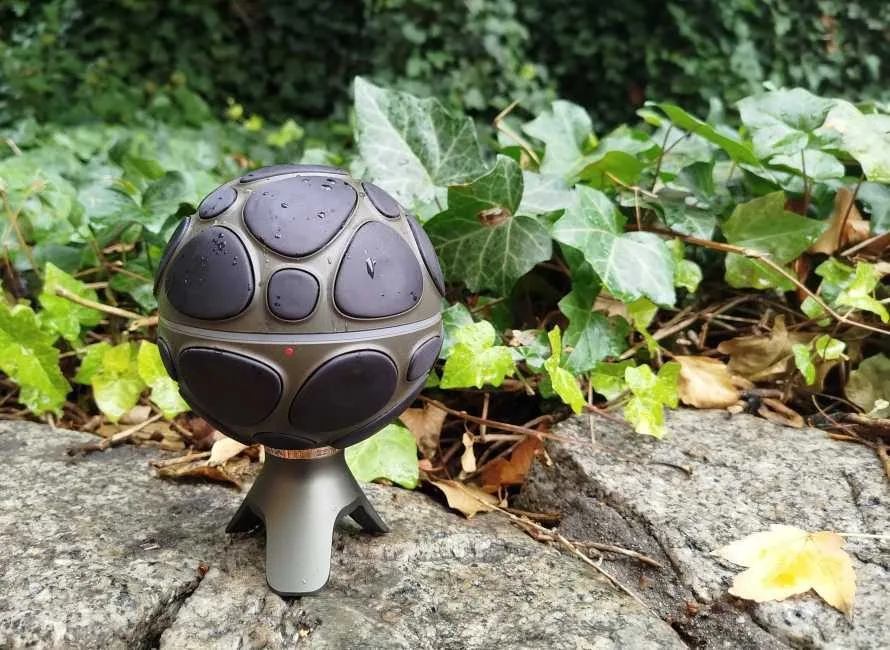
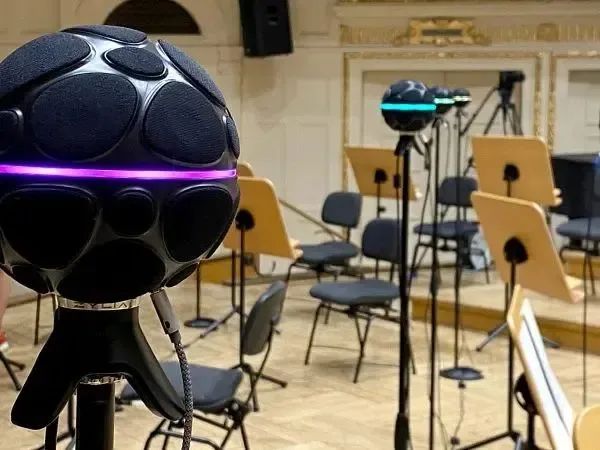
Capturing a complete sound field in a single take, to play it back later in 360 degrees or immersive audio, remains a specialist feat. Zylia made its name with a sphere studded with microphones, and now offers a new generation: the ZM-2, a third-order ambisonic microphone built on 19 MEMS capsules arranged on a sphere.
What changes with the ZM-2
The principle is unchanged: 19 capsules capture sound arriving from every direction at once, and Zylia’s software rebuilds a usable ambisonic field for binaural, VR or immersive rendering. The upgrades are about signal quality and integration. The MEMS capsules gain sensitivity, recording moves to 96 kHz, and connectivity switches to USB-C.
Those three points matter more than they look. Higher sensitivity widens the range of usable sources, from a whisper to a loud ensemble; 96 kHz gives more headroom for the spatial processing and time offsets inherent to ambisonic reconstruction; and USB-C simplifies connection to computers and recent devices. A weatherproof variant, built for outdoor ambience capture, joins the line.
What an ambisonic sphere is for
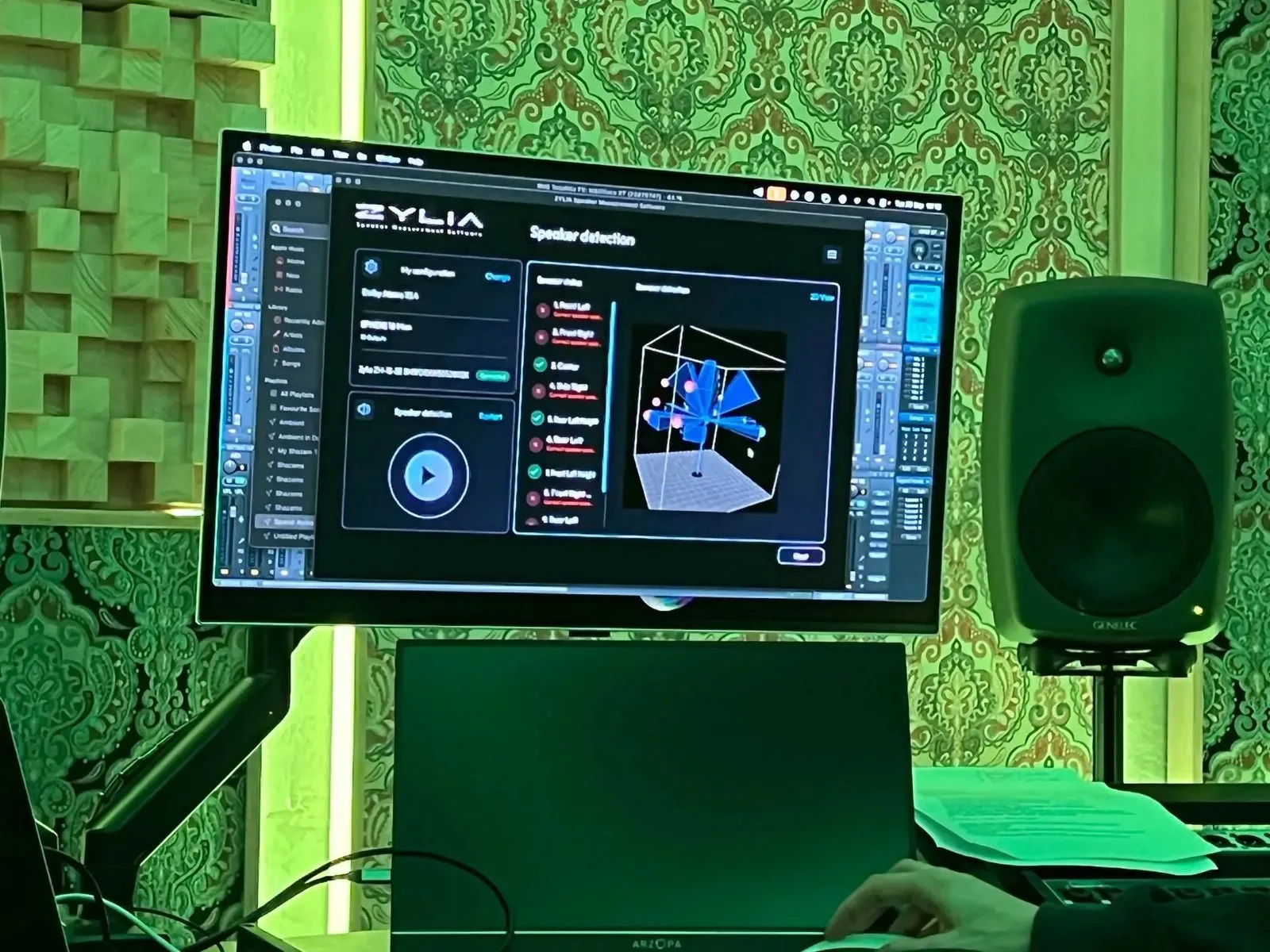
The appeal of such a mic is freezing a whole sound scene rather than one direction. It’s used for immersive ambiences, 3D music, virtual reality and six-degrees-of-freedom experiences, where the listener moves through the sound space. The ZM-2 comes with Zylia’s software ecosystem, with its ambisonics converter and processing environment, to go from the 19 raw signals to a production-ready format.
That logic echoes immersive work in the studio: capture or build a spatial field, then render it to the target delivery format, whether binaural on headphones or a dedicated immersive monitoring setup.
Where it sits
The ZM-2 stays a specialist tool, aimed at engineers working in immersive audio, acoustic research or 360 content. Its strength is capture simplicity: one sphere, one take, and the whole spatial scene captured at once, where a classic multi-mic setup demands lengthy alignment and careful synchronisation.
My take
Immersive audio is still hunting for its delivery standards, but the capture tools are maturing fast. Moving to 96 kHz and USB-C sounds minor; it’s actually what separates a lab object from a tool you can use in the field. The all-weather variant is a sign Zylia is targeting real use, not just demos. For anyone working in 360 or VR, grabbing an entire scene in one take remains a huge time saver, and that’s exactly where this kind of mic justifies itself.
Frequently asked questions
How many capsules does the ZM-2 have, and what ambisonic order does it reach?
The ZM-2 has 19 MEMS capsules arranged on a sphere, which lets it capture a third-order ambisonic field, usable for binaural, VR and immersive rendering.
What does the ZM-2 bring over the previous generation?
More sensitive MEMS capsules, 96 kHz recording and USB-C connectivity, where the previous generation topped out at 48 kHz over USB. A weatherproof variant rounds out the range.
Do you need dedicated software to use the ZM-2?
Yes. The 19 raw signals are converted to an ambisonic format through Zylia’s software ecosystem, which includes an ambisonics converter and a processing environment, before export to a production workflow.
What is the ZM-2 meant for?
Immersive ambiences, 3D music, virtual reality and six-degrees-of-freedom experiences, where capturing the whole sound scene in a single take saves valuable time.