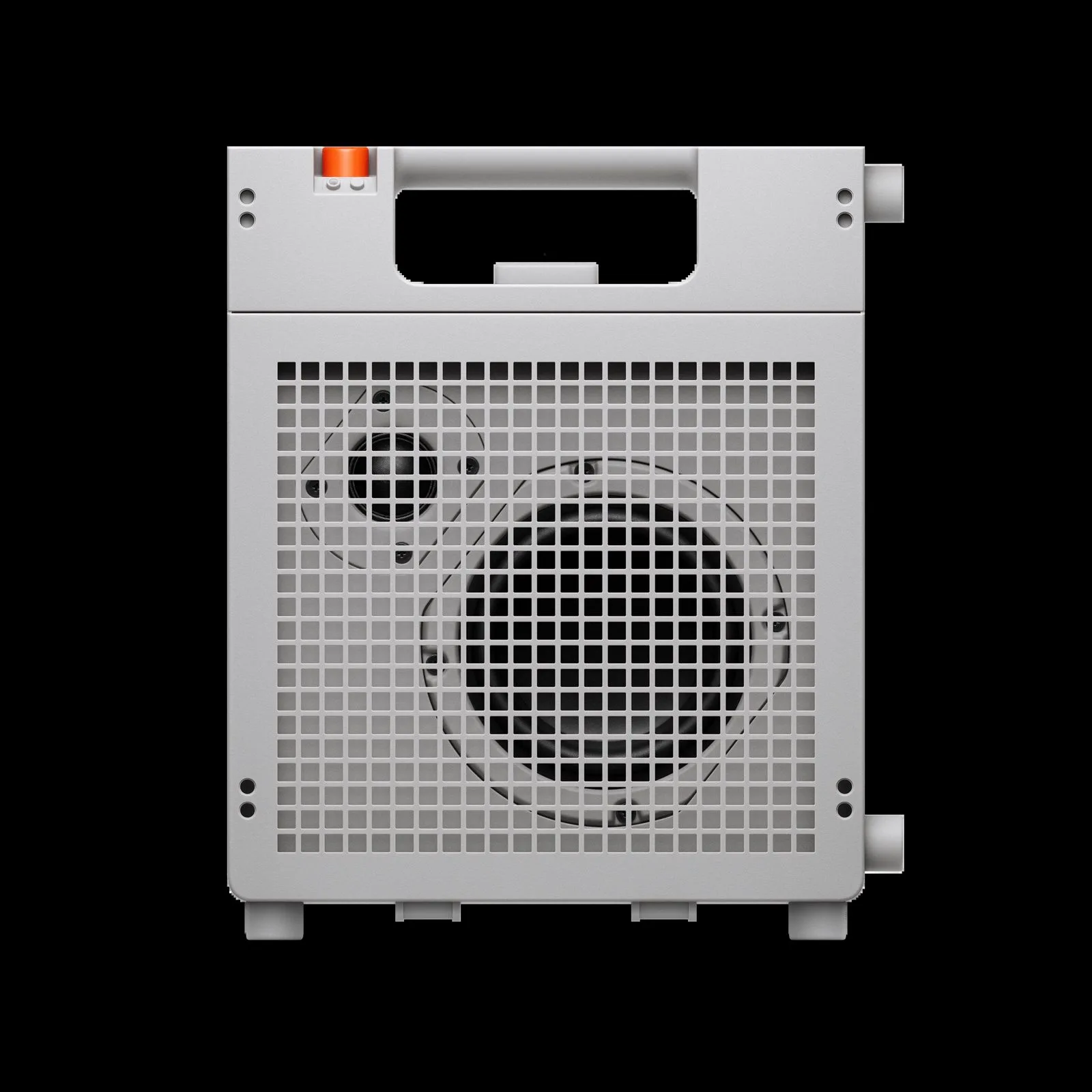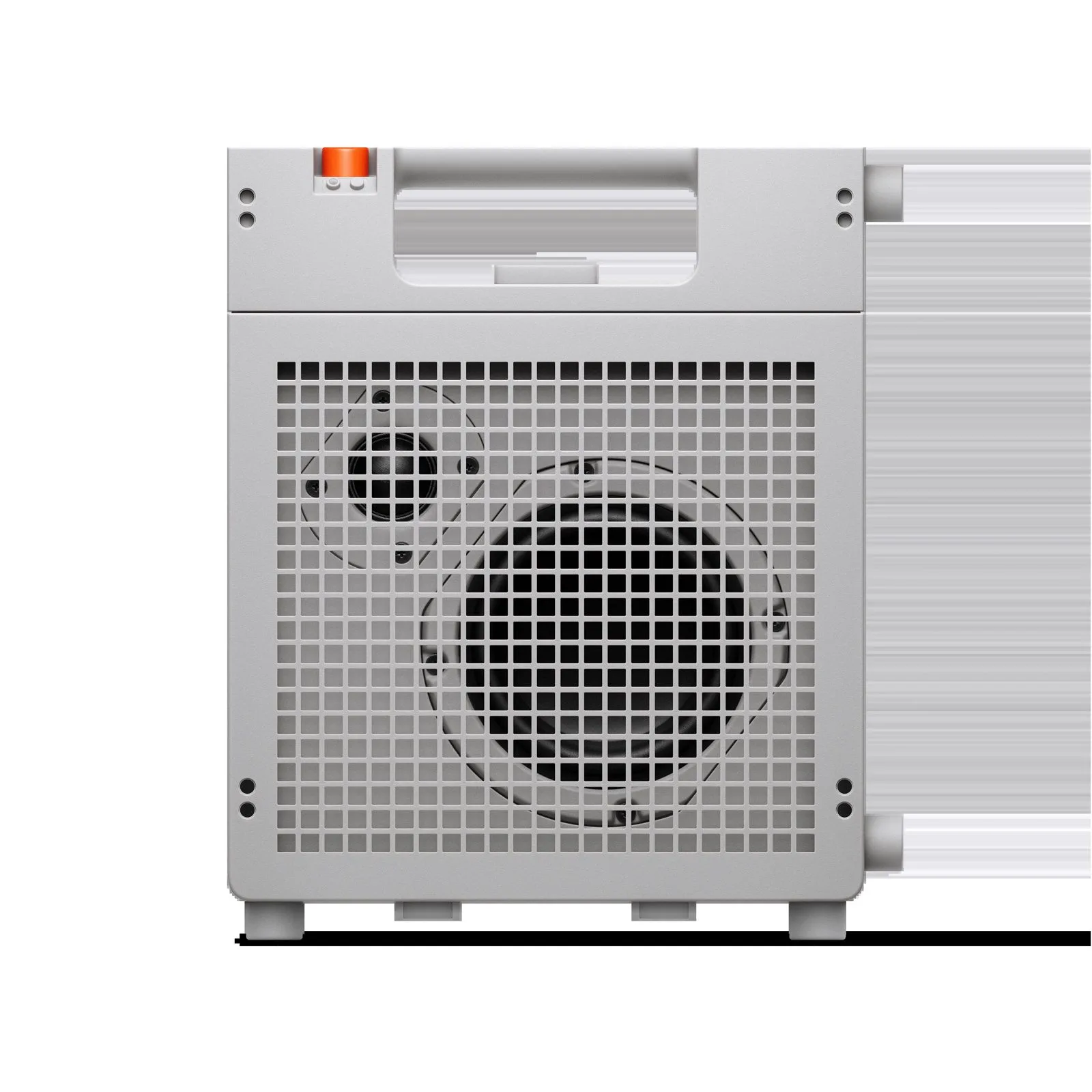
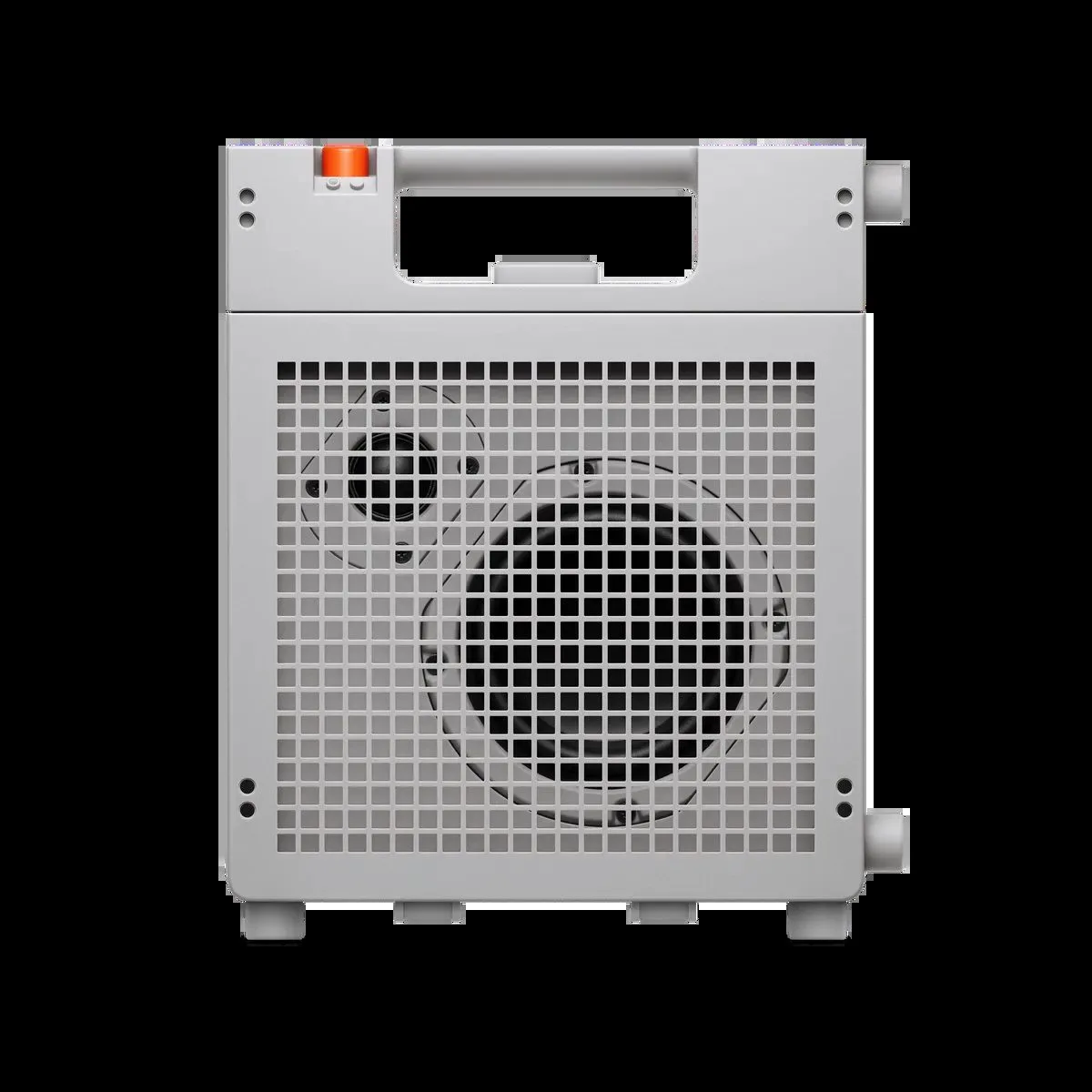
Teenage Engineering had never made an amplifier. That changes with the EP-35 K.O. Amp, a cube-shaped, battery-powered combo that kicks off the Swedish brand’s new K.O. era. It looks like a desk speaker, but it packs an instrument amp, a mic preamp, an audio interface and a Bluetooth speaker into something you can drop in a backpack.
A combo, but really a Swiss army knife
At its core sits a 35-watt amplifier built around a dedicated woofer and tweeter, so it covers more than the narrow midrange most pocket speakers settle for. What sets the EP-35 apart is its range of inputs: a 1/4-inch instrument input, an XLR mic input with its own preamp, a line input, and a USB-C port that handles both charging and audio.
That USB-C connection makes it a genuine audio interface: plug the cube into a computer or phone and you record guitar, vocals or a full mix straight in, no extra box required. Add sixteen effects spread across the instrument and mic paths, plus Bluetooth 5.3 for playback, and the same unit covers rehearsing, tracking a demo and playing music back.
On power, the 20.1 Wh lithium-ion battery is rated for around twelve hours of playback at moderate volume and recharges in roughly two hours. Enough for a rehearsal or an impromptu outdoor session.
The start of a stackable ecosystem
True to form, Teenage Engineering isn’t selling a standalone object but a platform. The EP-35 takes several accessories: the wireless EP-127 K.O. pedal that acts as a foot controller, the Amptenna that adds FM radio through the ep-plug port, a dock kit to mount other series devices, and a dedicated handheld mic. It all stacks and connects, in the modular spirit of the EP-133 and EP-1320 grooveboxes that drove the brand’s recent success.
The logic holds up: the EP-35 becomes the playback and capture hub of a pocket studio already built from samplers and effect boxes. For someone making music on the move, the appeal isn’t the amp in isolation, but having monitoring, an interface and light PA duties in a single cube.
Where it sits
Priced around $399, the EP-35 K.O. Amp isn’t chasing stage amps. It targets the mobile musician, the creator who jams outdoors, the home-studio user who wants one listening-and-recording point without a pile of boxes. At that price, the feature density is unusual: few products combine an amp, an XLR preamp, a USB interface and Bluetooth in a chassis this small.
If you want a pure studio interface, something like the MOTU OctaLite with its eight preamps stays more specialised, and to cover a stage a portable column PA will go louder. The EP-35 bets on versatility and mobility instead.
My take
At last, a box that owns up to being a toy as much as a tool. The EP-35 ticks a lot of boxes at once, and that’s its real pitch: one cube to rehearse, catch an idea and play it back, without ever opening the cable bag. The dedicated tweeter is a smart move, because that’s exactly where small portable speakers usually fall apart. The open questions are how it really sounds at high volume and how deep the accessory ecosystem proves over time. For the musician who creates on the move, though, the idea lands, and Teenage Engineering finish rarely just makes up the numbers.
Frequently asked questions
Can the EP-35 work as an audio interface for recording?
Yes. The USB-C port handles audio as well as charging: connected to a computer or phone, the cube records the instrument input, the XLR mic input or the line input directly, with no additional interface.
What battery life should I expect?
The 20.1 Wh lithium-ion battery is rated for up to around twelve hours of playback at moderate volume, with a recharge of roughly two hours. Real-world runtime drops at high volume, as always.
Can I plug a microphone straight in?
Yes, through an XLR input with its own preamp and dedicated mic-path effects. That’s what sets it apart from a plain Bluetooth speaker.
Which accessories complete the EP-35?
The wireless EP-127 K.O. pedal, the Amptenna that adds FM radio via the ep-plug port, a dock kit to stack other series devices, and a handheld mic. The set extends the modular logic of the EP-133 and EP-1320 grooveboxes.