Czech maker Electra One has revealed the Mk3, a deep revision of its flagship MIDI controller. The unit keeps its idea, driving several instruments and plugins from a single screen-based surface, but reworks almost all of its hardware. Announced in late October, it is already on pre-order at €599 excluding VAT, with shipping expected before the end of February 2027.
A preset-driven controller
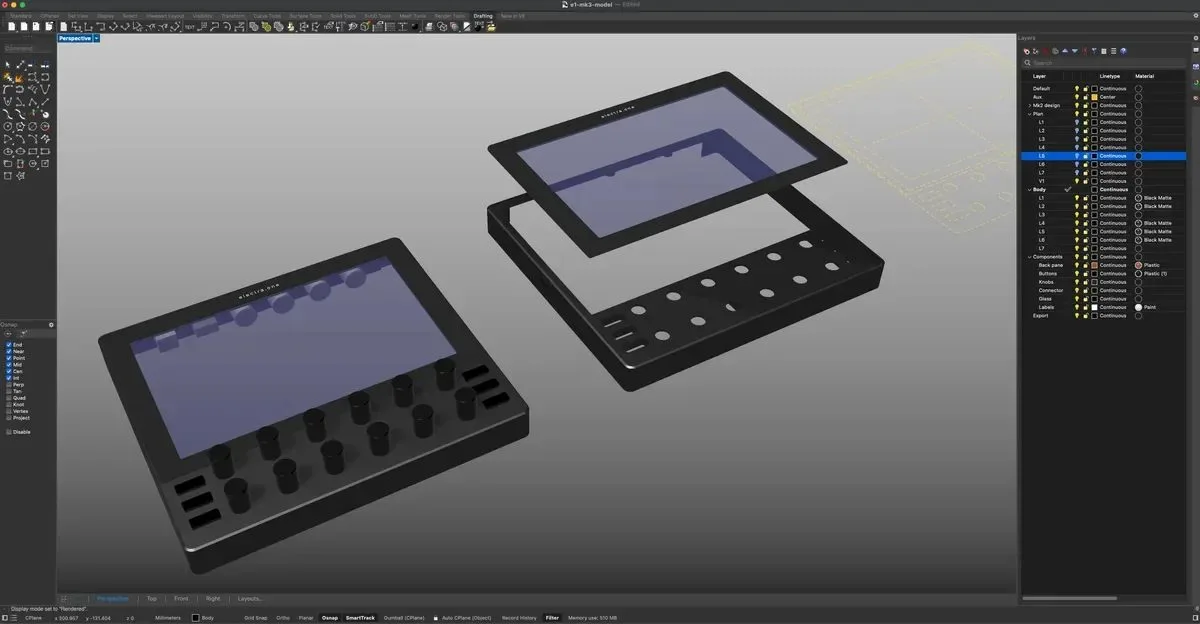
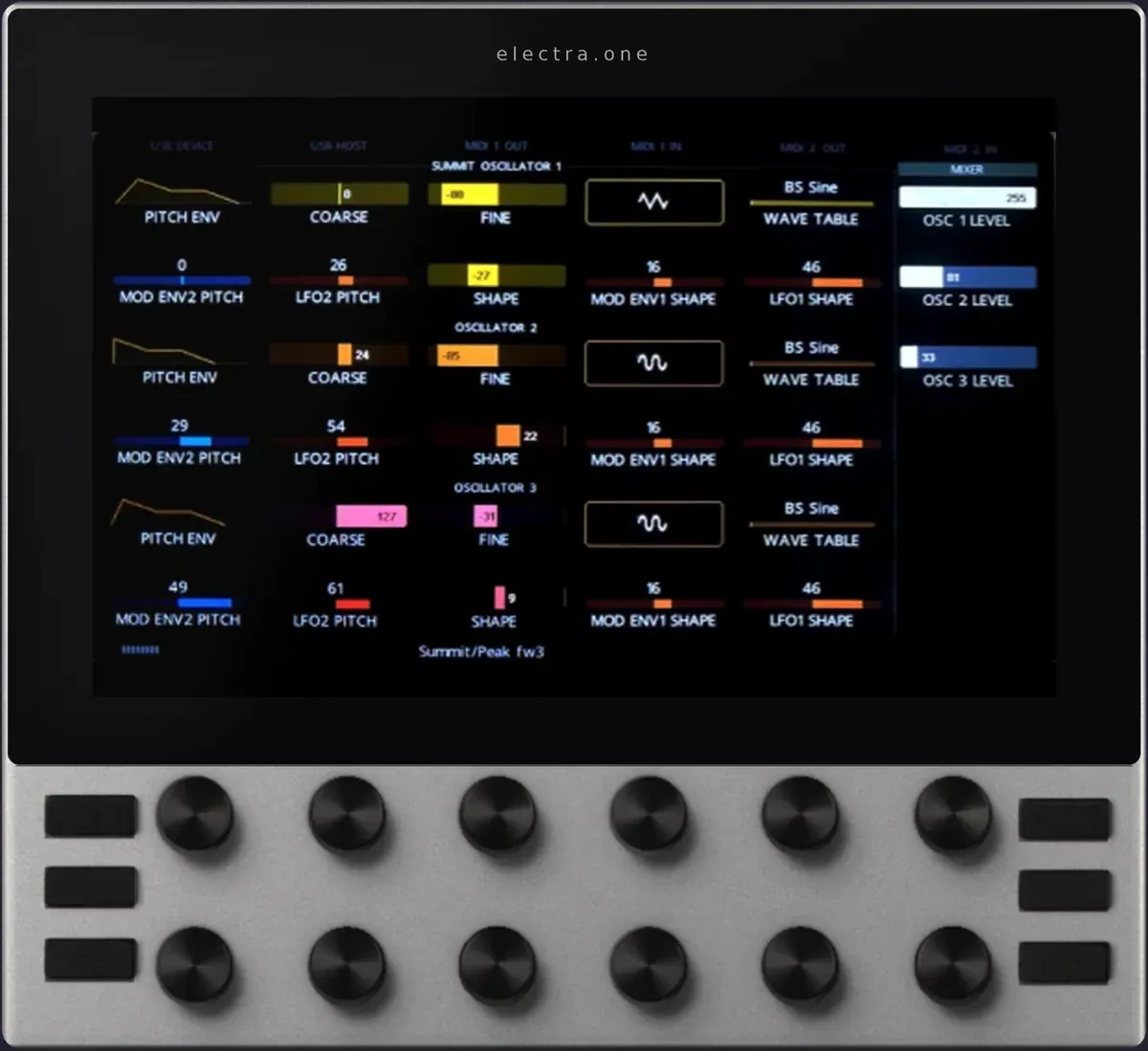
The Electra One is not a master keyboard. It is a surface built around twelve touch-sensitive aluminium knobs, buttons and a large screen that shows pages of controls drawn from presets. Each preset can address up to 32 devices, carries Lua scripts and holds up to 36 controls per page. It drives a synth over SysEx just as well as a plugin over MIDI CC or NRPN, with clear on-screen labels instead of controller numbers to remember.
What the Mk3 changes
The jump starts with the display. The screen grows from 7 to 8 inches at 1280 x 800, and its response time drops to 5 ms from 40 ms: knob moves now track without lag. At the core sits a dual-core Renesas RA8D2 running at 1 GHz, with one core dedicated to low-latency MIDI messaging, backed by 64 MB of unified memory.
| Spec | Previous generation | Mk3 |
|---|---|---|
| Display | 7-inch, 40 ms | 8-inch 1280 x 800, 5 ms |
| Processor | single-core | Renesas RA8D2 dual-core, 1 GHz |
| Networking | USB, MIDI DIN | USB host (8 devices), MIDI DIN, Ethernet |
Connectivity built for recent protocols
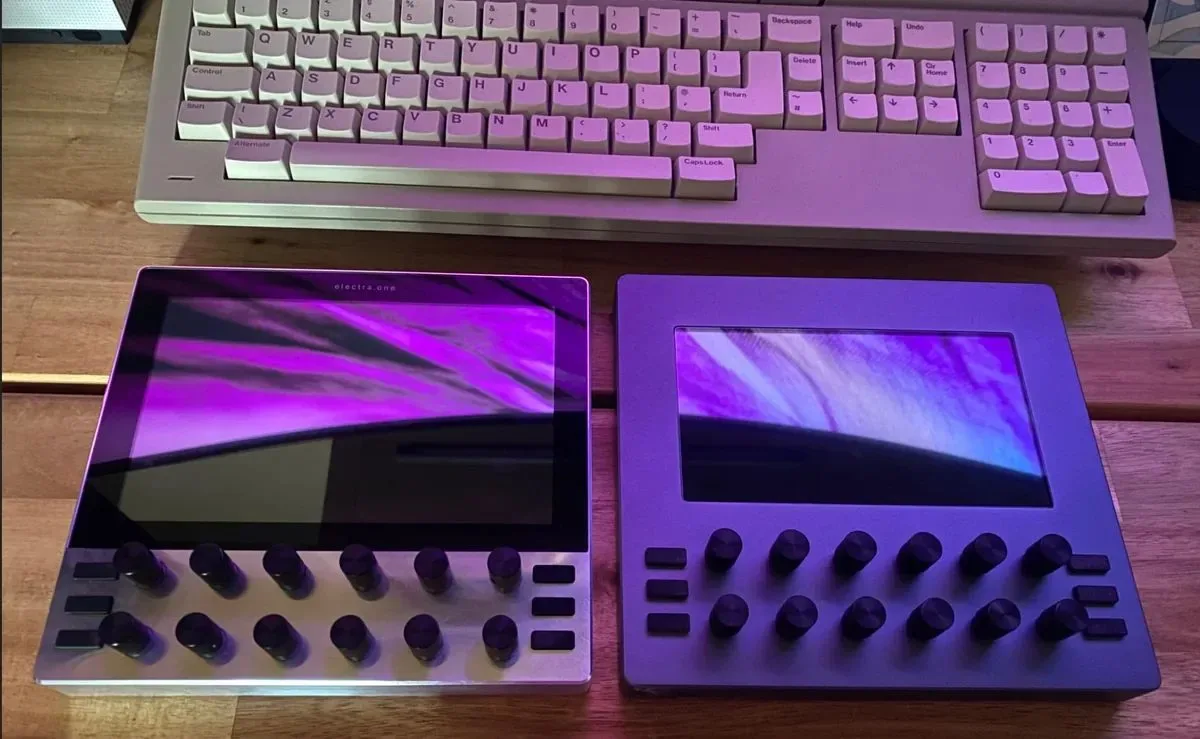
For connections, the Mk3 brings a USB device port, a USB host port that handles up to eight connected devices, five-pin MIDI DIN sockets and, new here, an Ethernet port. That network port carries RTP-MIDI, OSC and MIDI 2.0. For a studio mixing vintage synths and recent machines, that is enough to connect everything without stacking interface boxes. The body pairs aluminium with a real wood panel, in line with earlier generations.
No upgrade path from the Mk2
Electra One is clear: a Mk2 does not turn into a Mk3. The new enclosure, I/O board and mainboard are different, so moving up means buying the new unit. The controller is still pre-production, and the maker says the pictures will be updated as the project moves on. MIDI 2.0 and OSC put the Mk3 on the right side for the years ahead, as software starts to use the extended resolution behind MIDI Polyphonic Expression. If you program parts from the controller itself, our explainer on what an arpeggiator does shows another way to play a chord.
My take
A controller that puts your machines and plugins behind readable pages is an idea that ages well. The Mk3 does not reinvent the formula, it strengthens it where it mattered: a screen that finally keeps up and a core dedicated to MIDI, the two things that decide day-to-day comfort. Ethernet with OSC and MIDI 2.0 is the real signal, a unit built to last. At €599 excluding VAT it aims at demanding users, not first-time buyers. Those users will know why they are paying.