The SP-1200 never really left the studio. Thirty-five years on, its 12-bit grit still defines a huge chunk of hip-hop, house and any pop record that wants texture rather than polish. The catch is that an original now sells for the price of a used car. Hence the buzz around the Behringer SP1200X, an open-source clone aimed at two hundred dollars.
Except it is not on sale yet, and it was never going to be the only way in. Here are eight machines and plugins chasing the same job: sample, mangle, and spit back a groove that breathes worn converter. From the high-end hardware clone to a free bitcrusher, with an honest take each time on what they actually do and what they do not. Because these machines do not all play in the same league, and saying so plainly makes the choice easier.
The direct heirs: the real SP-1200 sound
Two machines do more than hint at the SP-1200: they take on its architecture, its workflow and its converter. This is the benchmark everything else gets measured against.
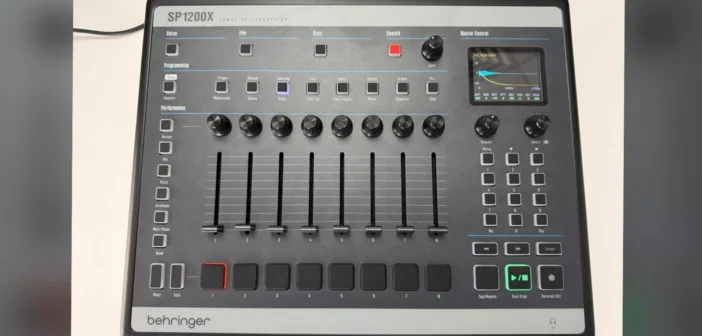
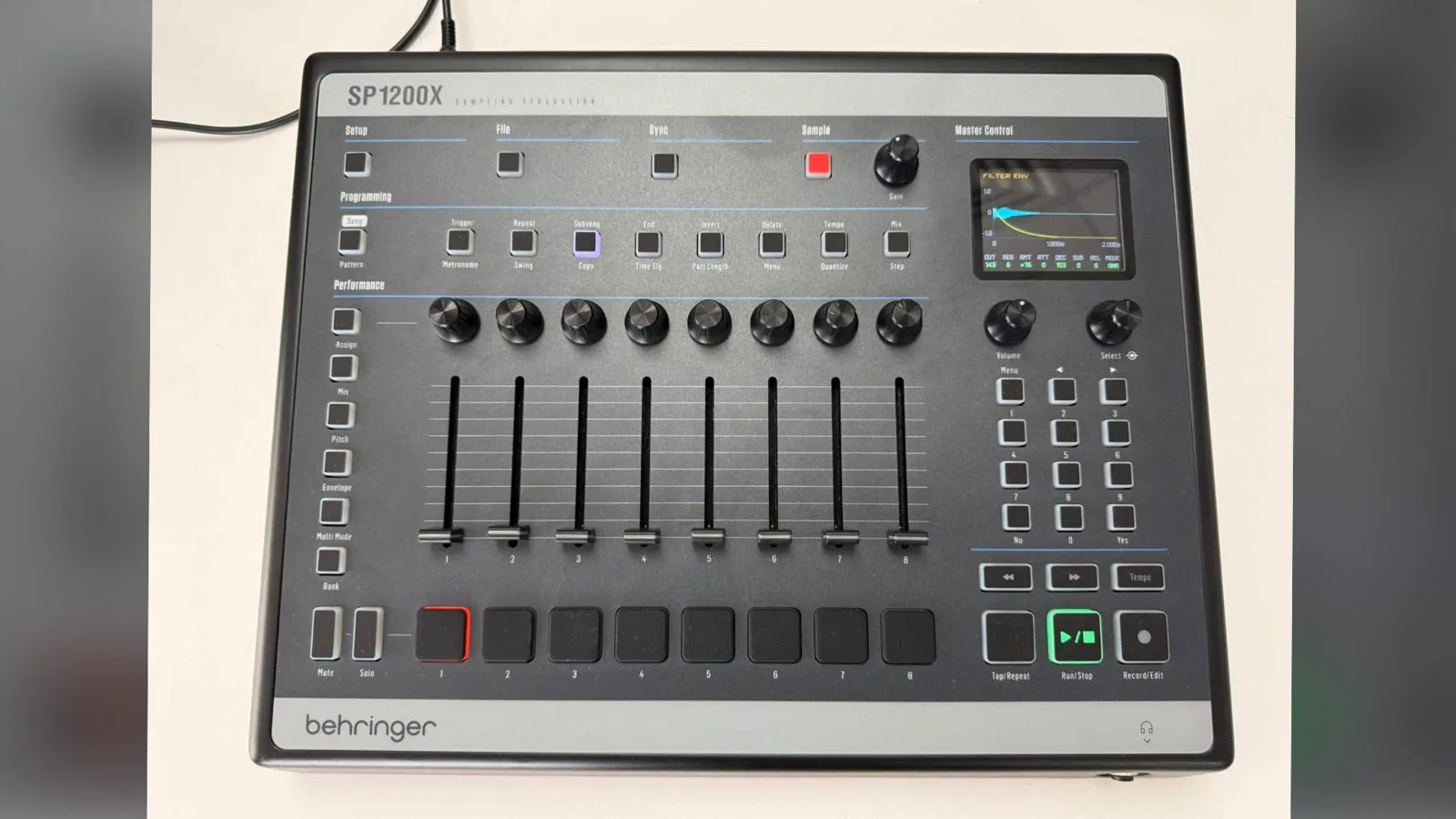
Behringer SP1200X
This is the anchor of the round-up: a clone that openly claims the SP-1200 lineage, with stereo inputs for sampling, eight individual outputs, a colour screen that is far easier to read than the original display, open-source firmware, DIN MIDI and USB-C. The headline argument is the target price: two hundred dollars, a fraction of what its rivals cost.
The caveat is just as clear: the unit is still in development. No final price set, no release date, and the exact converter grit remains to be heard on a production machine. On paper, it is the ideal pick for anyone who wants the sound without spending a month’s salary; in practice, you have to be willing to wait.
In short: Behringer · target ~$200 (not final) · hardware, still in development · stereo inputs, 8 outputs, DIN MIDI + USB-C.
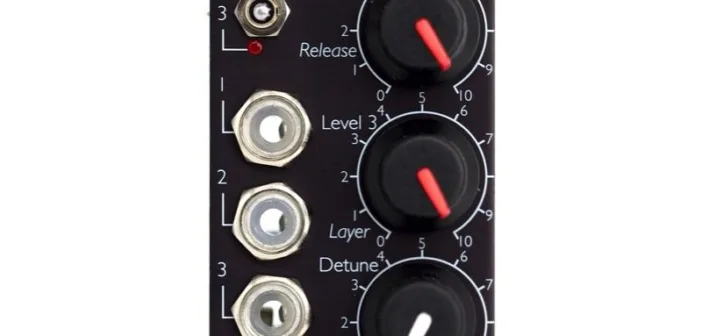
Isla Instruments S2400
If the SP1200X is the promise, the S2400 is the reality you can buy today. Built as the spiritual successor to the SP-1200, this Isla Instruments machine keeps its 12-bit sampling and its pad-and-fader workflow, but extends it generously: more memory, a modern sequencer, individual outputs, and an optional DSP card that adds effects and processing. Reviewers agree on one thing: the character is there.
Honestly, it is not the same entry ticket: expect around $1,799 at dealers (the launch price was announced lower, around $1,499), and the machine often ships on back-order because of demand. It is the pick for someone who wants the real, fully realised heir right now, and who accepts paying for it.
In short: Isla Instruments · ~$1,799 · hardware · 12-bit sampling, sequencer, optional DSP card.
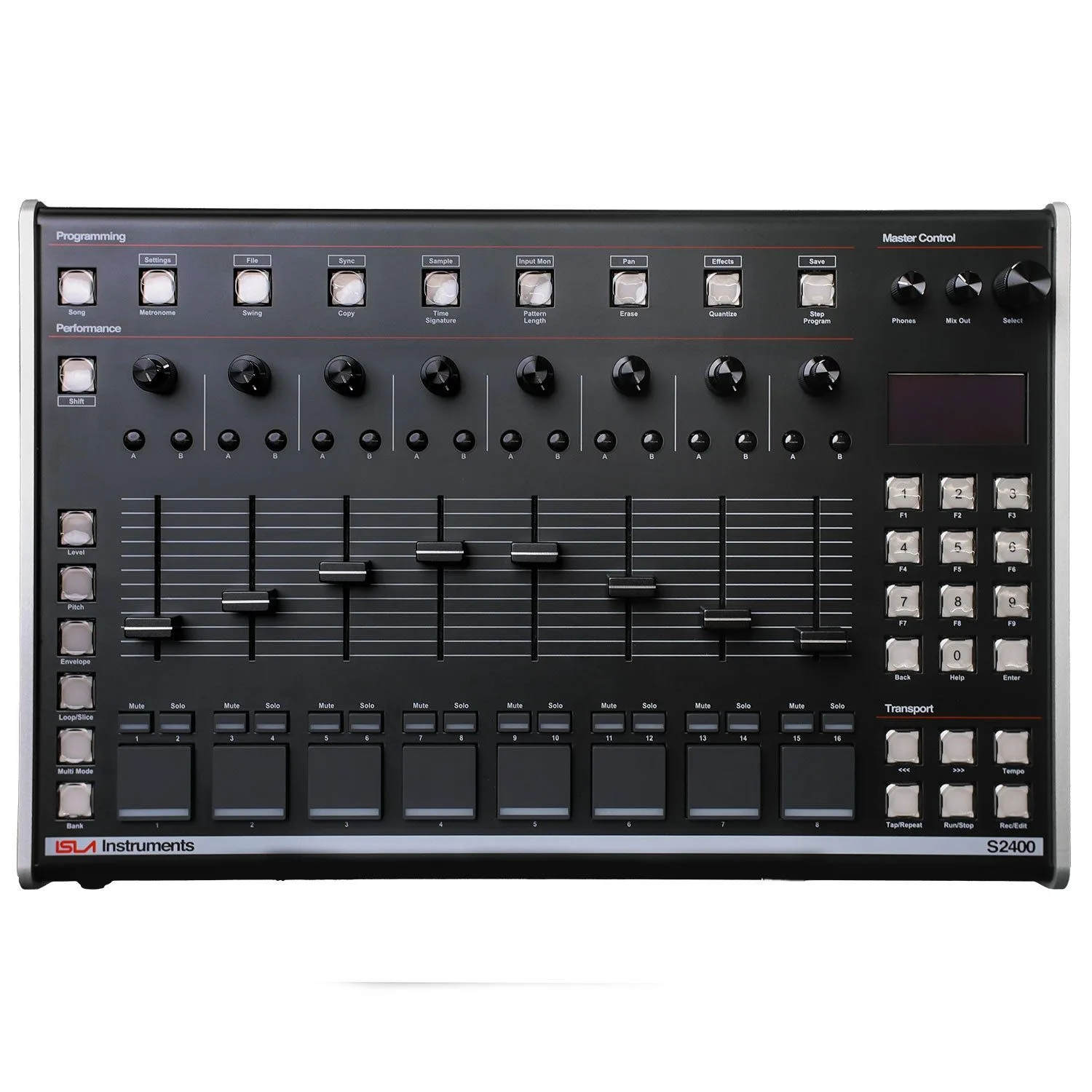
Product page: Isla Instruments S2400
The sampling grooveboxes, cousins of the SP-1200
These two are not trying to copy the SP-1200. They do the same core job — sample, chop, sequence a groove — with their own personality. We file them as cousins, not clones: 12-bit grit is not their default setting, but they get close in their own way.
Roland SP-404 MK2
The SP-404 MK2 is the go-to tool for a whole generation of lo-fi producers and travelling beatmakers. Sixteen gigabytes of memory, 160 samples per project, seventeen velocity-sensitive pads, an OLED display, thirty-seven effect types, MIDI and battery power: you can make a whole record on it, on the train or on stage.
Let us be clear about what it is and is not: it is not a 12-bit sampler, but the grimy beat-making spirit is fully present, thanks to its in-house effects — vinyl simulation, cassette, saturated compressor — and instant resampling. For the SP-1200 sound you go through the effects; for playability and price, it is hard to beat around $499.
In short: Roland · ~$499 / €499 · hardware · 16 GB, 160 samples/project, 37 effects, battery-powered.
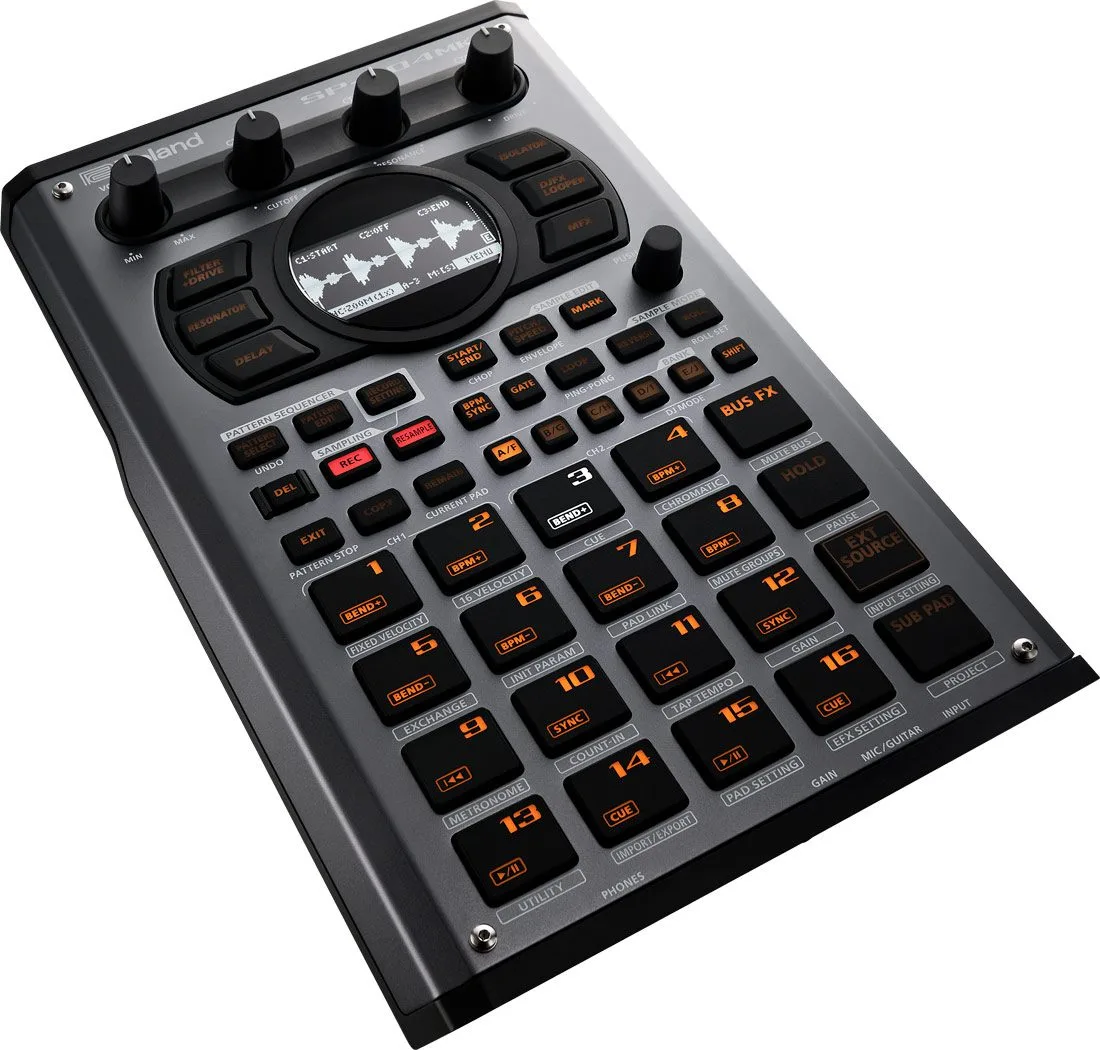
Product page: Roland SP-404 MK2
Akai MPC One+
You cannot talk about sampling without naming the MPC lineage: the early MPCs and the SP-1200 are the two siblings that built beat-making as we know it. The MPC One+ is the modern, standalone version of it: a seven-inch touchscreen, sixteen pressure-sensitive backlit pads, sixteen gigabytes of storage, WiFi and Bluetooth, and the AIR virtual instruments built in. It runs on its own, no computer needed.
Where it drifts from the SP-1200 is in its nature: it is a complete, clean production station, not a grit box. The lo-fi character is not served by default — you have to go dig it out of the warp and bitcrush effects. For anyone who wants a versatile studio brain around $699 rather than a one-trick vintage pony, this is the one.
In short: Akai Professional · ~$699 · standalone hardware · 7-inch touchscreen, 16 pads, WiFi/BT, AIR instruments.
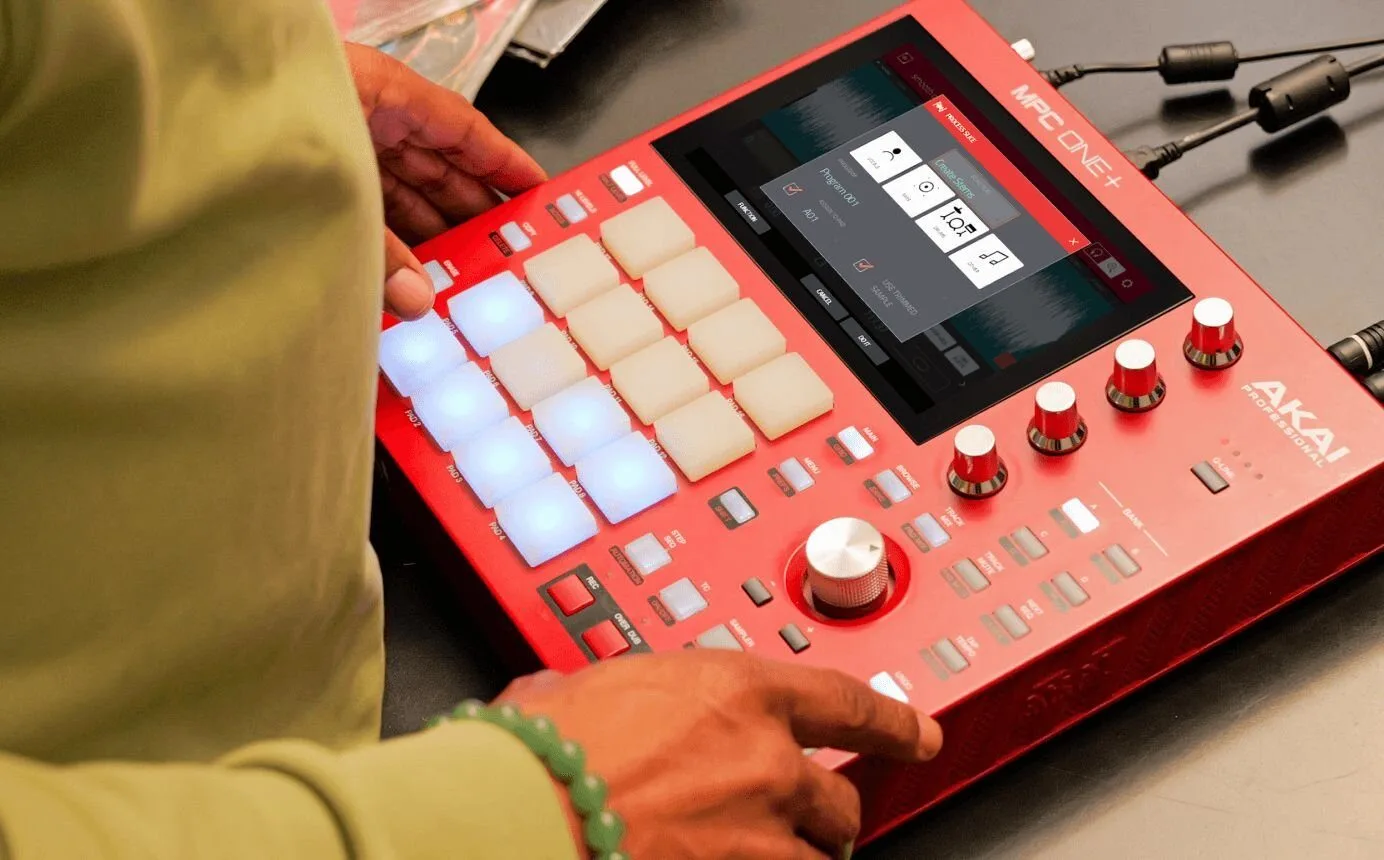
Product page: Akai MPC One+ — compare it with the Behringer Kick open-source MPC One clone prototype.
The software route: the sound without the box
Do not want to buy a box? 12-bit sampling recreates beautifully inside the DAW. One methodological warning, though: a true software sampler, which plays your samples, and a plain coloring effect, which dirties a signal passing through, are not doing the same job. We separate the two below.
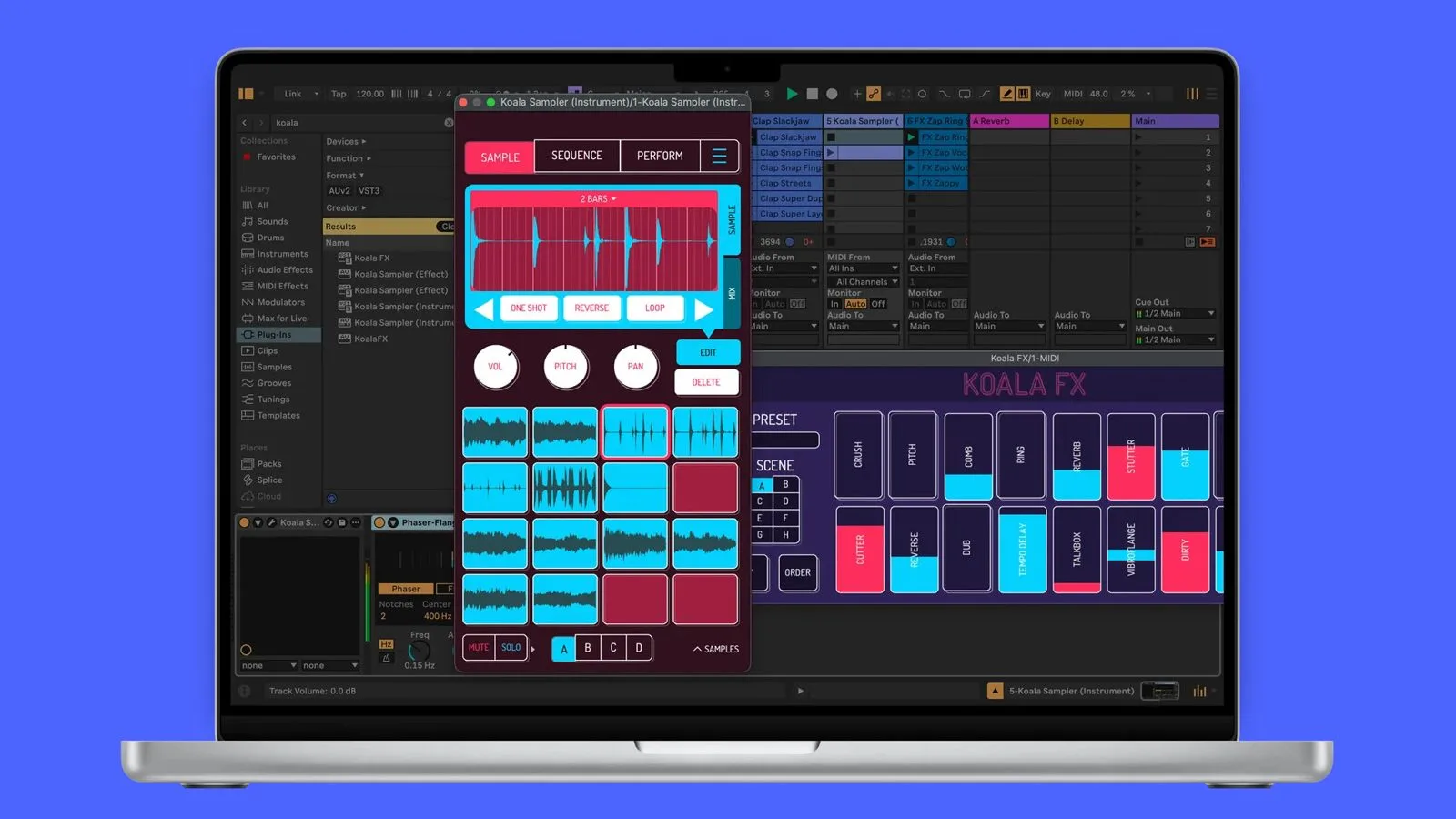
Koala Sampler
Koala is the easiest sampler to get into on this list. Born on mobile, where it won over hundreds of thousands of beatmakers with its instant SP-404-style pad sampling, it has just arrived as a VST3/AU plugin on desktop. You get the built-in stem separation, eight outputs and a sidechain input.
The entry ticket is unbeatable: a few dollars on mobile, around twenty for the desktop plugin at launch (about thirty afterwards), and a historically free Mac version. It is not a faithful SP-1200 emulation, but it is the ideal launchpad for building sample-based beats without breaking the bank or reading a manual.
In short: Elf Audio · ~$5 mobile / ~$30 desktop plugin · iOS, Android, VST3/AU · pad sampling, stem separation.
TAL-Sampler
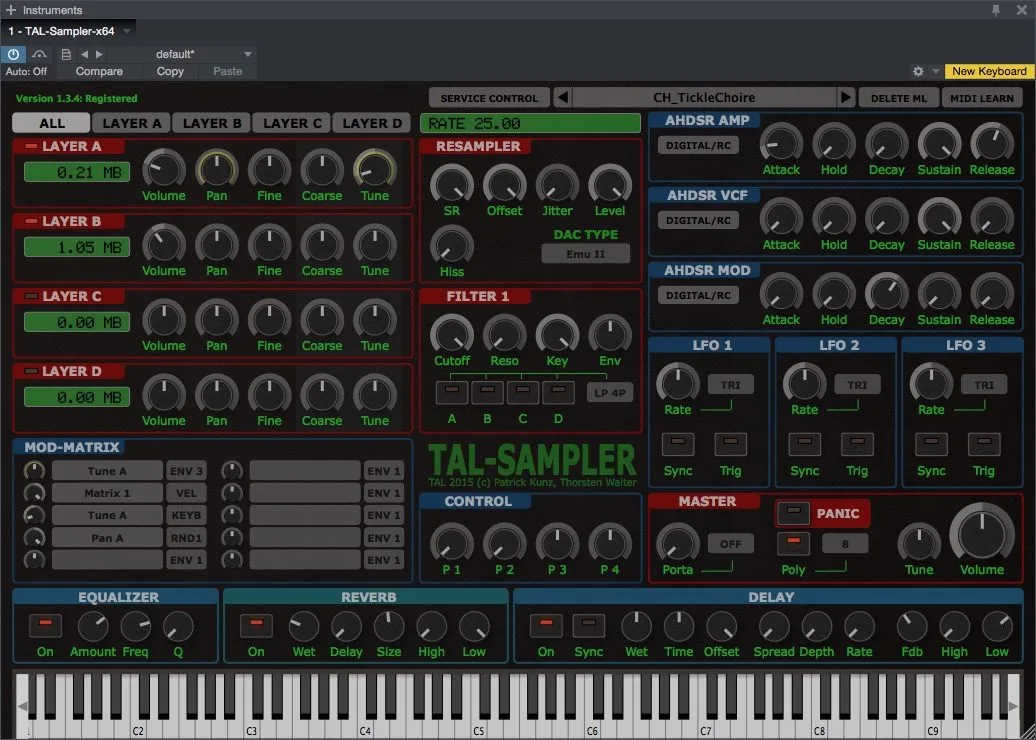
This is the real software sampler of the selection, and the most interesting for anyone chasing vintage grit. TAL-Sampler pairs a sample playback engine with a modelled analogue synth section — filter, envelopes, modulation matrix. Crucially, it offers several selectable converters — Emu II, AM6070 and S1000 modes among others — and that is exactly where the bit reduction and the colour of old samplers come from.
So it is the same job as the SP-1200, but in software and without the hardware constraint. Pricing stays gentle: around $45 to $60 depending on sales, sometimes listed closer to €95. To drop a drum kit or a loop into a real sampler that breathes analogue, it is the safe bet.
In short: TAL Software · ~$45–60 · VST/AU/AAX, macOS, Windows, Linux · sampler + selectable vintage converters.
orph ALIAS
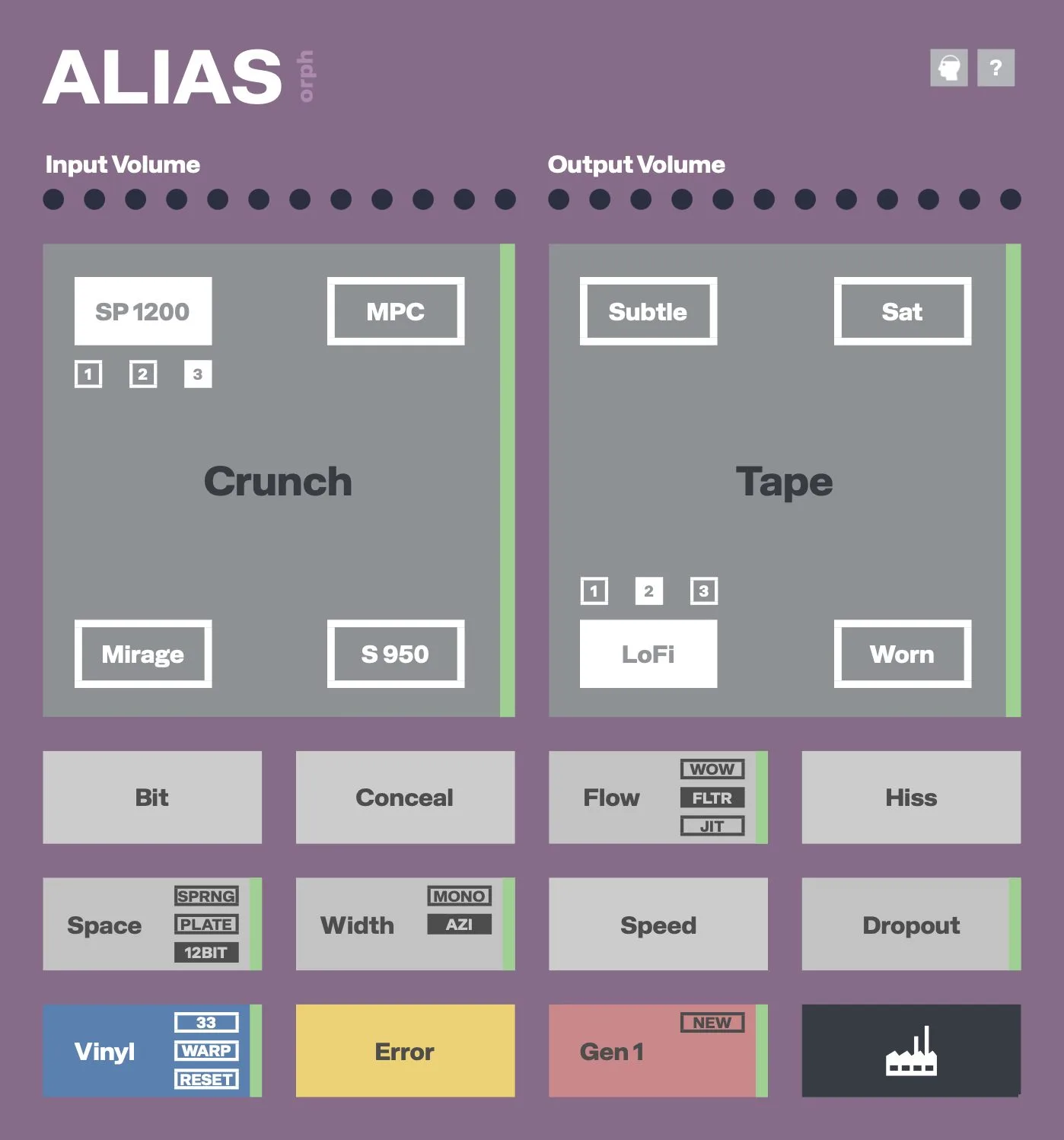
ALIAS does not play your samples: it is a coloring effect you insert on a track to give it the character of a worn sampler. The developer makes no secret of the inspiration — SP-1200, MPC60/3000, S950, Ensoniq Mirage — while stating honestly that those names describe a target colour, and that the plugin contains no samples, code or presets from those machines.
In other words, it is the grit, not the machine. You do not build a beat with ALIAS; you make an existing beat sound as if it went through an old converter. At €39 with a seven-day trial, it is the most direct way to cleanly dirty up any track already in place.
In short: orph · €39 · standalone, VST3, AU, macOS, Windows · a “worn sampler” coloring effect, not a sampler.
Tritik Krush
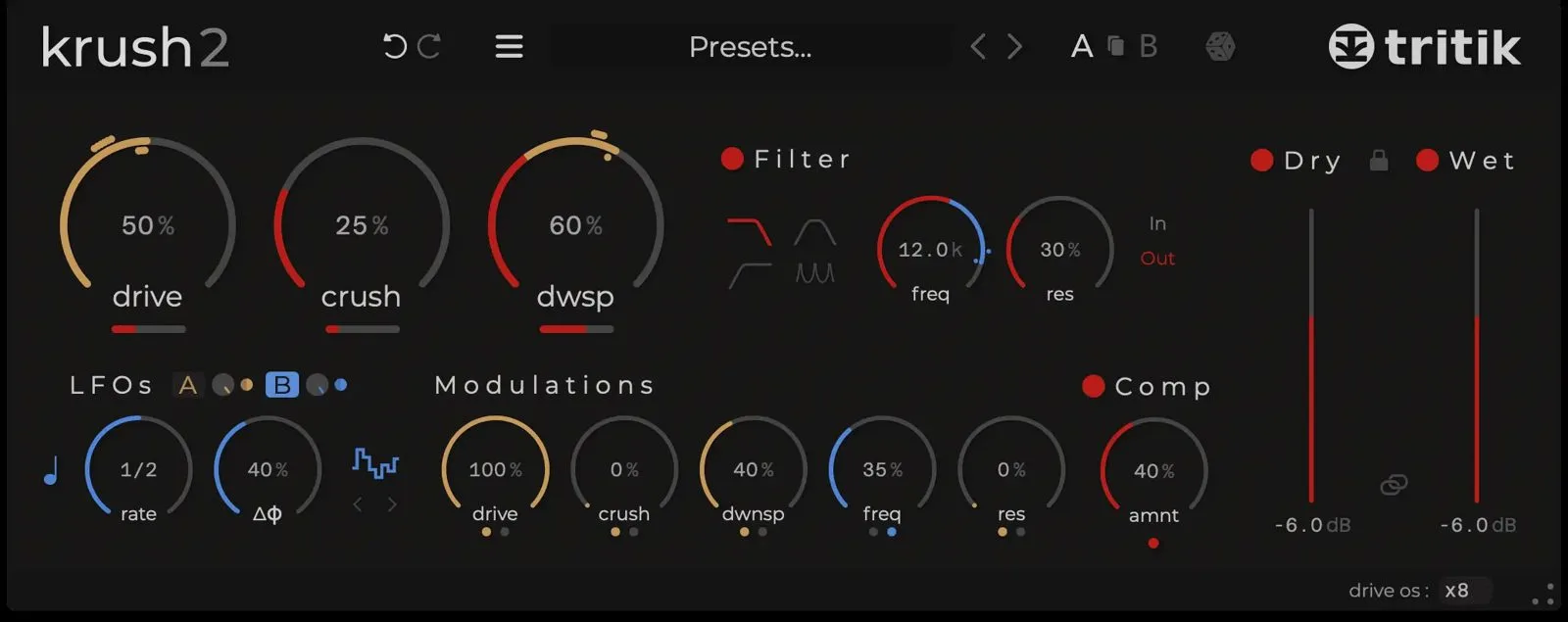
This is the free entry on the list, and it is not here to pad things out. Krush combines a bitcrusher, a sample-rate reducer and a resonant filter: exactly the two technical ingredients that build 12-bit grit. You drop the bit depth, you drop the sample rate, and the sound fills with aliasing and dust.
Like ALIAS, it is an effect, not a sampler: you put it on a track, not on a pad. The original version remains a free download; the newer build, Krush2, sells for around ten euros. To test the “old sampler sound” approach without spending a cent, it is the obvious way in.
In short: Tritik · free (Krush), ~€10 (Krush2) · VST/AU/AAX, macOS, Windows · bitcrusher + sample-rate reducer + filter.
At a glance
| Product | Maker | Price | The job in one word |
|---|---|---|---|
| Behringer SP1200X | Behringer | ~$200 (target) | Clone |
| Isla Instruments S2400 | Isla Instruments | ~$1,799 | Heir |
| Roland SP-404 MK2 | Roland | ~$499 | Groovebox |
| Akai MPC One+ | Akai Professional | ~$699 | Station |
| Koala Sampler | Elf Audio | ~$5–30 | Mobile |
| TAL-Sampler | TAL Software | ~$45–60 | Sampler |
| orph ALIAS | orph | €39 | Colour |
| Tritik Krush | Tritik | Free | Grit |
Which one should you choose?
It all depends on what you are really after. You want the real SP-1200 sound, right now and with no compromise: the S2400 is the obvious choice, as long as you accept the price and a possible wait. You have time and a tight budget: the SP1200X is worth holding out for, bearing in mind it has not shipped yet.
To make music with your fingers, on stage or on the couch, the SP-404 MK2 remains the most lovable lo-fi groovebox, and the MPC One+ the complete station if you want a single brain for everything. On the software side, Koala is the best launchpad, TAL-Sampler the real resident vintage sampler, and the ALIAS plus Krush pairing is enough to lay the grit over what you already produce — one paid and refined, the other free and blunt. Either way, the SP-1200 sound has never been this accessible. To stay with drum machines, see also our coverage of the latest open-source clones.