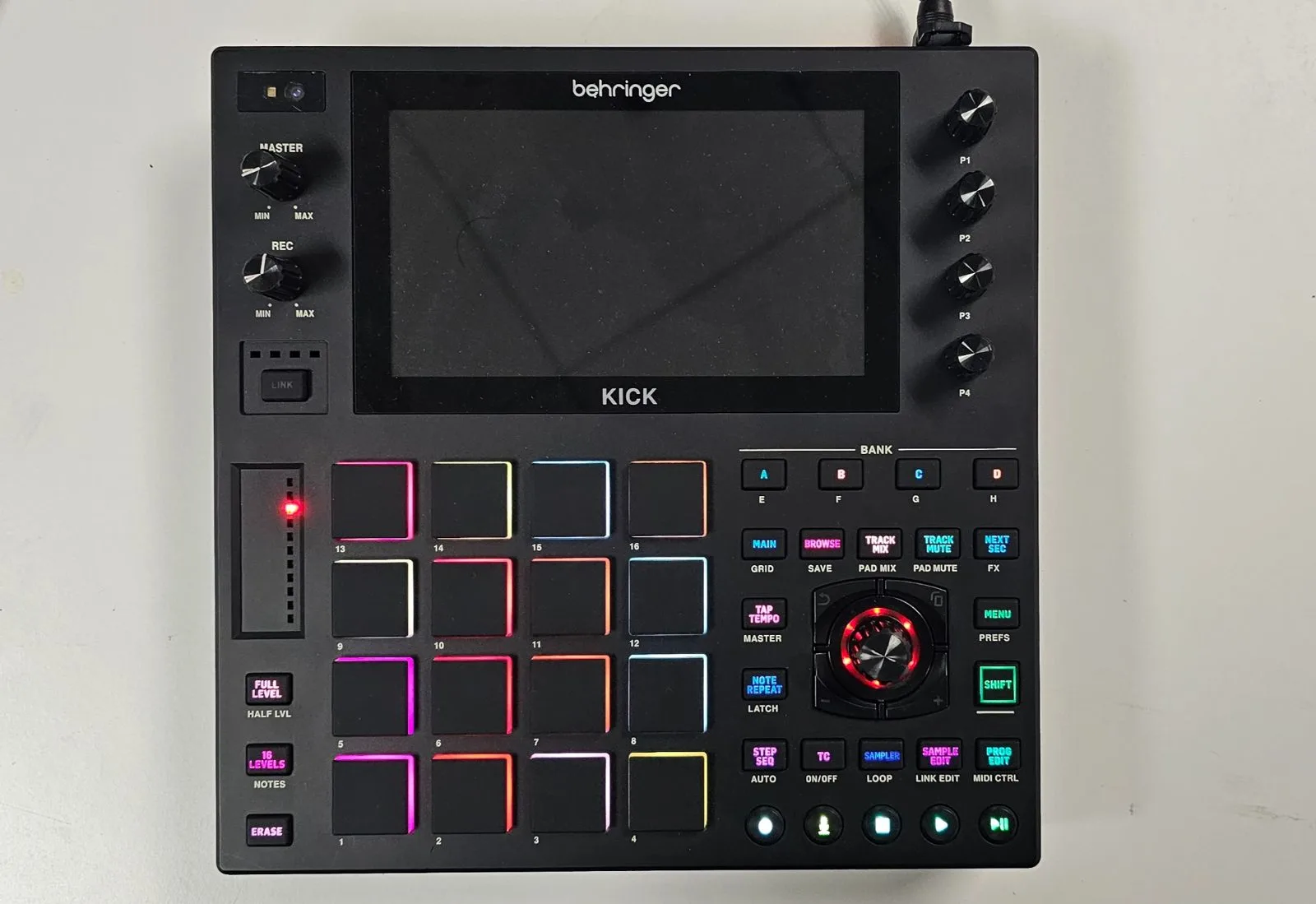
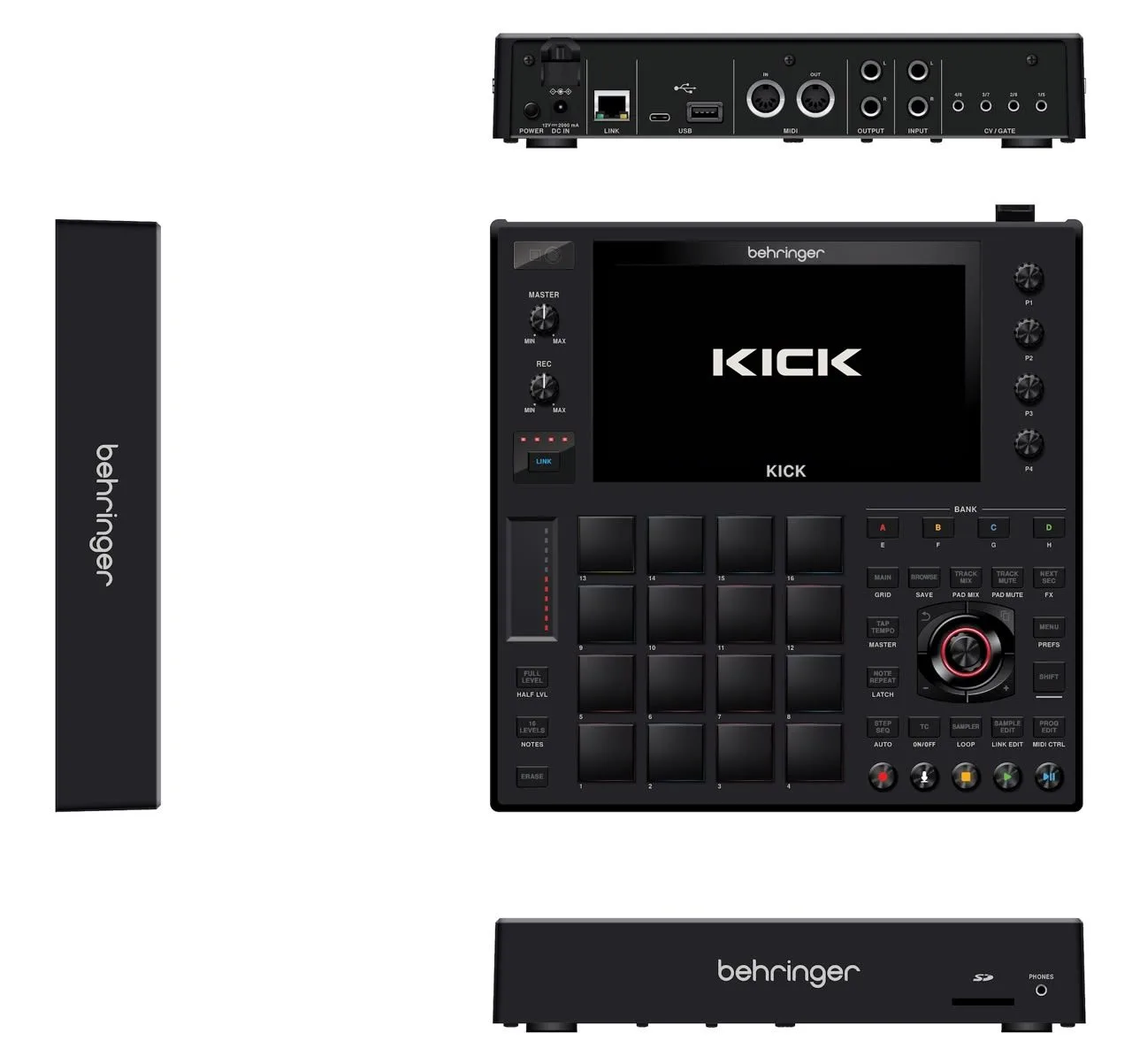
Behringer has shown a prototype groovebox called the Kick, and it makes no secret of its ambitions: the layout copies an Akai MPC One, square pads and a big touchscreen up front. The real surprise, though, isn’t the mould — it’s under the hood. Music Tribe has published the machine’s code as open source and is inviting the community to write its own operating system.
An MPC One reimagined, with a 7-inch touchscreen
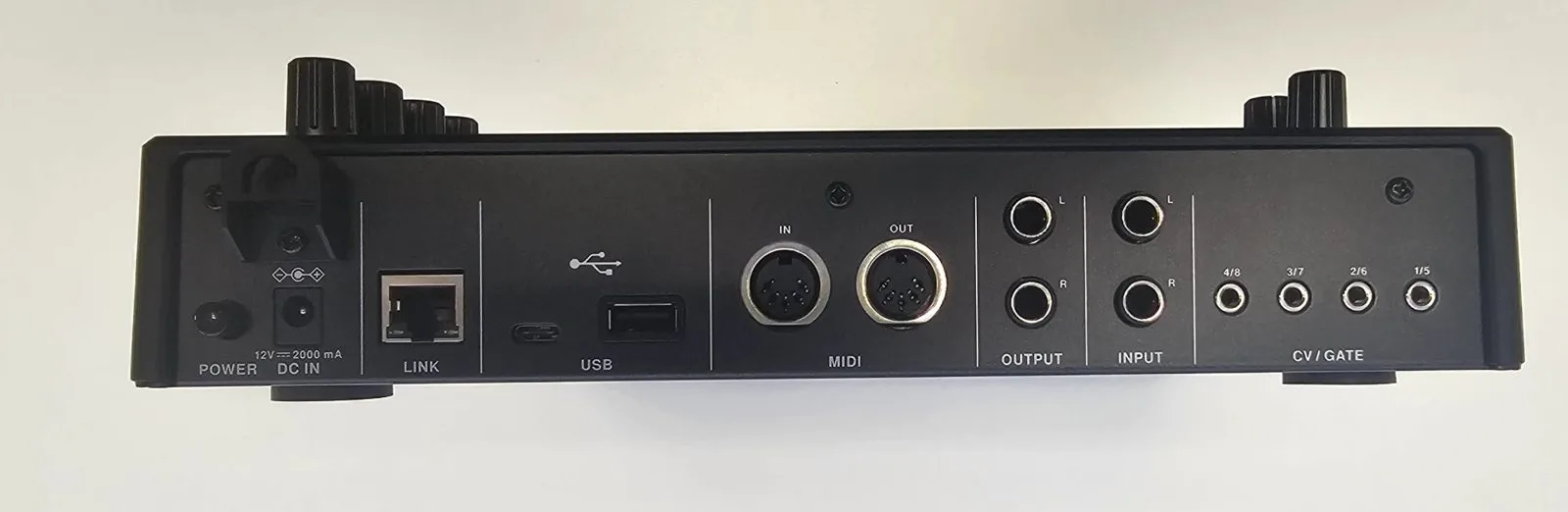
On the hardware side, the prototype’s spec sheet is generous. There’s a 7-inch touchscreen, sixteen RGB pads across eight banks, a sampler with editing, a step sequencer and a looper, more than 300 built-in effects, four assignable encoders and a jog wheel. Connectivity aims wide: DIN MIDI In/Out, USB-C and USB-A, a LINK port on RJ45, four CV/Gate outputs, stereo in and out, headphones, an SD card slot and a 12 V supply. Enough to talk to a computer, a small hardware ecosystem or a modular rig alike.
More unexpectedly, the spec mentions an AI-assisted camera for gesture control. We’ll want to see what that does in practice — it’s exactly the kind of promise that separates a prototype from a finished product.
The real gamble: open-source firmware
Where most makers carefully lock down their OS, Behringer does the opposite. The repository published by Music Tribe holds the application, the audio engine and the communication protocol under the AGPL-3.0 licence, plus a Linux image built with Buildroot under GPL-2.0. In other words the system runs on an open Linux base, and anyone can in theory compile their own build, fix a behaviour or add features.
Only the Behringer and Kick names and logos stay protected: the code itself is open. Billed as the first instrument from a major manufacturer designed around this open development model, the Kick taps a trend we’ve seen rising on small community machines — the same energy that kept alternative firmware alive on the M-Vave FM-1, but this time driven by the manufacturer from day one.
Prototype: what to keep in mind
Behringer clearly calls this a prototype, and the final product may still shift — shape, features, timeline and price are not set. The company has given no price, but its usual positioning suggests an aggressive play here, against an MPC One whose ergonomics it openly copies. The big unknown remains: open hardware is only worth as much as the community that adopts it. If developers show up, the Kick could become a living platform; if not, it will be one more MPC at a keen price.
My take
The copied ergonomics will set teeth on edge, and the “ugly MPC” nickname already doing the rounds doesn’t help. But the open-source angle is smarter than it looks: rather than promising a perfect OS, Behringer hands the machine’s future to the people who will use it. That’s humility dressed up as a marketing move, and it can absolutely work — we’ve seen it with samplers and recent clones that live through their users. So the real question isn’t “is this a good MPC?” but “will the community want to code for it?”. A prototype well worth watching.