A radio station that broadcasts around the clock without a presenter permanently behind the mic isn’t magic: it’s a playout system reading a log and chaining elements together. Understanding this software means understanding how a modern station is programmed, from a live morning show to the small hours on autopilot. Here are the mechanisms, the vocabulary and the pitfalls, from a radio-production angle.
Playout, the engine of the station
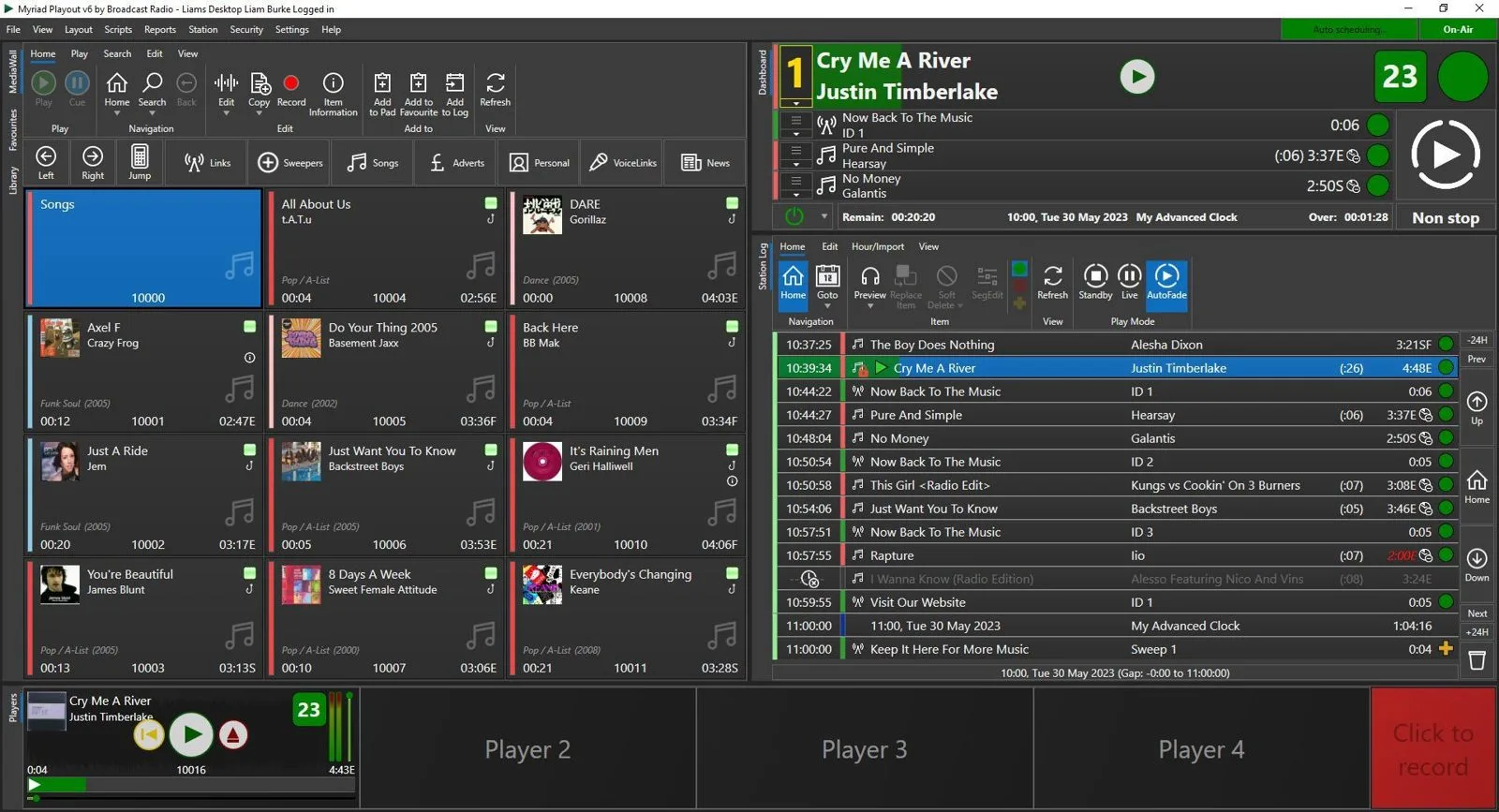
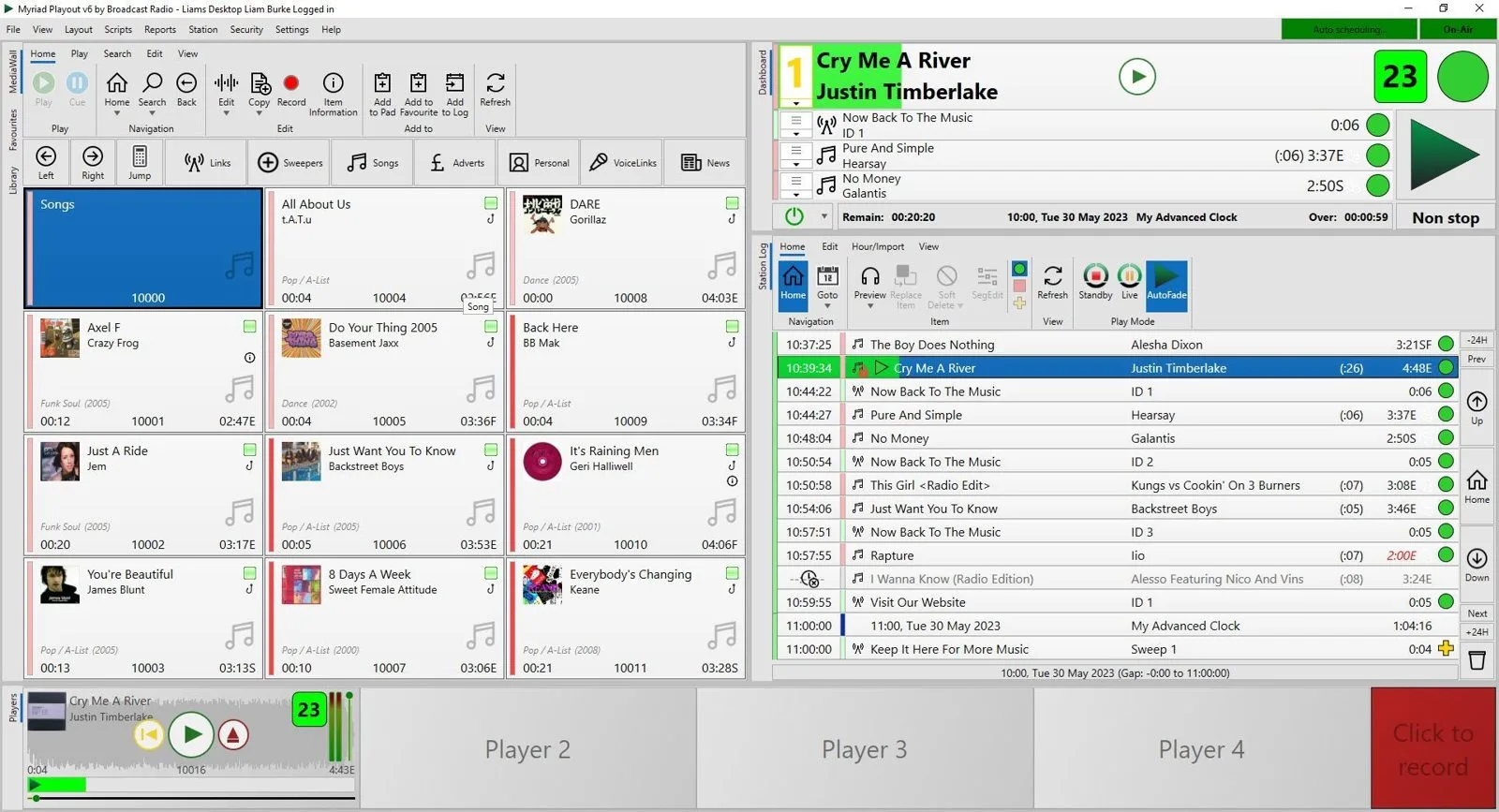
Playout (or the automation system) is the software that runs the station. It relies on an audio database — songs, jingles, imaging, commercials, voice breaks — organized into categories, and on a log: the ordered list of what must air, minute by minute. The software reads that log, fires each element on time and handles the transitions. Nothing more, but it’s all there: if the log is clean, so is the station.
How the log is built
The log isn’t written by hand, track by track. Music scheduling rests on clock wheels: hourly templates that say “a current here, a classic there, then imaging, then the ad break.” Rotations draw from categories according to separation rules — don’t repeat the same artist too soon, respect tempo or era alternation. On top of that, the traffic department injects commercial breaks into reserved slots. The result is a coherent grid, generated automatically but fully configurable.
Three ways to run the station
The whole craft of playout sits on the slider between human and machine, and there are three main modes.
- Full automation: the machine plays on its own, end to end. Ideal for nights, weekends or themed webradios. Zero presence, but zero reactivity to the news.
- Live assist: the presenter is on mic and fires the elements themselves, while the software prepares and chains the rest. This is the comfortable live mode — you keep control of the pace without managing every file.
- Voice-tracking: the presenter records their breaks in advance, precisely aligned to song intros and outros. On air, the illusion of live is perfect even though everything is pre-programmed. It’s the secret behind “local” morning shows aired with nobody in the studio.
Transitions, mix points and beds
A good segue isn’t just gluing two files together. Each element carries markers: intro start, intro end (where the voice can talk over the music), outro start, segue point (where the next track begins overlapping). The software handles crossfades, overlap and the automatic ducking of the music bed under the voice — the same ducking you find everywhere in production. Set well, these points give a station that breathes; set badly, they create dead air or train wrecks.
Triggers and networking
A station isn’t an island. Playout reacts to external triggers: GPIO contact closures to switch between a national feed and local opt-outs, synchronized time signals, network commands or APIs. A network of affiliates can air the same satellite feed, each local station inserting its own ads and IDs thanks to these switching signals. The precision of those switches is the whole difference between a clean opt-out and an awkward overlap.
Where playout meets the rest of the chain
The playout system doesn’t live in isolation. On its output it feeds the console and the self-op studio, then the broadcast processing before the transmitter. It also sends the “Now Playing” metadata that feeds RDS RadioText and the streaming feeds. And for interactive shows it coexists with the telephone hybrid and the mic console. Playout is the conductor; the MPX and transmission chain is downstream.
Cartwall, redundancy and as-run proof
Live, the presenter often has a wall of buttons (cartwall, instant players) to fire beds, stingers and jingles on the fly — the key self-op tool. For reliability, a serious station doubles its machine: a main server and a backup ready to take over on failure, with replicated storage. Finally, playout generates an as-run log that proves what actually aired: essential for billing advertising and declaring copyright. Many systems also normalize the catalog’s loudness on playback, to hold a consistent target without crushing the dynamics.
My take
Playout is the tool that shifted radio from a real-time craft to a craft of preparation. Voice-tracking crystallizes the debate: brilliant for holding a local grid on a tight budget, dangerous when it drains the air of all spontaneity. The real skill today isn’t firing the right record at the right moment, but building clocks and mix points that sound alive. Done well, a playout system disappears and lets you hear a radio station. Done badly, you hear it — and that’s the worst thing you can say about one.