It was one of those Behringer projects we’d written off. Shown as a prototype in 2021, the Polyeight went quiet for years. The brand has just put it back in the spotlight, now described as finished, with a product page online and a video to back it up. For fans of vintage analog polys, this one matters: the Polyeight draws directly on the 1981 Korg Polysix, but pushes its logic further.
The name says it: where the Polysix had six voices, the Polyeight offers eight. The signal path stays analog and builds on the original’s VCO, VCF and VCA circuits, reworked. Behringer talks of “inspiration” as much as a clone — sonic authenticity will be judged in use.
A Polysix, expanded
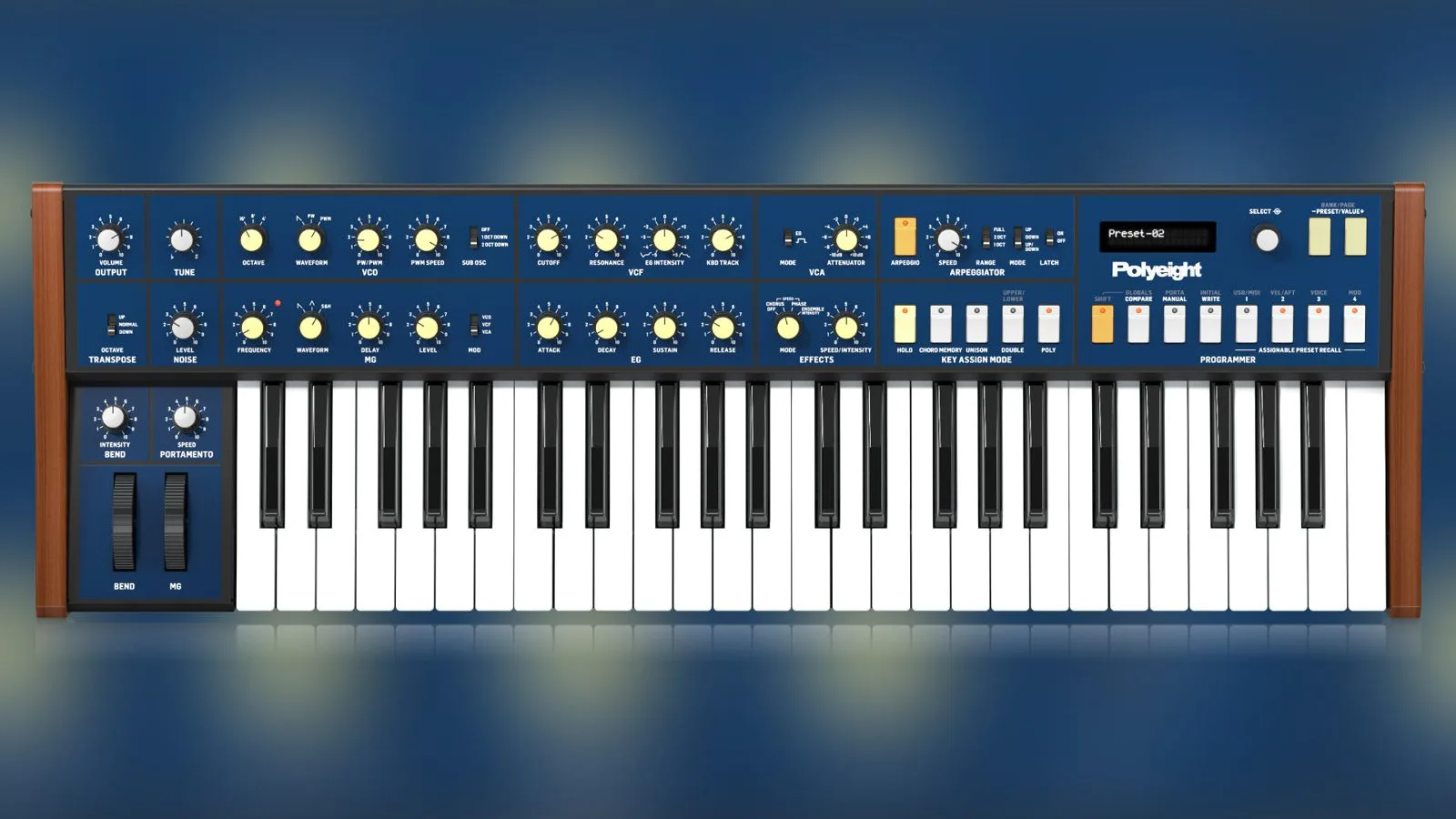
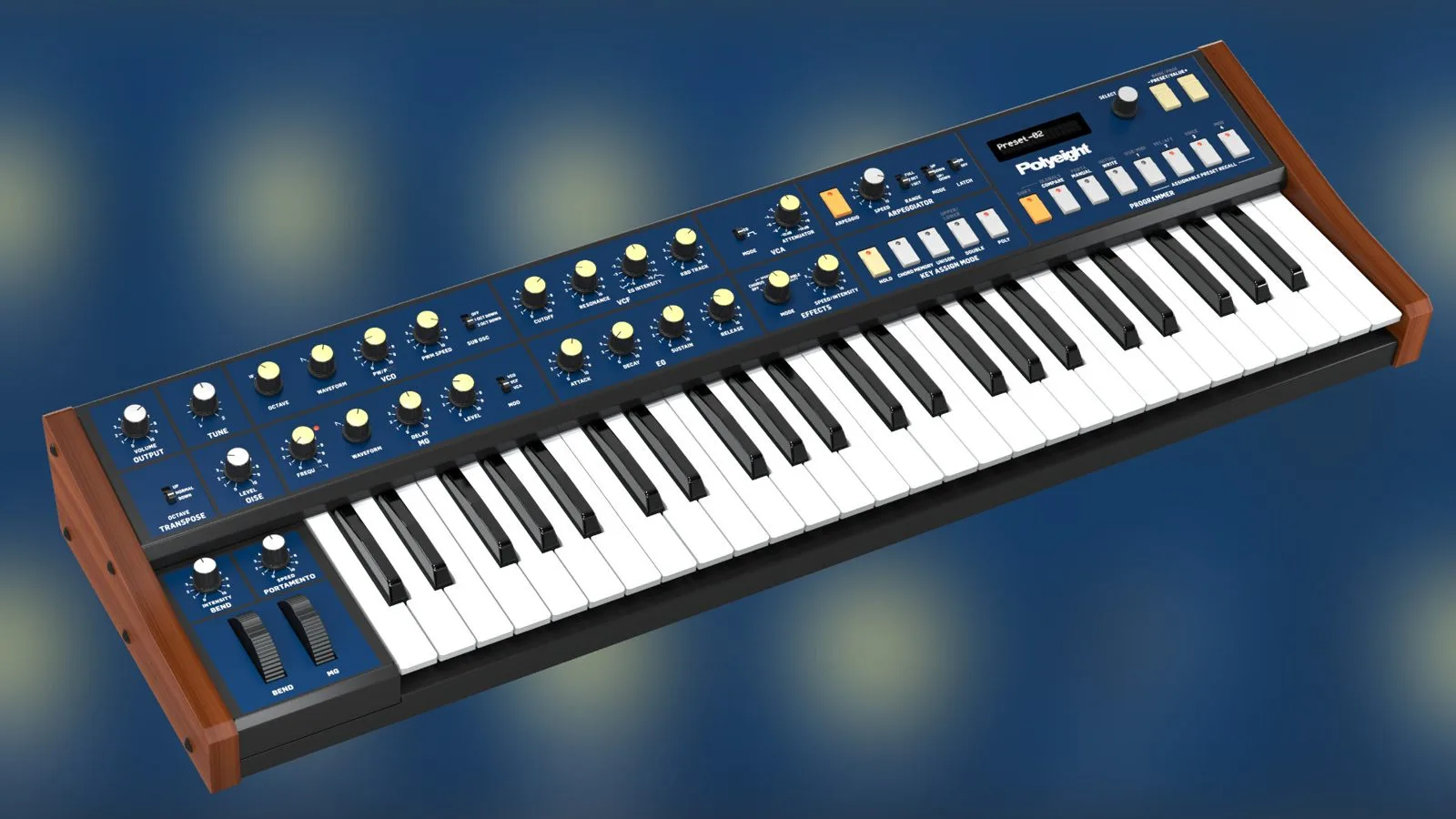
Under the hood sit discrete VCOs with saw, square and variable pulse width, an octave range from 16′ to 4′, a sub-oscillator reaching two octaves below the fundamental, and a global noise generator Behringer says is inspired by the MS-20. PWM gets its own dedicated LFO.
The filter is a low-pass built on the 2044 chip, with cutoff, resonance, keyboard tracking and positive or negative envelope modulation. There’s one ADSR envelope, a multi-wave LFO with delay that routes to pitch, filter or loudness, and above all a BBD effects section (chorus, phaser and ensemble) that made up much of the Polysix’s charm.
Memories, chords and playability
On the performance side, the Polyeight goes well beyond the original. It offers unison, double and several poly modes, 256 user memories with a compare-and-match function, a chord memory (trigger a saved chord with one key), polyphonic portamento and a syncable arpeggiator with three modes.
The keyboard moves to 49 semi-weighted, full-size keys, velocity-sensitive and — a notable detail — with polyphonic aftertouch. That’s a real difference from the recent Behringer JN-80, limited to monophonic aftertouch. Spring-loaded pitch and mod wheels round it out.
Connectivity of its era
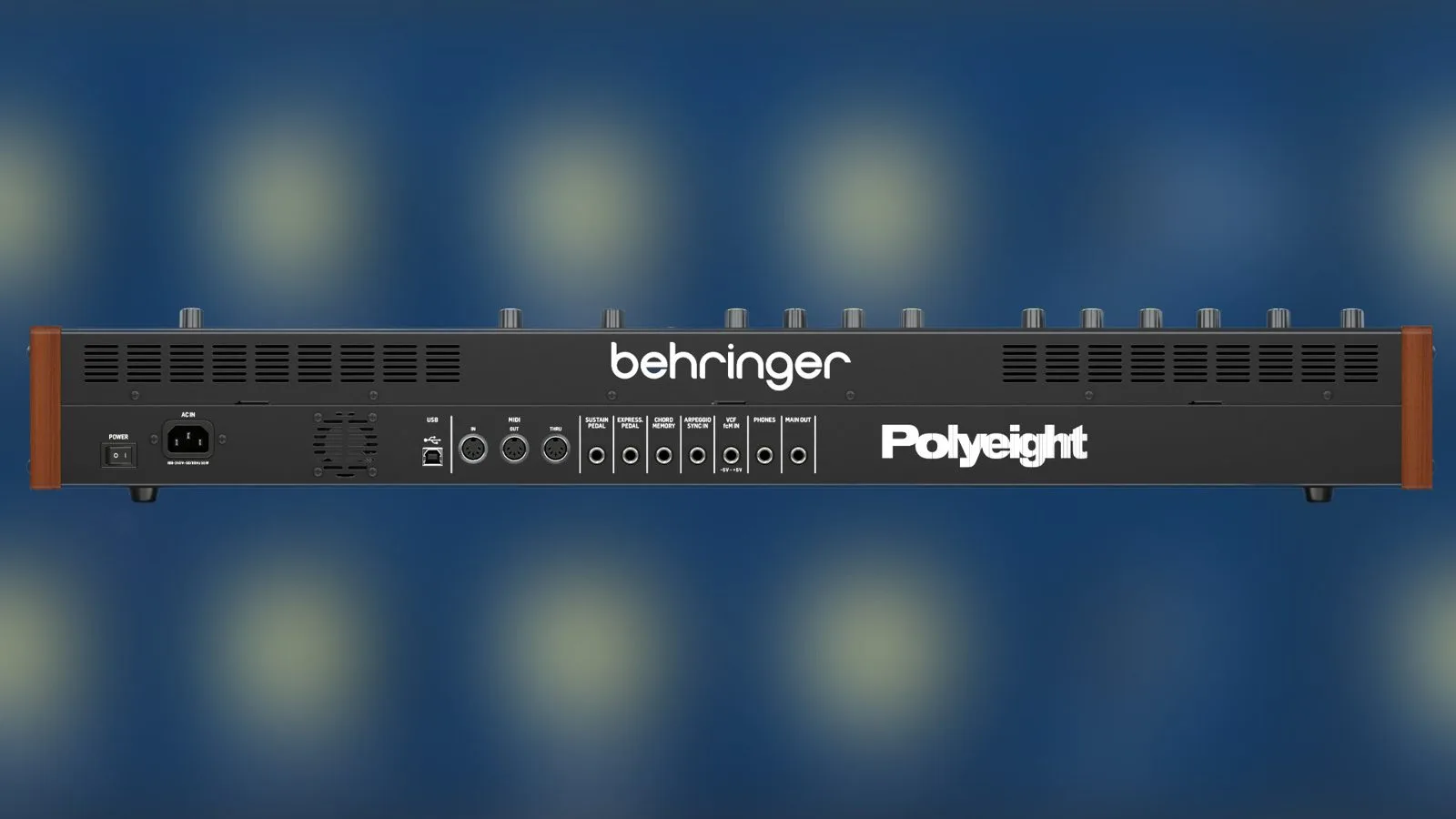
Where the 1981 Polysix was necessarily limited, the Polyeight adds the modern toolkit: a USB port, 5-pin MIDI in/out with NRPN and CC handling, two pedal inputs (sustain and expression), a chord-memory socket, an arpeggiator sync input and a CV input for the filter. There’s a headphone output and a main output, very probably mono — a point to confirm.
Where it sits
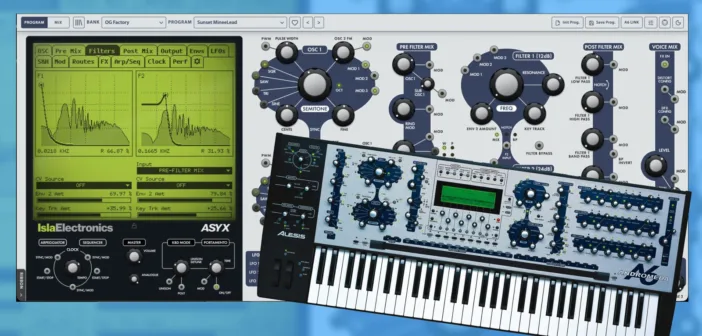
The Polyeight is part of Behringer’s long run of analog reissues, alongside the Juno-60-inspired JN-80. It also arrives at an amusing moment: the Polysix is being revived in hardware at Behringer just as other classics come back in software — like the Alesis Andromeda, whose ASYX emulation we just covered. Two opposite philosophies, one shared love of vintage polys. Against official reissues like the Roland Boutique line, Behringer plays, as usual, the price-to-features card.
Price and availability
Behringer hasn’t given a price or release date yet: the Polyeight is presented as finished but still awaiting a commercial launch. The official page is online at Behringer.
My take
Eight voices, polyphonic aftertouch, 256 memories and BBD effects: on paper, the Polyeight doesn’t just copy the Polysix, it modernises it where it counts. The unknown is time — four years between prototype and this “finished” announcement, and still no price, which is reason to stay measured about when it actually lands in shops. Still, the format is tempting: a genuine analog poly with an aftertouch keyboard will find its audience easily if it arrives at the brand’s usual pricing. Mostly, we want to hear it for real.