Roland rarely lets an anniversary slip by. To mark 45 years of the JUPITER-8, first released in 1981, the company has added two new modules to its Boutique line, both announced on October 20: the JUPITER-08, a direct nod to the polysynth that shaped 80s pop, and the n/vision, the range’s first wavetable instrument. Two tiny boxes that slip into a bag, but aimed at real keyboard playing rather than mouse work.
JUPITER-08: the JUPITER-8 spirit in a pocket module
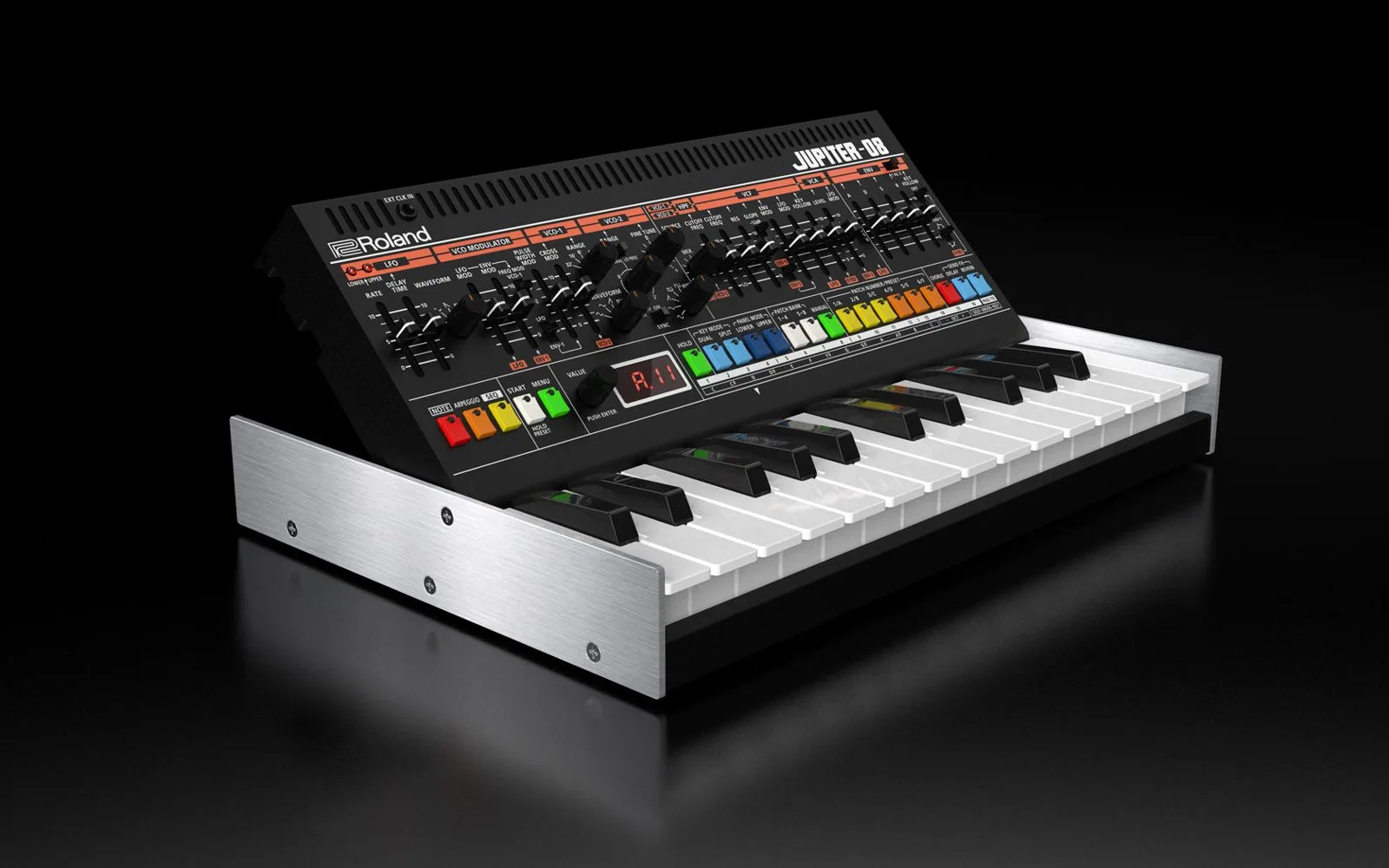
The JUPITER-08 follows the Boutique template: a slice of front panel with dedicated controls, an in-house digital engine and a 308 mm-wide footprint. Polyphony climbs to 32 voices depending on load, enough for rich pads without dropping notes. The two-part, 64-step polyphonic sequencer takes up to eight notes per step and records knob moves, quickly turning the module into a small pattern station.
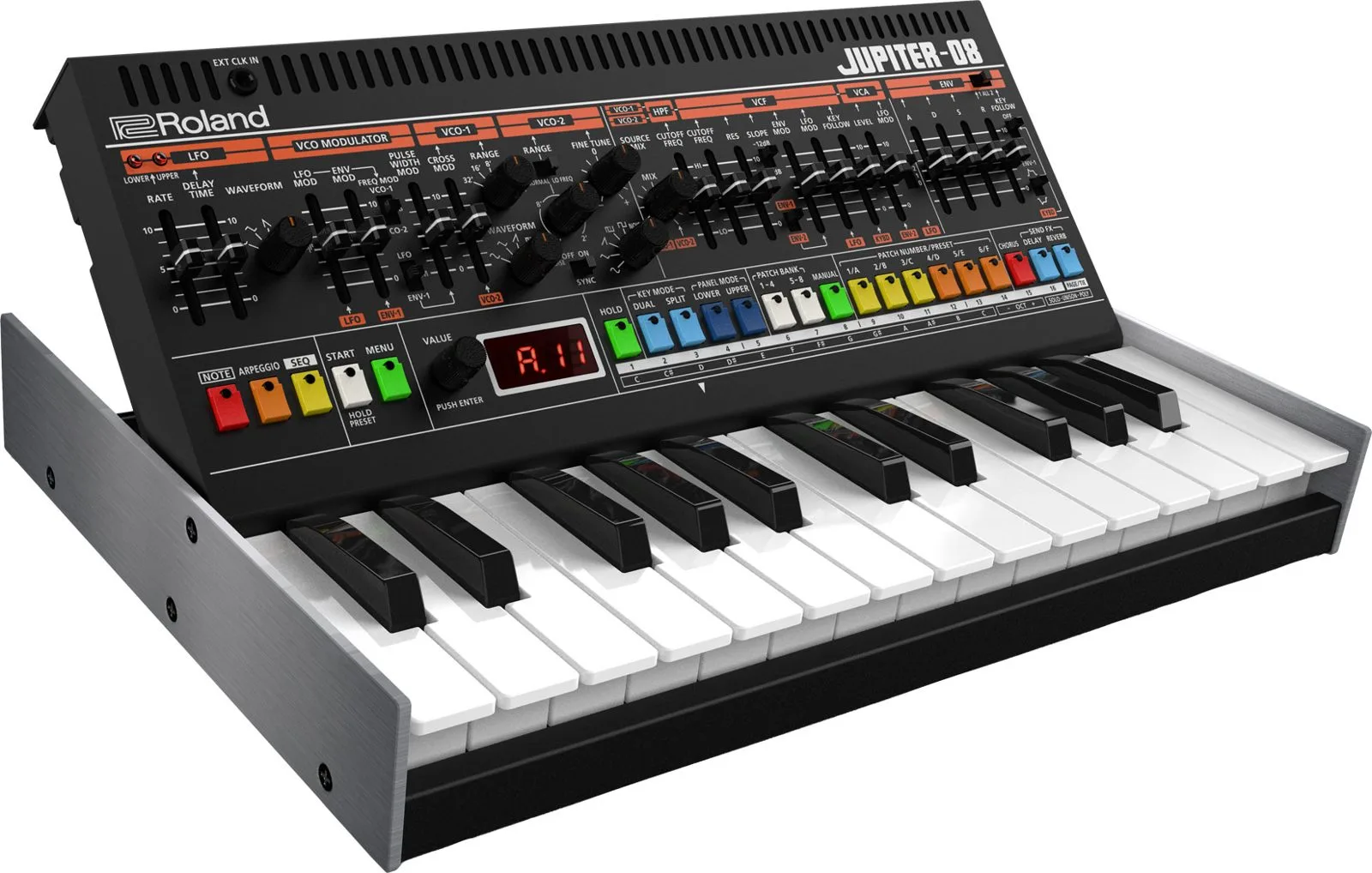
On the processing side, seventeen MFX types sit alongside a vintage-flavoured chorus, an on-demand delay and a five-type reverb with a shimmer mode. Everything is hands-on, with no deep menus, true to the idea of an instrument you switch on and play. The bundled K-25m keyboard dock clips underneath to make it a proper portable synth.
n/vision: wavetables arrive in the Boutique line
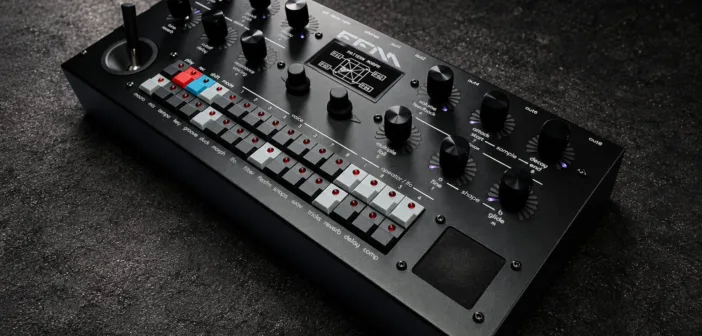
This is the real conceptual novelty. The n/vision is the first Boutique built around wavetable synthesis, with a dual-layer architecture that lets you blend and morph waveforms. Roland adds an analog-modelling filter with drive and several models inspired by classic synths, plus a separate high-pass filter. The result is a modern engine capable of moving textures, but with an analogue character that avoids the clinical edge of some digital synths. Polyphony can reach 56 voices depending on the patch.
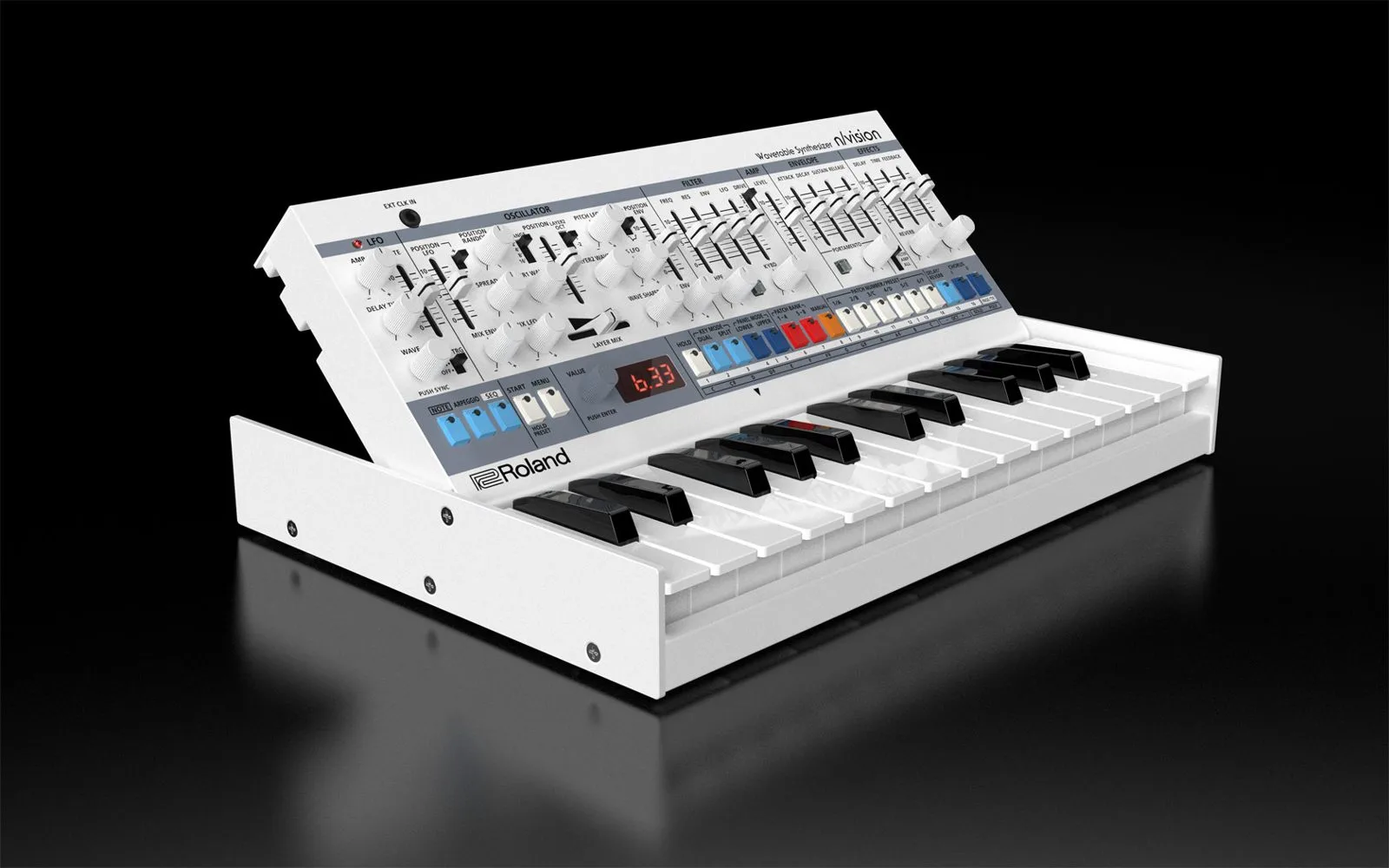
The n/vision shares the JUPITER-08’s effects section: seventeen MFX, the JUNO chorus, a delay and the same shimmer reverb. That takes you from a solid bass to an endless pad without leaving the instrument. If the synthesis vocabulary is new to you, our guides to the filter and its types and MIDI-to-CV sequencing lay out the basics.
Shared I/O and power
Both modules share the same nomadic philosophy. There is a USB-C port carrying audio and MIDI, a MIDI IN/OUT pair on mini-jack, an external clock input, a MIX IN, a main output and a headphone output. Power comes from four AA batteries (around six hours on Ni-MH) or USB-C bus power. Each module weighs 1.6 kg with its keyboard and batteries, so they really do go anywhere.

JUPITER-08 vs n/vision: what they share and where they differ
| Feature | JUPITER-08 | n/vision |
|---|---|---|
| Synthesis | Subtractive (JUPITER-8 spirit) | Dual-layer wavetable |
| Max polyphony | 32 voices | 56 voices (load dependent) |
| Sequencer | 2-part, 64-step, motion | 2-part, 64-step, motion |
| Filter | Analog modelling | Analog modelling + drive, HPF |
| Effects | 17 MFX, delay, shimmer reverb | 17 MFX, JUNO chorus, delay, shimmer reverb |
| US price | $549.99 (with K-25m) | $549.99 (with K-25m) |
Price and availability
In the US, the JUPITER-08 and n/vision are listed as available now at $549.99 each, K-25m dock included. In Europe, one retailer shows the JUPITER-08 at around 699 euros with availability expected in early January 2027, so local timing and pricing still need confirming. It stays true to the Boutique idea: an accessible price for a collectable built to play, not just to display. Roland’s product page has the full specs.
My take
The Boutique format has always kept one promise: slip an iconic Roland voice into a bag. The JUPITER-08 keeps it, and n/vision finally brings wavetables to the line. At $549, you are not buying a JUPITER-8 – you are buying 32 voices, a sequencer that moves and something you actually carry. The real test is how they sound next to Roland’s already-strong ACB plug-ins. But for playing with your hands instead of a mouse, these two have an argument a screen never will.