Yamaha is extending its digital console line downward. Announced on 10 September 2026, the DM5 series carries the DM7’s user experience and processing engine into a far more compact chassis, in two models: the dual-fader-bay DM5 and the DM5 Compact, built for tight control positions. The target is broad — small to mid-sized live sound, corporate events, houses of worship, theatre and light broadcast production.
A condensed DM7, not a stripped-down desk
The point of the DM5 is not to cut corners on processing, but to put the DM7 environment within reach in a portable format. The operating logic carries over: touch navigation, flexible channel assignment, scene memories and an effects library. The DM5 handles up to 60 mono input channels, with 24 mix buses, 12 matrices, two stereo buses and 12 DCAs — enough for a multi-monitor show or a multitrack capture without juggling resources.
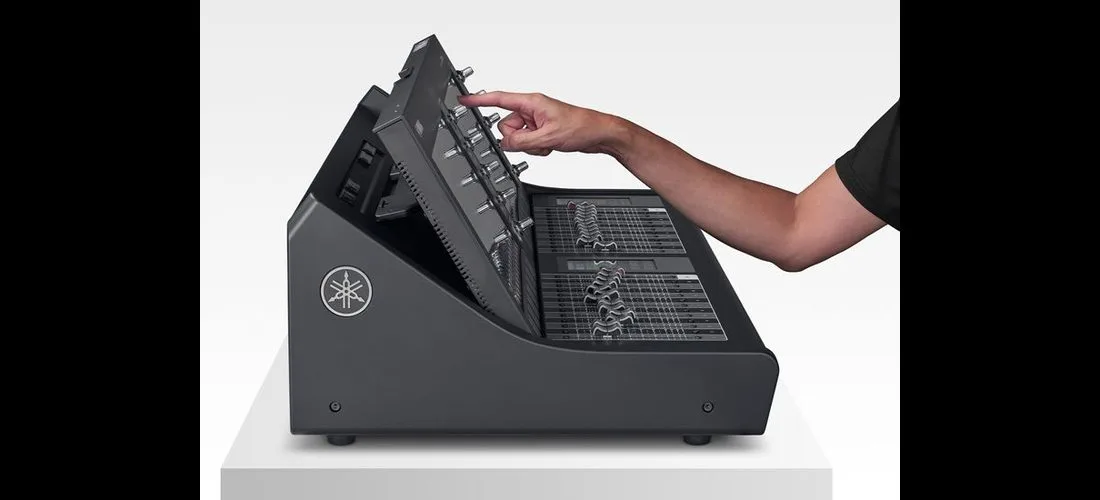
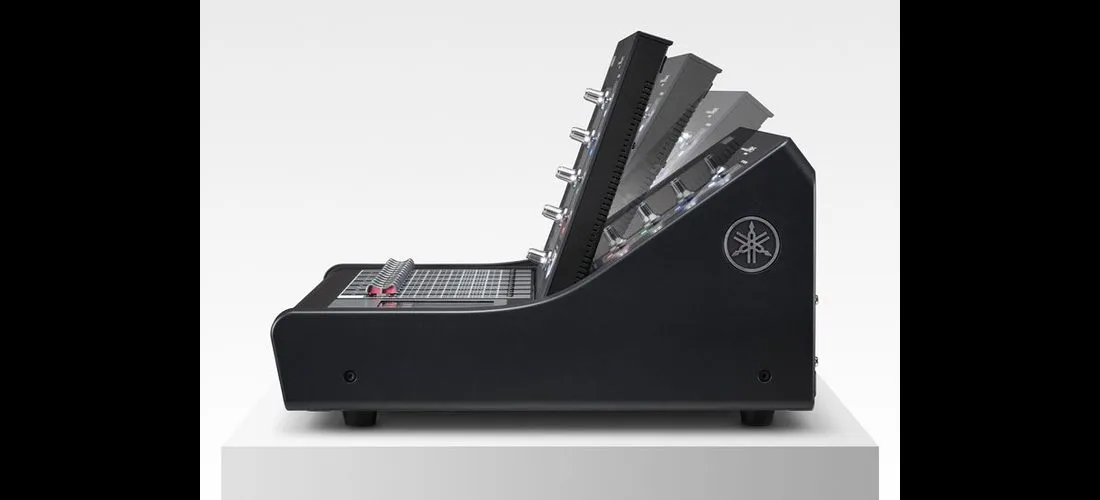
The surface is built for legibility: 26 motorized faders, two 13.3-inch touchscreens and a 4-inch utility display. Glass keys and an adjustable display tilt point to care taken for the long shifts, the ones you spend behind the desk without thinking about it.
Two formats for two kinds of control room
The choice comes down to footprint and channel count. The full DM5 aims for versatility; the DM5 Compact, just 446 mm wide, slots into a cramped booth or a touring flight case without giving up the digital core.
| Spec | DM5 | DM5 Compact |
|---|---|---|
| Input channels | 60 | 48 |
| Faders / screens | 26 faders, two 13.3″ screens | single fader bay, one screen |
| Analog I/O | 32 in / 16 out | 16 in / 16 out |
| Width | dual-bay | 446 mm |
| Dante network | 64 x 64 at 96 kHz | |
Both share the essentials: 24 mix buses, 12 matrices, two stereo buses, 12 DCAs and end-to-end 96 kHz processing.
The sound: the full DM7 toolbox
For processing, the DM5 inherits the house arsenal: four EQ types, modeled compressors (Comp 260, Legacy Comp, FET limiter, diode-bridge comp), gate, de-esser, expander and ducking. The Dugan Automixer, invaluable for conference and spoken-word work, is on board. To go further, a PY slot takes a PY-DSP card that adds processing power, and the Premium Rack offers treatments developed with Rupert Neve Designs. This is a console happy to live fully in the box without short-changing the ear.
Network and I/O: the Dante ecosystem
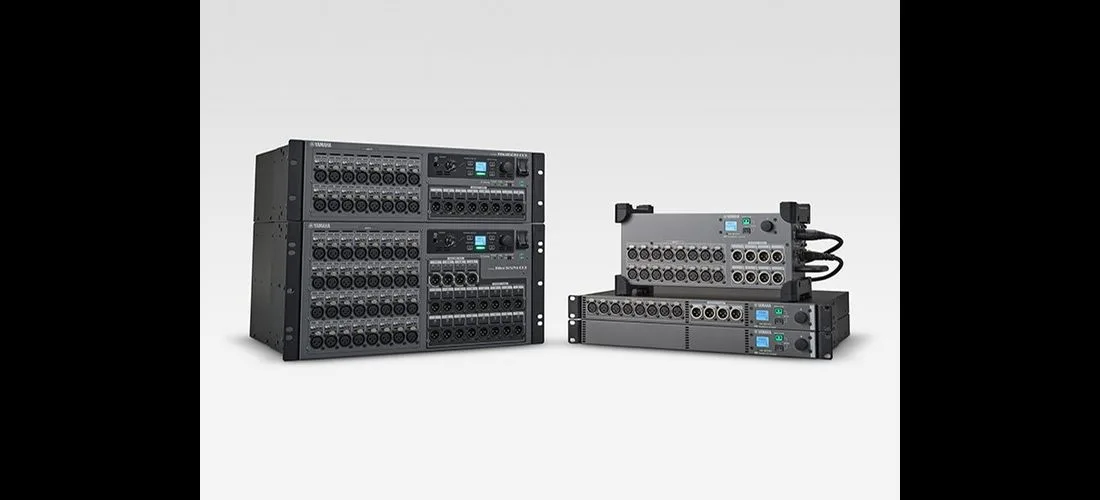
The DM5 runs Dante at 64 in / 64 out, 96 kHz — the de facto standard for audio over IP on stage and in install. It talks to the new R series I/O racks (3rd-generation AD/DA converters), so preamps can sit next to the sources and a whole rig wires up over a single network link. Add 18 channels of USB I/O for multitrack recording and streaming, an RJ45 control port and Bluetooth for backing-track playback.
The DM5 doesn’t reinvent the digital console; it democratizes a proven approach. By putting the DM7 workflow in a transportable format with full Dante networking, Yamaha is squarely after the rental companies and venues that want a reliable workhorse without going up a size or a budget bracket.
Frequently asked questions
What’s the difference between the DM5 and the DM5 Compact?
The full DM5 offers 60 input channels, 32 analog inputs and a dual fader bay with two 13.3-inch screens. The DM5 Compact drops to 48 channels, 16 analog inputs and a single fader bay, at 446 mm wide. Processing and the Dante network are identical across both.
Is the DM5 compatible with existing I/O racks?
It is designed for the new R series with 3rd-generation converters, connected over Dante. The network handles 64 inputs and 64 outputs at 96 kHz, allowing remote preamps and integration into an audio-over-IP install.
Can you record straight from the console?
Yes. The DM5 has 18 channels of USB I/O, enough for a multitrack capture or a feed to a computer. For more tracks, Dante remains the obvious route.
Is the DM5 suitable for broadcast production?
Yamaha positions it for live sound, events, theatre and light broadcast production. The Dugan Automixer and voice-focused dynamics make it relevant on spoken-word sets, even if it isn’t an on-air console in the strict sense.
My take
The real story isn’t a new feature but the address: a DM7 in a chassis you can carry without a pallet truck. The full version’s twin 13.3-inch screens and 26 faders give a comfortable surface where rivals close the ranks, and full Dante keeps the desk from hitting a ceiling the moment an install grows. The 446 mm DM5 Compact will be a relief in booths where every centimetre counts. One open question only real-world use will settle: will the launch price put the series head-on with the compact desks already dug in, or a notch above?