On tour, the worst-case scenario fits in one word: silence. When tracks and sequences run from a computer, a machine that crashes at the wrong moment means the show stops. That is exactly the problem iConnectivity‘s PlayAUDIO range has tackled for years. The new PlayAUDIO2D takes that redundant playback interface and adds the piece today’s large productions were waiting for: Dante.
Two computers, no gaps
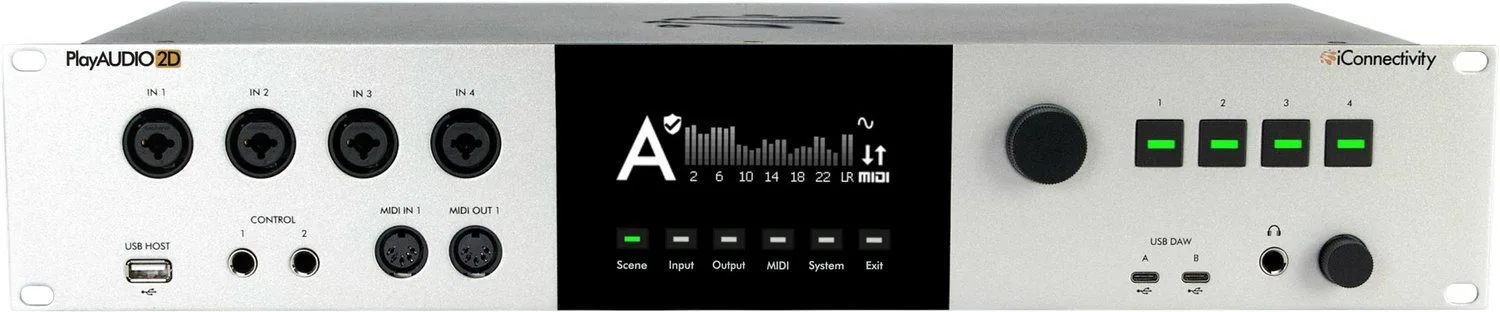
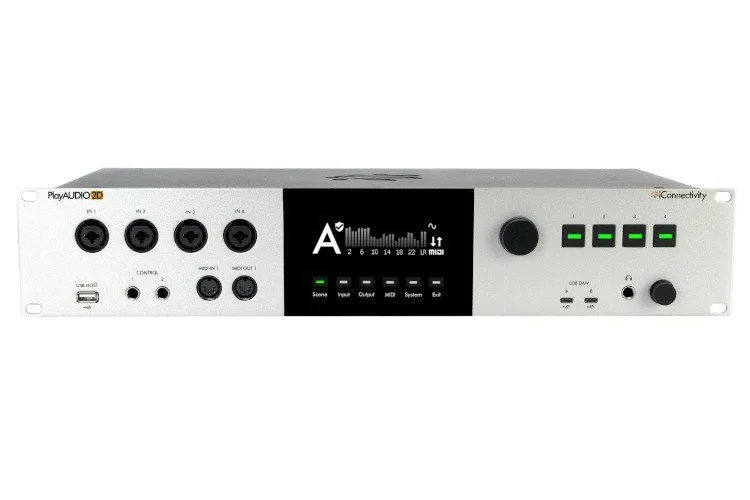
The principle is unchanged, and that is its strength. Two USB-C ports host a main and a backup computer running the same session in parallel. On a failure, the PlayAUDIO2D switches automatically to the backup machine, and the operator can also switch by hand. The Audio Protection feature watches the signals: if a stream goes faulty, the matching output is muted before the audience hears the problem. For a show engineer, that is the difference between a quiet scare and a multi-second hole in front of a full room.
Dante, the real news
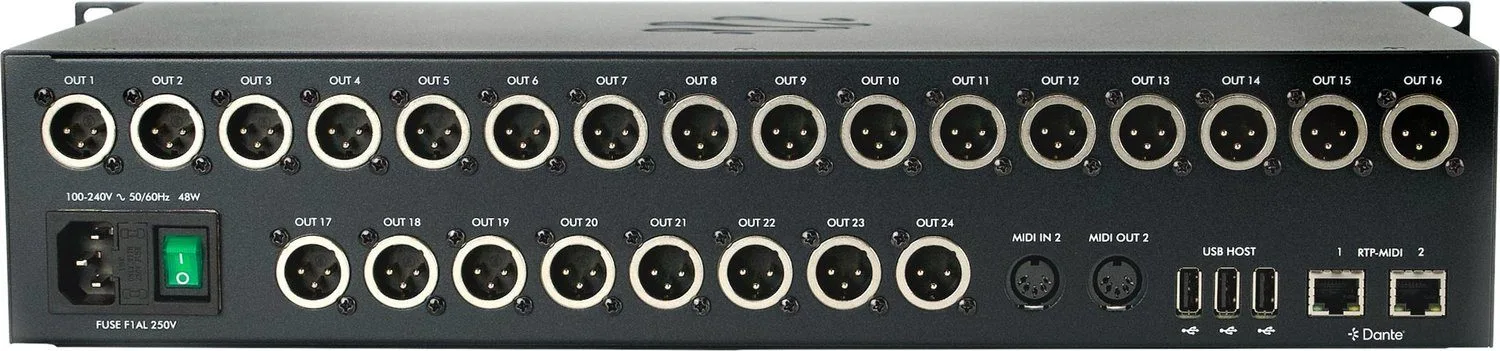
Where the PlayAUDIO2U stayed in the analog and USB world, the 2D steps straight into audio-over-IP. It offers 8 Dante inputs and 32 Dante outputs, and crucially its 24 analog XLR outputs are automatically mirrored onto the network. In other words, one session feeds a classic analog patch on one side and a Dante infrastructure to the console and monitors on the other, with no acrobatic routing. If you already work on a network, this drops playback straight into the existing flow. New to Dante? Our Dante explainer and our overview of audio-over-IP cover the basics.
Preamps, MIDI and stage life
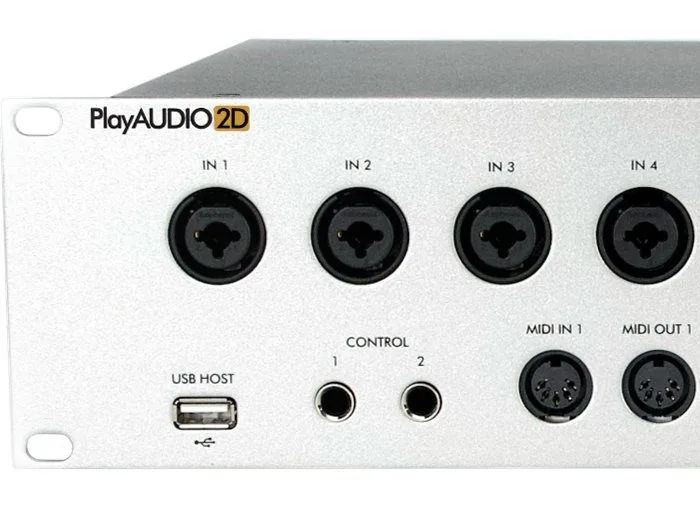
The PlayAUDIO2D is more than a track player. Four XLR/TRS combo inputs carry four low-noise mic preamps with 48 V phantom power, enough for live sources or a talkback. For control, the MIDI connectivity is generous: two MIDI DIN inputs and two outputs, four USB-MIDI host ports and RTP-MIDI over Ethernet, to sync instruments, lighting and effects through the show. Conversion goes up to 24-bit / 96 kHz, all in a 2U rack chassis weighing 3.8 kg and built for the flight case. If you are rigging the rest of the stage, our guide to stage power covers the habits that keep ground loops away once everything is connected.
The specs that matter
| Item | Detail |
|---|---|
| Format | 2U rack, 3.8 kg |
| Redundancy | 2 × USB-C, auto + manual switching, Audio Protection |
| Network | 8 Dante in / 32 Dante out |
| Analog outputs | 24 balanced XLR, mirrored to Dante |
| Inputs | 4 XLR/TRS combo, 4 preamps + 48 V |
| MIDI | 2 in / 2 out DIN, 4 USB-MIDI hosts, RTP-MIDI |
| Conversion | up to 24-bit / 96 kHz |
Price and availability
The PlayAUDIO2D sits at the top end of playback interfaces: expect around 2,799 pounds at UK dealers, with first shipments set for about 20 October 2026. This is infrastructure pricing, aimed at rental companies and tours where reliability is measured in contracts kept.
Full specifications are on iConnectivity’s website.
My take
Dante on a redundant playback player was the logical next step, and iConnectivity delivers it cleanly. Hot switching and Audio Protection are still the real arguments: on a live show nobody congratulates you for an incident-free set, but everyone remembers the five-second hole. Automatically mirroring the 24 XLRs to Dante avoids patch spaghetti and genuinely simplifies network integration. The price puts the unit firmly on the rental and large-production side rather than the solo musician’s desk, but that is exactly where silence costs the most.