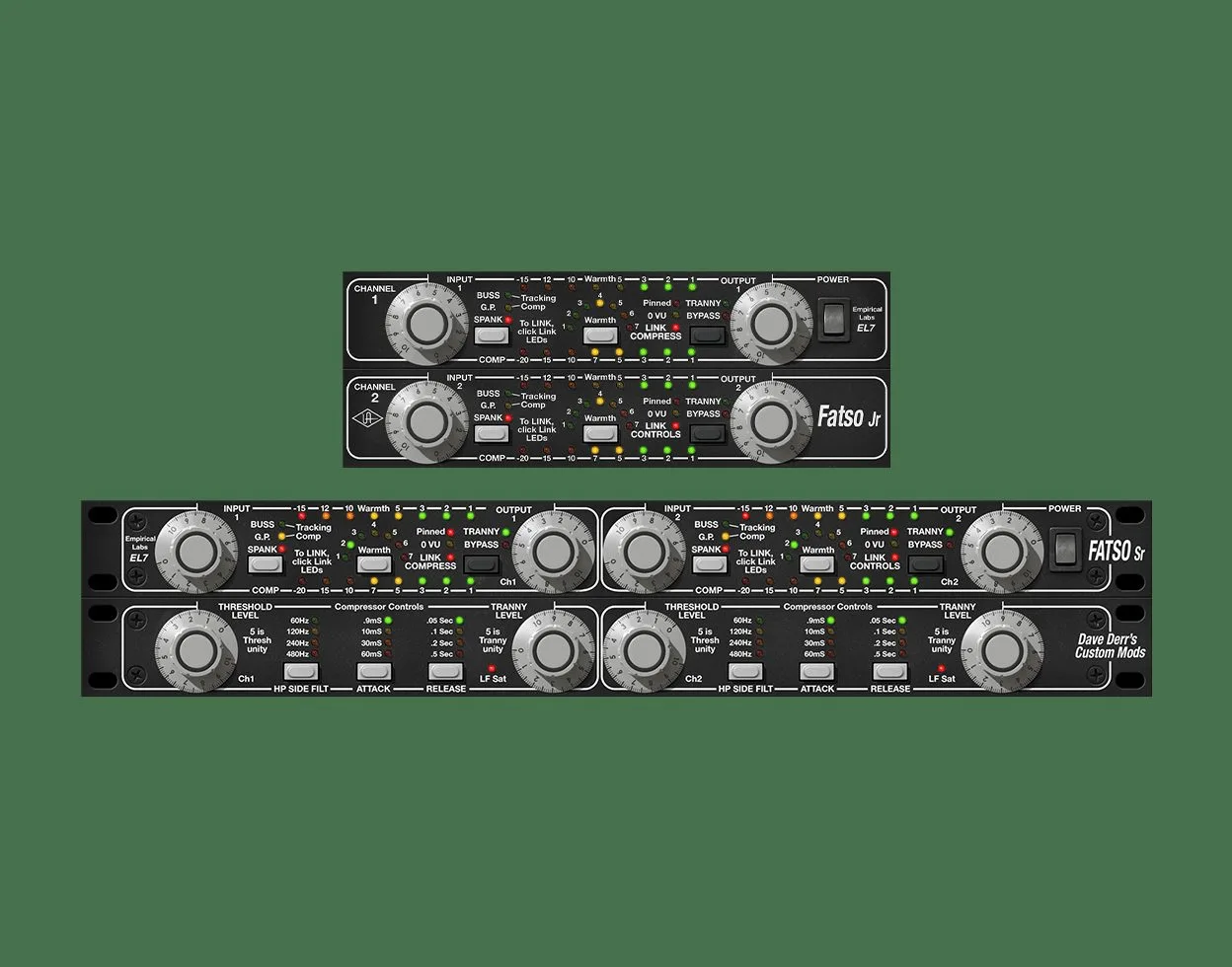
Some grey boxes end up in everyday vocabulary. Empirical Labs’ FATSO, designed by Dave Derr, is one of them: a saturation-and-compression hybrid you reach for to “warm up” a track, glue a bus or add body to a mix that sounds a touch too clean. Universal Audio already offered an emulation, but one locked to its Apollo interfaces and UAD-2 cards. Not anymore: the FATSO arrives as a native plugin, and that’s a real change for anyone without UA hardware.
Native, properly native
The plugin now ships in VST3, AU and AAX on macOS and Windows, Apple Silicon included, and also runs in LUNA. Crucially, it runs on the host CPU: no Apollo interface or UAD accelerator needed to open it. A DSP version remains for those who want to offload onto UA hardware, but it’s no longer a prerequisite. Authorisation goes through a free iLok account.
That switch sounds minor, but it changes how you work. A treatment once rationed to two or three tracks “because DSP was tight” can now sit anywhere in the session, no trade-offs. That’s exactly what users had been asking for over the years.
FATSO Jr and FATSO Sr: two levels of ambition
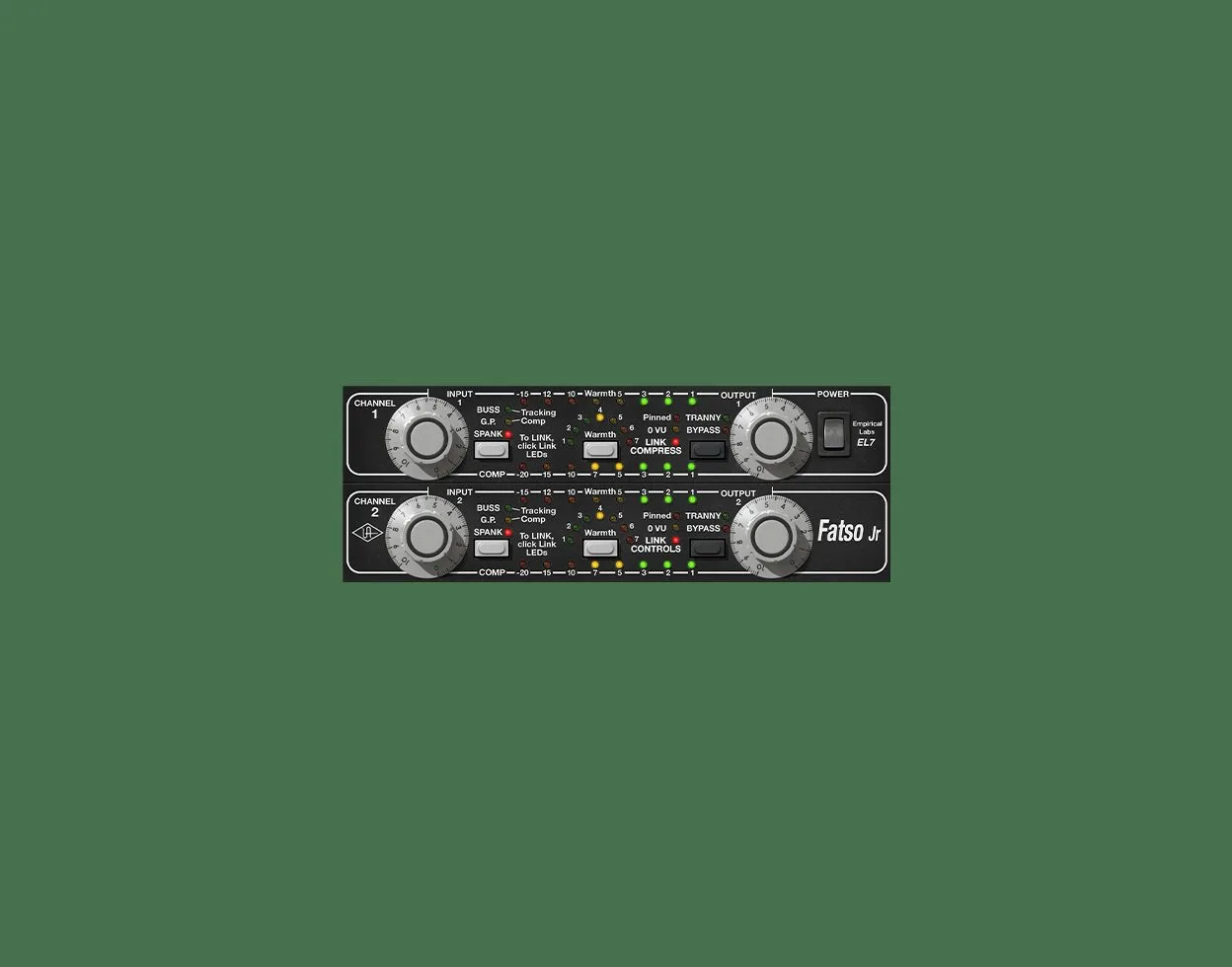
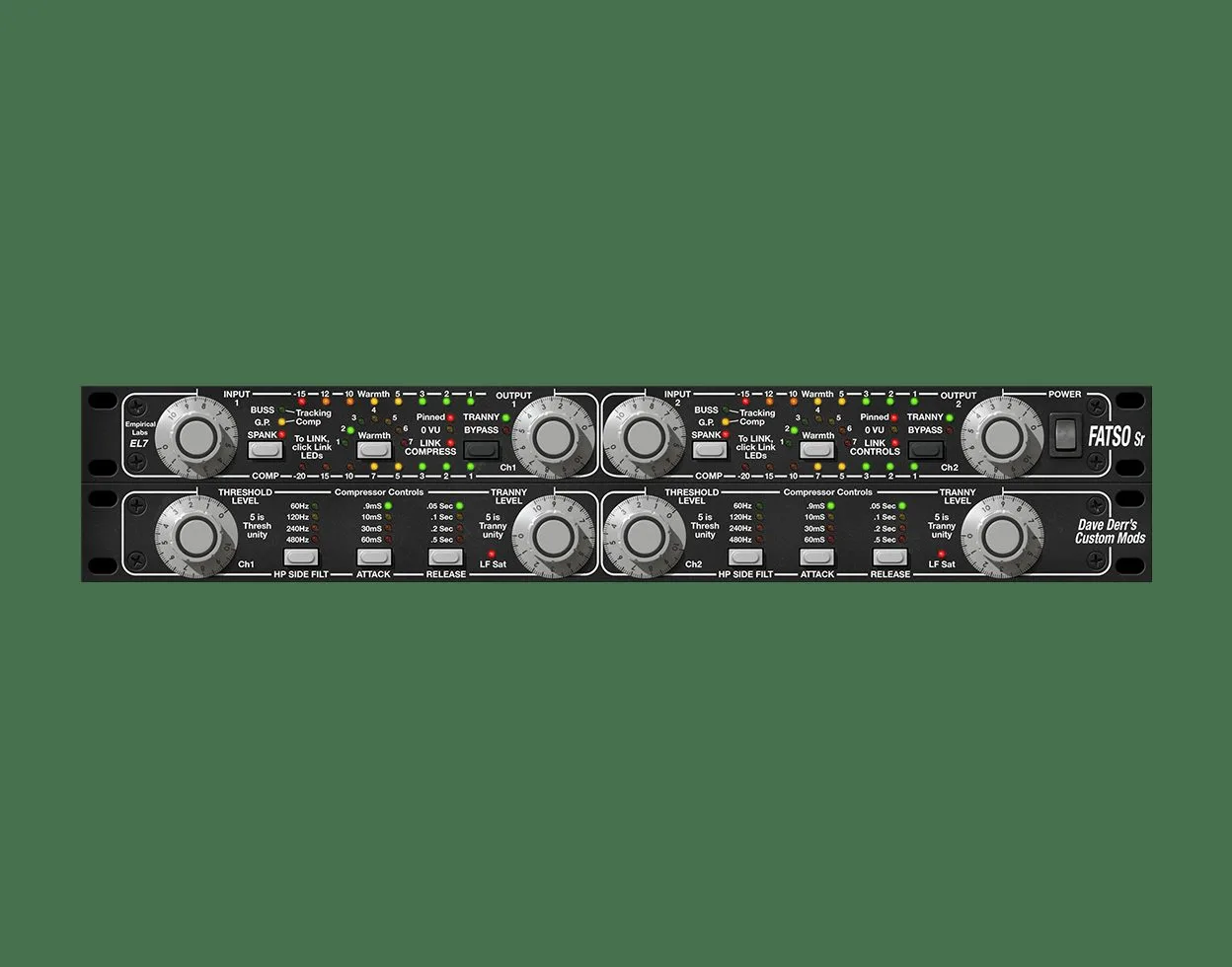
The plugin keeps the hardware’s dual personality. FATSO Jr reproduces the original’s tape simulation and compression, with its direct controls: the “turn the knobs, it sounds good” version. FATSO Sr goes further and opens the hood: variable transformer saturation, sidechain filtering and detailed compression controls — threshold, attack, release — where the Jr sticks to factory settings.
The dynamics section offers four compression modes with distinct characters, worth knowing to get the most out of the box:
- Buss: a gentle ratio, around 2:1, with a soft knee, built to glue a mix or a subgroup.
- G.P. (general purpose): the do-everything setting, transparent, holding a level without drawing attention.
- Tracking: an 1176-style, snappy dynamic for vocals and instruments captured on the way in.
- Spank: an aggressive mode, close to a 1970s talkback limiter, for when it needs to hit hard.
Beyond compression, the FATSO’s appeal is its saturation: a soft colour that rounds transients and thickens the upper mids without a clipper’s bite. That’s what made it a mix tool as much as a tracking effect. On a drum bus, a slightly flat DI bass or a digital vocal, it brings the heft we associate with analog input stages.
Price and availability
The native FATSO lands at 79 dollars as an introductory price, against 149 dollars list. Owners of the DSP version can move to native for 2.99 dollars, and the plugin is part of the UAD Spark Studio subscription library. To pick the right dynamics stage, our guide to compressor types puts the FET, VCA, opto and vari-mu families in perspective; on keeping the punch, see our piece on parallel compression. And if it’s the colour you’re after, we compared several harmonic saturation plugins. The official spec sheet is on Universal Audio’s product page.
My take
Making the FATSO native was the obvious move that kept being delayed. The sound was never the issue; it was the hardware entry ticket that walled the tool off to Apollo owners. At 79 dollars, the FATSO becomes what it always should have been: a treatment you drop in freely, for its soft saturation as much as its compression. The Jr will be plenty for many — four modes and a drive knob cover the essentials — while the Sr speaks to those who like to dial things in. The real news isn’t one more plugin, it’s a classic finally let out of its cage.