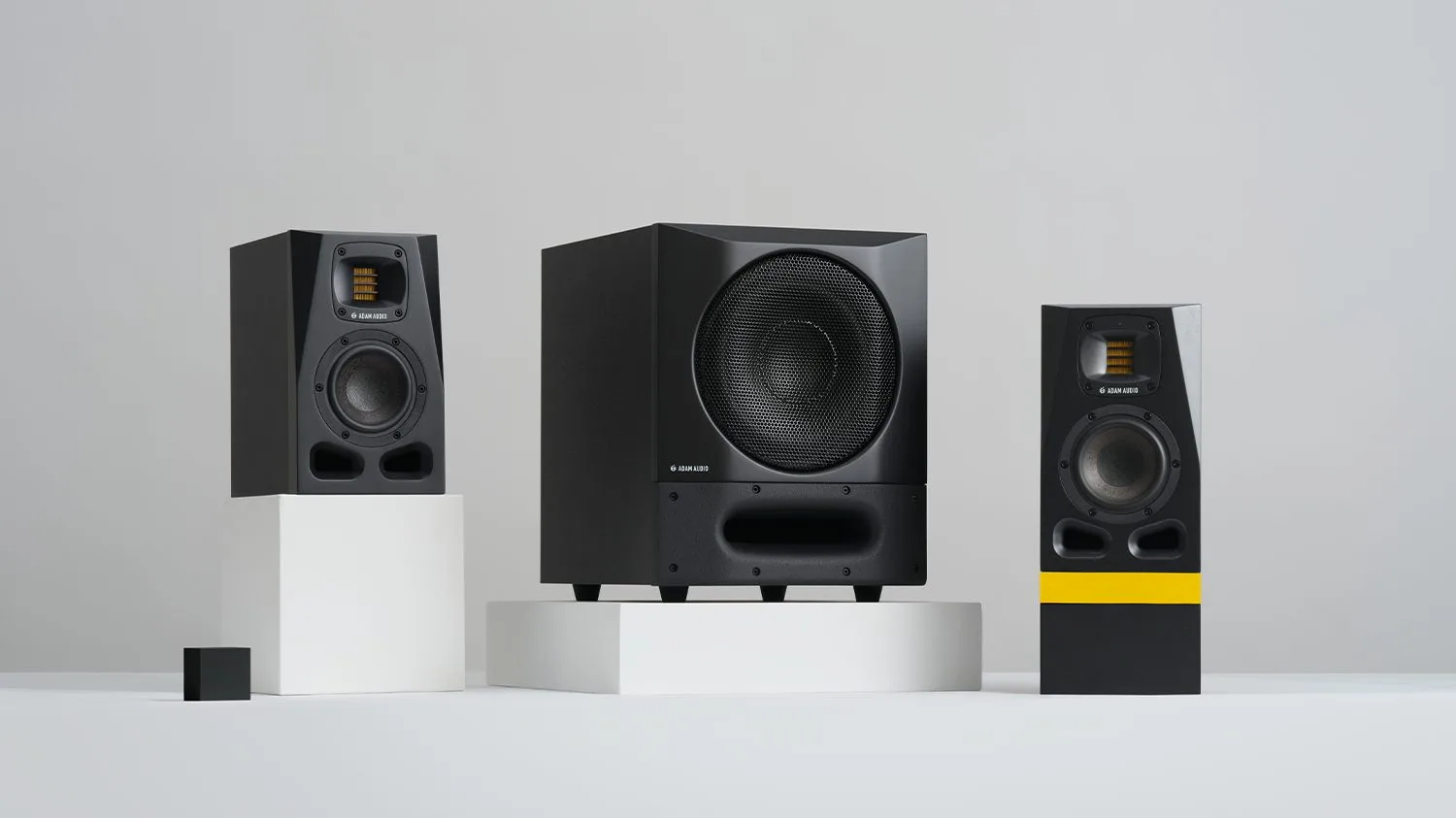
ADAM Audio extends its monitoring range downwards with two new active subwoofers, the Sub8 PRO and Sub10 PRO, announced from Berlin. The company launches them alongside ADAM Control, its management and calibration platform for networked ADAM products. The intent is clear: stop selling a sub as a simple low-end booster and treat it as an integrated, measured, aligned part of the monitoring chain.
Two formats, one design
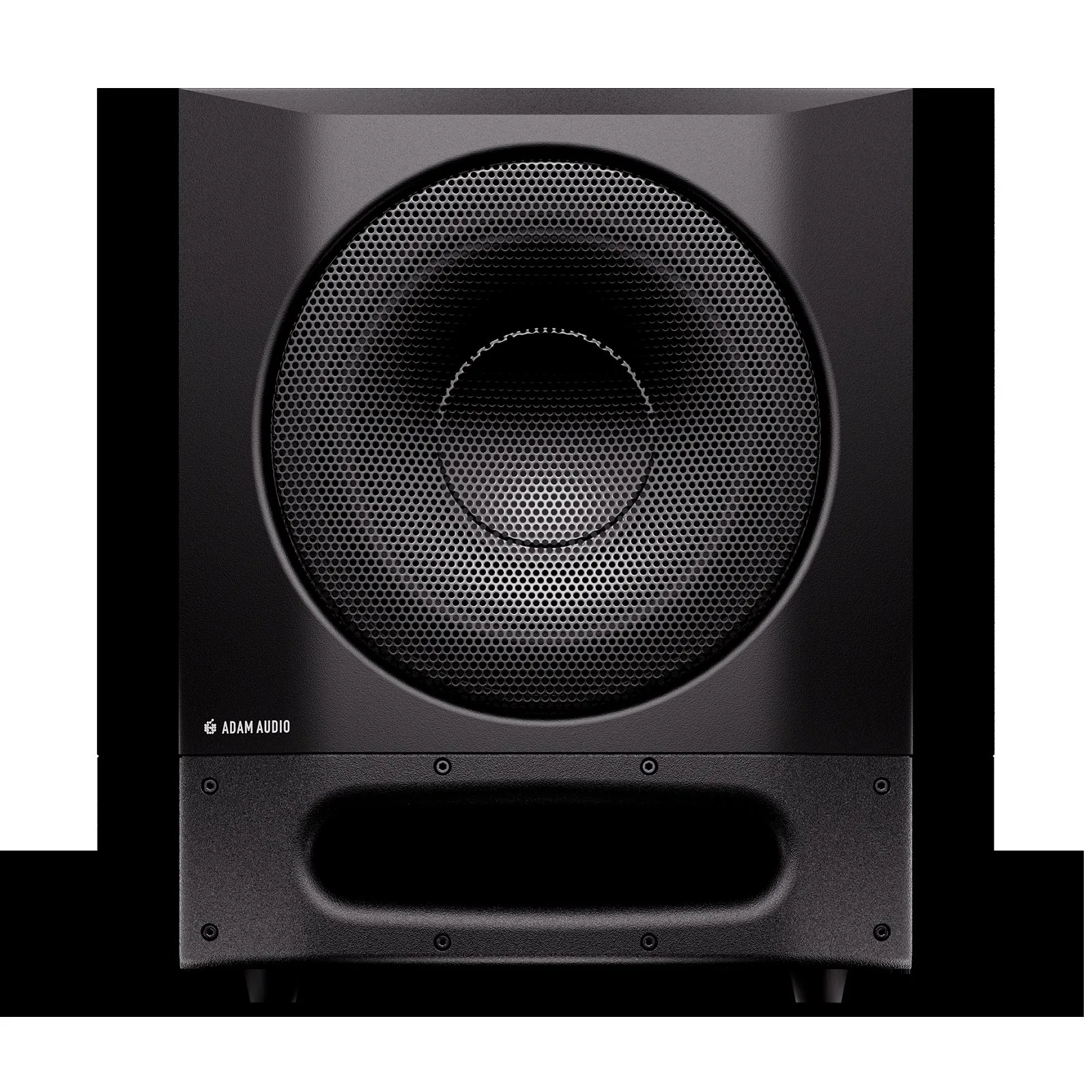
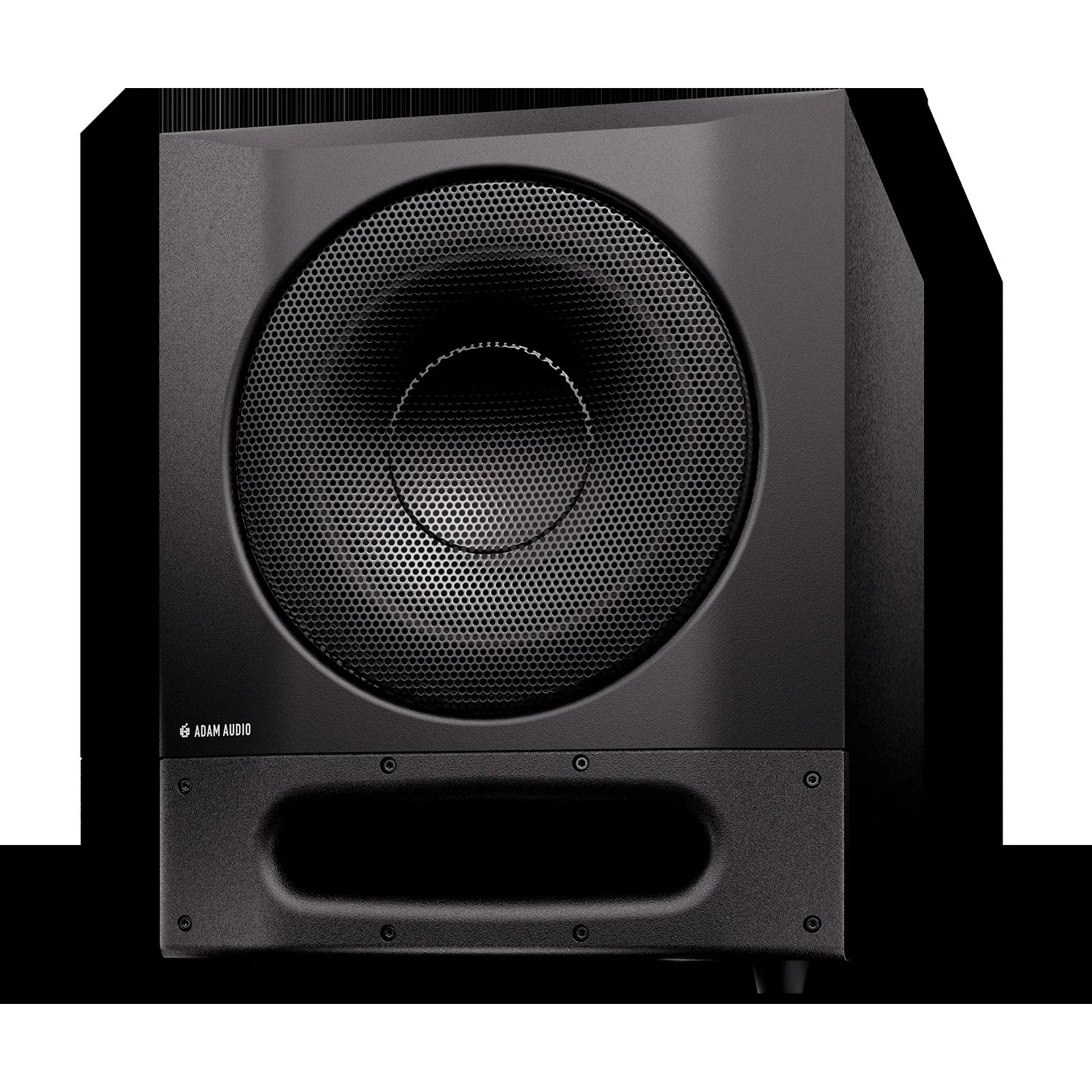
The Sub8 PRO carries an 8-inch woofer, the Sub10 PRO a 10-inch one. Both use fibre-reinforced paper cones with compliant rubber surrounds, a pairing that allows long excursion while keeping mechanical behaviour in check. The cabinet is solid wood, the grille metal, and the bass-port curvature was optimised with finite element analysis to tame turbulence at high levels. Each sub pairs a Class D amplifier with a DSP that handles crossover, correction and bass management internally.
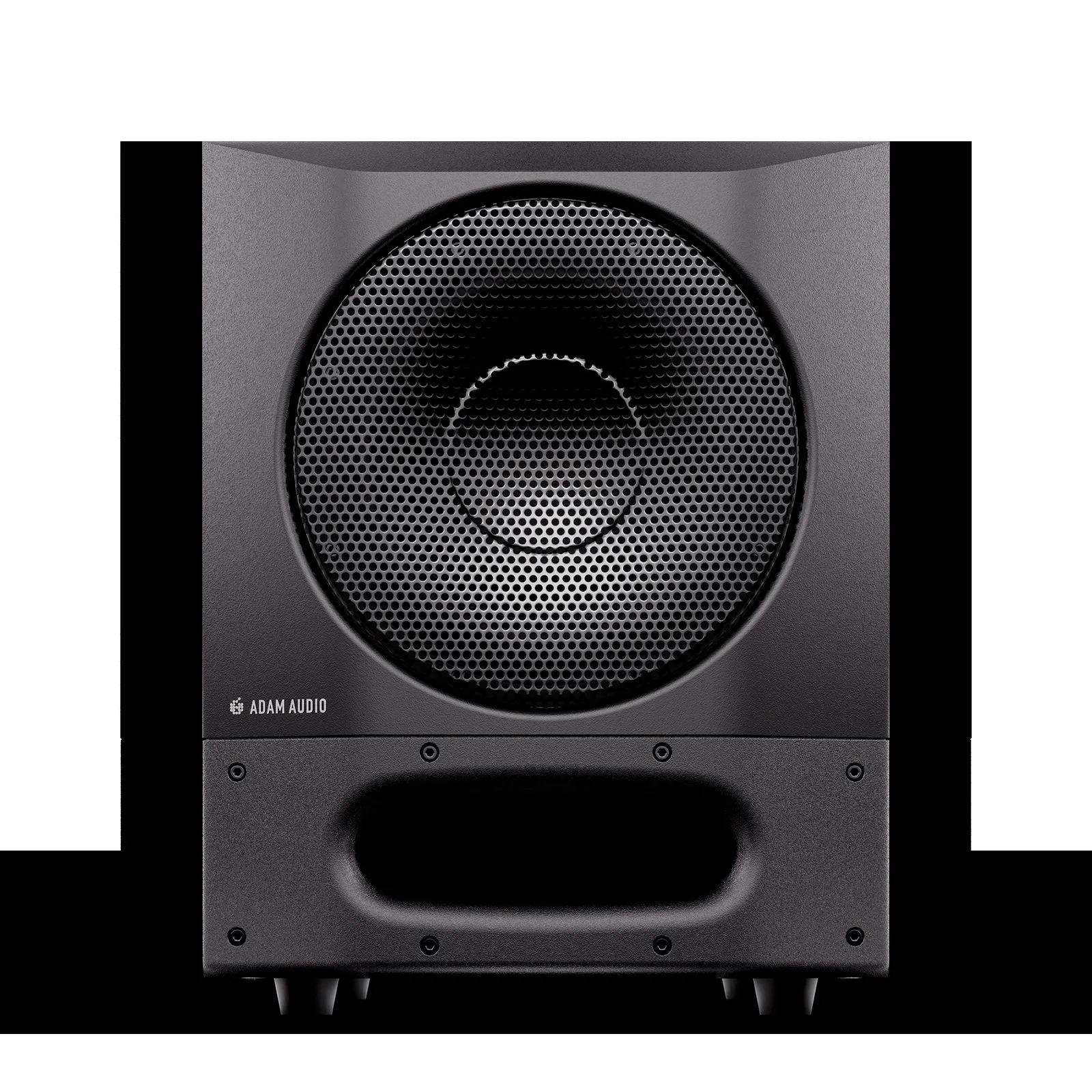
On response, the Sub8 PRO reaches down to 30 Hz at -3 dB (26 Hz at -6 dB), while the Sub10 PRO buys the useful octave by extending to around 22 Hz at -3 dB (21 Hz at -6 dB). Both share the same power stage: 325 W peak, 200 W RMS into 3 ohms, for a quoted peak around 105 to 106 dB SPL at one metre, more on short bursts. Nothing extravagant on paper, but it suits the brief: clean, controlled low end in the near field, not a PA sub.
| Spec | Sub8 PRO | Sub10 PRO |
|---|---|---|
| Woofer | 8″ | 10″ |
| Response (-3 dB) | 30–228 Hz | 22–264 Hz |
| Power | 325 W peak / 200 W RMS | 325 W peak / 200 W RMS |
| Dimensions (H×W×D) | 385 × 300 × 365 mm | 450 × 360 × 450 mm |
| Weight | 15.3 kg | 22.8 kg |
| Indicative price | around £1,000 / €1,000 | around £1,130 / €1,299 |
Connectivity and operating modes
Connectivity is squarely aimed at a serious studio: an AES3 digital input up to 24-bit/96 kHz, an XLR/TRS combo socket for analog, a dedicated Ethernet port for control, and a footswitch input to bypass bass management with your foot. Two modes shape the use. LFE mode offers a cutoff tailored to Dolby Atmos systems; Wide mode lets the sub run full range. For plain stereo monitoring, the DSP handles redirecting the lows from the main monitors to the sub.
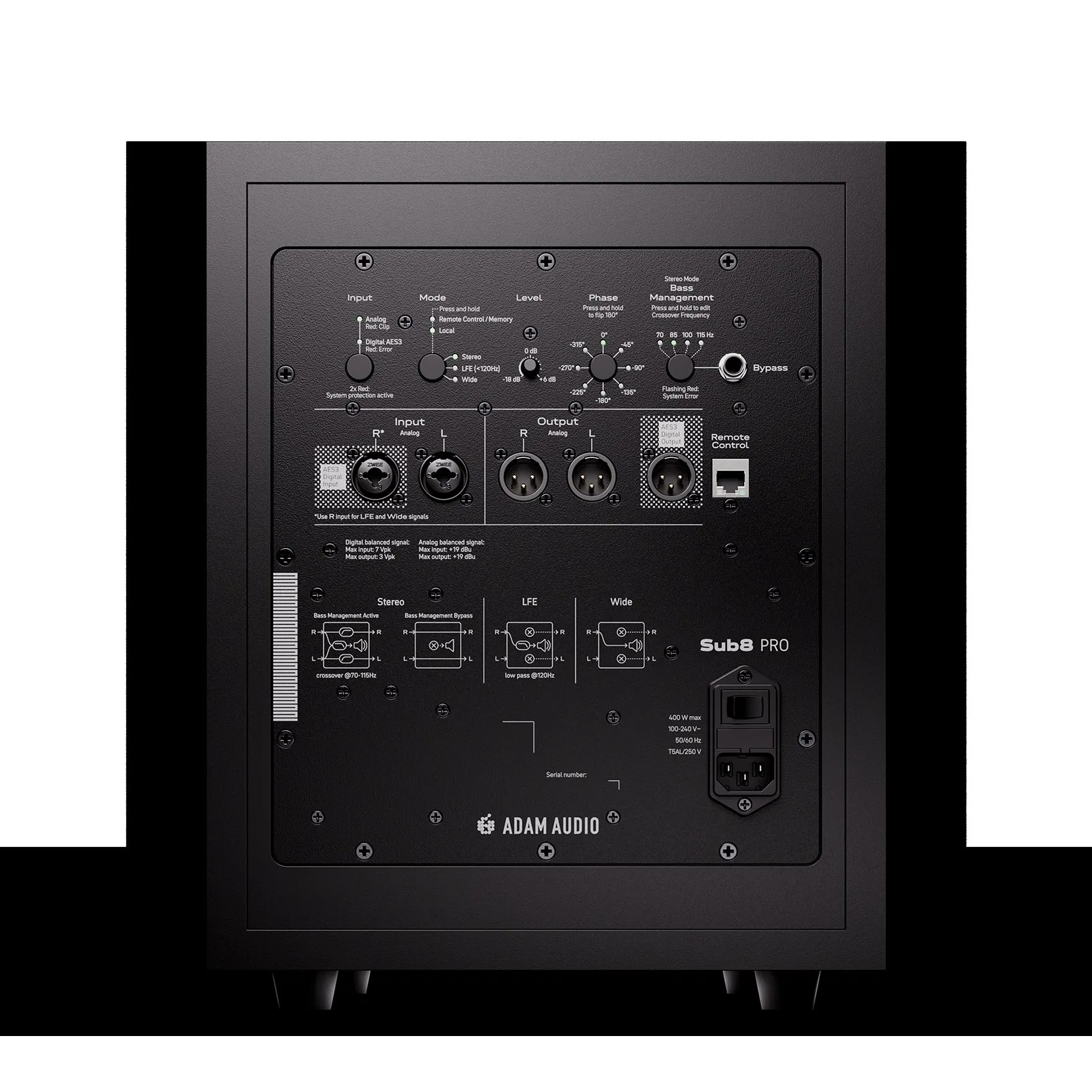
Keeping the link digital via AES3 all the way to the sub is a genuine plus: it avoids a needless conversion and simplifies the wiring of an already-digital setup. The kind of detail that never makes a headline but changes the life of a clean install.
ADAM Control: the real news
The free ADAM Control software succeeds A Control and becomes the command post for the whole system. It adjusts EQ, gain, phase and delay across a Sub PRO and A Series rig, in stereo or multichannel. Manual calibration is included at no extra cost. Above all, ADAM Control can deploy filters created in Sonarworks’ SoundID Reference straight into the sub’s DSP — A Series and Sub PRO customers get a 60-day trial and a 25% discount. In other words, you measure the room once and the correction lives in the hardware, not just in an insert strip in your DAW.
Room correction is the heart of the matter in a studio: a well-integrated sub is not heard, it reveals. That is where the credibility of the bottom end is won, far more than in the race for an extra hertz. If the topic appeals to you, our pointers on choosing studio monitors and on gain staging in the digital domain round out the approach.
Who it is for
The Atmos-ready LFE mode is no gimmick: it clearly puts these subs on immersive-production turf, where managing the LFE channel and aligning speakers matter as much as anything else. Readers getting into the format will find in our guide to mixing in Dolby Atmos enough to place the value of a driven, calibrated sub. Warranty is two years, extendable to five after product registration. On availability, both models are announced for pre-order, with arrivals expected in early November 2026. Full product sheet on the ADAM Audio site.
My take
The real move here isn’t the woofer, it’s the networked DSP and pushing SoundID filters straight into the sub. A studio sub is only as good as its integration with the room and the monitors; turning it into a measurable, recallable node fixes the one problem that genuinely matters with low end. The power figures stay modest, but in the near field they are plenty, and the Atmos-ready LFE mode lands right as immersive trickles down into small rooms. The open question is price against calibrated rivals: at a little over a thousand, the Sub8 PRO has to prove that a driven sub beats a bigger, good passive one. For a studio already mixing in the box, the bet is tempting.