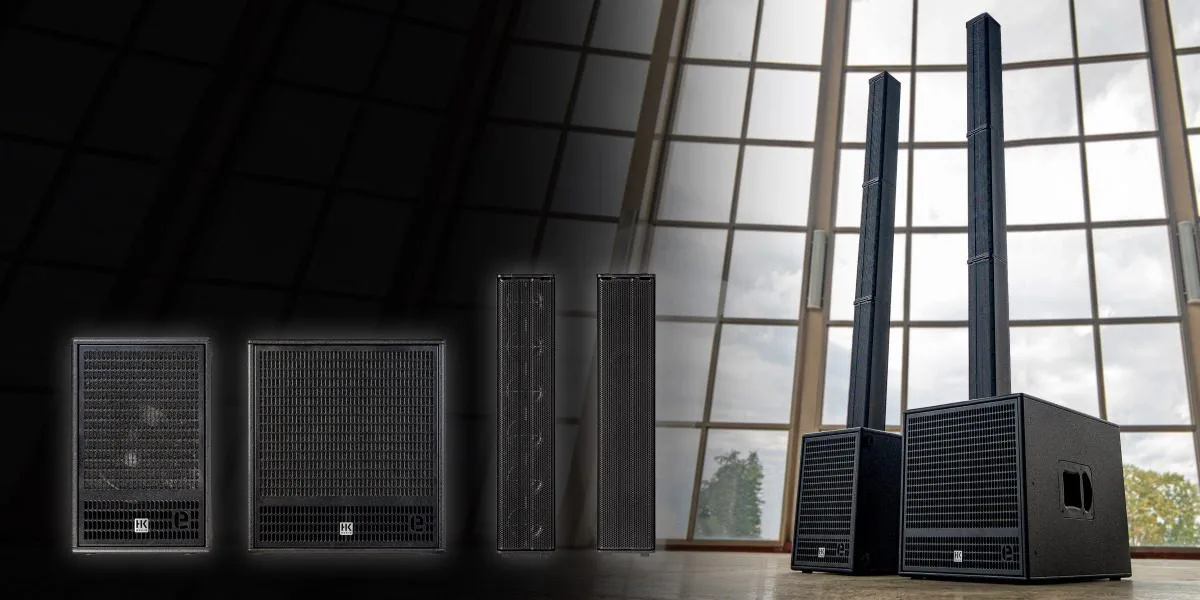
Fifteen years after it popularised the consumer-friendly modular column, HK Audio is back at the workbench. The ELEMENTS MK2 keeps the range’s founding idea — a column system you stack like building blocks to fit the room — but rethinks the part that mattered most: the sound. The target stays the same: conferences, DJ sets, small-capacity gigs, corporate events, and above all the awkward spaces (rooftops, low-ceilinged rooms) where a conventional line array simply won’t fit.
Tool-free setup, scaling to taste
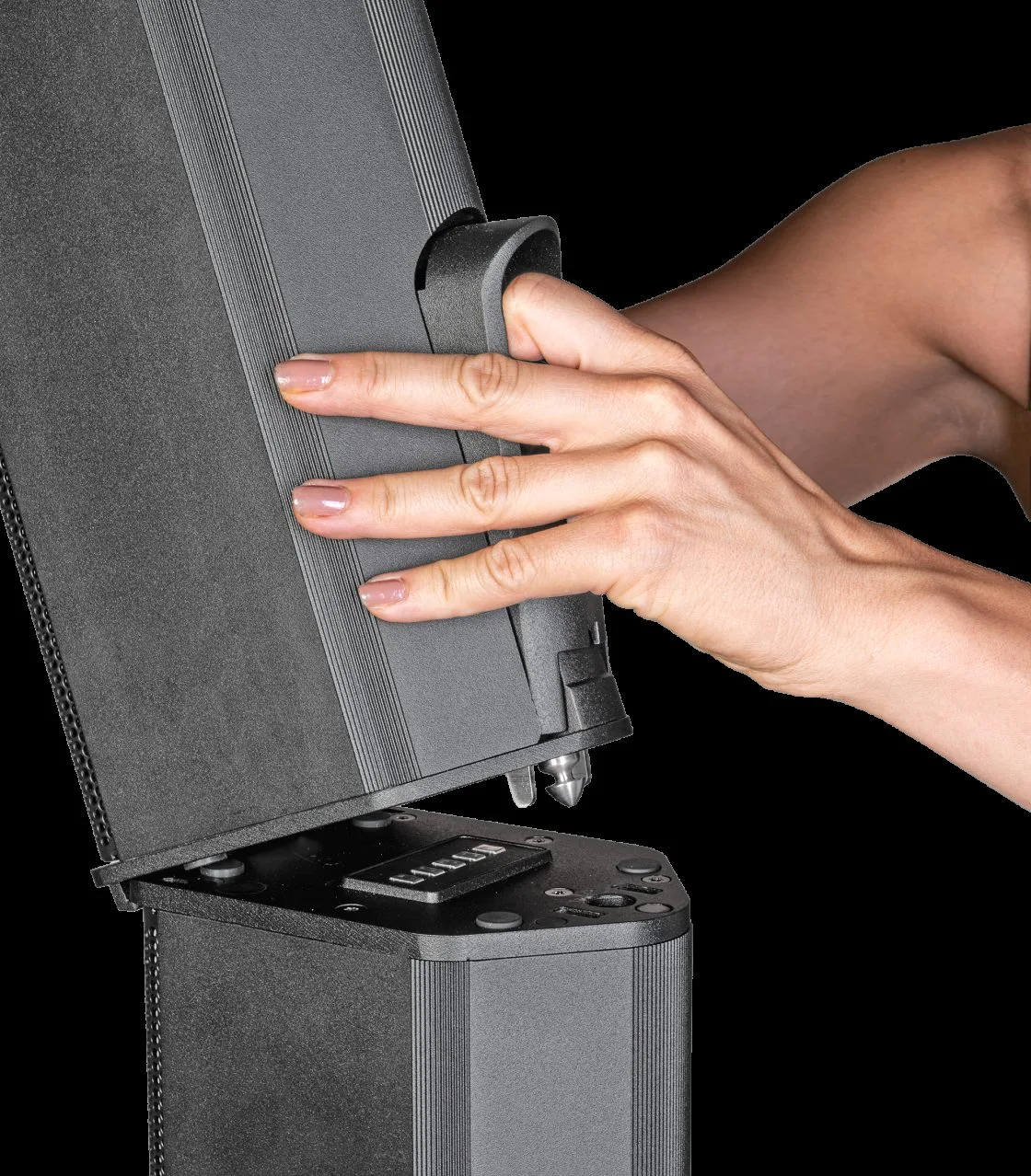
The system is built from three blocks: a 635 top module, Spacer units and a subwoofer. You stack as many modules as you need for the height and coverage you want, and you aim the system by sliding one or more spacers between the sub and the column when the room doesn’t call for a full curtain of drivers. Assembly relies on a system called SnapLock: the elements lock together mechanically with no screws or tools at all — a real difference when you’re rigging and de-rigging several times a week.
What the MK2 actually changes
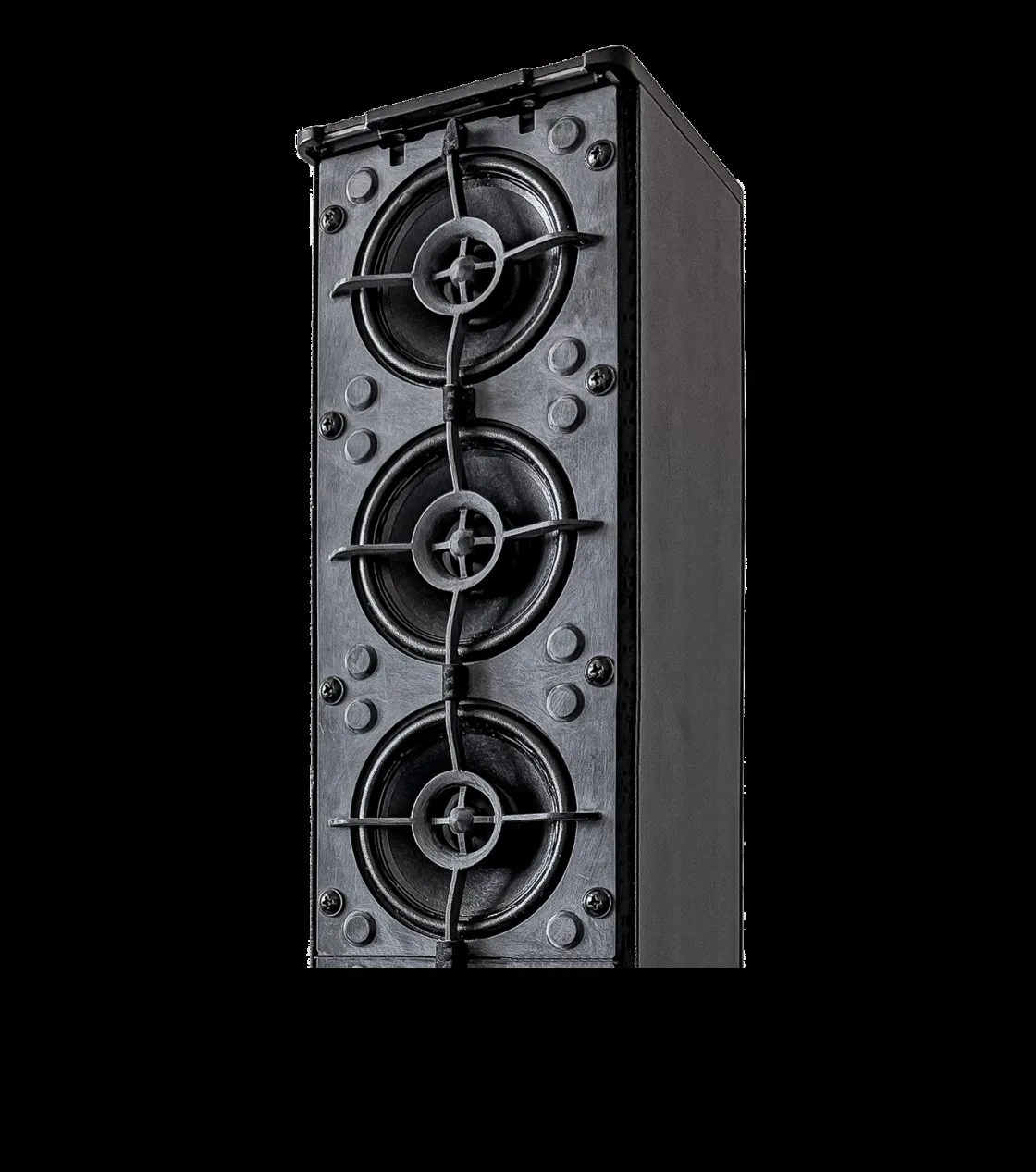
Each 635 column carries six 3.25-inch drivers paired with six newly designed phaseplug waveguide horns. That’s where the generational jump lives: dispersion is quoted at 90° horizontal by just 5° vertical, a mini-line-array behaviour that throws far while keeping coverage consistent from one listening spot to the next. HK Audio leans into the comparison with the first generation: the slightly ‘boxy’ midrange of old gives way to wider, cleaner highs and noticeably fuller low-mids.
The sub: the system’s amplified, DSP-driven core
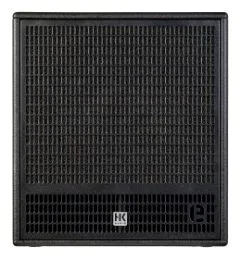
As on the previous generation, the amplification lives in the subwoofer, not the column. You get two choices: the 110 Sub A, a 10-inch rated at 900 W RMS that works horizontally or vertically, and the 115 Sub A, a 15-inch at 1,500 W RMS for beefier rigs. Both use a bass-reflex cabinet with a 175 Hz crossover, and the DSP CONTROL app opens up remote access to a 10-band EQ, limiter, filters, polarity and delay — enough to align the system and tame a room without a computer or a separate processing rack.
Price and availability
The ELEMENTS MK2 is up for pre-order, with shipping expected next month. On manufacturer pricing, the 635 column lands around €599, the Spacer at €199, the 110 Sub A at €1,699 and the 115 Sub A at €2,499. A complete rig is built to order, adding blocks to match the capacity you’re chasing — which is the whole point of a modular architecture.
Who it’s for
- Rental companies and bands running back-to-back small and mid-size shows who want a rig that fits in an estate car.
- Fixed installs with a tight footprint: bars, restaurants, meeting rooms, low-ceilinged event spaces.
- Mixed speech-and-music applications where intelligibility matters as much as level.
My take
Reviving an installed range without betraying it is a tricky brief, and on paper the MK2 aims true: it’s the midrange — the genuine weak spot of compact columns — that got the work, not the marketing. The phaseplug waveguide and the very tight vertical pattern are the right answer for the reverberant rooms where this kind of system shines. The tool-free SnapLock will pay for itself in time saved from the very first run of load-ins. The one question that settles everything: does it truly deliver once the column is tall and pushed hard? That verdict comes at the listening position, on site — but the engineering intent is spot on.
Frequently asked questions
Can I reuse first-generation ELEMENTS columns?
The MK2 introduces a new 635 module, a new waveguide and the SnapLock coupling system. HK Audio presents it as a full new generation; to get the reworked midrange and revised dispersion you’ll want to deploy the MK2 module itself, not a mix-and-match with the older stock.
Do I need an external amplifier or processor?
No. Amplification sits in the subwoofer, and processing (10-band EQ, limiter, filters, polarity, delay) is handled from the DSP CONTROL app. The system runs without a power rack or a separate loudspeaker processor.
What’s the difference between the 110 Sub A and 115 Sub A?
The 110 Sub A is a 10-inch rated at 900 W RMS that can sit horizontally or vertically depending on stage constraints. The 115 Sub A is a 15-inch at 1,500 W RMS, for rigs that need more low end and headroom. Both share the bass-reflex loading and the 175 Hz crossover.
Is it suitable for a reverberant room?
That’s exactly its home turf. The very tight vertical dispersion (5°) limits the energy fired at the ceiling and floor — two major sources of unwanted reverberation — which helps preserve intelligibility in difficult spaces.
Related reading: point source vs line array, which PA system should you choose and our guide to angling a line array.