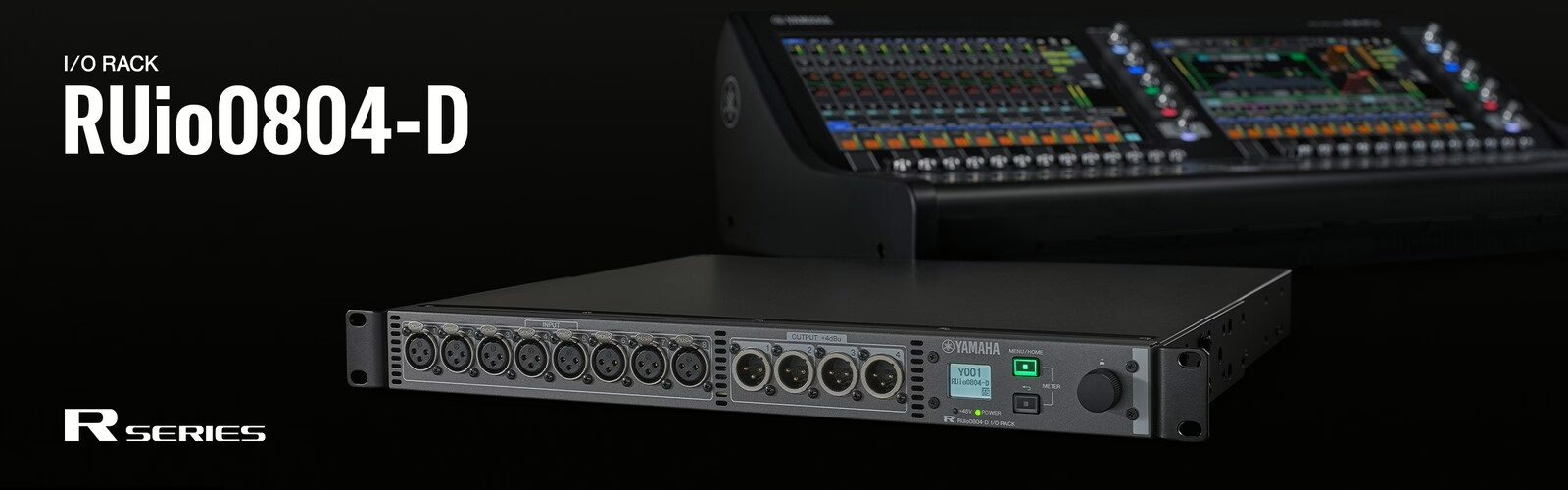
Unveiled in September 2026 alongside the new DM5 consoles, the Yamaha RUio0804-D is not the headline of the announcement — and that is exactly what makes it interesting. This small I/O box opens a new family, R Series Utility I/O, together with the RUio1608SB-D and RUio16FLX-D. Its job: add a handful of analogue inputs and outputs where you are short, without rolling out a full stagebox.
Eight in, four out, nothing wasted
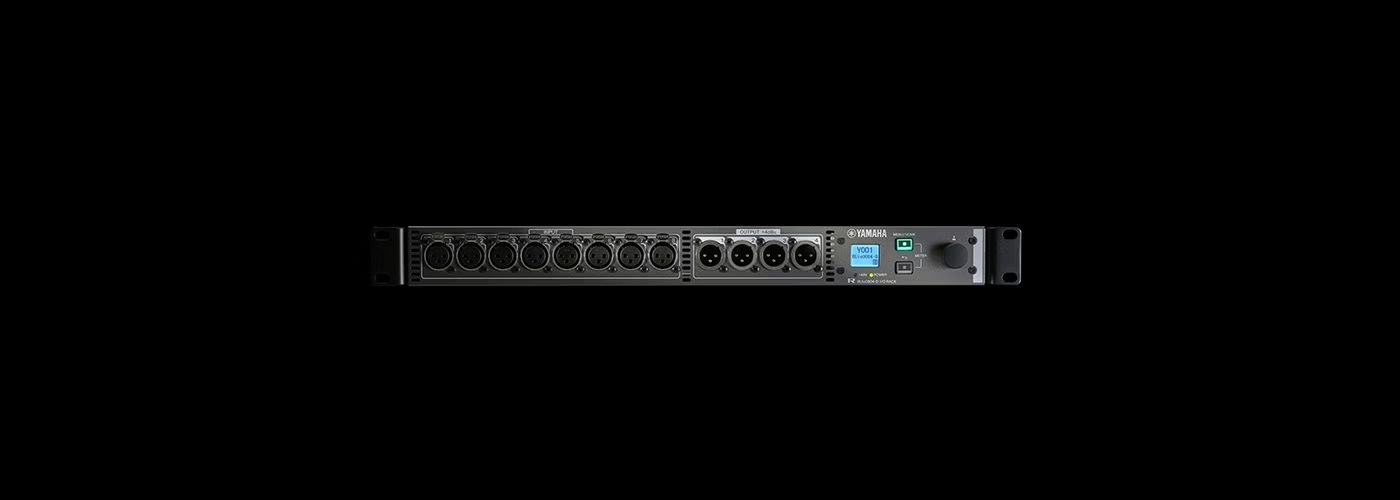
The RUio0804-D fits in a single rack unit and lines up eight mic/line inputs on XLR and four XLR outputs. The preamps are remote-controllable from the console, just like Yamaha’s stageboxes: you set the gain from the surface without touching the rack. This is the classic top-up tool — a few extra mics at the back of the room, an injection point for an external source, a talkback channel, one or two more sends. Where a 16- or 32-channel stagebox would be overkill, this compact format slots into a flight case, under a stage or in a tech room.
Dante done right: Primary and Secondary
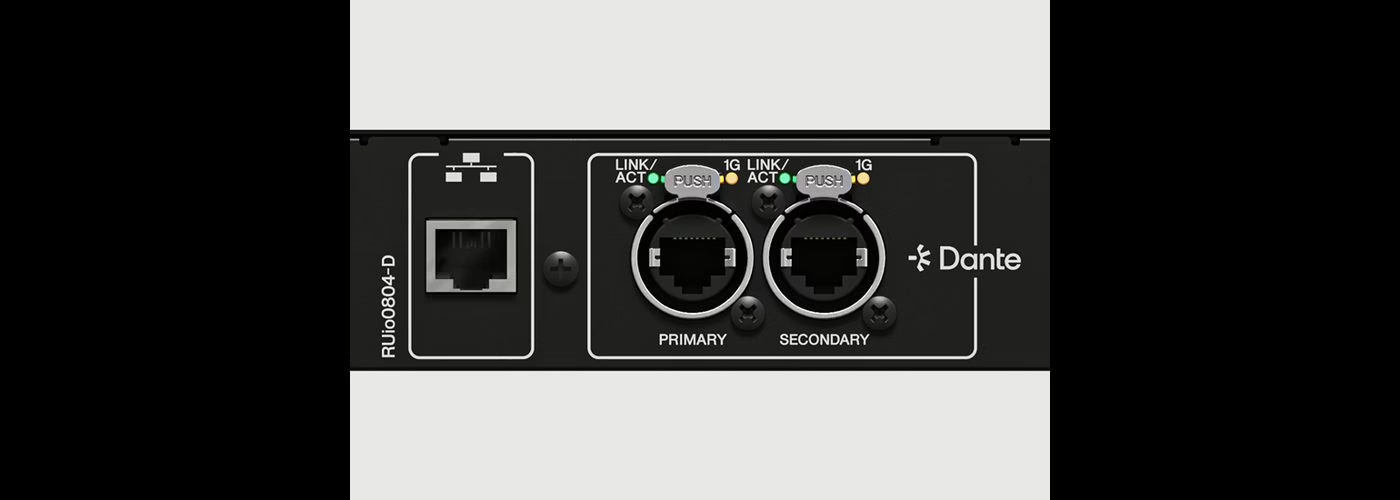
On the network side the box offers two Dante ports, Primary and Secondary, for full redundancy, plus a dedicated control port. Live, that matters: if the main cable fails, the secondary takes over without a dropout. The RUio0804-D runs from 44.1 to 96 kHz and posts a very low conversion latency, under two milliseconds even at 96 kHz. It stays within standard Dante practice, interoperable with the rest of an audio-over-IP rig, as covered in our Dante primer.
Inside the Yamaha ecosystem
The RUio0804-D is built to slot into the company’s consoles: DM3, DM5, DM7 and RIVAGE PM. Control also runs through the R Remote, ProVisionaire Design and ProVisionaire Control PLUS software, so it can serve beyond a strict console context. It is aimed at live sound reinforcement, fixed installation, corporate events, theatre, broadcast and, more broadly, any Dante system that needs a small I/O top-up. It is the utility brick of an ecosystem, not a flagship — and that is exactly what was missing between a plain converter and a full stagebox.
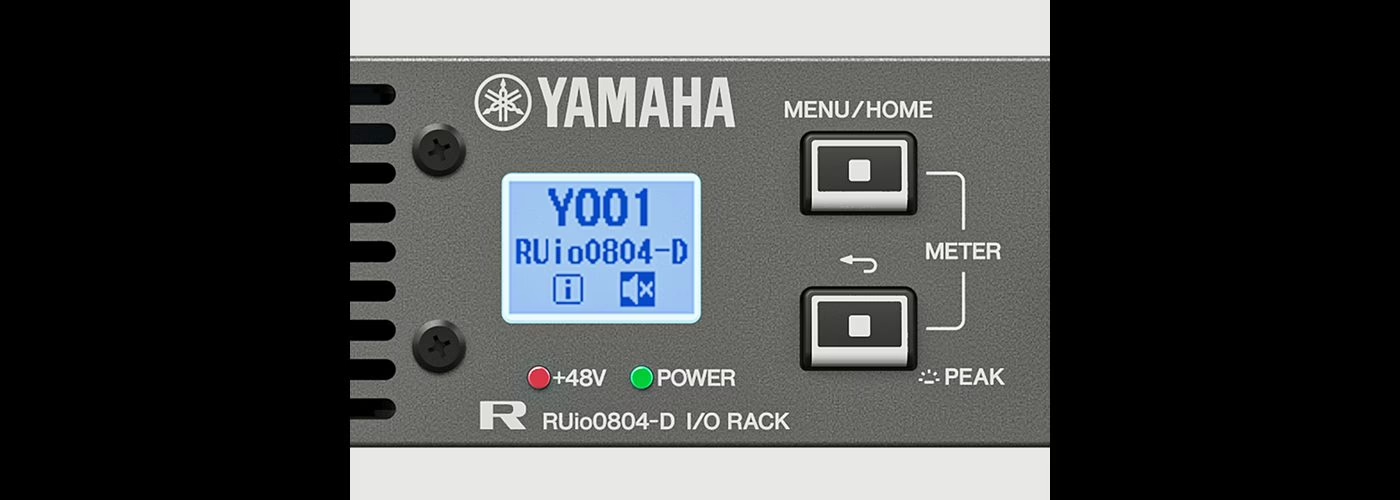
Choosing the right I/O box is part of system design: our guide to patch and stageboxes in live sound puts the RUio0804-D in context, and it logically complements the new Yamaha DM5 consoles announced at the same time.
Price and availability
The RUio0804-D lands around €1,750 (roughly $1,799 list), a fair figure for a box with remote-controlled preamps and redundant networking. It arrives in the wake of the DM5 consoles and the other R Series additions, and targets the rental company or integrator already running a Yamaha rig who wants add-on flexibility rather than a large interface.
My take
This is the kind of quiet product that solves a real field problem: that moment when you are three mics short at the back or need one output for a comms amp, and wheeling out a 16-channel stagebox feels like heavy artillery. Eight in, four out, two redundant Dante ports and remotely driven gains: the brief is tight, with no fat. The real value hinges on one thing — already living in the Yamaha world. For a DM or RIVAGE rig, it is the missing piece between the pocket converter and the full stagebox. For everyone else, a generic Dante box will do the same job, minus the in-house integration.
Frequently asked questions
Which consoles does the RUio0804-D work with?
It is designed for the Yamaha DM3, DM5, DM7 and RIVAGE PM consoles. It also runs via the R Remote, ProVisionaire Design and ProVisionaire Control PLUS software, so it can be used outside a strict console context, in any Dante network.
Can the preamps be controlled remotely?
Yes. Like Yamaha’s stageboxes, the RUio0804-D offers remote head-amp control from the console or software. You adjust input gain from the surface, with no need to physically reach the box.
How does it differ from a full stagebox like the RUio1608SB-D?
The RUio1608SB-D is a 16-in/8-out stagebox, built for a large channel count. The RUio0804-D is an 8-in/4-out top-up box: you pick it when you are only a few I/O points short, not to patch a whole stage.
What is the Primary/Secondary redundancy for?
The two Dante ports let you wire a main network and a backup. If the main link drops, the secondary keeps the audio running with no interruption — essential insurance live, where a network outage is not an option.