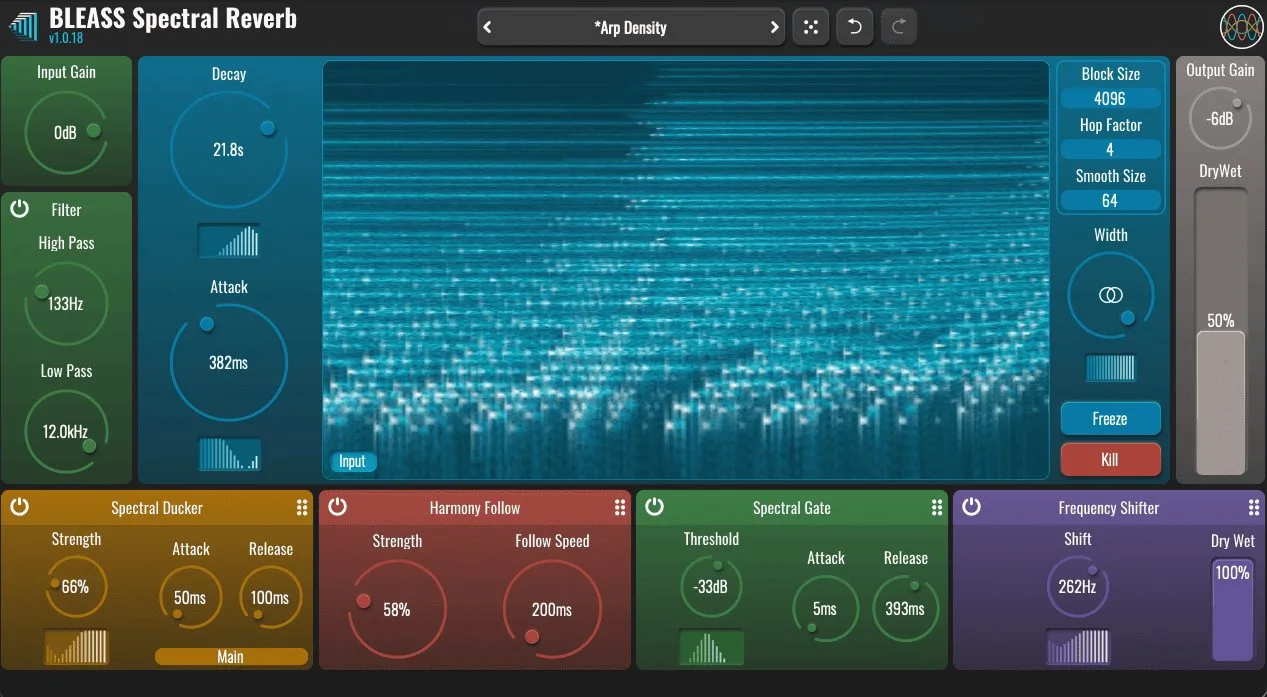
We tend to think reverb comes down to three controls: size, pre-delay, mix. BLEASS takes the opposite route with Spectral Reverb, a plugin that processes the signal in the spectral domain and hands you control over every frequency band. The point is no longer to drape a virtual room over a sound, but to sculpt how each harmonic emerges, decays and blends with the rest.
A reverb you can map
The heart of the plugin is spectral mapping. Instead of applying a uniform decay, you draw Decay, Attack and Width independently across the whole spectrum. Lows can linger while highs die away fast, or the reverse; the stereo image can open up over a precise range without touching the rest. It is close to what you do at the mix with a dynamic EQ, but applied to the reverb itself.
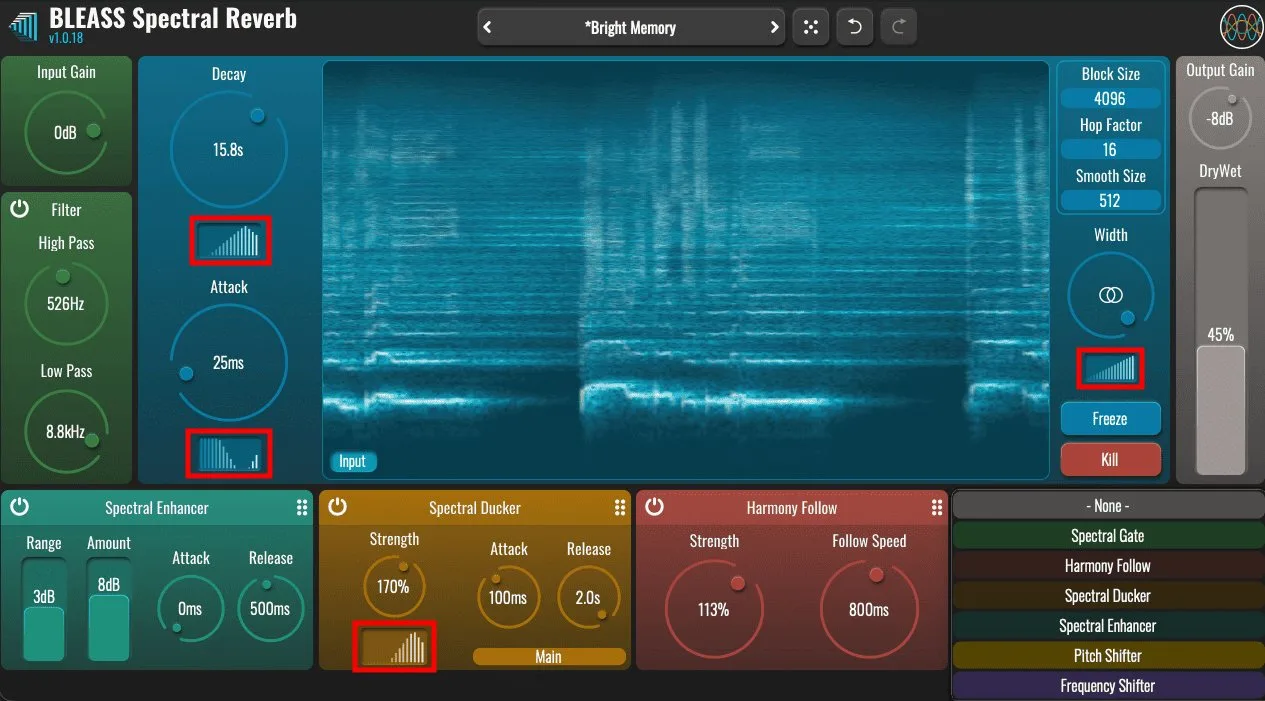
Two performance functions round it out: Freeze captures an evolving reverb and holds it indefinitely for sustained pads, while Kill instantly clears the entire tail. Enough to move from an ethereal pad to clean silence without fiddly automation.
Six spectral processors inside the tail
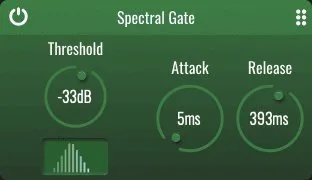
Where many reverbs stop, Spectral Reverb adds six modules that work directly on the spectral signal:
- Gate and Ducker: tighten the reverb or let it breathe in time with the source.
- Harmony Follow: the tail tracks the track’s harmony instead of smearing chords.
- Enhancer: densifies and colours the tail.
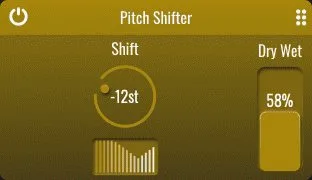
- Pitch Shifter and Frequency Shifter: for shimmer, metallic or frankly experimental reverbs.
Each processor can be fine-tuned, with control over spectral resolution, overlap and smoothing — the parameters that set the trade-off between precision and artefacts in FFT-based processing. Everything accepts DAW automation, internal modulation and an external sidechain, opening the door to reverbs that react to another track.
Everywhere, and cheap
BLEASS keeps up its cross-platform strategy: Spectral Reverb runs on macOS, Windows, Linux and iOS, in VST3, CLAP, AU, AAX and AUv3 formats. The desktop version is 39 dollars, the iOS version 12.99 dollars — pricing that clearly puts it in the impulse-buy bracket. To revisit the reverb families and their uses, our guide to reverb in the mix covers the ground, and for a more classic take, Waves Atlas Reverb plays in a different register.
My take
The bet is appealing: treat reverb as a living material rather than a preset to stack. Spectral mapping and Harmony Follow are the two standouts — being able to let only the lows linger, or stopping a tail from smearing chords, is a real comfort at the mix. At 39 dollars the question isn’t price but discipline: a tool this playful invites overuse. Keep it for a signature sound, a pad, a bridge, and it works wonders; as a utility reverb on twelve tracks, you’ll lose the thread. An excellent spectral Swiss army knife — as long as you know when to put it away.
Official BLEASS Spectral Reverb page