Austrian Audio keeps trickling its Viennese know-how into ever more affordable formats. After the dual-output OC818 and the cardioid-only OC16, the brand now introduces the OC616, a five-pattern large-diaphragm condenser squarely aimed at being the go-to all-rounder studio mic — the one you grab for vocals as readily as for acoustic guitar or drum overheads.
An in-house capsule, five patterns
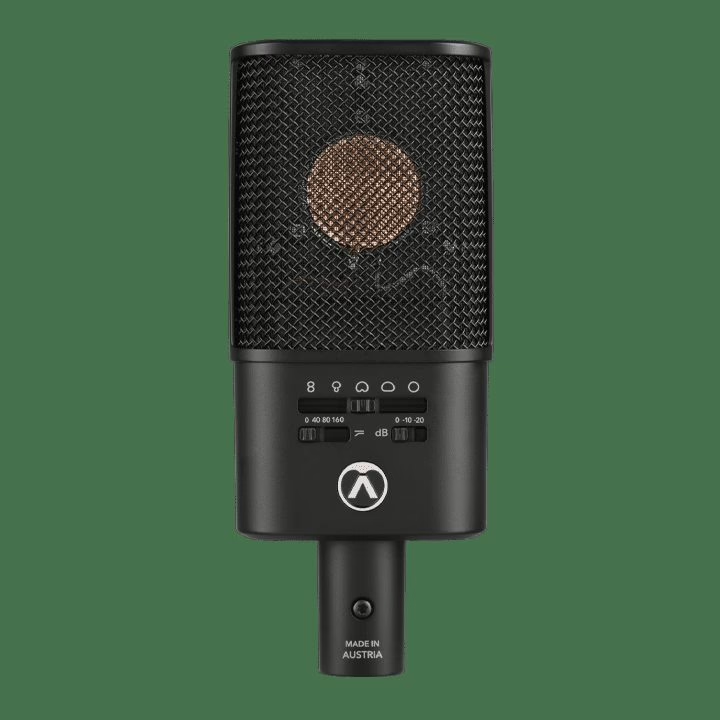
At the heart of the OC616 sits the CKR12, a one-inch true condenser capsule with an edge-contacted design and ceramic isolator, hand-built in Vienna. It is the same philosophy found on the higher-end models: a diaphragm tensioned and wired with care that drives both linearity and long-term stability.
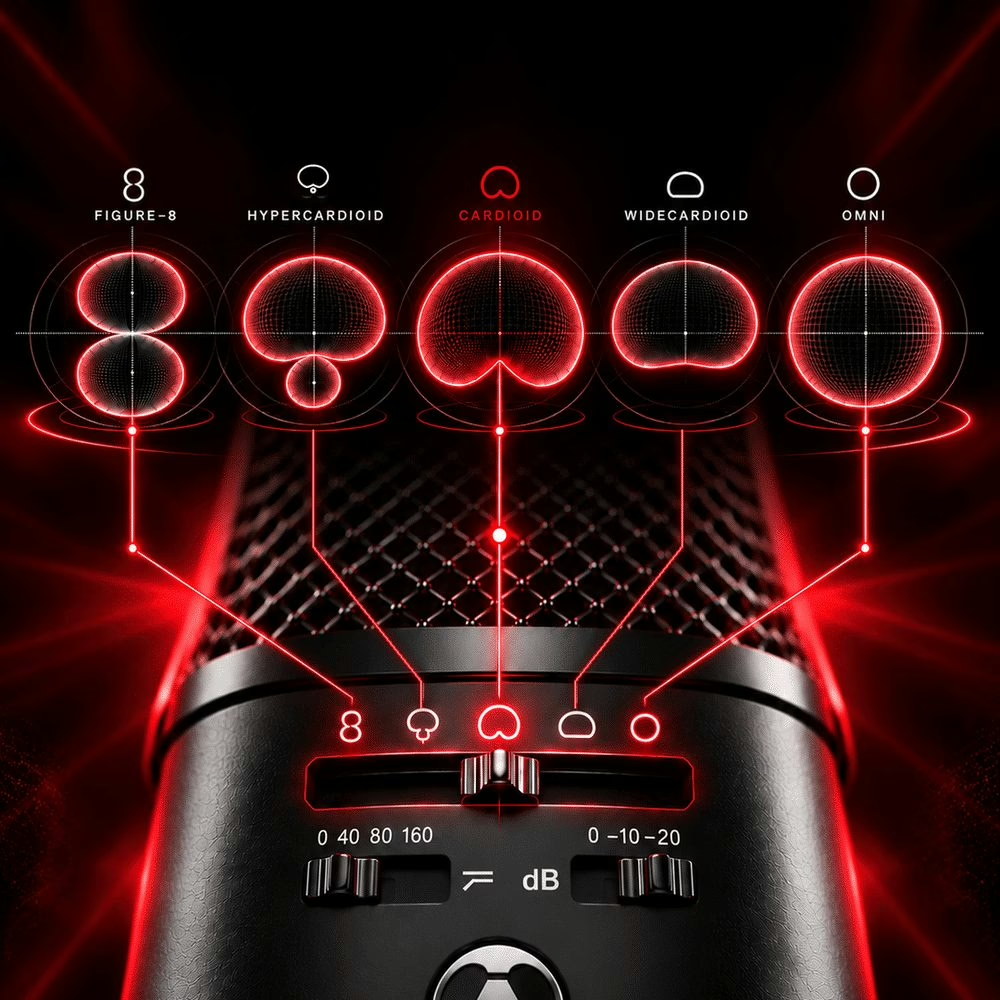
Where the OC16 stayed fixed in cardioid, the OC616 offers five selectable polar patterns right on the mic body: cardioid, omnidirectional, figure-8, hypercardioid and wide cardioid. Enough to move from a tight lead vocal to a room capture, or to build a figure-8 pair for Mid/Side stereo, without swapping mics.
The specs that matter
Beyond the marketing, the OC616 posts figures consistent with demanding pro use. Its very low self-noise and high maximum SPL make it comfortable on a whisper as well as in front of a cranked guitar amp, especially once the pad is engaged.
| Specification | Value |
|---|---|
| Type | Large-diaphragm condenser, CKR12 capsule (1 inch) |
| Patterns | Cardioid, omni, figure-8, hypercardioid, wide cardioid |
| Frequency response | 20 Hz – 20 kHz |
| Self-noise | 13 dB-A |
| Max SPL | 147 dB (157 dB with -20 dB pad) |
| High-pass filters | 40, 80 and 160 Hz |
| Pads | -10 and -20 dB |
| Announced price | $749 / £499 / €599 |
Having the controls on the mic itself — three high-pass filters (40, 80, 160 Hz) and two pads (-10, -20 dB) — is a genuinely good idea when you are tracking fast: you set the mic by hand before it even hits the preamp, with no diving into an interface. If the colour and gain of the next link interest you, we broke it all down in our explainer on the mic preamp.
Open Acoustics and where it sits
Austrian Audio highlights its Open Acoustics Technology, a design meant to cut internal reflections behind the capsule for a more open, less boxy sound. In practice, that is the kind of detail you hear most on transients and on the air up top.
At €599 the OC616 slots below the OC818 while keeping the capsule and most of what defines the brand. It lands in a hotly contested segment — affordable high-end all-round condensers — where pattern choice and placement usually matter more than the spec sheet. On that turf, a figure-8 pair or a well-placed omni changes everything; we cover it in our guide to microphone placement.

Who is it for?
Austrian Audio pitches the OC616 as a do-it-all mic for home and project studios: lead vocals, voiceover, acoustic guitar, drum overheads, instrument tracking, stereo capture. The promise is not a strongly coloured mic but a neutral, reliable tool you shape through pattern and placement. On vocals, solid sibilance control will finish the chain: see our piece on de-essing.
My take
It is a smart play: take the capsule that built the OC818’s reputation and serve it in a better-priced body, with the five patterns where they count. At €599 the OC616 is not out to dazzle with a signature colour — it wants to be the mic you reach for nine times out of ten, which is exactly what a small locker tends to lack. Body-mounted filters and pads will earn their keep when tracking on the fly. The ears will have the final word, but on paper this is precisely the kind of versatile workhorse that deserves a spot on the studio’s main stand.