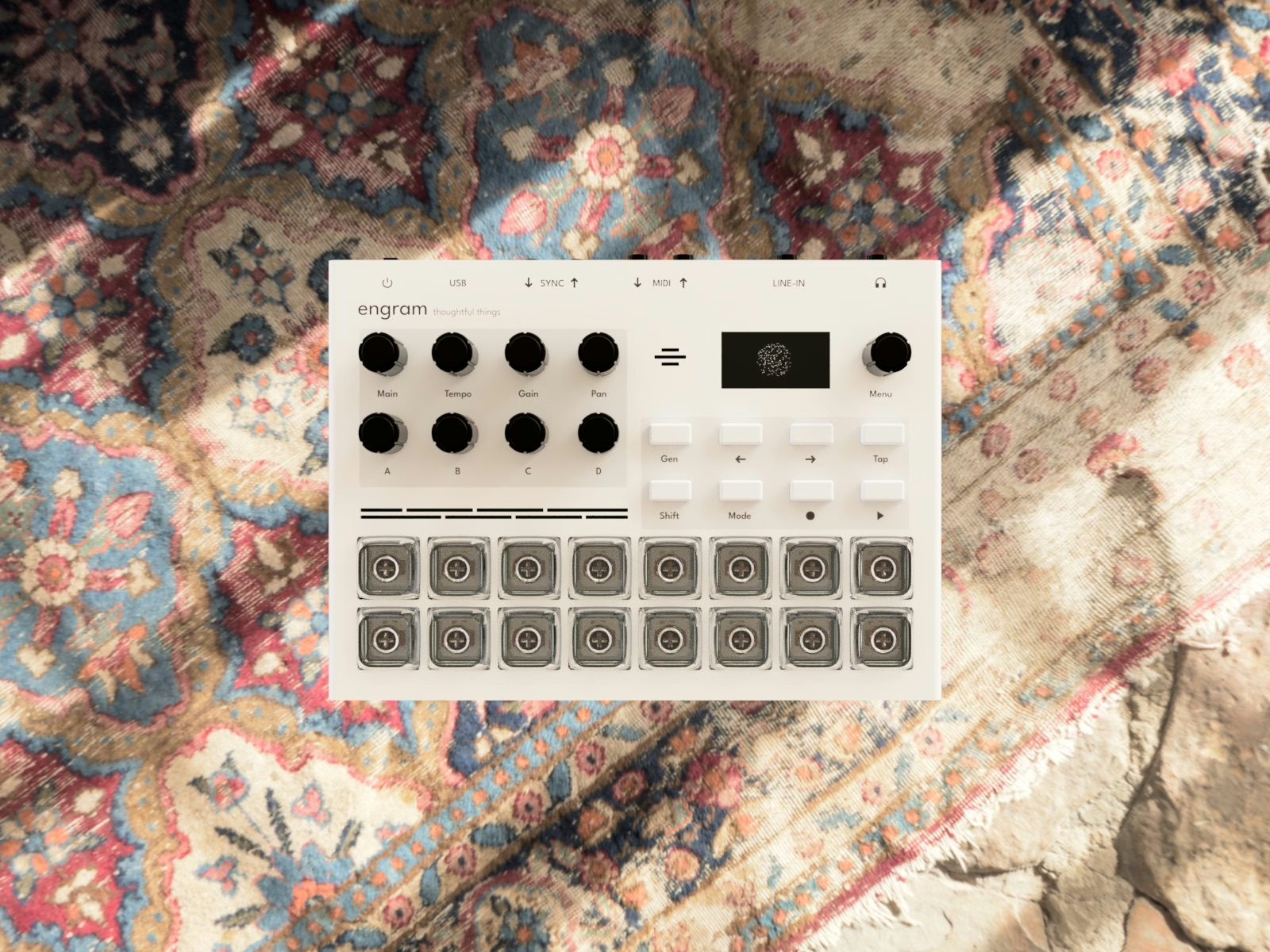
Here is a machine quite unlike any other. Engram, from Los Angeles startup Thoughtful Things, is a pad-based sampler and groovebox that runs small generative AI models directly on the device — no internet connection, no app and no subscription. Everything happens in the hardware, and that is exactly what makes it intriguing.
Generate, mangle, sequence
The concept rests on three ideas. First, sound generation: the device creates short bursts of audio on demand. Then neural processing: you run your own recordings through an embedded neural audio codec that recomposes them in its own way. And finally — this is the clever part — model-bending knobs that deliberately push the model into failure: glitches, artefacts and textures you could not get any other way. The mistake becomes the raw material.
A real instrument, not a software gadget
Engram does not forget that it has to be played. You record and warp your own material through an onboard microphone or a stereo line input, arrange with a step sequencer, chop with sample slicing and color with onboard FX. For connectivity, it plays the hardware-studio game: headphone output, MIDI in/out and CV sync + gate to hook it into a modular or a hardware groovebox rig. This is no toy: it is a sampler built to slot into an existing setup.
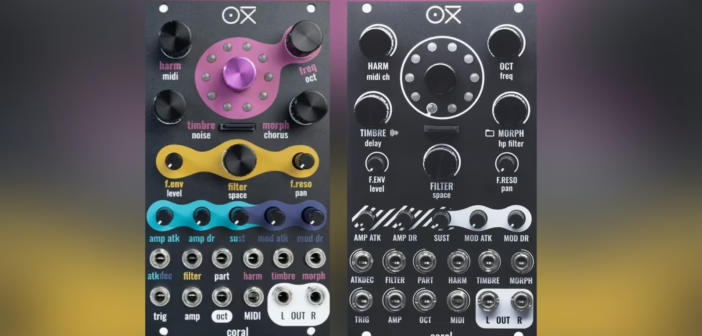
Running generative models on hardware echoes a wider trend: recent machines keep adding engines and open firmware, like the OXI Coral 3.0, or rethink the hybrid drum machine the way Polyend Drums does. Engram bets everything on generated, recomposed sound.
Price and availability: the catch
This is the part to watch closely. Engram launches through a crowdfunding campaign: early-backer units start around $675 (roughly 30% off the planned price), a $770 tier covers 40 units, and an estimated retail price later lands near $850 to $900. Delivery is slated for May 2027, so you will have to wait — and, as with any community-funded project, keep in mind that dates and specs can shift before production.
My take
The idea is exciting because it grabs AI by the right end: not an online assistant that composes for you, but a texture engine running inside the box that you bend with a knob. The model-bending controls in particular promise what musicians actually love — an instrument you can break to pull out sounds no one has heard. The usual crowdfunding caution applies: mid-2027 delivery, a small team, embedded models whose real-world finesse is still unknown. If Engram delivers, it opens a whole new category. For now, it is one of the most original electronic-instrument projects of the year — and above all it makes you want to hear it for real. To understand what “generating” a sound means, revisit our explainer on additive synthesis.