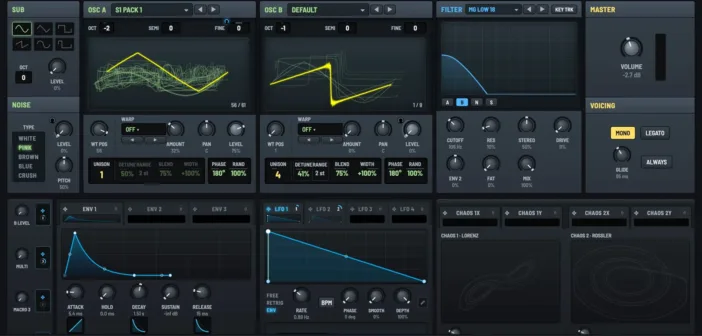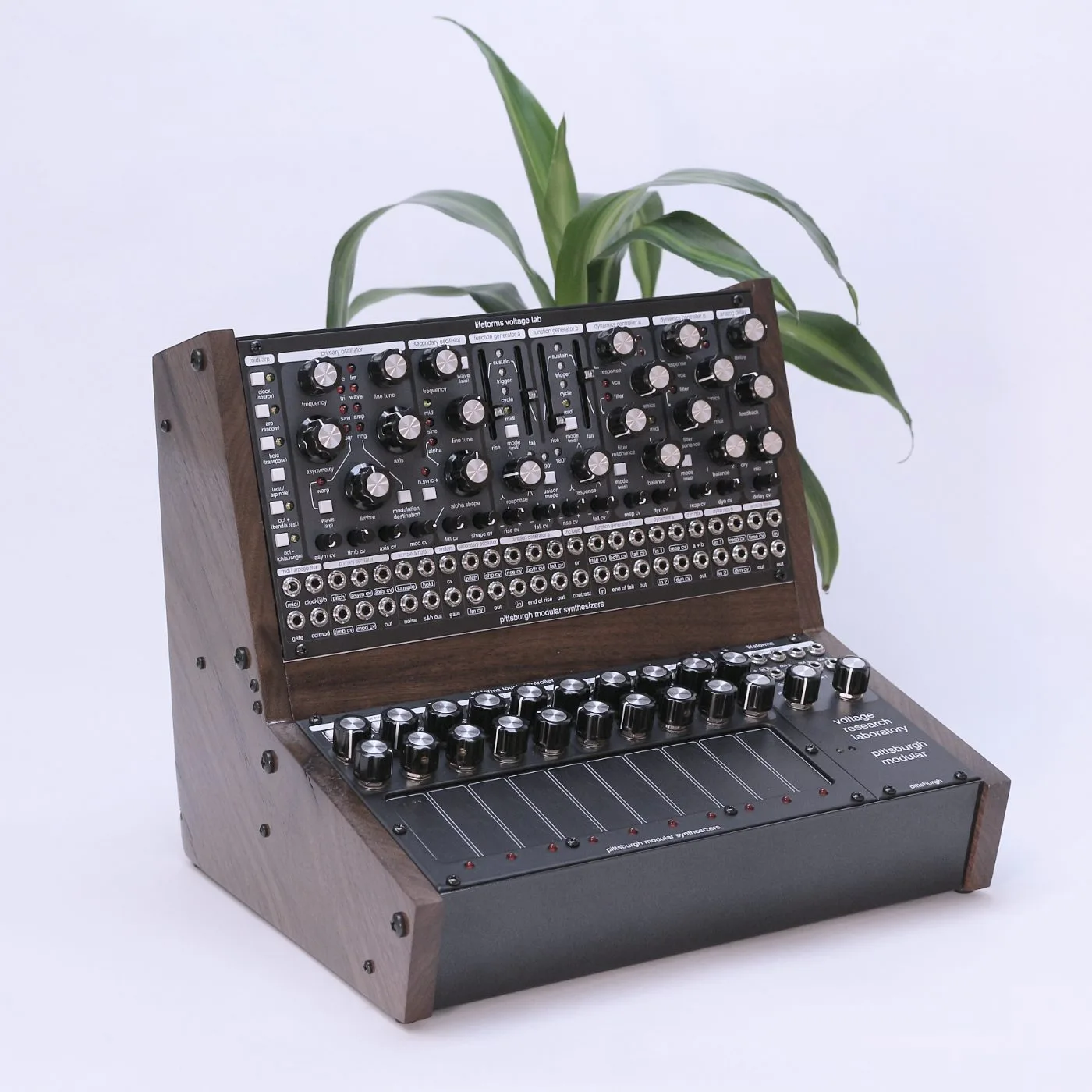
Pittsburgh Modular has brought one of its most ambitious instruments back to life in software. The Voltage Research Laboratory, a semi-modular synthesizer released in 2019 and quickly discontinued, returns as an iPadOS app called Voltage Lab V. It sells for $19.99 on the App Store, runs both as a standalone instrument and as an AUv3 plugin, and is billed as a component-level emulation of the original hardware.
A West Coast semi-modular at heart
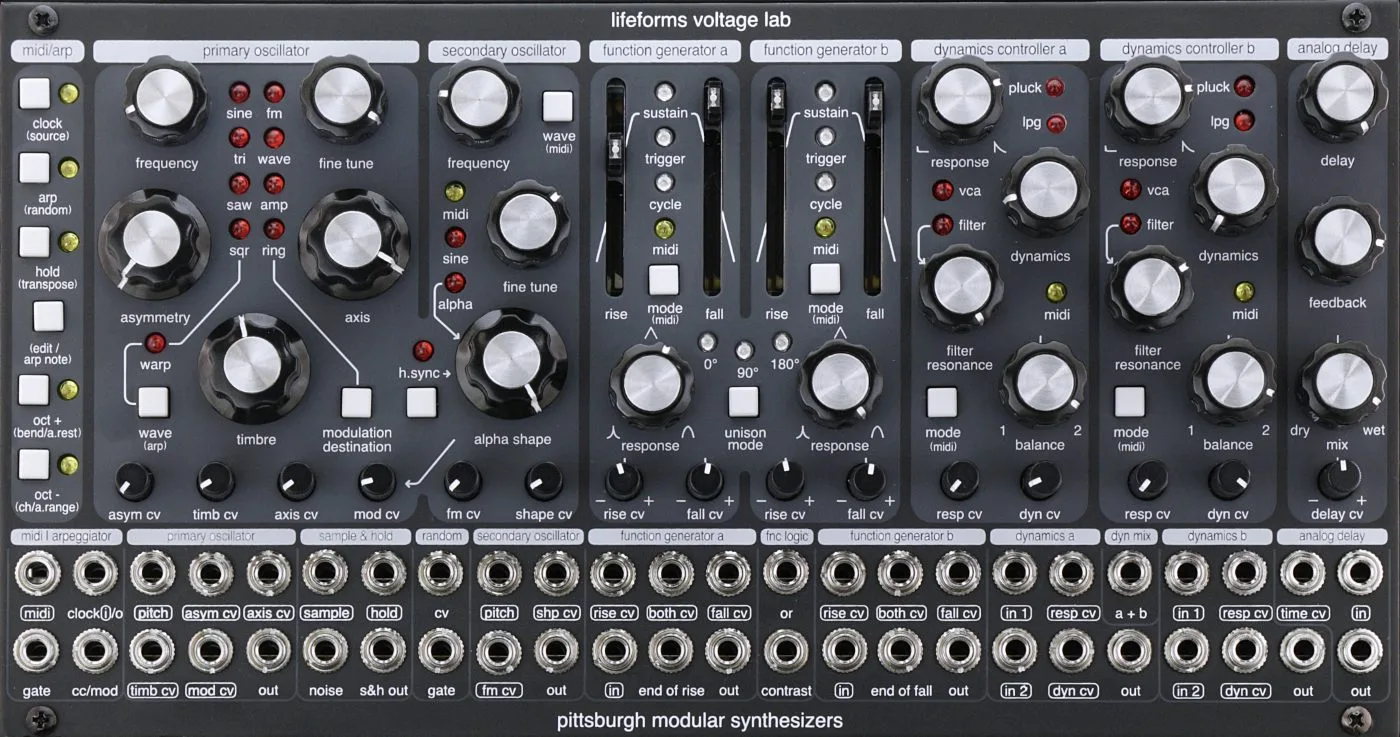
The Voltage Research Laboratory belongs to the West Coast family of synthesizers, descended from Don Buchla’s ideas. Where classic subtractive synthesis starts with a rich waveform and filters it down, the West Coast approach builds timbre through wavefolding, modulation and low-pass gates. Voltage Lab V carries that heritage in its main oscillator, with a custom wave folder, linear FM, amplitude and ring modulation, waveform cycling and hard sync. A second oscillator adds to or modulates the first.
That lineage puts the instrument close to other machines the site has covered, such as the Tiptop Audio Buchla Model 277t, which revives an unfinished Buchla signal delay in Eurorack. Voltage Lab V, by contrast, folds a whole modular system into a tablet.
Inside the laboratory
The app keeps the full feature set of the hardware. The main sections are:
- a complex oscillator pair, with wavefolding, linear FM, amplitude and ring modulation, and sync;
- two rise/fall function generators, usable as envelopes, LFOs or slew generators, with unison modes;
- a twin dynamics section, described as an evolution of the classic low-pass gate, offering a 12 dB resonant filter, a VCA and a percussive mode;
- a multi-FX section at the end of the chain with two delays, two reverbs, a granular processor and a PGH filter emulation, one effect at a time;
- full patching, with audio and voltage patch points and virtual cables, for monophonic or polyphonic sounds.
Playing, sequencing and control
Voltage Lab V goes beyond the patchbay. It includes an arpeggiator, a preset browser and an on-screen touch keyboard. A four-voice multitimbral drone mode opens the door to pads, textures and shaped noise. For control, every parameter maps to an external controller through a MIDI CC assign function, and the AUv3 version loads as several instances inside a host or sequencer. To understand how a tablet, synths and modular gear talk to each other, our guide to MIDI and CV/Gate lays the groundwork.
Price, availability and the EU question
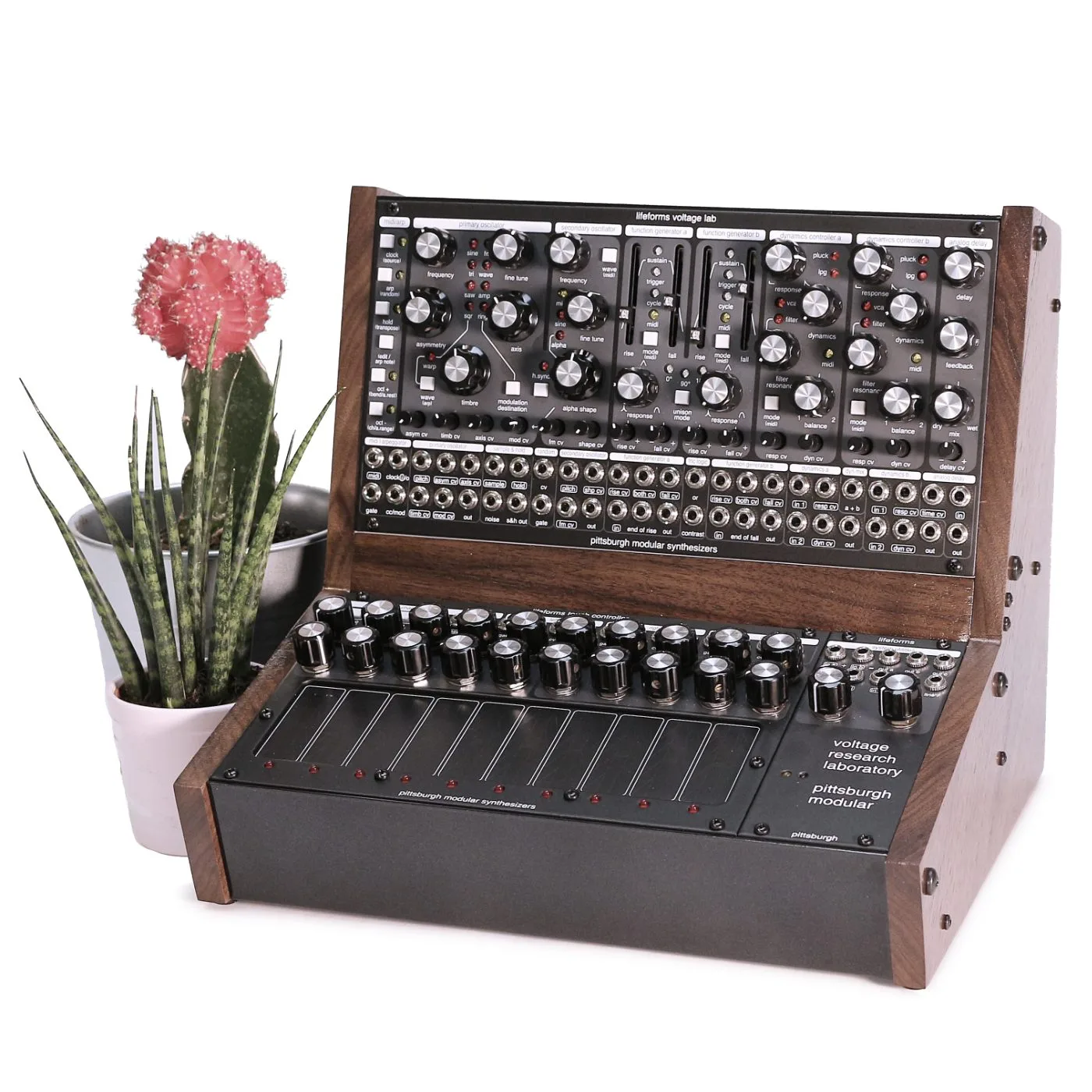
Voltage Lab V is priced at $19.99 on the App Store and available now, but not yet in the European Union. Pittsburgh Modular says it is waiting for its developer account to become EU-compliant before selling there. The original hardware was funded on Kickstarter in 2019 and dropped soon after, which made the Voltage Research Laboratory a rarity. This software revival joins a wider trend of niche machines made affordable by porting, as the KOMA Elektronik Haloplane also shows on the sampling side.
My take
Seeing a semi-modular this expensive reappear at $19.99 on a tablet sums up the decade nicely. The pitch is honest: instead of yet another emulation of an overdone classic, Pittsburgh Modular revives a singular architecture built for patching and sonic exploration. The EU gap at launch is annoying, and a touchscreen will never match a real panel for feel. But for anyone curious about West Coast synthesis without emptying their account, this is a fine way in. Mostly, we want the iPad version within reach of all of Europe.