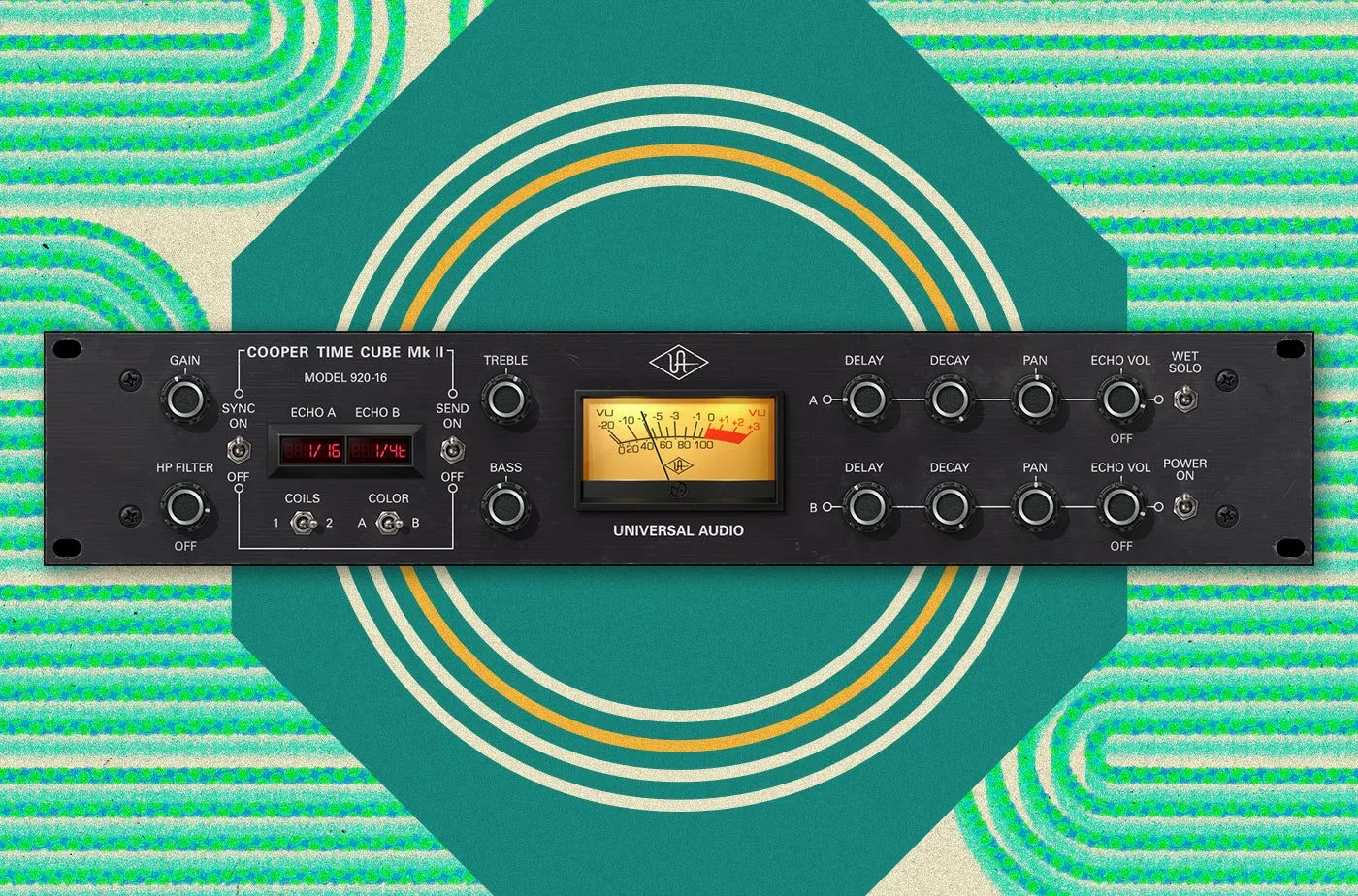
On November 11, 2026, Universal Audio released a native version of its Cooper Time Cube Delay plug-in. Until now the emulation ran only on UAD-2 cards and Apollo interfaces. It now runs on your computer’s CPU, in most DAWs, on macOS and Windows, with no UA hardware at all.
A delay born in a garden hose
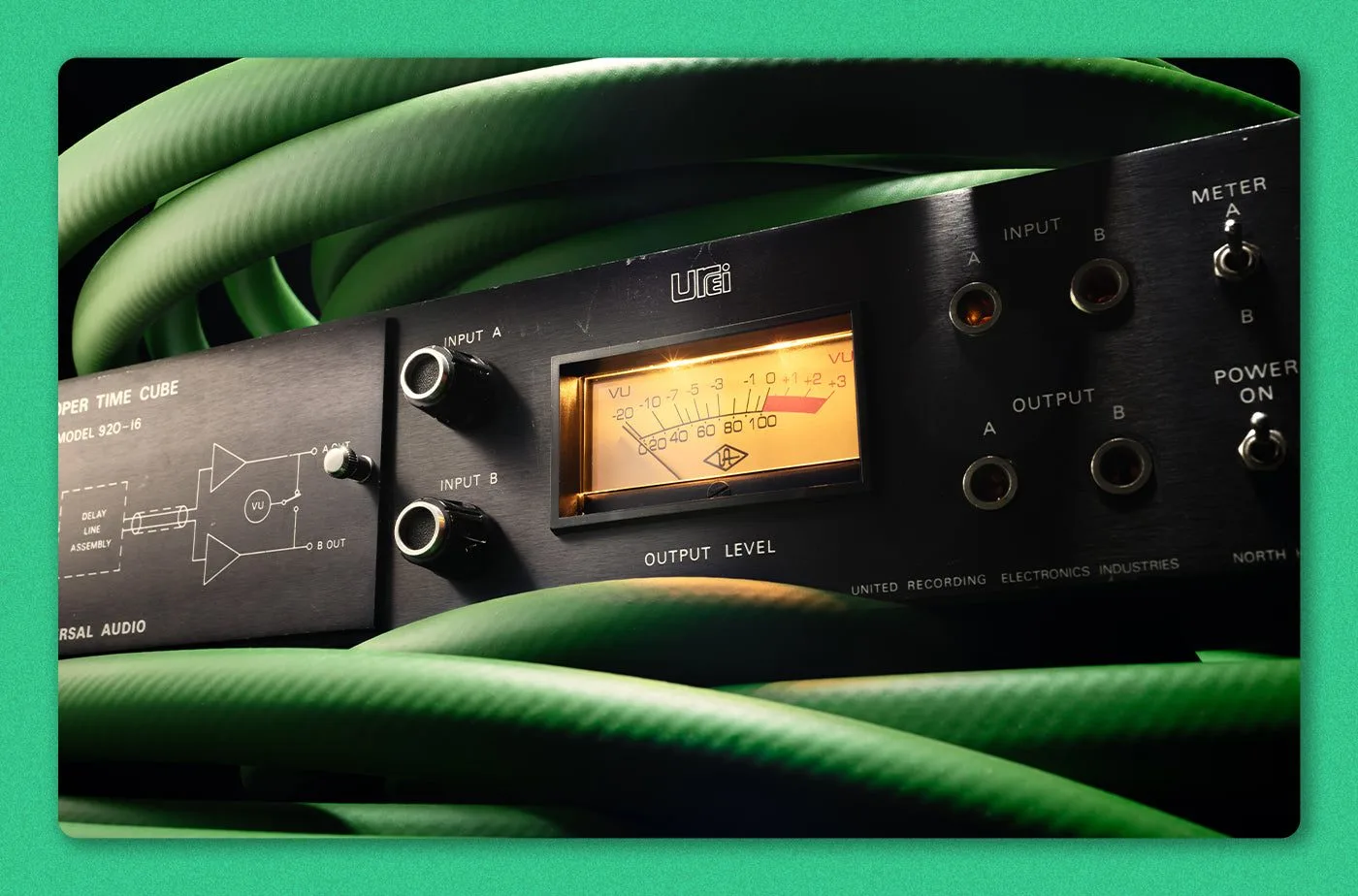
The original unit dates back to 1971. Bill Putnam, Universal Audio’s founder, and acoustician Duane H. Cooper had an idea nobody would dare sell today: send the signal through a real coiled garden hose to create a purely acoustic delay. The Cooper Time Cube offered two short fixed delays, around fourteen and sixteen milliseconds, and only about a thousand units ever left the workshop. That scarcity is exactly why engineers kept chasing its grain.
This mechanical delay sounded like no tape or analog circuit of its era. It gently colored the highs, tightened the image, and was mainly used to thicken a vocal or a guitar without adding any reverb tail.
Two delay lines and grain shaping
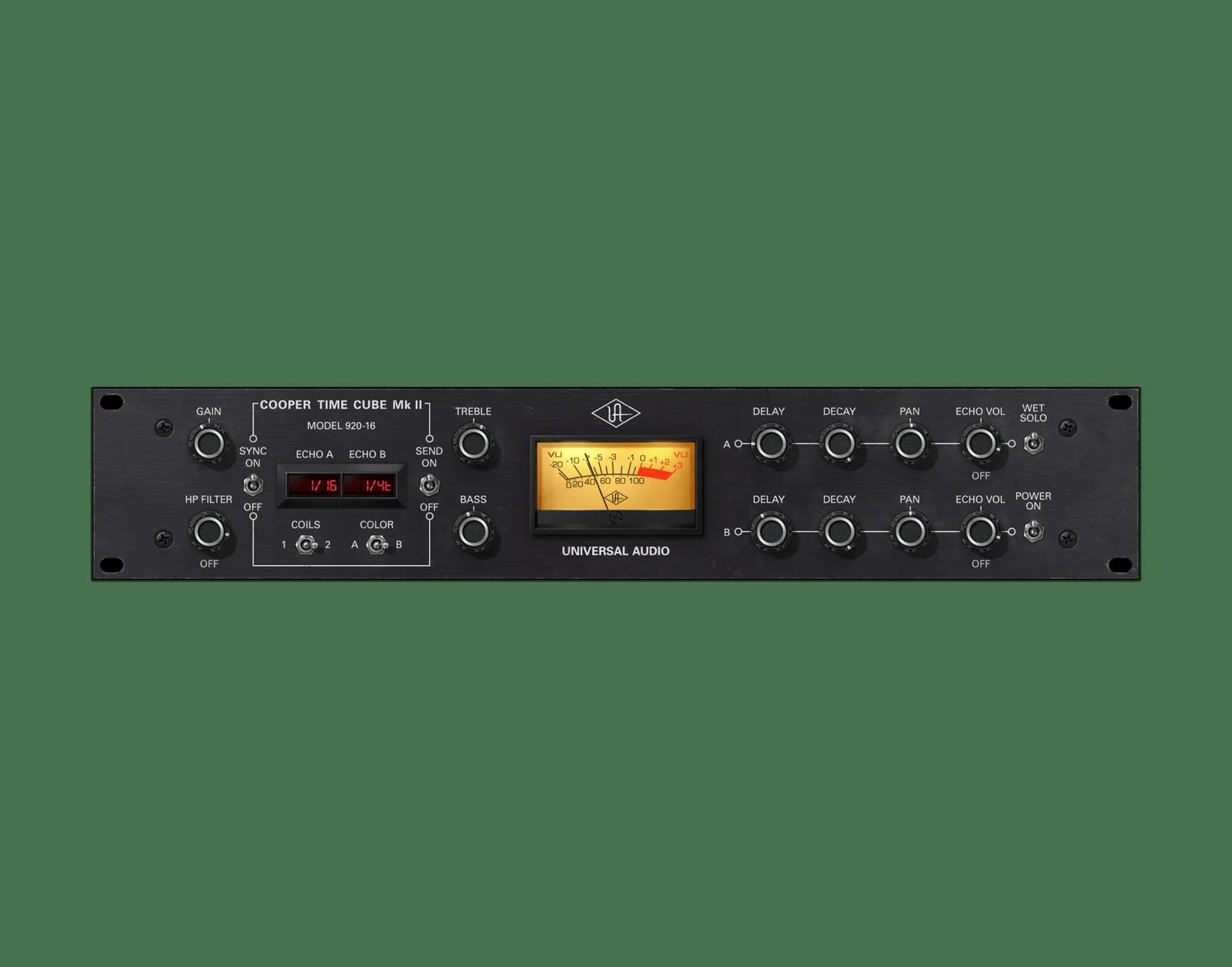
The plug-in keeps that principle and opens it up. It gives you two separately adjustable delay lines, with tempo sync for rhythmic textures. Four controls shape the repeats: Treble, Bass, Color and a high-pass filter. Enough to move from organic doubling to a tight slapback, or to widen a mono track into instant stereo.
This is no Swiss-army delay, and that is the point. The Cooper Time Cube is about short delays, the ones that add body to a take rather than depth. For long, musical echoes, a more conventional mix delay or a tape echo still does the job.
Native, and no Universal Audio hardware
The real change is one word: native. You no longer need a UAD-2 card or an Apollo interface to load the plug-in. It runs on the machine’s CPU and fits into the usual hosts on macOS and Windows. Universal Audio also bundles it in its UAD Spark Studio subscription, which unlocks the brand’s full native library.
This port extends a move started months ago. UA has already shifted several flagship titles to native, from the Empirical Labs FATSO tape simulator to the EMT reverbs. The Cooper Time Cube follows the same path: the house classics are no longer reserved for DSP owners.
On price, Universal Audio lists $49 as an intro price through November 30, 2026, then $99. A measured entry ticket for a historical oddity that any session can now reach.
My take
Seeing an oddity like this arrive natively is a treat. The Time Cube was never a do-it-all delay, and that is not its job: its two short lines thicken a vocal, set a clean slapback or nudge a track into stereo without reverb. At $49 during the launch, the ticket stays reasonable for a grain no other delay quite reproduces. The only open question: among the dozens of delays already loaded in your sessions, will you give it a regular spot or keep it as a seasoning?