Some machines put a color in an engineer’s head the moment you say their name. The Lexicon 480L is one of them. Released in 1986, this digital reverb and effects processor held the top spot in major studios until the mid-2000s, to the point of becoming the yardstick every other reverb was measured against.
From the 224 to the 480L
Lexicon did not invent the digital reverb. That honor goes to the EMT 250, which appeared in 1976. But the Massachusetts company made its own the studio standard from 1978 with the 224, shown at the AES convention. The 224, then its 224X and 224XL variants, became the most widespread high-end reverb in history. The 480L took over in 1986 and pushed the architecture further: two independent processors able to run two programs at once, and 18-bit conversion that was a strong spec sheet for the time.
The price also made an impression. At around $15,000, the 480L was not a hobbyist purchase. It lived in the control rooms that billed by the day and had to deliver the best sound available. You met it in pop as much as in film scoring, where a reverb that breathes is the difference between a demo and a record.
The LARC, a remote that set a template
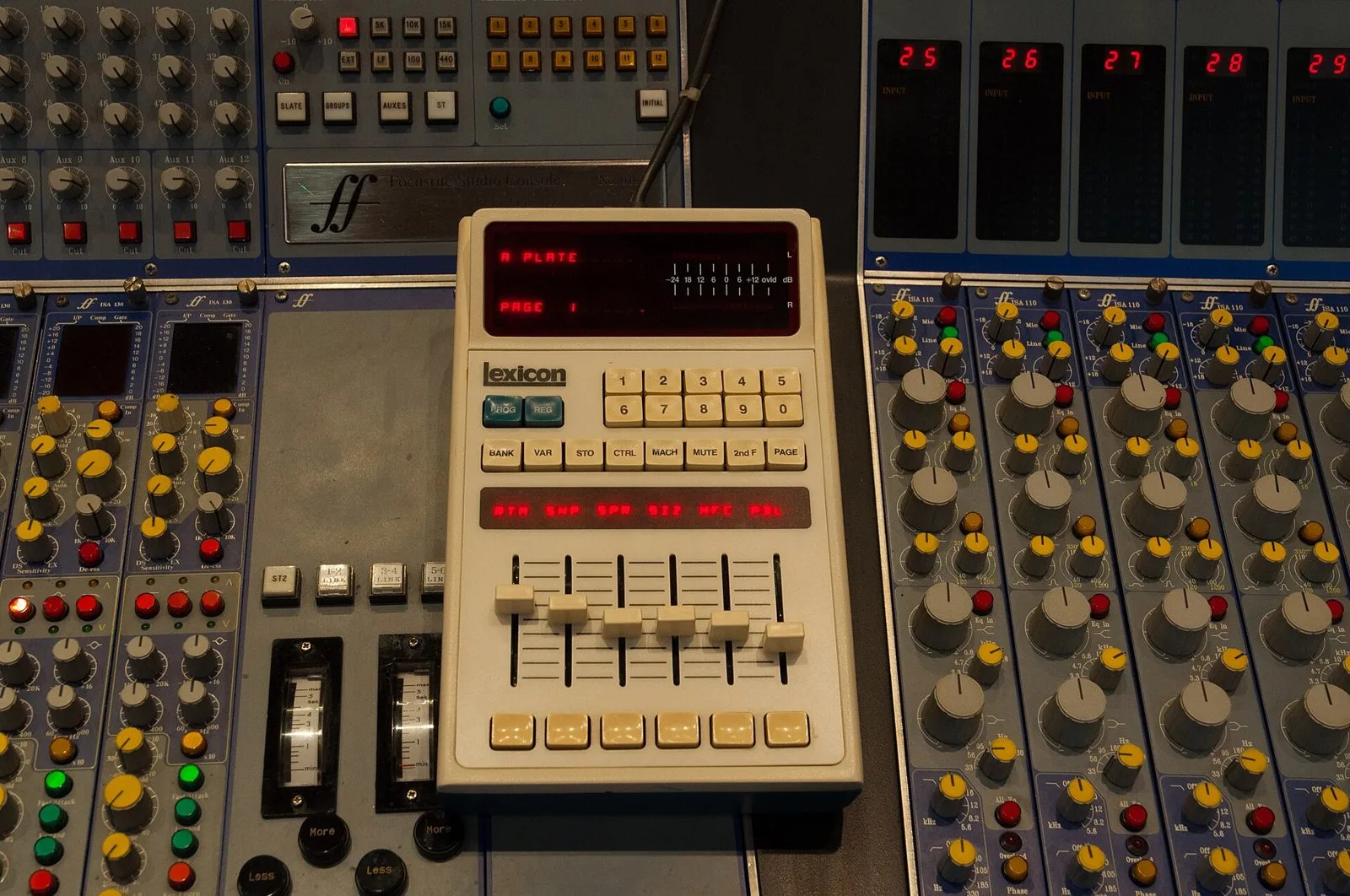
The visible part of the 480L is not the rack, tucked away in a flight case at the back of the room, but the LARC, for Lexicon Alphanumeric Remote Control. This small desktop panel brings together seemingly simple faders, buttons and an alphanumeric display. Through it the engineer sets room size, pre-delay, decay time, diffusion and the shape of the reverberant field. One LARC could even drive a 224XL sitting next to it, which turned it into a genuine command post for the time-based effects of a big session.
That ergonomy matters as much as the sound. Putting the LARC within reach, next to the large console, means getting to classic programs in a few moves. Random Hall, Concert Hall, Rich Plate, Ambience: those names still speak to anyone who has spent nights hunting for the right reverb tail on a vocal.
How a 480L algorithm sounds
Behind the grain sits a mechanism you can describe simply. The signal comes in, passes through a pre-delay that pushes the reverb away from the source, crosses a set of early reflections that set the scene of the room, then enters a network of modulated delay lines that feed back into each other. This feedback loop sets the decay time, and the gentle modulation of those delays gives the 480L its living quality, without the metallic ring of the earliest digital reverbs.
The comparison with a plate reverb like the EMT 140 is telling. The plate offers instant density and a warm midrange, but a single color. The 480L offers a palette: deep halls, short rooms, discreet ambiences, all adjustable at the fader. It also sits at the opposite end from a modern convolution reverb, which replays the fingerprint of a real place. The 480L copies no existing room, it invents them, and that is exactly why it was used so much: its reverb exists nowhere but inside the machine.
A fingerprint that outlived the hardware
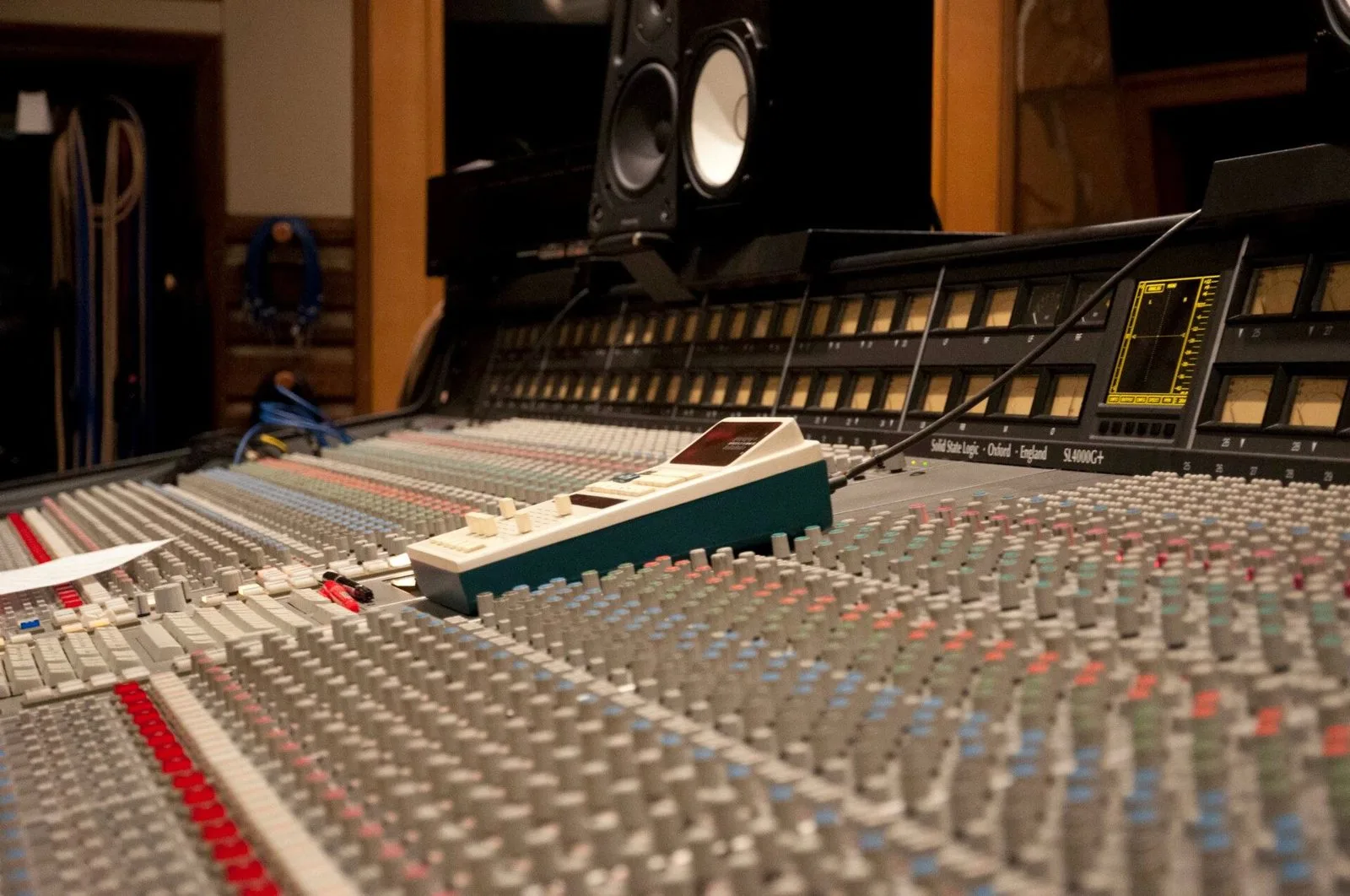
You met the 480L LARC in the finest control rooms, often resting on a large analog desk such as the SSL 4000 G+, the pairing that signed a huge number of 1990s records. Japan’s Onkio Haus studio is a good example. The 480L shared the rack with plates, bus compressors and character limiters like the 1176, each adding its signature to the chain.
The machine eventually aged, but its grain did not. The final firmware, version 4.10, now serves as the reference for the software emulations that replay its most requested algorithms. You find the same space-modeling logic in recent tools, for instance Universal Audio’s room modeling. Proof that a good reverb does not go out of fashion: it only changes its medium.
My take
The 480L remains a lesson in sound design. Its appeal is not rack nostalgia but the accuracy of a tool that offers believable spaces without copying the real world. The LARC, with its faders and small screen, also shows that a good interface ages better than a pile of menus. In software or hardware, the real question has not moved: does the reverb tail serve the voice, or bury it. On that ground, the 480L still has things to say.
Source: Lexicon 480L documentation published by Universal Audio.