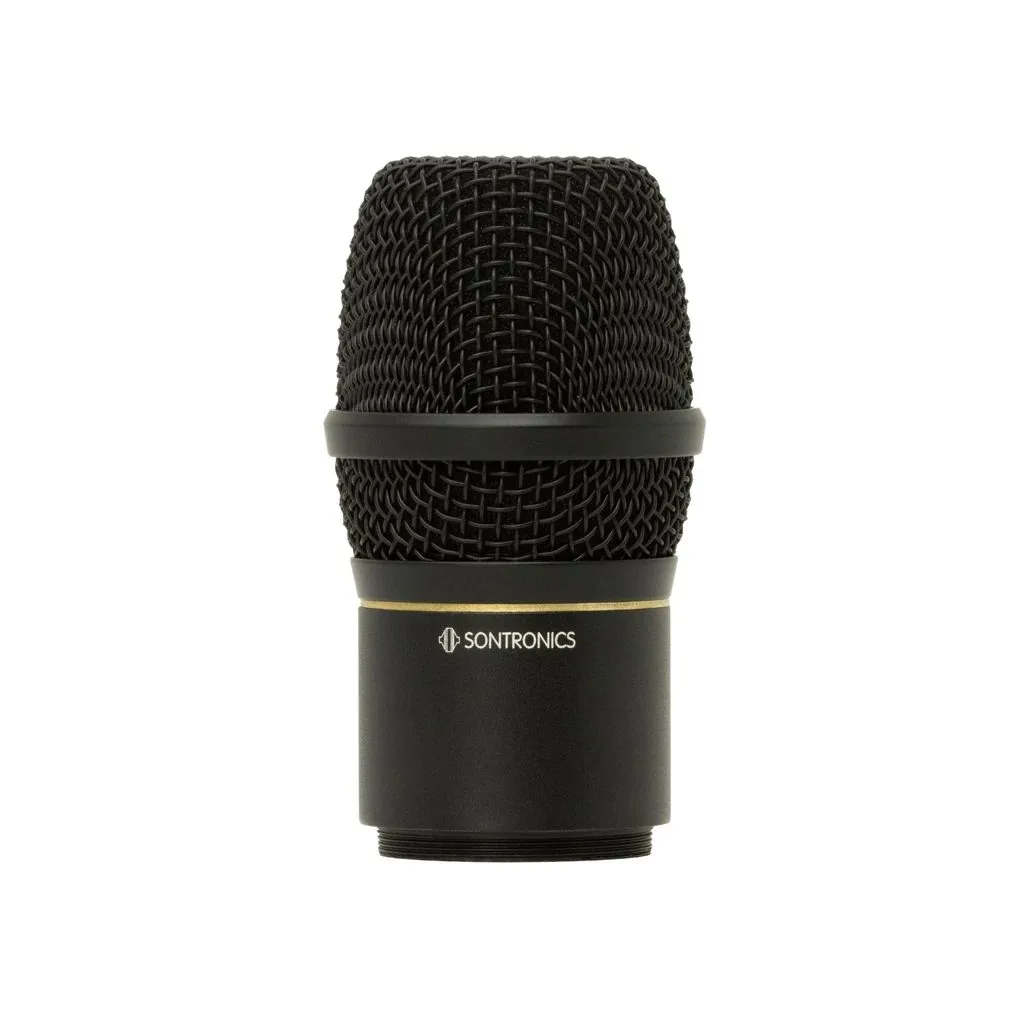
Swap the capsule without swapping the transmitter: that is the whole point of interchangeable mic heads, and Sontronics has just widened its own. On 6 November 2026 the British maker introduced the SOLO W2, a supercardioid dynamic capsule built for Sennheiser handheld transmitters. It joins the SOLO W1, released a few months earlier for the Shure world, and brings the voicing of the brand’s wired SOLO mic to an RF rig you already own.
A SOLO-voiced head that bolts onto your Sennheiser rig
The SOLO W2 is not a full microphone: it is only the head, the part that holds the capsule and grille. It threads on in place of the stock capsule on a Sennheiser handheld, exactly the way you would swap an e935 head for an e945 on an evolution body. The RF transmitter, the battery and the frequency plan stay yours; only the way the sound is captured changes.
The payoff is twofold. You get the character of the SOLO, Sontronics’ dynamic vocal mic, known for a present midrange and an open top end without harshness. And you get it on a Sennheiser fleet that is already deployed, with no need to buy whole new systems or redo a frequency coordination.
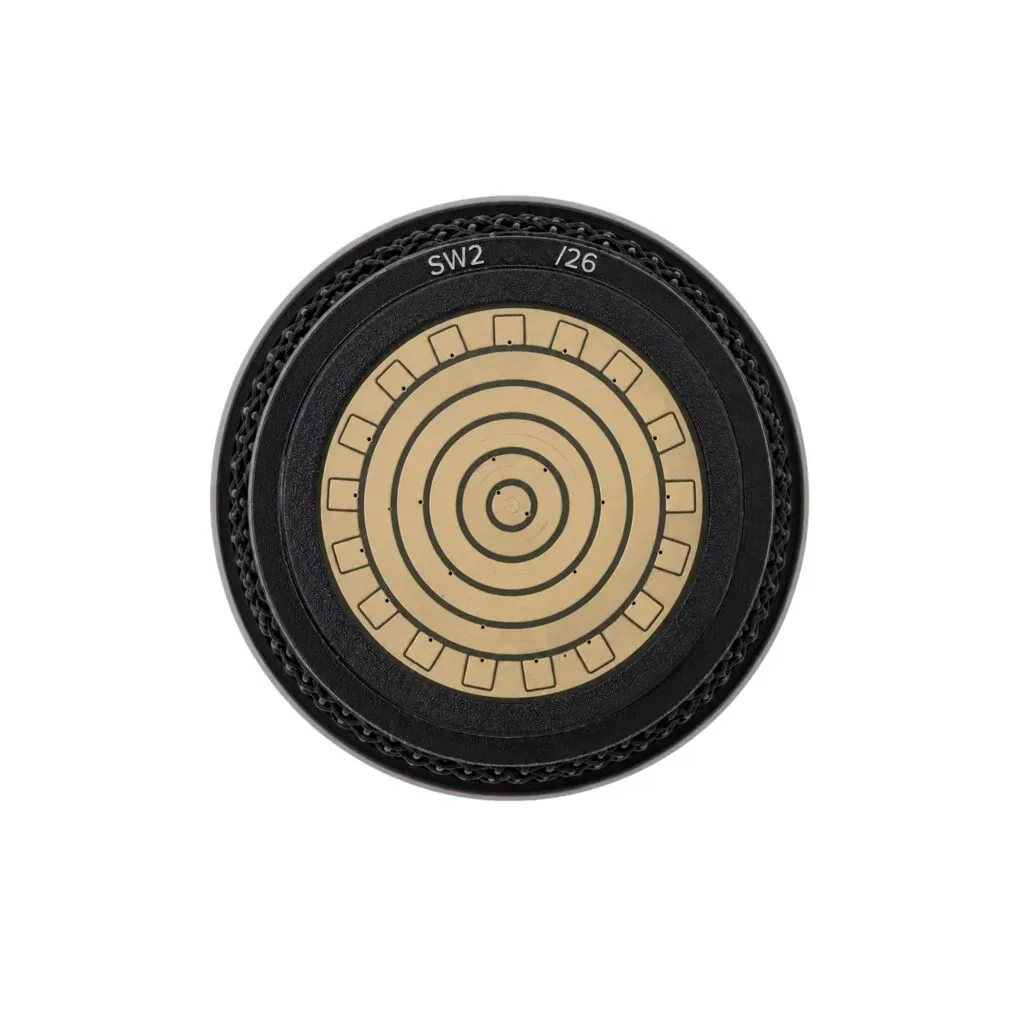
Supercardioid, dynamic, built for the stage
On paper the spec sheet is short but coherent with demanding live use:
- Dynamic capsule with a neodymium magnet, supercardioid pattern
- Frequency response 50 Hz – 15 kHz
- Sensitivity 5.5 mV/Pa
- Maximum SPL of 140 dB (for less than 1% THD)
- Hard anodised black body, steel grille, 170 g, 93 × 50 × 50 mm
The supercardioid pattern is the thing that matters most on stage. Tighter than a cardioid, it narrows the pickup onto the voice and rejects more monitor wash and spill from nearby sources, at the cost of a small rear lobe to watch when you place your wedges. The 140 dB max SPL leaves headroom for singers who push, and the response deliberately capped at 15 kHz keeps the aggressive sibilance of an over-extended capsule in check.
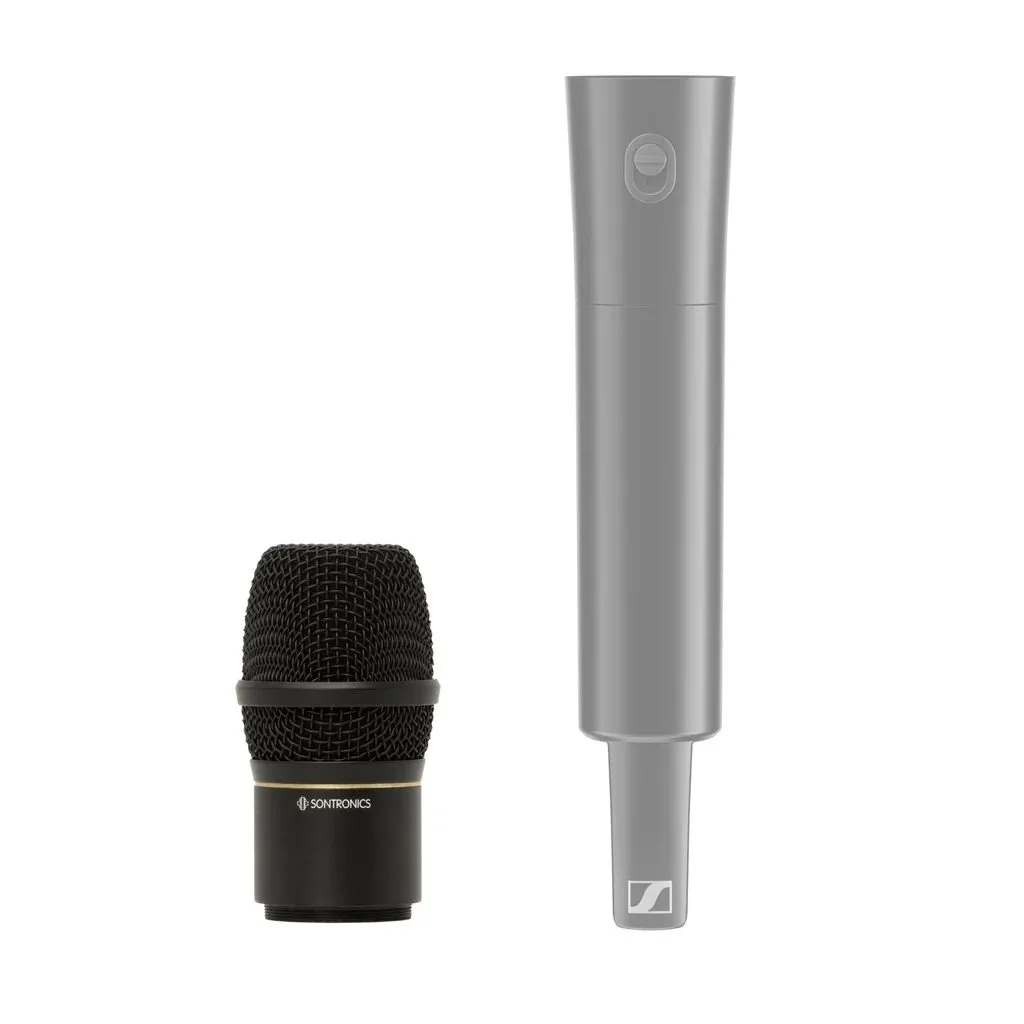
Broad Sennheiser compatibility
Sontronics lists a compatible-transmitter range that covers most of the Sennheiser catalogue, from the recent digital lines to series that have been in service for years:
| Family | Handheld transmitters |
|---|---|
| Recent digital | EW-D SKM-S, EW-DP SKM-S, EW-DX SKM and SKM-S |
| evolution G3 / G4 | SKM 100, 300 and 500 (G3 and G4) |
| High end | SKM 2000, 6000, 9000 |
| Compact and entry level | XSW, XSW-D, SKM AVX, SKM D1, SL Handheld |
Whether you run a latest-generation EW-DX digital link or the trusty SKM 500 G3 still working in plenty of venues, the W2 fits. It lines up against Sennheiser’s own interchangeable capsules and rival heads such as the sE Electronics V8, which plays on exactly this turf. A clean RF plan still comes first, but the capsule itself leaves it untouched.
Price and availability
Sontronics lists the SOLO W2 at around GBP 120, close to the W1, sold through its network of authorised dealers. The capsule ships in a protective pouch and is covered by the brand’s limited lifetime warranty.
My take
The interchangeable capsule is still one of the best value moves in live sound: for the price of a head you change the colour of a voice without touching a single frequency. The W2 has the right scope, supercardioid, dynamic, capped in the top, for a lead vocal that has to hold up in front of loud monitors. The real question no spec sheet settles is whether the SOLO’s grain survives intact through your Sennheiser’s RF stage, because that is where the last nuances live. At GBP 120 a head, trying one on two or three transmitters costs little and gets decided by ear, at soundcheck. For placement, the fundamentals of vocal mic positioning still apply.
Frequently asked questions
Does the SOLO W2 work with a Shure or AKG transmitter?
No. The W2 is cut for the mount and level of Sennheiser handheld transmitters. For a Shure system, choose the SOLO W1: the two capsules share the same voicing, not the same mount.
Do I need to recalibrate my frequency plan after swapping the capsule?
No. The capsule touches neither the RF transmitter nor the carrier: your frequency coordination stays valid as is. Only the pickup changes.
How is it different from a stock Sennheiser dynamic capsule?
The voicing. The W2 carries the character of the Sontronics SOLO mic, a present midrange and an open but un-harsh top, where Sennheiser heads have their own signature. Its supercardioid pattern puts it closer to an e945 than an e935.
Is it suitable for speech, in conference or theatre?
Yes. The supercardioid pattern and controlled bandwidth suit speech as well as singing, with good rejection of off-axis sources. The 140 dB SPL only matters for singing, but it does no harm to spoken use.