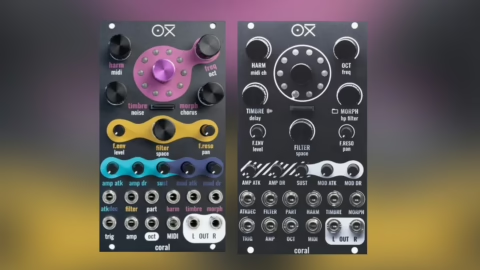
OXI Coral 3.0: six new engines, DX7-style FM and build-your-own firmware
OXI Instruments cracks its polyphonic Eurorack synth wide open with firmware 3.0: six fresh sound engines, a six-operator DX7-compatible FM engine, and…



OXI Instruments cracks its polyphonic Eurorack synth wide open with firmware 3.0: six fresh sound engines, a six-operator DX7-compatible FM engine, and…
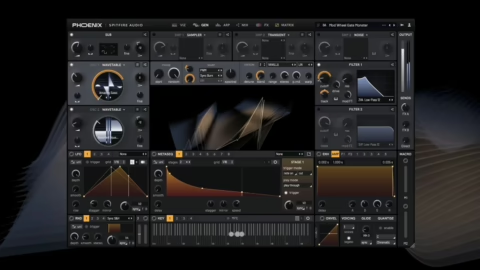
Spitfire Audio has launched Phoenix, a hybrid software instrument built with producer BT. Six synthesis engines, a fully stereo architecture, 40GB of…
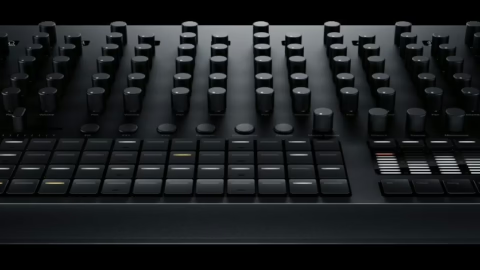
Billed as Polyend's most ambitious project, the Drums packs four true analog voices built on SSI chips and four digital tracks into…
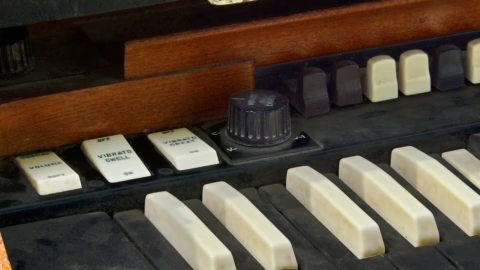
Additive synthesis starts from a simple, dizzying idea: any sound can be rebuilt by stacking sine waves. Here is how partials, harmonics…
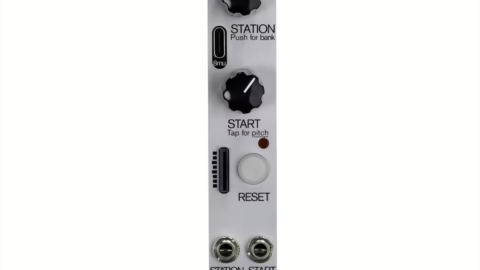
Music Thing Modular has rebuilt the Radio Music, one of its best-loved modules, as a Mk2 that keeps the spirit and changes…
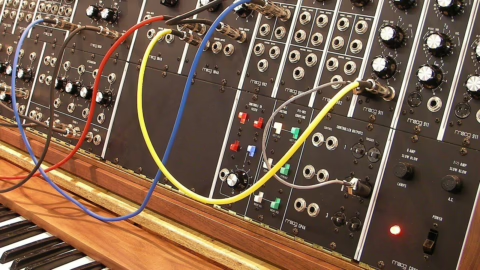
The LFO is the movement engine behind almost every synth patch: it makes a filter sweep, a note shimmer, a pad breathe.…
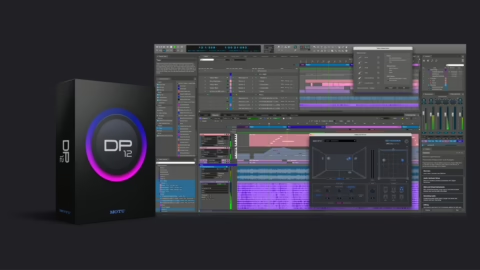
MOTU takes its Digital Performer workstation to version 12: immersive Dolby Atmos mixing up to 9.1.6, in-house AI stem separation, a new…
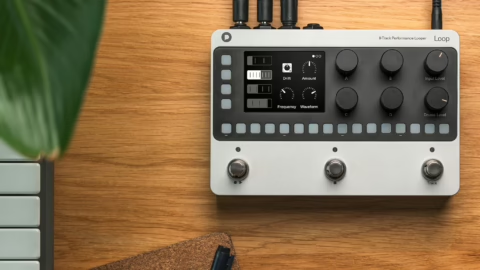
Polyend has unveiled the Loop, a compact instrument that pairs four stereo loopers, a drum machine and more than a hundred effects.…
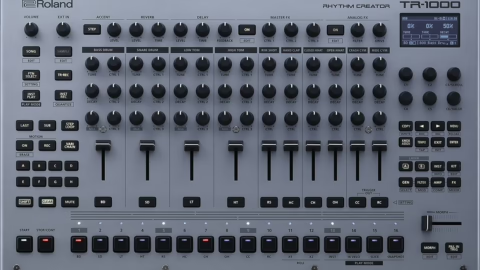
Roland's TR-1000 Rhythm Creator is its most ambitious drum machine in decades: sixteen analog circuits descended from the TR-808 and TR-909, a…
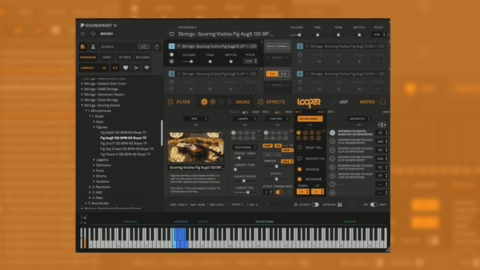
Soundpaint hits version 5.0 and finally grows up. 8Dio's free engine gets a built-in sample editor, an eight-layer engine and a monster…