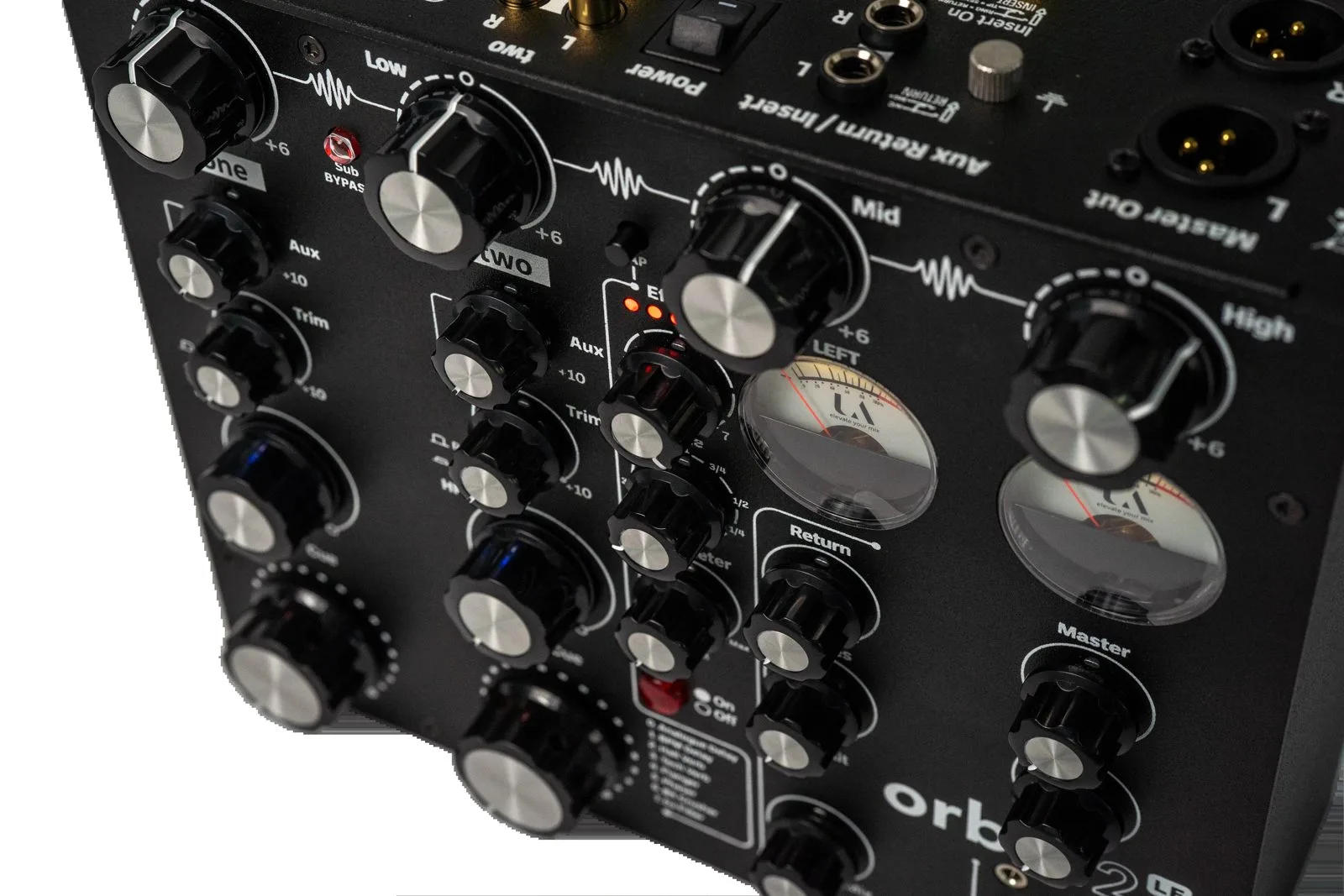
The rotary mixer, long the preserve of vinyl purists and listening bars, keeps moving toward more compact formats. Union Audio — the British workshop run by Andy Rigby-Jones, former Allen & Heath designer and MasterSounds co-founder — brings its range down to the orbit.2, a two-channel desktop rotary mixer offered in a plain version (LE) and an effects version (LE fx).
A two-channel rotary, hand-built in the UK
The orbit.2 follows the recipe that made the brand’s name: rotary knobs instead of faders, careful analogue circuitry, and hand assembly in its Cornwall workshop. The format is deliberately tight here — two channels, a desktop footprint — aimed at the home DJ, the listening bar or the high-end vinyl setup, where big four- or six-channel rotary consoles are overkill.
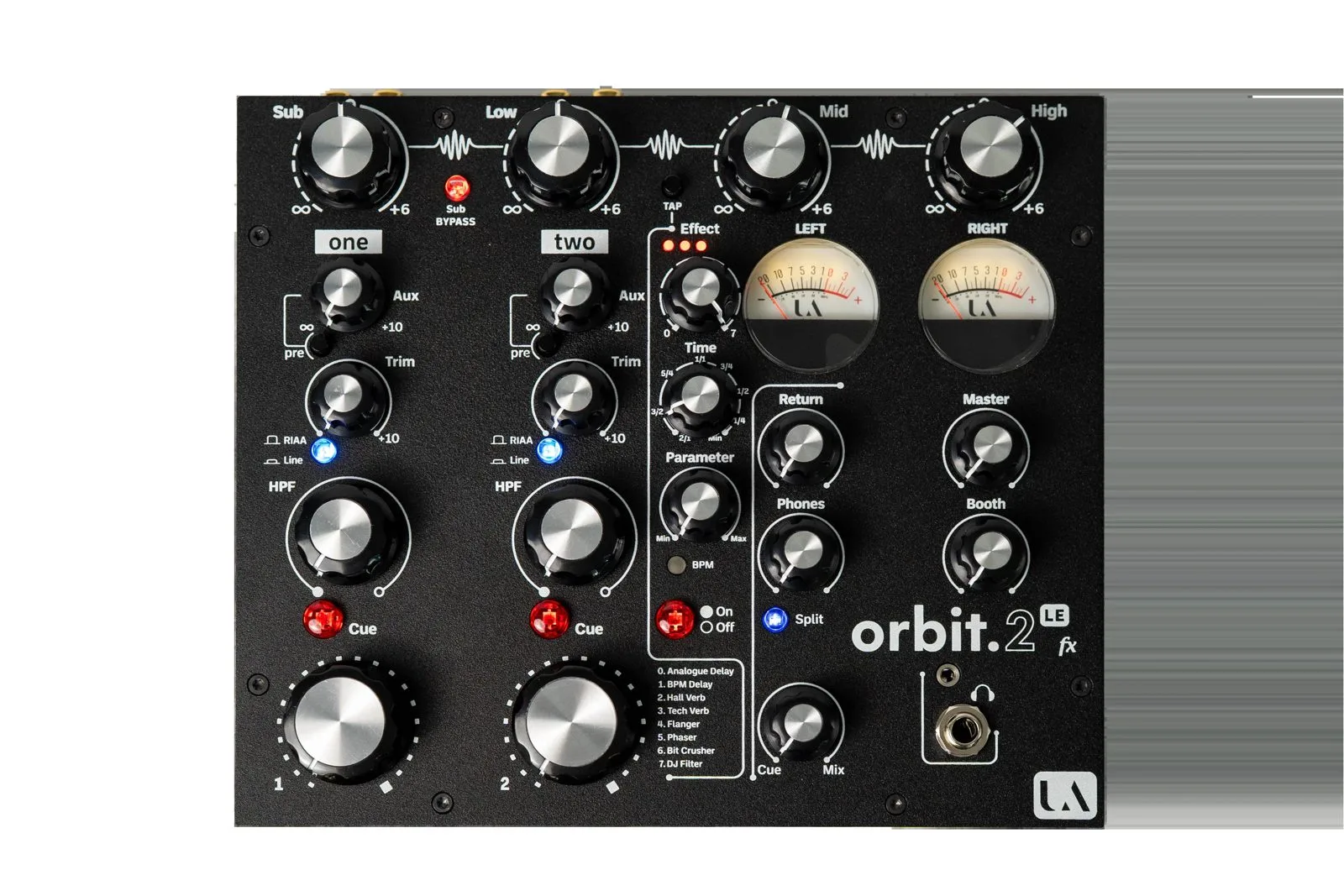
Each channel has a switchable phono/line input, a VU meter, and runs through the isolator, the heart of any rotary mixer: an EQ (three bands on the LE, a reported four on the LE fx) that can cut a band to silence, giving transitions a feel very different from a crossfader.
LE or LE fx: the difference is the effects stage
Both versions share the same chassis and the same mixing section. The LE fx adds a built-in digital effects unit and an aux send/return loop:
- Delay, reverb, phaser and flanger
- Bit-crusher and resonant filter
- Four-band isolator, versus three on the LE
- Aux send/return on 1/4″ jack
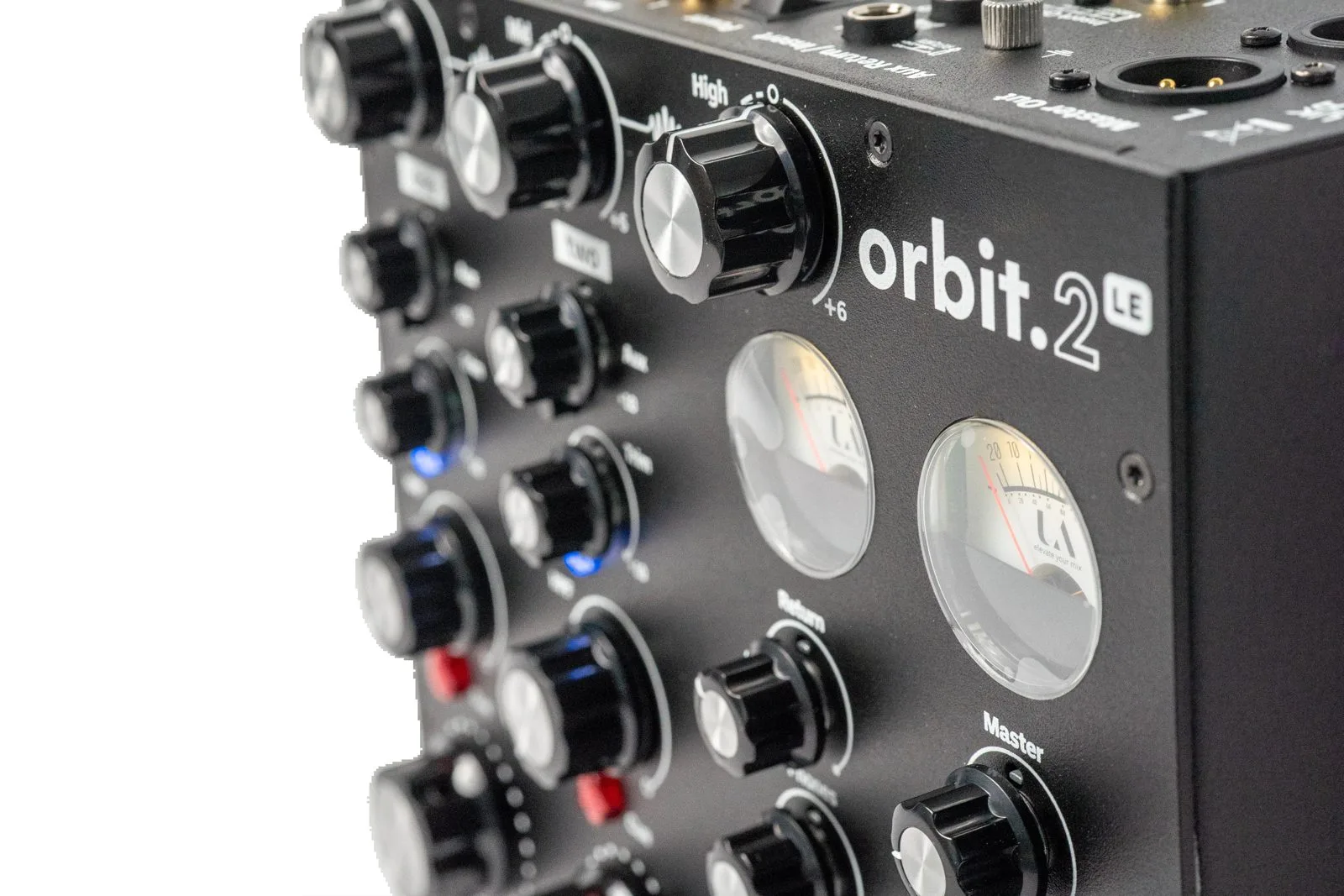
For connectivity, both models offer a balanced XLR master output, booth and aux outputs on TRS jacks, and an RCA record output. Power comes from an external 18 V supply. The footprint stays small, around 23 cm wide for roughly 2.6 kg: an object that lives on the corner of a desk, next to two turntables.
Positioning: the way into rotary mixing
Union Audio did not invent the two-channel rotary, but it brings its own signature: the MasterSounds lineage, British manufacturing and an analogue sound aimed at the top of the field. The orbit.2 sits below the valve two.valve and four.valve models and alongside the CV-controllable area.6, in a now-wide range. For anyone coming from digital, moving to analogue rotary mostly changes the gesture: you ride, you isolate, you let things breathe, where the fader invites you to cut.
Price and availability
The orbit.2 LE is listed at around $850, and the LE fx between $950 and $1,000 depending on the market, both sold through the brand’s usual dealer network. Exact prices vary by country, so check the local figure before deciding between the two versions.
My take
Rotary has long carried an entry price that kept it a niche object. Bringing the Union Audio recipe into a two-channel desktop unit, with the option of an effects stage, opens the door to people who mix at home or run a listening bar without wanting a six-kilo console. The isolator remains the real argument: it is what gives rotary that distinctive touch, and moving it to four bands on the fx is no gimmick. That is where the choice sits: for vinyl played the old way, the LE is enough; if you like reshaping the sound live, the effects earn their premium.
Frequently asked questions
How is a rotary mixer different from a regular fader DJ mixer?
A rotary replaces vertical faders with rotary knobs and leans on an EQ isolator rather than a crossfader. The gesture becomes gradual, built for long musical blends rather than scratching or quick cuts.
Can the orbit.2 take turntables directly?
Yes. Each channel has a switchable phono/line input, with the RIAA preamp needed to connect a moving-magnet turntable without an external box.
Are the LE fx effects analogue or digital?
Digital. The mixing section and isolator stay analogue, but the effects stage (delay, reverb, filter, bit-crusher and so on) runs on a DSP, patched in through an aux send/return loop.
Who makes Union Audio, and what is the link with MasterSounds?
Union Audio is the British workshop of Andy Rigby-Jones, who also designed the MasterSounds rotary mixers. The brand builds its products by hand in the UK and took over production of the MasterSounds two.valve and four.valve models.