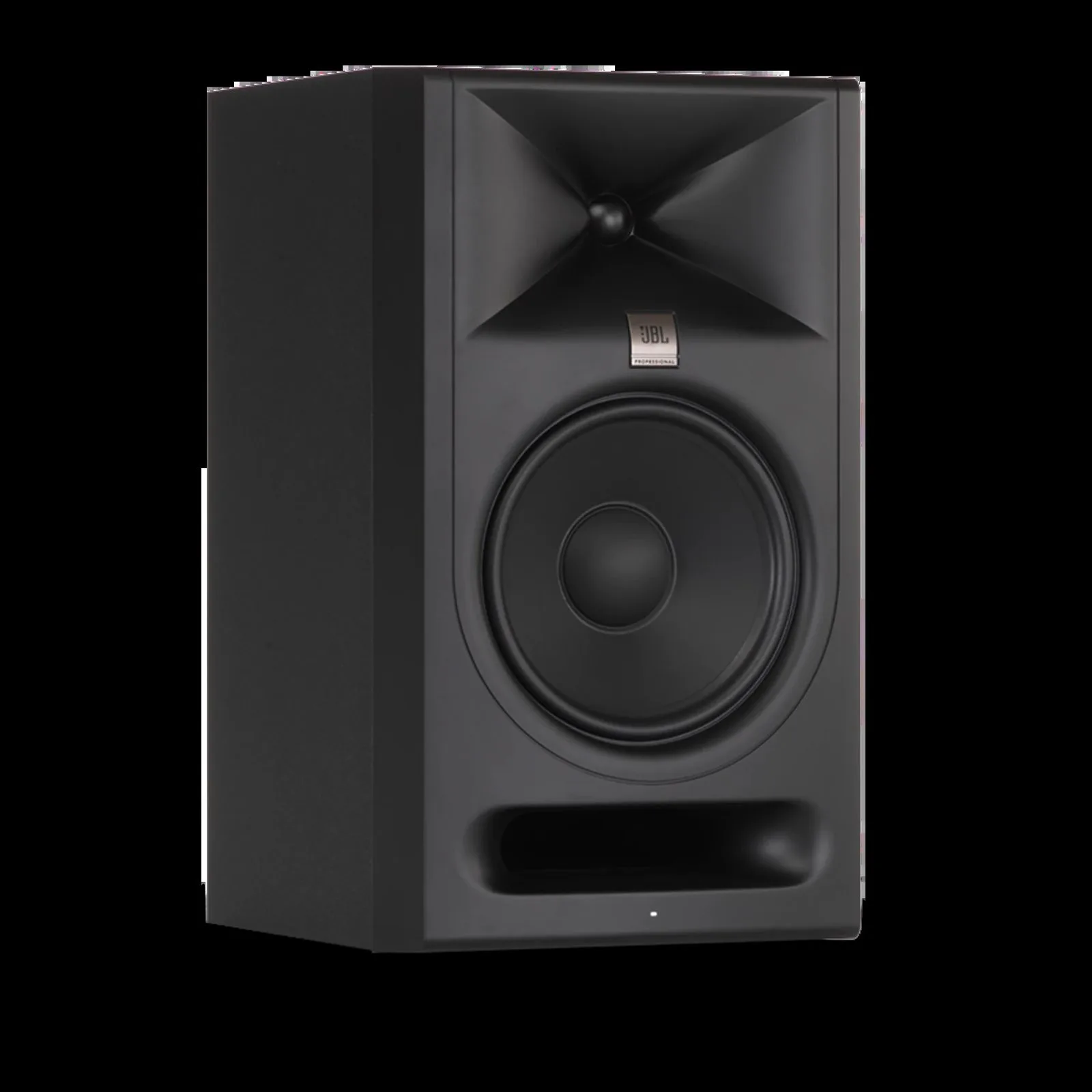
JBL has reworked the most affordable monitor line in its catalogue. Announced on 3 November 2026, the 3 Series MkIII keeps the formula that made the LSR305 and then the MkII a home-studio staple, and rebuilds it from the inside. Three powered monitors, the 305P, 306P and 308P MkIII, ship alongside a matching subwoofer, the 310S MkIII.
A best-seller rebuilt
The 3 Series sits at the bottom of JBL Professional’s price ladder, the one many home studios and small control rooms audition first. The MkIII is more than a facelift: new drivers, new amplification, new cabinet geometry. The rollout starts in Asia-Pacific, Europe, the Middle East and Africa at announcement, with North America following on 7 January 2027. JBL has not published pricing yet, worth watching given that the MkII built its name on performance per euro.
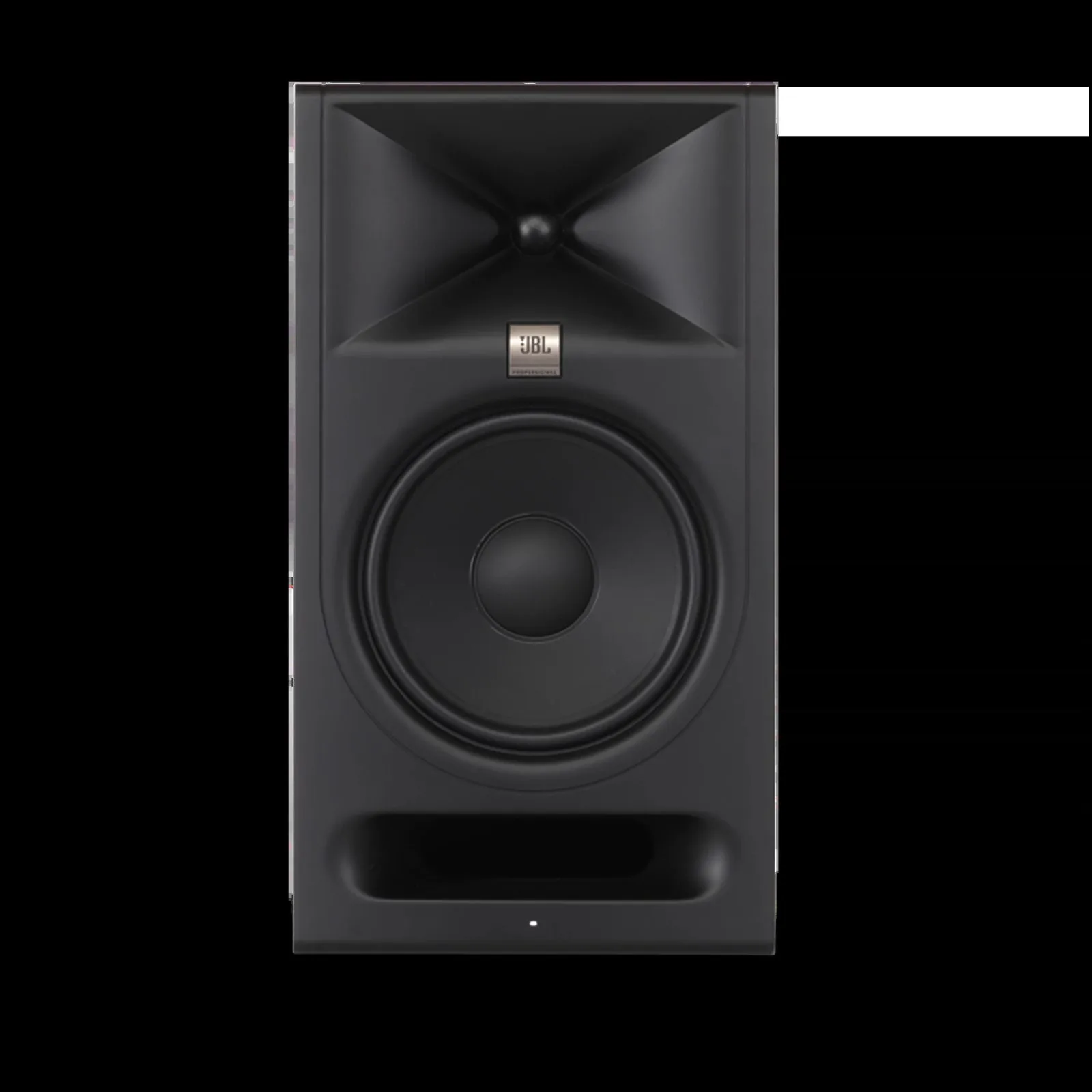
The port moves to the front
The clearest change is the port. The MkIII adopts the front-firing Slipstream port, a JBL-patented design meant to cut air turbulence and the bass build-up that appears when a speaker sits close to a wall. In the real world an entry-level monitor often ends up against a wall, on a shallow desk or inside a furniture nook. Moving the port to the front eases that constraint and makes the low end more predictable, without boom. For why placement matters this much, our guide on how to choose studio monitors walks through the cases.
Waveguide, tweeter and amplification
JBL has redesigned the Image Control Waveguide, derived from the one on its M2 reference monitor. Its job is to widen the stereo sweet spot so the image does not collapse the moment you move your head. The tweeter is new and reaches above 30 kHz. Amplification moves to a new Class D stage, quieter and higher in output, while the revised woofers handle more power and extend lower.
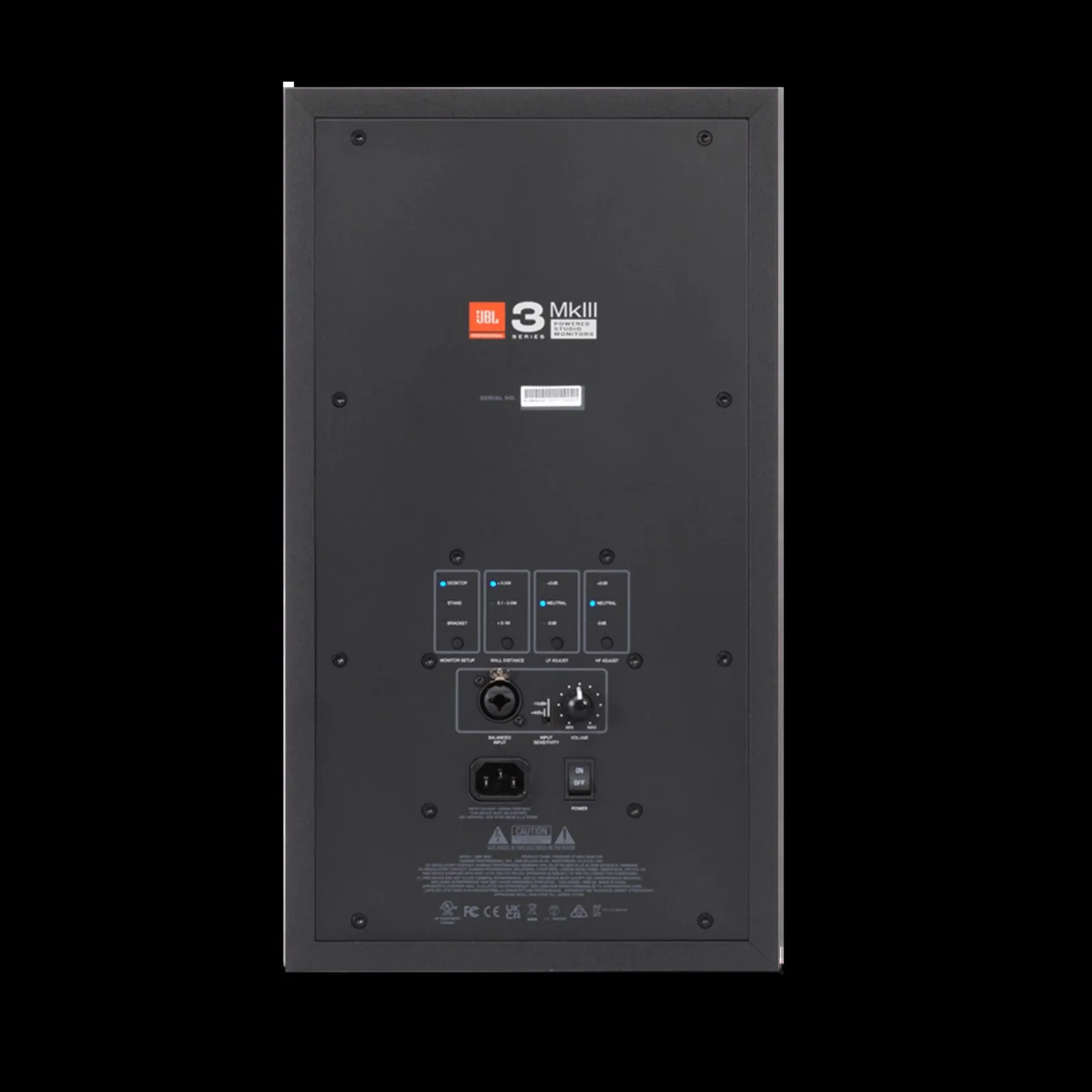
Eighty-one corrections by button
The MkIII has four one-touch corrective controls that combine into eighty-one options. They compensate for speaker placement, boundary distance and the response in both the lows and the highs. No software, no measurement mic: correction happens on the speaker itself. Anyone working in an untreated room gets a useful safety net here, as long as its limits stay in mind. To go further, a software correction such as IK Multimedia ARC Studio+ measures the room, and nothing replaces real acoustic treatment at the first reflection points.
The range in numbers
| Model | Driver | Class D amplification | Low end (-10 dB) | Peak SPL |
|---|---|---|---|---|
| 305P MkIII | 5-inch, two-way | 86 W | 45 Hz | 109 dB |
| 306P MkIII | 6.5-inch, two-way | 110 W | 43 Hz | 112 dB |
| 308P MkIII | 8-inch, two-way | 110 W | 41 Hz | 113 dB |
| 310S MkIII | 10-inch subwoofer | 300 W | 26 Hz | 116 dB |
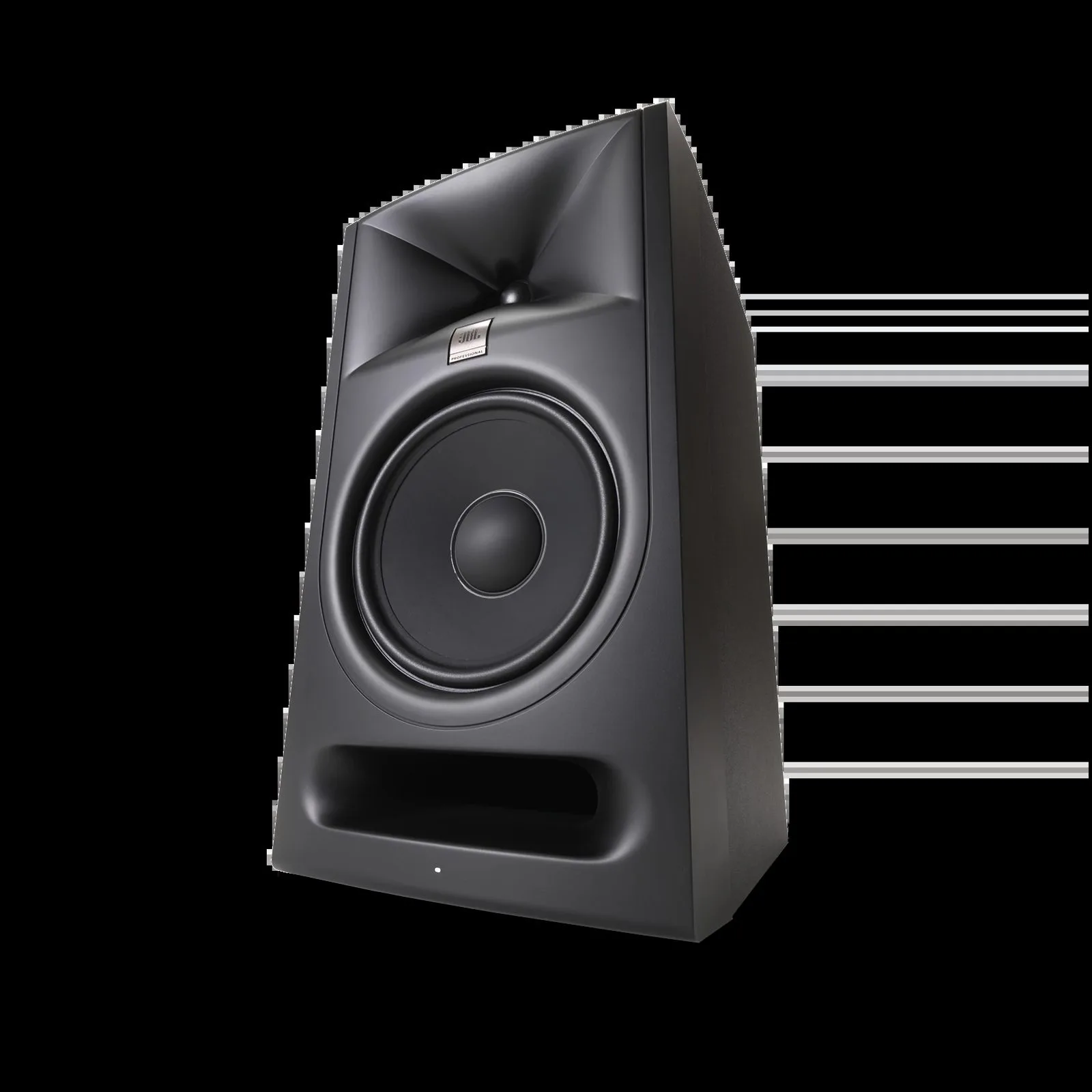
The 310S MkIII reaches down to 26 Hz and offers flexible crossover controls for 2.1, surround and immersive setups. Every monitor has integrated mounting points, a detail that matters for fixed installs and multichannel rigs.
My take
The front port is the real upgrade here. The 3 Series has always ended up against a wall, in a bedroom or on a shallow desk, and the low end paid for it. Moving the port forward fixes the problem where it actually happens. The eighty-one button corrections will not turn a bare room into a treated booth, but they help someone starting out. The open question is price: that is what will tell us whether JBL keeps its promise of affordability.