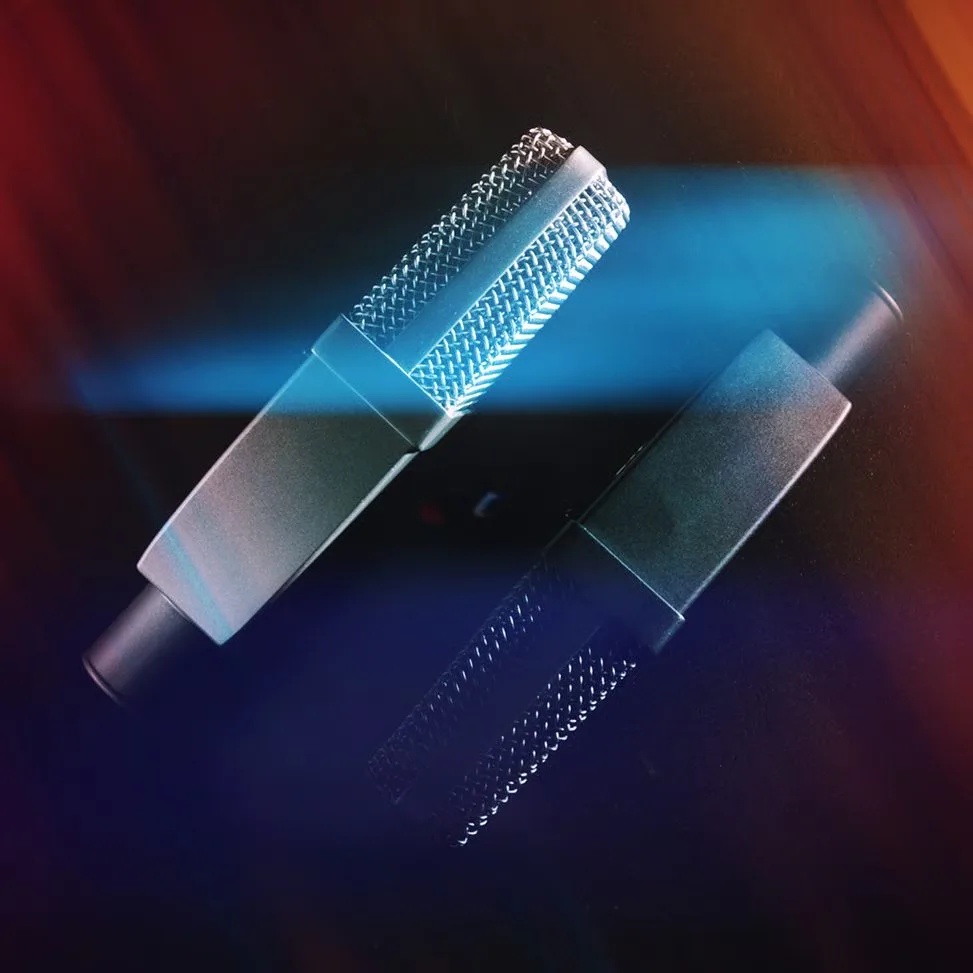
The stage vocal mic is a mature market, where you need a real angle to stand out against the established names. sE Electronics makes its case with the V8, a handheld dynamic mic built around an in-house capsule, the DMCV8, with a supercardioid pattern. The real news isn’t so much the wired mic as its wireless spin-off: two capsules, the MC1 and MC2, that put the same capsule on other makers’ wireless systems.
One capsule, two wireless worlds
That’s the clever idea behind this range. The MC1 is a wireless dynamic capsule built to screw onto compatible Shure handheld transmitters, while the MC2 does the same for Sennheiser handheld transmitters, also supercardioid. In practice, a rental company or band already running Shure or Sennheiser wireless can adopt the V8’s tone without changing transmitters or receivers.
That approach answers a real-world fact: you don’t replace a wireless fleet overnight, but you may want to unify the sound of your vocals. Being able to drop the same capsule onto the wired mic in the small room and onto the wireless on the big stage is a welcome consistency win from one gig to the next.
What the V8 is after
In its wired form, the V8 presents itself as a premium handheld dynamic mic built for demanding stages. The supercardioid pattern aims for solid off-axis rejection, which helps tame feedback and monitor spill on a busy stage. A typical bundle includes a clip with thread adapter, an internal windscreen and a soft case.
On stage, the choice of vocal mic shapes the singer’s comfort as much as the front-of-house engineer’s work. A good supercardioid fits the same logic as the rest of live stage miking: controlled directivity and careful placement matter more than the raw spec sheet.
Where it sits and what it costs
The wired V8 lands around $200, a mid-range price that puts it up against the classic dynamic vocal mics. The MC1 and MC2 wireless capsules are announced in a similar bracket. sE Electronics isn’t playing the price-disruption card, then, but the ecosystem-consistency one: a single sonic character carried from cable to wireless, whatever the installed RF system.
My take
The Shure- and Sennheiser-compatible capsules are the genuinely good idea here. Switching vocal mics when you’re committed to one brand’s wireless is often a headache, and sE sidesteps it neatly. The wired mic itself will be judged on a listening test and on real-world rejection on a noisy stage, where a supercardioid earns its keep. For a band or rental company wanting to unify vocal tone without replacing transmitters, the proposition is relevant and well thought out.

Frequently asked questions
What’s the difference between the MC1 and MC2 capsules?
The MC1 is built to screw onto compatible Shure handheld transmitters, the MC2 onto Sennheiser ones. Both carry the V8’s supercardioid capsule, for a consistent tone across wireless systems.
What is the V8’s polar pattern?
The V8 is supercardioid, a tighter pattern that favours off-axis rejection and helps control feedback and monitor spill on stage.

What’s in the box with the wired V8?
The mic typically ships with a clip and thread adapter, an internal windscreen and a soft carrying case.
Can I keep my existing wireless system?
Yes, that’s the whole point of the MC1 and MC2 capsules: they fit compatible Shure or Sennheiser transmitters, with no change of transmitter or receiver.