An audio cable carries more than your signal. Along the way it also picks up the surrounding electromagnetic field: the mains supply, lighting dimmers, transmitters, screens. That interference adds to the sound and ends up as hiss, hum or buzz. The whole point of balanced wiring is right there: how to carry a signal over a long distance without collecting that noise on the way.
Unbalanced or balanced: the physical difference
An unbalanced connection uses two conductors: a hot that carries the signal, and a ground that acts as both reference and shield. That is the wiring of a guitar on a TS jack, a consumer RCA, a headphone output. Simple and fine over a few metres, at low risk. The weakness shows with length: any noise induced on the conductor adds to the signal, with no way to separate it out.
A balanced connection adds a third wire. The signal travels on two conductors, hot and cold, in opposite polarity, while the shield surrounds the lot. That is the wiring of XLR and of TRS jack in balanced mode. This extra wire changes everything, thanks to the principle below.
The real secret: common-mode rejection
At the far end, the device does not read the hot on its own. It reads the difference between hot and cold, through a differential input stage. Because the two conductors run side by side in the same cable, external noise settles on them almost identically: this is called a common-mode signal. By subtracting, the receiver adds up the wanted signal (which is in opposite phase on the two wires) and cancels the noise (which is identical on both). This ability to reject the shared interference has a name, common-mode rejection ratio, and it is what keeps the line clean over fifty metres of stage.
There are two ways to drive a balanced output. The output can actively drive the cold with the inverted signal, or simply reference it to the same impedance as the hot with no signal on it: this is impedance balancing. Either way, the benefit at the receiver is the same, because only the balance of impedances seen by the differential stage matters.
Line level, mic level, instrument level
The balanced world goes hand in hand with professional line level, around +4 dBu, while consumer unbalanced tends to live around -10 dBV. That level gap, combined with noise immunity, is why a studio links its machines in balanced. Levels and how to manage them are worth a look through our guide to gain staging in the digital domain, and the question of input impedance and gain is covered in the article on the mic preamp. A guitar, by contrast, puts out an unbalanced high-impedance signal: to send it a long way cleanly, you go through a DI box, which matches impedance and balances the line.
XLR, TRS and the practical traps
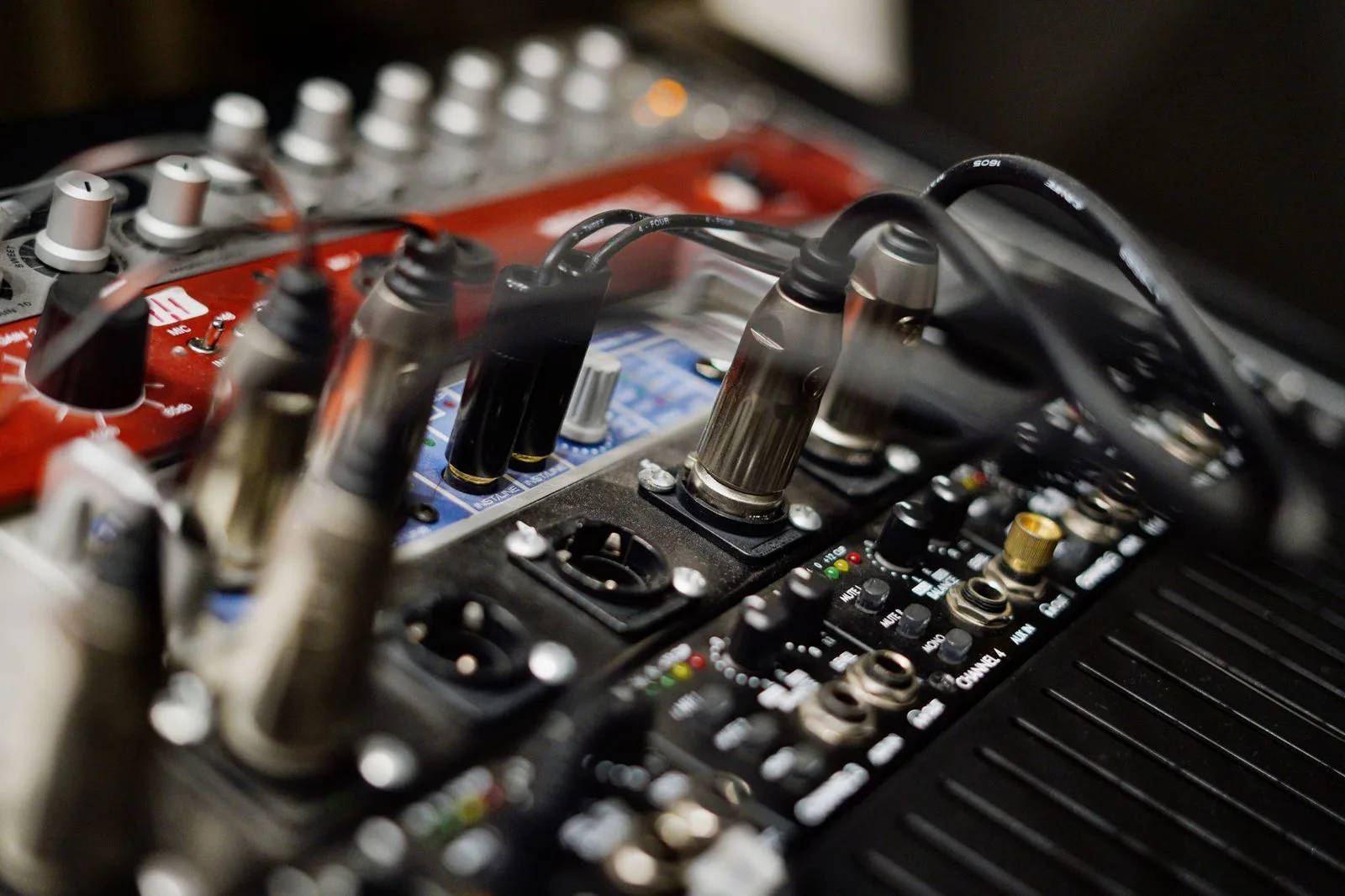
A few habits avoid nasty surprises. On an XLR, pin 1 is ground, pin 2 is hot, pin 3 is cold: that is the standard, and keeping pin 2 hot keeps polarity consistent across the whole rig. A balanced TRS jack carries hot on the tip, cold on the ring, ground on the sleeve, not to be confused with a stereo headphone TRS or an insert point. A TS jack is always unbalanced.
Connecting a balanced output to an unbalanced input throws away the benefit, and careless wiring of the cold can even short out an output stage. In that case, a correctly wired adaptor cable is the safe route. For the rest of the stage connectivity, the detail of connectors is covered in our guide to audio cables and connectors for live sound. One last useful point: balancing does not replace a clean supply. On microphones it coexists with +48V phantom power, which in fact travels on the two signal conductors.
In practice
For a fixed, long connection, balanced without hesitation. For a short patch between two machines sitting side by side, unbalanced is perfectly fine. Cable quality matters mainly for mechanical durability and solder joints, not for any sonic miracle: a decent conductor, well soldered, with a continuous shield does the job. And when a hum persists despite a balanced link, the problem is elsewhere, often a ground loop between two devices.
My take
Balancing is one of the few audio engineering ideas whose benefit you can hear without debate. Understanding common mode avoids the two opposite mistakes: buying overpriced cable hoping for a gain that does not exist, or running unbalanced over thirty metres and then wondering about the hiss. The right reflex fits in one line: long run, balanced line, and keep your energy for the mix.