It is the link you look at last and the one that decides almost everything. Between the microphone and the converter, the preamp does a thankless but fundamental job: lifting a tiny signal to a level the rest of the chain can work with, without adding noise or artefacts. Understand what it really does and you understand why two takes made with the same mic can sound so different.
What a preamp actually does
A microphone puts out a very weak signal, typically in the region of -60 to -40 dBu depending on the source and the model. Converters and consoles, on the other hand, work at line level, around +4 dBu in a professional environment. The preamp’s job is to bridge that gap: it applies gain — often 40 to 70 dB — to bring the mic signal up to line level.
The hard part is not amplifying: it is amplifying cleanly. The more gain you add, the more you also amplify the preamp’s own noise and the mic’s. The whole quality of a good input stage lies in its ability to deliver plenty of gain while staying quiet.
Gain and noise: why gain should come early
A preamp is judged in part on its Equivalent Input Noise (EIN): the lower it is — figures around -128 dBu — the less hiss the stage adds. That matters with low-output mics, especially dynamics and above all ribbons, which demand a lot of clean gain.
It is also why gain belongs in the right place at the right time: a generous, quiet preamp beats a weak one propped up afterwards by digital gain that only raises the noise already captured. This gain-structure logic runs across the whole chain, a topic we covered in our guide on gain staging in the digital domain.
Input impedance: the parameter people forget
The preamp presents an input impedance to the mic — an electrical load. That figure, often ignored, directly affects tone. A dynamic or ribbon mic changes behaviour with the load: a high impedance lets the highs and lows breathe, a low impedance tames the top end and can alter the transient response.
That is why some preamps offer switchable impedance, sometimes called Z-Match or variable Z: it becomes a genuine colour tool, on a par with choosing a mic. On a phantom-powered condenser the effect is subtler; on a ribbon or a dynamic it is often very audible. The Focusrite ISA, heir to Rupert Neve’s circuits, is a classic example of a transformer preamp where impedance is part of the signature.
Transformer, transistor or tube: where the colour comes from
A preamp can be designed in several ways, and each leaves a mark. Transformer stages — on the input, the output, or both — add gentle harmonic saturation when pushed, a rounded low end and a slight softening of transients that explains the reputation of Neve-style circuits. Discrete transistor preamps without transformers often aim for neutrality and speed. Tube stages add a specific harmonic compression and warmth prized on vocals.
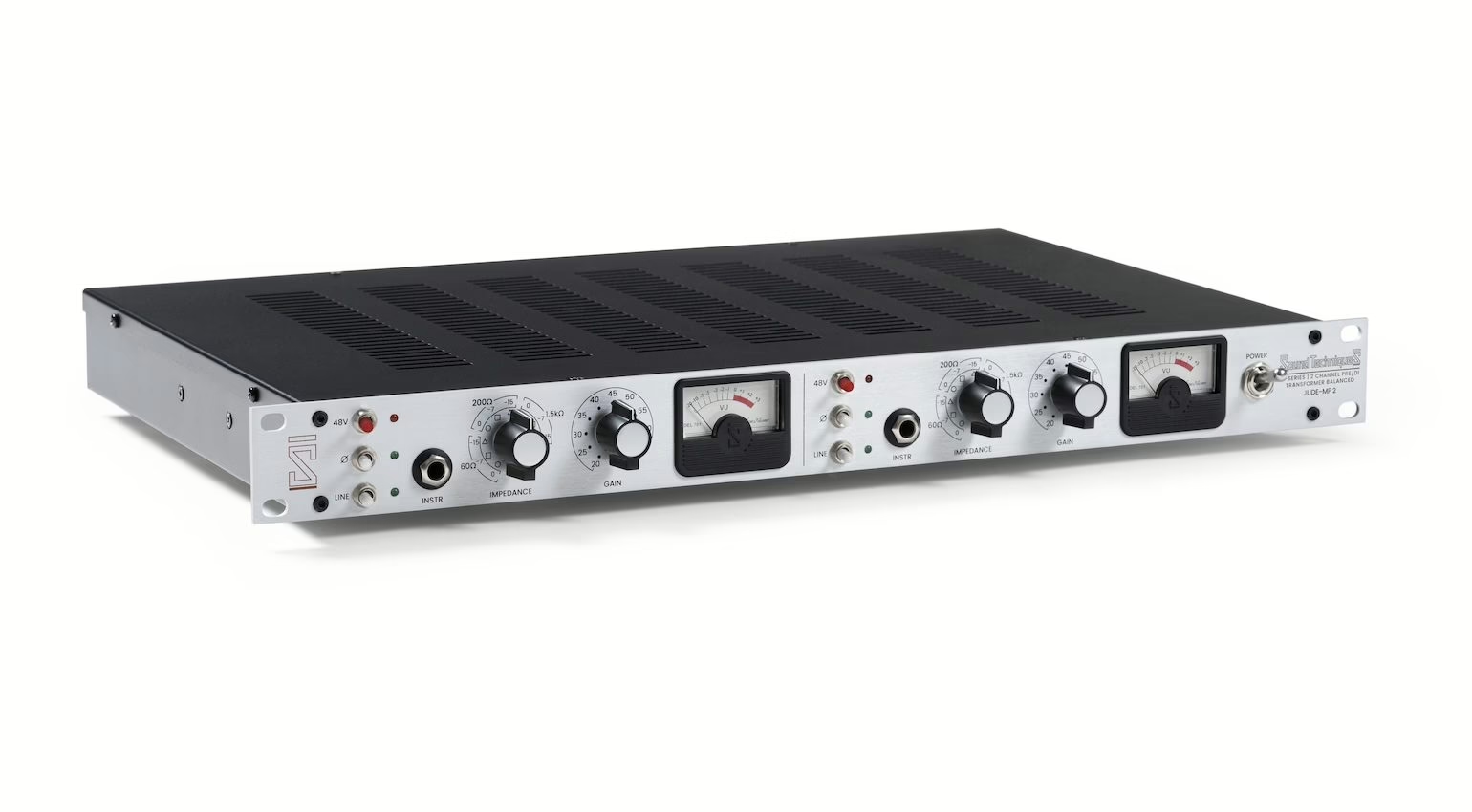
None of these approaches is superior in absolute terms: a transparent preamp is precious when you want to capture the source as it is, a coloured preamp is an artistic choice when the colour serves the song. That is exactly the reasoning behind remakes of historic circuits such as the Sound Techniques Jude-MP.
Setting a preamp without getting it wrong
In practice, a few habits go a long way. Set the gain for a comfortable level — headroom below digital clipping, without chasing 0 dBFS. Engage the high-pass filter when the source has no useful sub content, to clear the low end of rumble and plosives. Use the pad (input attenuator) on very hot sources, a guitar amp or a close-miked snare, so you do not overload the input stage. Finally, mind phantom power: essential for a condenser, it must never be sent to a passive ribbon, which it can damage.
And if you are after colour, remember that the compressor downstream interacts strongly with the preamp’s grain: we described those mechanisms in our guide on audio compression.
Interface preamp or dedicated preamp?
Most audio interfaces already include preamps, often very decent ones, more than enough for the majority of takes. The question is not whether built-in preamps are bad — they stopped being bad a long time ago — but what a dedicated stage adds. Three things, essentially: more clean gain for demanding mics such as ribbons, a deliberate sonic character you will not find in a neutral interface preamp, and reserves of level and impedance that widen the palette.
That is the reason the 500 Series format and modular preamp racks exist: drop a few stages with different personalities into a chassis and choose to suit the source. An in-line preamp, such as the Triton Audio Tilt EQ, shows another approach: complementing an existing preamp rather than replacing it. Before investing, simply ask whether your current stage is really holding you back, or whether the weak point in your takes lies elsewhere — in the room’s acoustics or the mic placement.
Our take
I have spent enough time behind Neve and Euphonix consoles not to be dogmatic: the best preamp is the one that serves the take in front of you. A 1073 on a voice or brass, yes, for the colour; a clean, fast stage on an already rich source, just as much. The real mistake is believing the magic lives in an esoteric cable or a marketing component: on a tracking chain, what matters is the solder joints, the quality of the input stage and mic placement, long before the folklore. Choose a preamp the way you choose a mic: on the sonic result, never on dogma.