Warm Audio has made a habit of reissuing studio legends at prices that raise eyebrows. This time the Texan brand goes further than drawing inspiration from a circuit: it has signed an official partnership with Sound Techniques to revive the mic preamp from the A-Range console, a machine only a handful of which survive worldwide. The name is no accident: this console tracked “Hey Jude”. On paper, it is one of the more serious studio announcements of the season.
A genuine Sound Techniques A-Range, not a loose “in the style of”
Sound Techniques’ A-Range console, designed by Geoff Frost in the late 1960s, shaped records by The Beatles, David Bowie, Elton John, Queen, Fleetwood Mac and Pink Floyd. It is also the architecture that directly inspired the famous Trident A-Range a few years later. In other words, this is one of the founding sources of the “British console” grain: forward mids, snappy transients, a colour that flatters a dull microphone.
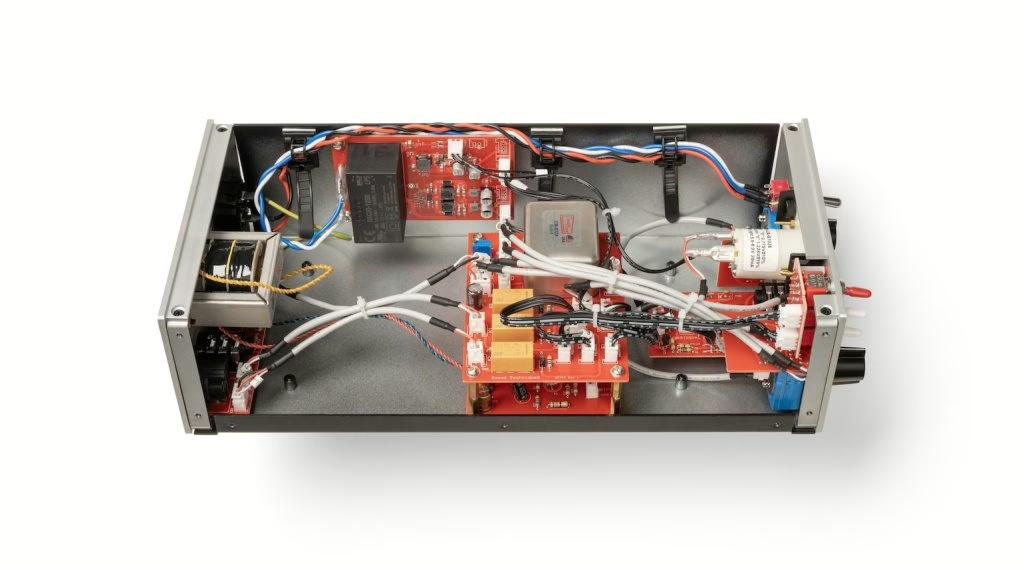
Warm Audio says it worked from Geoff Frost’s original schematics rather than a rough reverse-engineering job. The circuit carries the Class-A dual-discrete 3035 amplification, audio-grade Wima and Nichicon capacitors, carbon resistors, hand wiring and custom-spec CineMag USA transformers, one of them a nickel unit. This is territory Warm Audio knows inside out: the input transformer and the discrete stage account for most of a preamp’s character, and those are exactly the parts the brand has learned not to cut corners on.
Z-Match, the real idea here
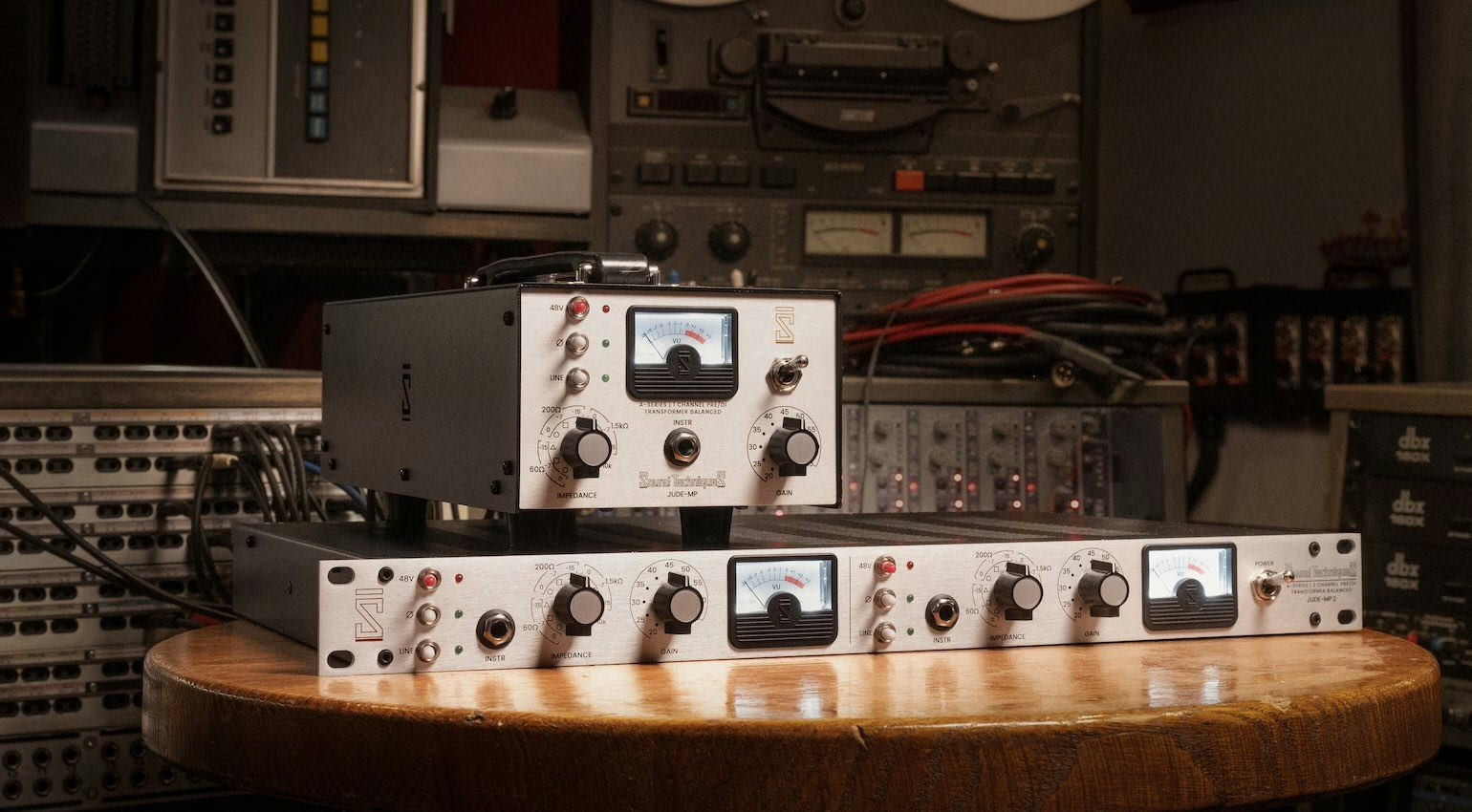
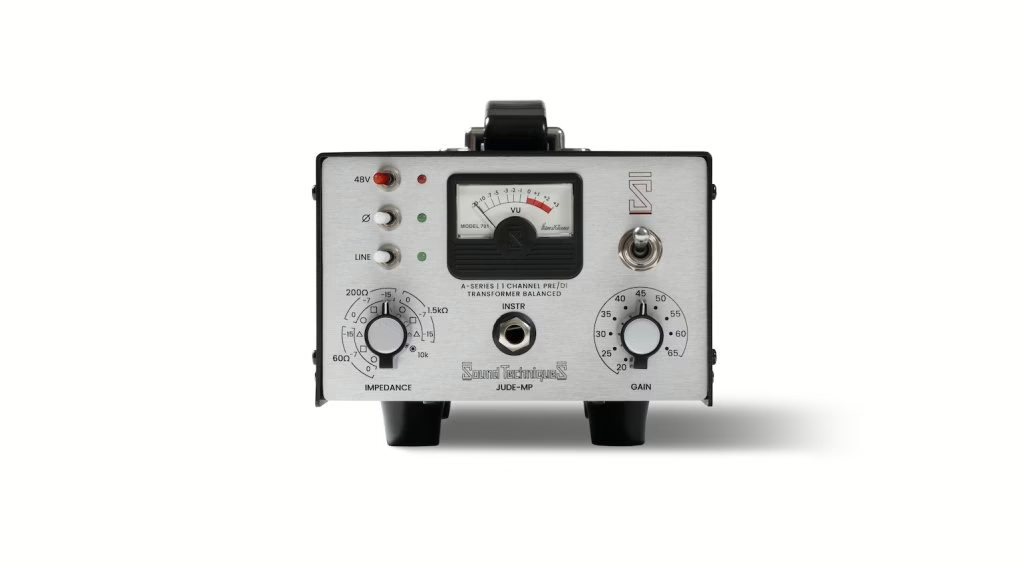
The part that genuinely deserves attention is the nine-position Z-Match control. This is not a simple two- or three-step impedance switch like the ones on many modern preamps, but a system patented by Geoff Frost that offers nine distinct interactions between the microphone and the input stage, built around three impedance values (60, 200 and 1.5k ohms). Each position reshuffles gain, transient response, tonal balance and harmonic colour.
In practice it is a tracking-stage voicing tool, not a gimmick. Loading a dynamic or a ribbon with a low impedance dramatically changes its low end and dynamics; Z-Match turns that behaviour into a repeatable musical setting. On a slightly harsh vocal you reach for a position that rounds the top; on an acoustic guitar, another that opens the transients. It is the kind of control that replaces three corrective plug-ins later in the mix, and I would far rather set that at the source, while the signal still has all its life.
What’s in the box
The Jude-MP covers 65 to 76 dB of gain with a very low stated noise floor, a quoted 10 Hz to 25 kHz frequency response, and doubles as a solid DI for plugging a bass or synth straight in. It stays a preamp with no EQ: colour comes from the transformer and Z-Match, not from a tone stack. That is a coherent choice for the A-Range spirit, where the grain is born of the topology itself.
| Model | Channels | Price |
|---|---|---|
| Jude-MP | 1 (mono) | $749 / £/€799 |
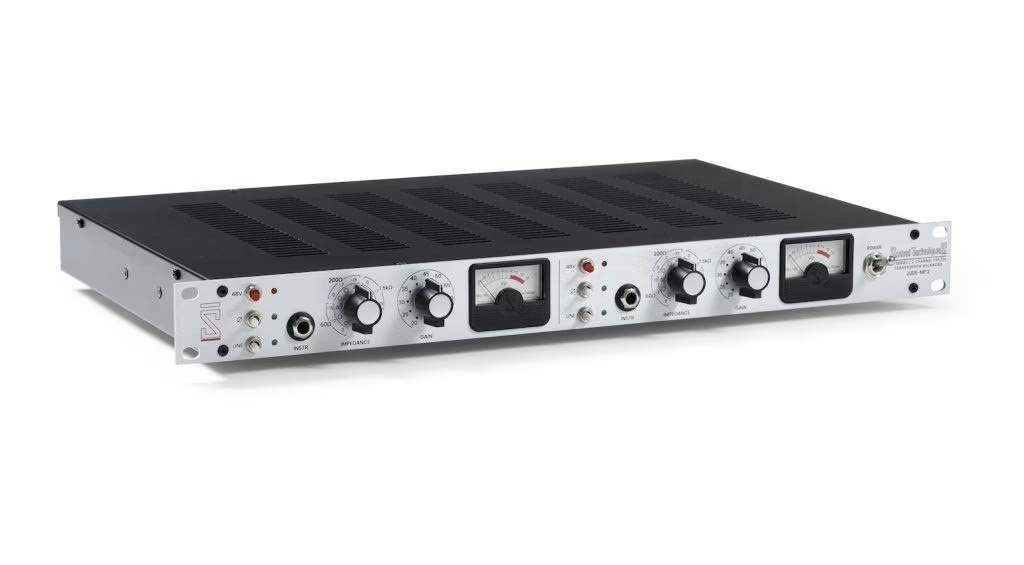
| Jude-MP2 | 2 (stereo) | $1,399 / €1,559 |
The two-channel Jude-MP2 unsurprisingly targets stereo tracking, M/S pairs and any setup that needs two perfectly matched paths. At this price you are a very long way from a boutique reissue of an original A-Range, which changes hands for tens of thousands when one turns up at all. Expect it through the usual suspects — Sweetwater, Thomann and the like.
My take
I’ll stay cautious until I’ve put a real mic in front of it, because the devil always hides in the transformer and the actual quality of the soldering — the only wiring that matters, long before any accessory-maker’s superstition. But the promise is coherent: reproduce a strongly coloured preamp, with an impedance control that turns it into a tracking Swiss Army knife, at a price that puts it within reach of a serious home studio. If the sound follows the spec sheet, the Jude-MP could become a credible gateway to the “British console” grain without remortgaging the room. That is exactly where Warm Audio is most useful.
To place the Jude in a full tracking chain, set it against the first 500-series preamp from Cloud Microphones, move on to the FET and optical Drawmer compressors in 500 format for the next stage, and remember that colour captured well up front saves you from fixing everything later, as we detail in our guide to EQ. Full product page on Warm Audio’s site.