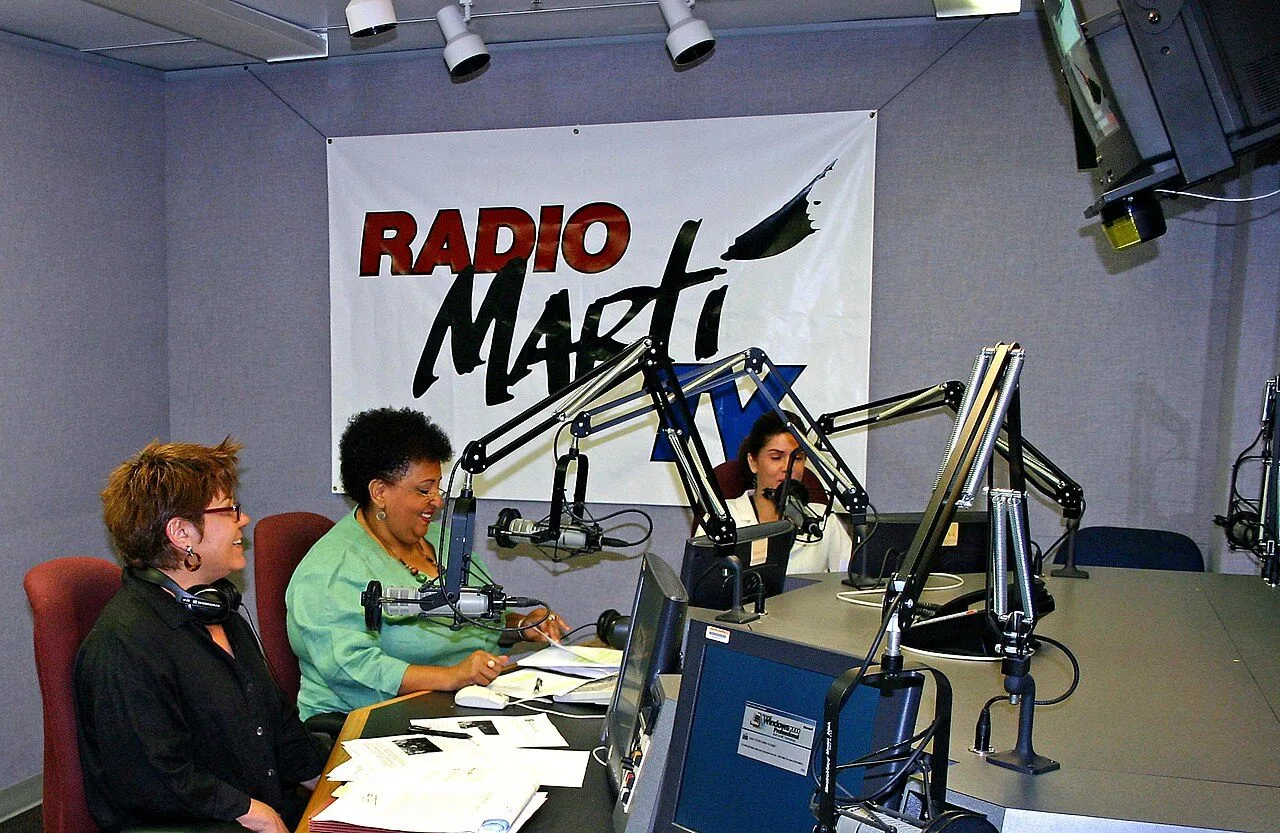
In most radio stations today, the presenter is alone at the controls: talking, firing elements, taking callers and watching the output with no engineer beside them. This is self-op (self-operated), a way of working that demands an ergonomics and a signal flow designed so one person can hold the air without a wrong move. Understand that flow and you understand how a show actually gets from the mic to the listeners.
The sources coming into the console
It all starts at the inputs of the on-air console. A typical radio studio has a few recurring families:
- microphones: the presenter’s, and the in-studio guests’;
- the playout system: the computer holding music, jingles, ads and beds — we break down how it works in our piece on radio automation;
- codecs and remote links: a reporter in the field, a two-way, another studio;
- the telephone hybrid: to take callers on air.
Each source lands on a channel, with its fader, its keys and its bus assignment. A radio console looks like a regular mixer, but its logic is different: it’s built to send cleanly to air, not to sculpt a music mix.
The buses: program, cue and clean feed
The heart of a broadcast console is its output buses, and two always come up. The Program bus (PGM, or On-Air) is the one that goes to air: anything routed to it is broadcast. The cue bus (PFL or audition) lets the presenter listen to a source before sending it — checking a caller, lining up a report, prepping the next track — without it reaching air.
Then comes an essential and often misunderstood bus: the mix-minus (or cleanfeed). When you take a caller or a reporter, they must hear the program but absolutely not hear themselves coming back in their ear, or the echo is unbearable. Mix-minus sends them the program minus their own voice. It’s a fundamental mechanism, which we detail in our guide to mix-minus, and it goes hand in hand with how the telephone hybrid works.
Monitoring and the golden rule of the open mic
Self-op demands strict listening discipline. The studio’s control room monitors play the program… until the presenter opens their mic. At that instant, the speakers mute automatically to prevent feedback, and monitoring switches to headphones. It’s the most universal rule in radio: mic open, speakers off. Likewise, opening a mic fader can trigger the red “On Air” light and cut certain feeds.
This automation — fader-start, monitor muting, lighting the signs — is what makes self-op workable. The presenter doesn’t have to juggle ten things: opening a channel kicks off the right sequence of events.
From the console to the transmitter
Once the program is built, it doesn’t go raw to the transmitter. It first passes through on-air processing: a chain that evens out level, controls dynamics and gives the station its recognisable “sound.” That’s a topic in its own right, which we explore in our article on radio on-air processing.
Then the chain splits by delivery platform: to the FM transmitter (with its stereo coder and RDS), to digital broadcasting, and to streaming for the web feed, which has its own encoding and online loudness logic. For links between studios or to a remote transmitter site, contribution codecs take over.
Audio-over-IP, the backbone of the modern studio
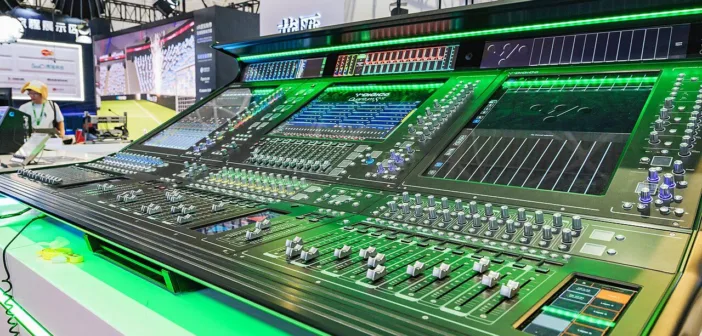
In a recent studio, these links are no longer point-to-point analog cables but an audio-over-IP network. Consoles like the AEQ Forum IP, the Axia Fusion or the Lawo Ruby run a control surface separate from a mix engine, tied to the rest of the station over AES67, Livewire or Ravenna. A mic, a codec feed, a studio return all become streams on the network, which simplifies wiring and makes configuration largely software-based.
The principle of the signal flow, though, doesn’t change: a source comes in, it’s assigned to program or cue, callers get a mix-minus, the mic mutes the speakers, and the program heads to processing and then to the transmitters. The technology evolves; the grammar stays.
My take
Self-op is a small masterpiece of ergonomics you mostly notice when it’s done badly. A well-configured radio console lets the presenter focus on the show and forget the gear — which is exactly the point. What strikes you, coming from live sound or the studio, is how central mix-minus and automatic muting are: two mechanisms invisible to the listener, yet nothing holds together without them. For anyone starting in radio, that’s where to begin, well before processing: understanding where the signal goes and why the speakers fall silent is worth every setting in the world.