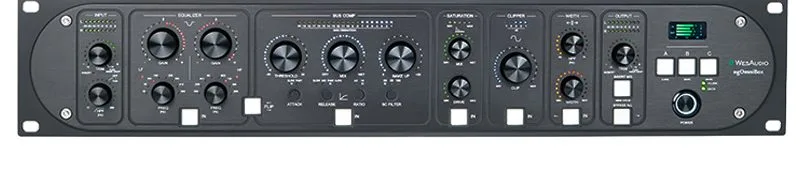
WesAudio keeps digging its furrow: pure analog, but controlled and recalled like a plug-in. The ngOmniBox is a fully analog stereo mix and mastering processor that packs a complete processing chain into a single chassis and keeps the total recall the brand is known for.
The idea is not new at WesAudio, but here it is taken to its conclusion: gather, on the stereo bus, the stages you used to assemble from several boxes, and be able to save, compare and automate everything from the DAW.
A full mastering chain in one box
The ngOmniBox chains five processing stages, each of which can be switched in or bypassed independently:
- a passive two-band EQ, for the broad, musical shaping typical of mastering equalisers;
- a bus compressor with switchable attack, release and ratio, plus a sidechain filter set to 60, 90 or 150 Hz;
- a saturation stage for density and colour;
- a clipper to tame peaks;
- a stereo width processor.
A key point for anyone working the top of the mix: the order between EQ and compressor can be swapped at the press of a button, and the output insert stage can run in stereo or mid/side mode, so you treat centre and sides separately — a modern mastering staple.
Analog, with total recall
This is WesAudio’s signature and the whole argument of the ngOmniBox: the signal stays 100% analog across the chain, but every parameter is controlled digitally. You save settings in the session, compare A/B/C versions, automate from the control plug-in, and reopen a mix weeks later exactly as it was — a convenience classic analog outboard does not offer.
Dedicated input and output stages and an external insert point round out the unit, and a display reports parameter status precisely. The ngOmniBox plugs into the brand’s ‘ng’ ecosystem, which unites its devices around the same recall logic.
Who it’s for, and at what price
The ngOmniBox targets studios and mastering engineers who want the colour and behaviour of analog without giving up the recall flexibility of the all-digital world. At around 4,000 dollars, it sits firmly in the high-end segment, up against mastering chains built from separate units.
The return of recallable bus analog has been confirmed in recent weeks: we covered the rack comeback of the original SSL bus compressor and the native port of Empirical Labs’ FATSO tape simulator.
Full details are on WesAudio’s website.
My take
Total recall on bus analog is the kind of argument that lands instantly with anyone who has had to re-dial a mastering compressor by ear because a client wanted ‘just one tweak’ three weeks later.
Bringing passive EQ, bus compressor, saturation, clipper and width into one recallable unit condenses a whole chain — appealing, as long as each stage pulls its weight rather than being one more gimmick. The price marks the ambition, and the real judge will be listening on a real stereo program. The approach, though, is the right one.
Frequently asked questions
What exactly is the ngOmniBox?
It is a fully analog stereo mix and mastering processor that gathers five stages in one chassis: a passive two-band EQ, a bus compressor, saturation, a clipper and stereo width, each of which can be switched in or bypassed independently.
How does recall work?
The signal stays 100% analog, but every parameter is controlled digitally. You save settings in the session, compare A/B/C versions and automate from the control plug-in, then reopen a mix exactly as it was later on.
Can it work in mid/side?
Yes. The output insert stage can run in stereo or mid/side mode, to treat centre and sides separately. The order between EQ and compressor can also be swapped.
What is the price?
The ngOmniBox sits at around 4,000 dollars, placing it in the high-end segment, up against mastering chains built from separate analog units.