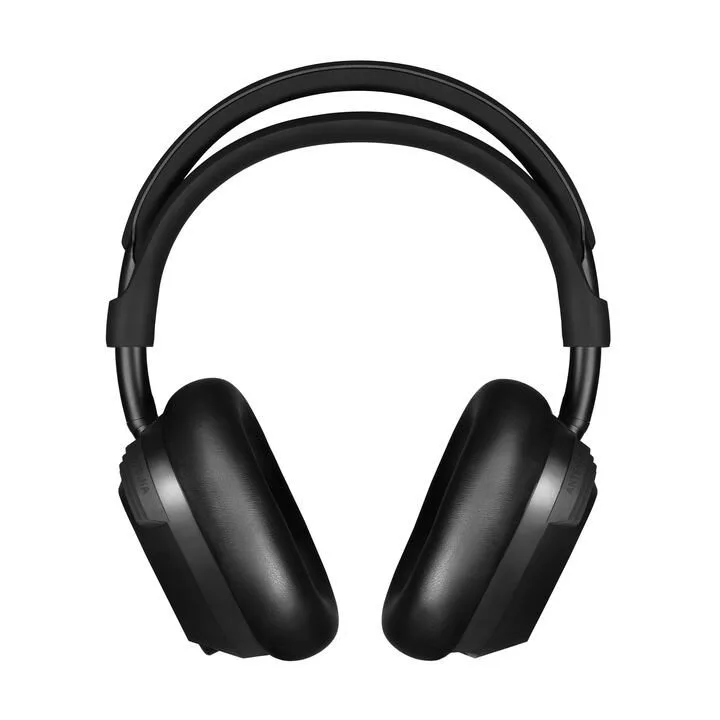
Lewitt made its name with microphones. The Austrian brand now signs its first professional headphones, and it comes out swinging: the LW6 is a closed-back wireless studio headphone that carries uncompressed audio with a stated latency under 6 milliseconds. In other words, wireless built not for casual listening but for mixing, recording and mastering.
Wireless aimed at work, not living-room comfort
The heart of the LW6 is its RealSound ultra-wideband (UWB) link, carrying an uncompressed PCM stream. Measured latency sits at 5.8 ms, a figure that changes everything: at that level you can track a take, play an instrument or build a mix without the lag that makes ordinary wireless unusable in a studio. A RealSound transmitter is included; it plugs into any headphone output, such as an audio interface’s, or straight into a computer over USB-C. Stated range is about 5 metres — the real working radius of a control room.
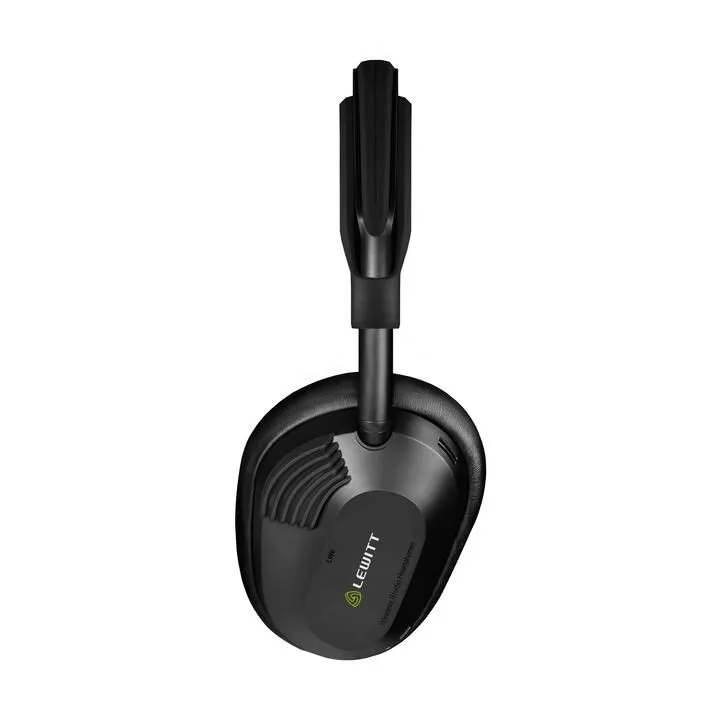
A closed-back headphone built as a reference
Beyond the link, the LW6 stays a working headphone. The design is closed-back, over-ear, with a 40 mm driver, 32 ohm impedance and a stated 20 Hz to 20 kHz response. Lewitt presents it as a reference headphone, built for critical decisions rather than flattery. Battery life reaches 21 hours, with fast charging that returns three hours of listening from a ten-minute top-up: enough to get through a studio day without watching the socket.
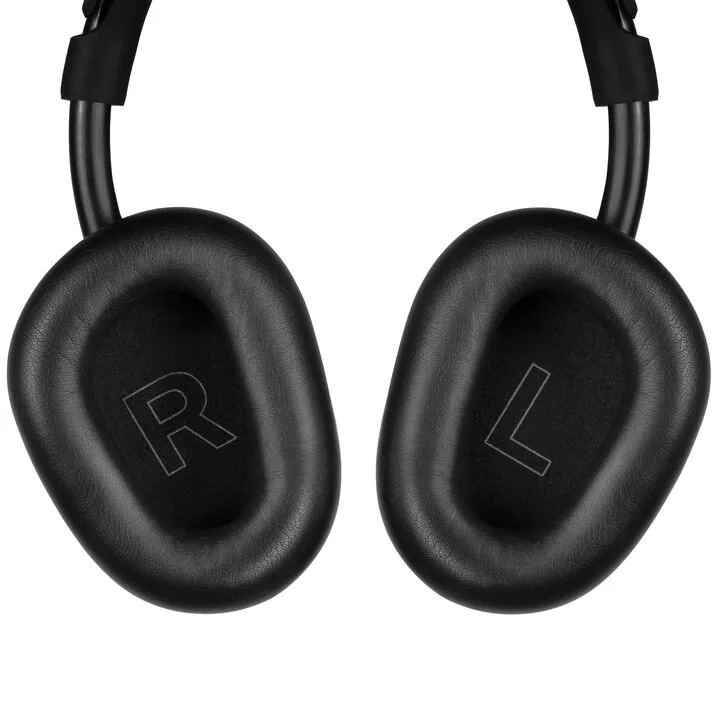
All the processing on board, driven by software
The clever part of the LW6 is its onboard DSP. All processing runs in the headphones themselves and is managed from a companion app for Mac, Windows, iOS and Android. There you’ll find custom EQ profiles, virtual studio monitors, a Loudness Guard feature to protect your hearing and advanced monitoring modes. The LW6 also switches to Bluetooth 5.3 for casual listening, and the package includes Space Replicator Essential software. The idea isn’t to add gadgets but to turn the headphone into a configurable monitoring tool.
| Spec | LW6 |
|---|---|
| Type | closed-back, over-ear, wireless studio headphone |
| Link | RealSound UWB, uncompressed audio, 5.8 ms latency, ~5 m range |
| Driver | 40 mm, 32 ohm, 20 Hz – 20 kHz |
| Battery | 21 hours (3 h of listening after a 10-min charge) |
| Processing | onboard DSP, Mac/Windows/iOS/Android app, Bluetooth 5.3 |
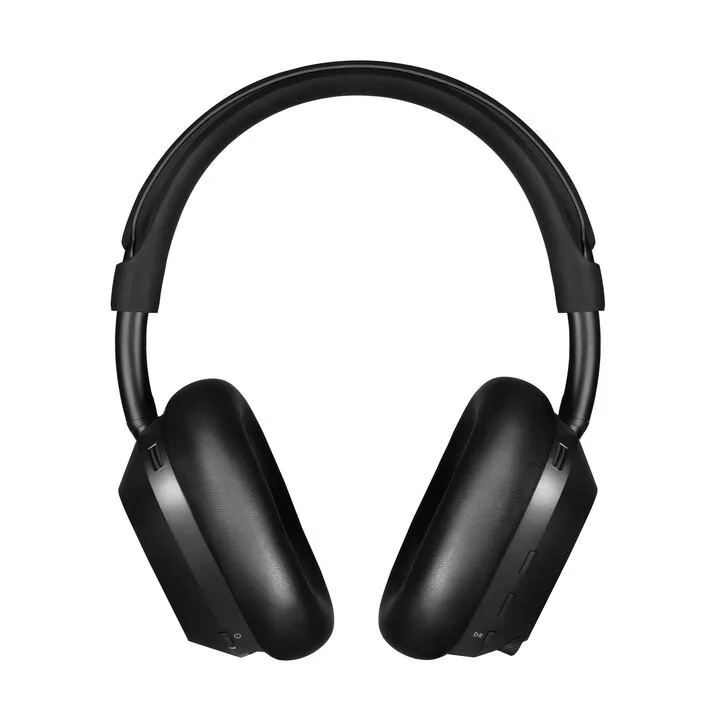
At $699 (about €599), the LW6 isn’t a backup headphone. It’s an ambitious proposition: bringing uncompressed, low-latency wireless into a context where it was previously banned. For anyone who works standing, moves around the control room or wants to cut the cable without giving up accuracy, the argument is appealing.
Frequently asked questions
Can you really mix and record on wireless headphones?
That’s the whole point of the LW6. Its RealSound link carries an uncompressed signal with 5.8 ms latency, low enough to track a take or build a mix without disruptive lag. That’s exactly what ordinary Bluetooth can’t do.
How does the included transmitter connect?
The RealSound transmitter plugs into a headphone output, such as an audio interface’s, or straight into a computer over USB-C. Stated range is about 5 metres, built for the space of a control room.
Does the LW6 also work over Bluetooth?
Yes. Beyond the work-focused RealSound link, the headphone switches to Bluetooth 5.3 for more casual listening. The DSP processing stays on board the headphone in both cases.
What’s the real battery life?
Lewitt states 21 hours, with fast charging that returns around three hours of listening after ten minutes plugged in. Enough to cover a long session without interruption.
My take
Wireless in the studio was something we waved away, and for good reason: latency. The LW6 attacks the problem head-on with 5.8 ms and an uncompressed stream, which makes it credible where Bluetooth never is. The onboard DSP and virtual monitors are the real added value, provided the app holds up over time. Then there’s the price, which puts it against excellent wired headphones: cutting the cable costs, and everyone will judge whether freedom of movement is worth the premium.