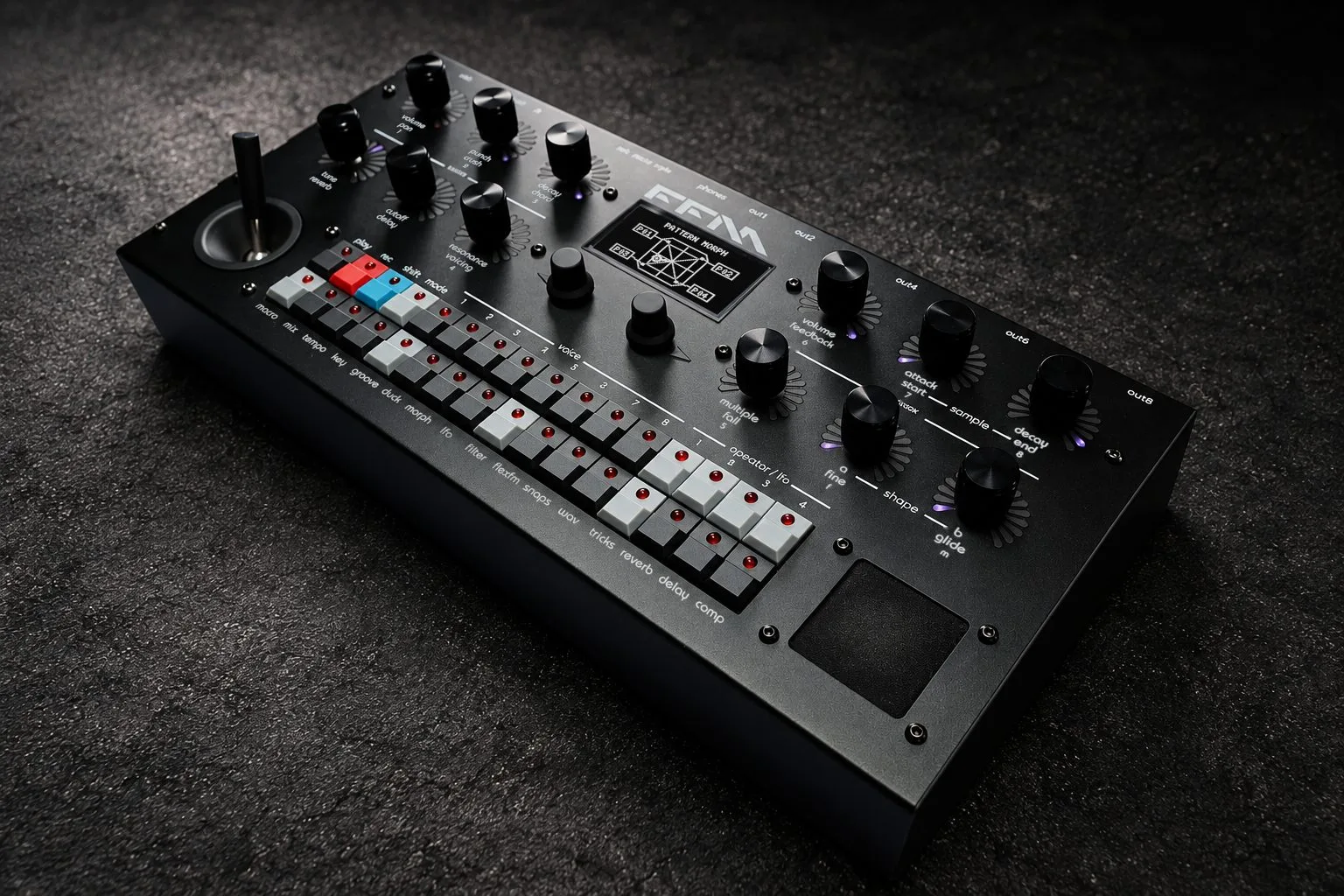
Twisted Electrons has a taste for dense, slightly mad machines — the TWISTfm and its Sound Blaster FM chips proved as much. The French maker is back with the FLEXFM, first seen at Superbooth and now available for pre-order with its full feature set. It’s a hybrid groovebox blending FM synthesis, sampling and analog filters in a compact format.
Eight voices, four FM operators… and plenty more
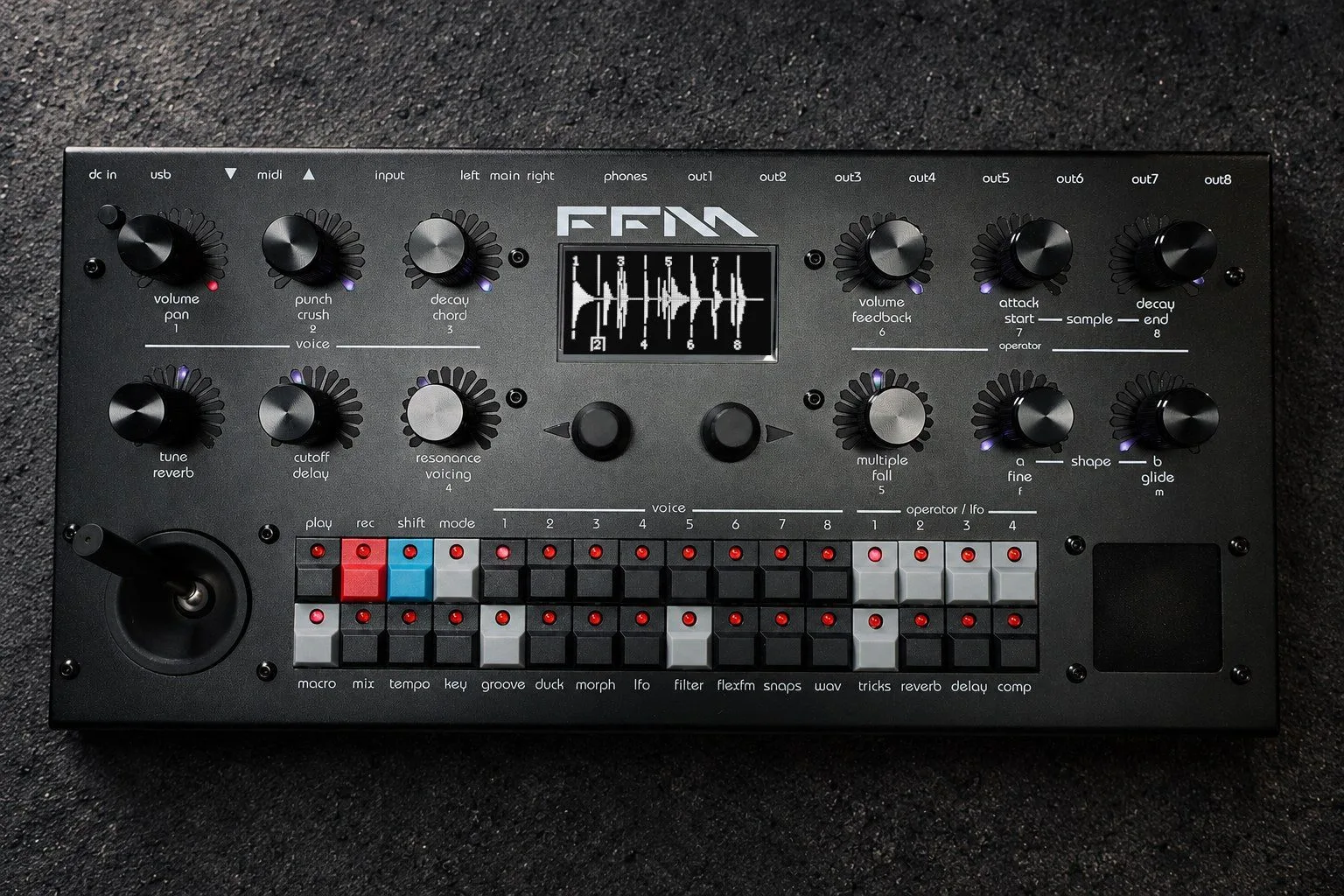
The FLEXFM offers eight voices, one per track, each built on four operators. But where classic FM sticks to a handful of waveforms, each operator here draws from more than thirty engines: classic waves, wavetables, Braids-inspired macro oscillators, 8-bit chip-style engines, hand-drawn waves and sample playback (slices, sampler, wavescan, repitch). Operators connect via FM, AM, ring modulation or oscillator sync, and you morph between those connections on the XY joystick.
If operators and algorithms are still fuzzy, our guide to FM synthesis lays the groundwork first.
Sampling and filters: the hybrid side
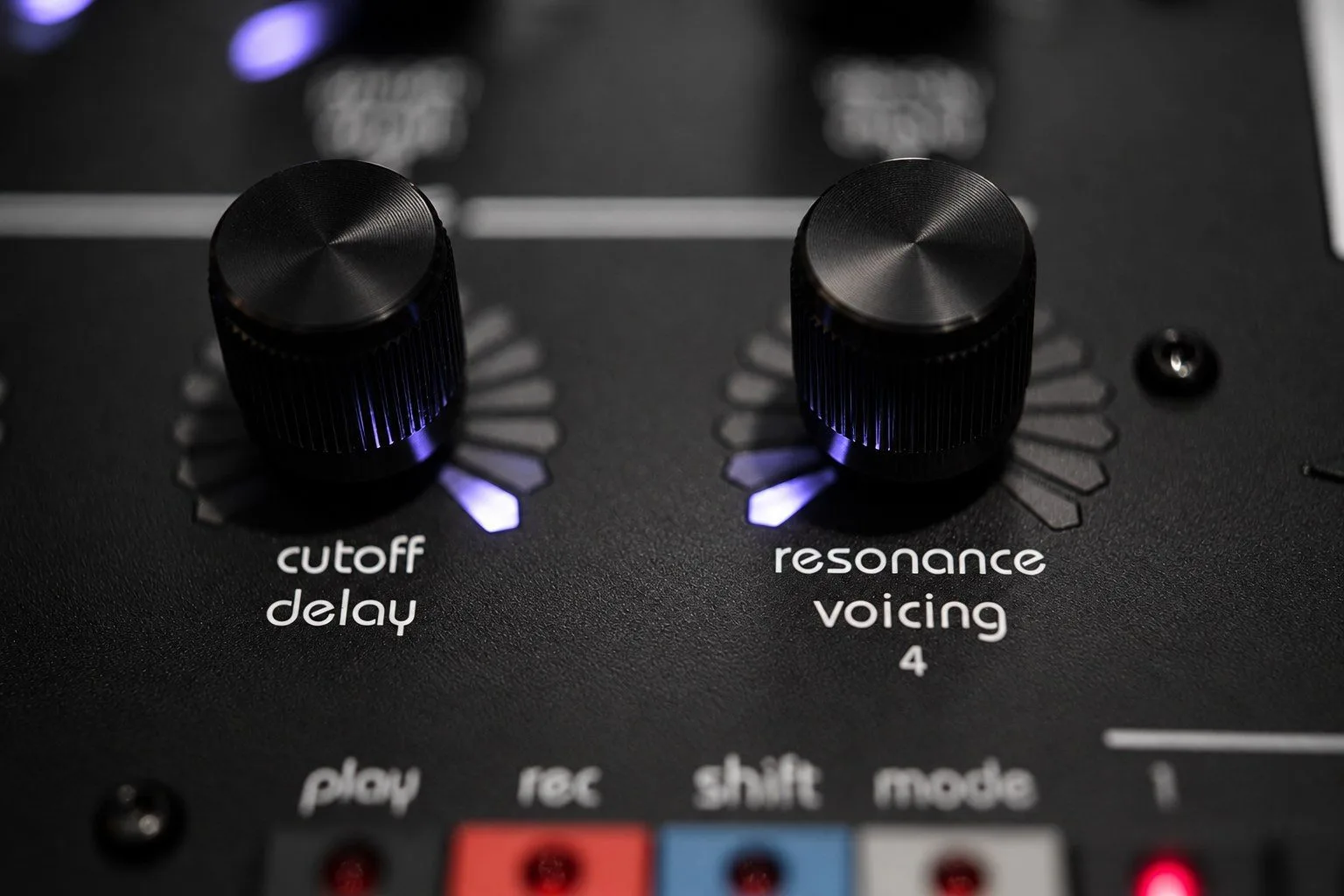
The FLEXFM samples live through its audio input, or imports WAV files. Each voice then runs through a multimode analog filter offering fifteen pole-mixed responses (low-pass, high-pass, band-pass, notch), inspired by Mutable Instruments. On top sit three digital filters named CROQUETTE, ZMORPH and ORACLE. Each filter has its own ADSR envelope, velocity response and key tracking.
That’s a lot of colour for one machine: if filter terminology trips you up, our synth filter explainer covers the ground.
A deep sequencer and a performance-first layout
On the sequencing side, each voice gets a lane of up to 128 steps and 16 patterns, with per-note lengths, step locks, conditional steps, timing shifts, arps, swing and probability. In poly mode a voice stacks up to four notes; there are also mono, chord and sync modes. The tempoFlex feature allows speed changes relative to the master clock, and you morph between patterns on the joystick.
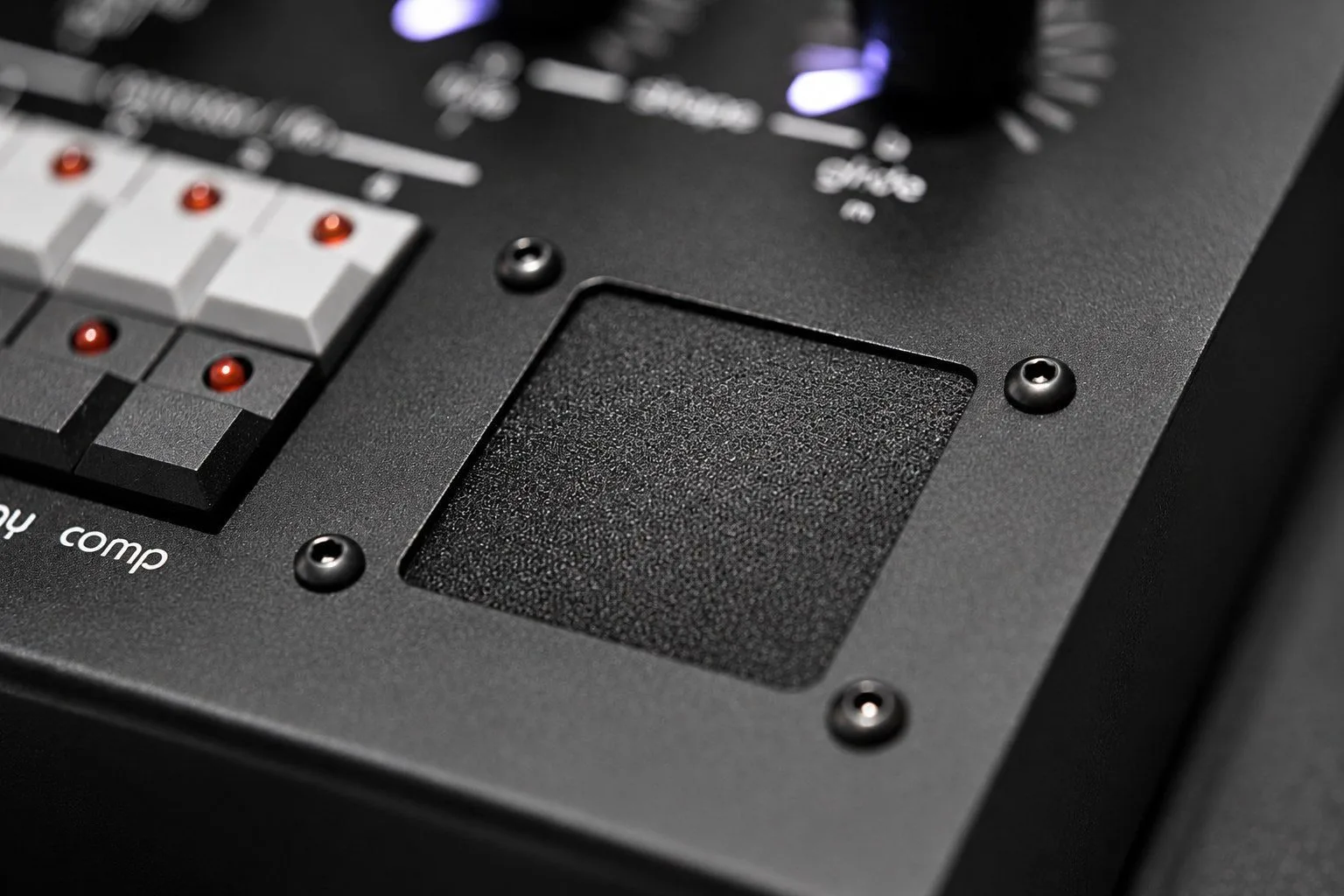
Control relies on a large XY joystick, LED-ring encoders, tactile sequencer buttons and a velocity-sensitive piezo drum pad. This is clearly a machine built to be played, not just programmed.
I/O, effects and a software editor
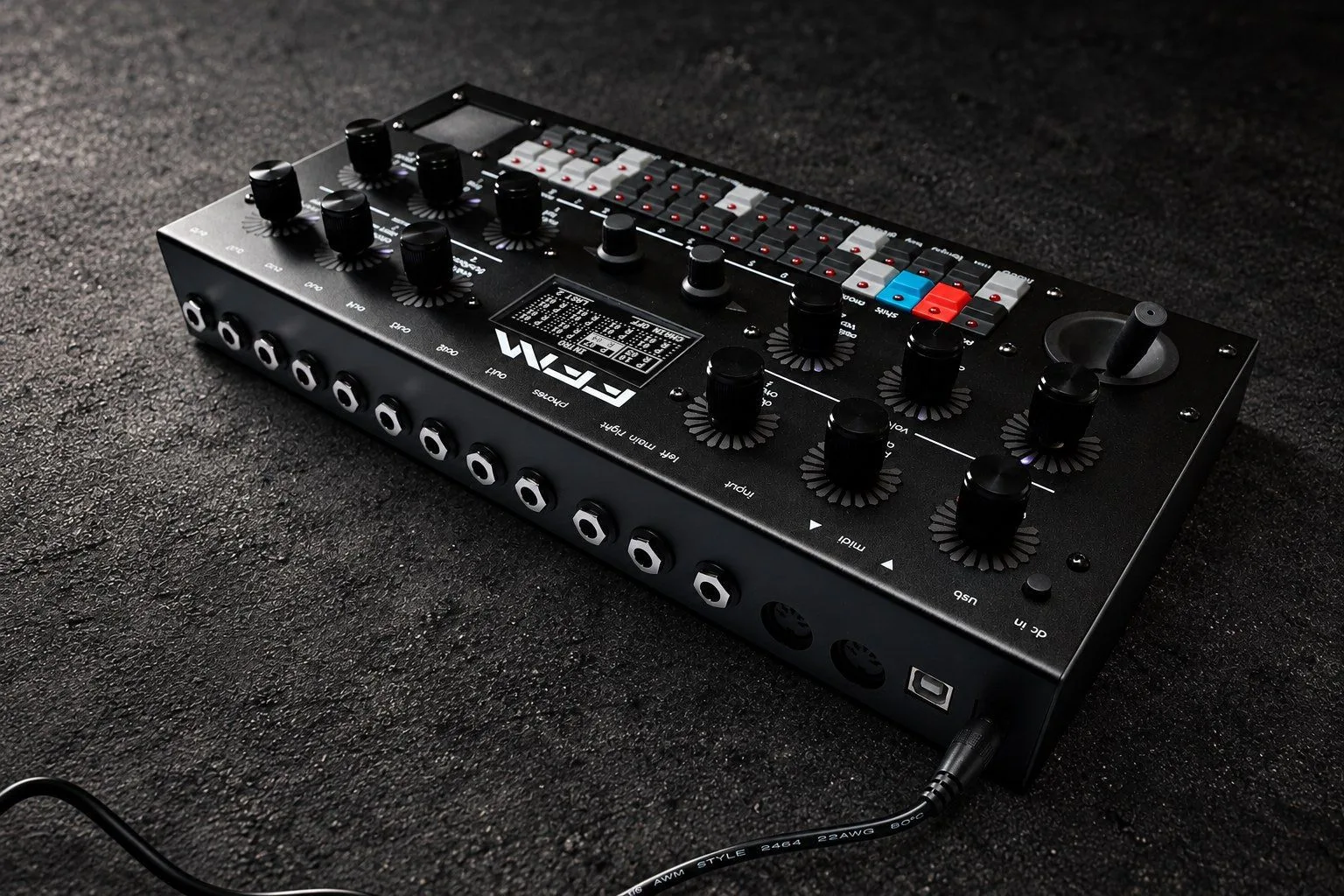
The FLEXFM doesn’t skimp on outputs: an individual 6.3 mm mono output per voice, a stereo main out, a headphone jack and a mono input. On the digital side, MIDI In/Out and USB handle data as well as multitrack audio streaming to the computer. A full software editor manages sound editing and library management. Three built-in effects round things off: a plate reverb with pitch-shifted shimmer, a vintage feedback echo and a sidechain-pumping compressor.
| Spec | FLEXFM |
|---|---|
| Voices | 8, one per track, 4 operators each |
| Operator engines | 30+ (waves, wavetables, macro, samples) |
| Filters | 1 multimode analog (15 responses) + 3 digital |
| Sequencer | 128 steps, 16 patterns, conditional steps, tempoFlex |
| Outputs | 8 individual jacks, stereo, headphone, USB multitrack audio |
Price and availability
The FLEXFM is up for pre-order at a launch price of 999 € including VAT, with shipping announced before Christmas 2026. Full specs and pre-orders are on the Twisted Electrons product page.
My take
The FLEXFM is an unapologetic Swiss army knife: deep FM, sampling, a fifteen-response analog filter and a sequencer that pushes playability hard. That kind of density can intimidate, but it’s exactly the Twisted Electrons signature — you’re buying a machine that rewards exploration, not a synth you exhaust over a weekend. At 999 €, it lands among the serious grooveboxes; the open question is how that analog filter behaves on a real take. The sort of box you want to plug in just to see where it takes you.