Two words that get mixed up constantly in the studio: phase and polarity. They are not the same thing, and the little Ø button on your console or interface only fixes part of the problem. Understand the difference and you stop flipping polarity at random and start hearing why a sound goes hollow.
Phase and polarity: two different ideas
Polarity is the direction of the signal: a positive signal becomes negative, and vice versa. It is an instant 180-degree flip, identical across all frequencies. Phase describes where a wave sits in time: two identical signals offset by a few milliseconds are out of phase, but their polarity has not changed. The confusion comes from the Ø button often being labelled “phase” when it actually acts on polarity.
Polarity: the 180-degree flip
Flipping polarity is like mirroring the waveform. On a single source it is inaudible: your ear cannot tell a sine wave from its inverse. It becomes crucial the moment two signals capture the same source. The textbook case is a snare miked from above and below: the two mics “see” the head move in opposite directions, so their signals are in opposite polarity. Summed, they partly cancel and the snare loses its body. One press of the Ø button on the bottom mic and the low end returns.
Phase: an offset in time
Phase is about arrival time. Two mics at different distances from the same source receive the sound with a slight delay relative to each other. When you mix them, some frequencies add, others cancel, depending on the wavelength involved. The result is a series of peaks and dips in the spectrum — exactly the comb filtering that gives that hollow, metallic sound. Flipping polarity does not fix a phase problem: you have to align the signals in time.
When it really shows
Phase issues appear as soon as you combine several sources:
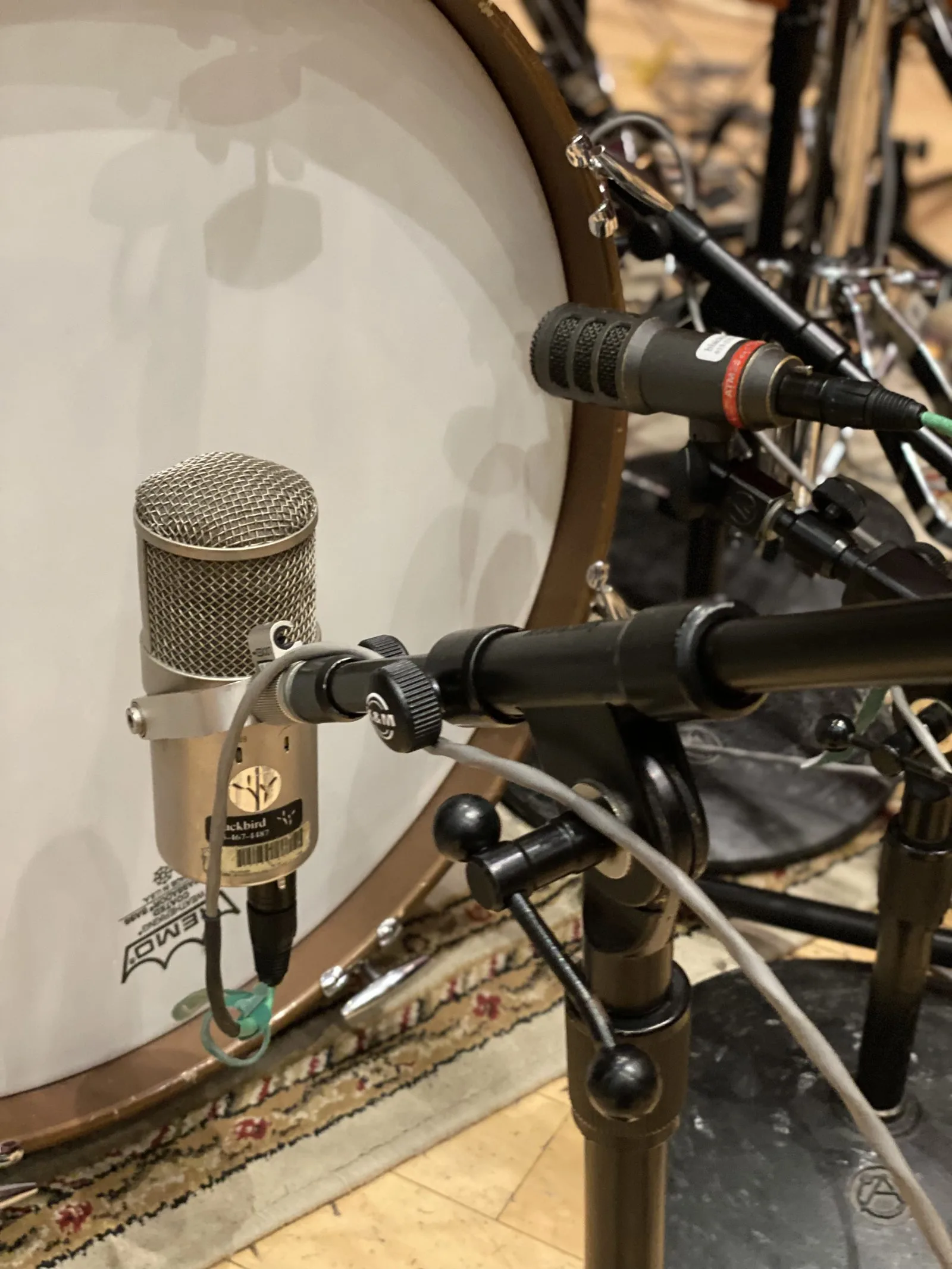
- Multi-mic recording: drums, a guitar amp caught by two mics, piano. The more mics on a source, the more phase has to be watched.
- Close mic and room mic: the delay between the two creates comb filtering if you do not align them.
- Mid/Side processing: mishandled encoding or decoding can upset mono compatibility.
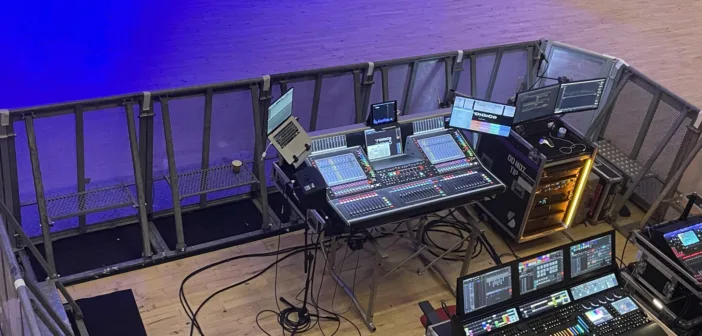
- Low end in a PA: live, the same principle governs system alignment, where phase alignment between subs and tops makes or breaks the low end.
Checking and fixing
The first rule is prevention over cure: good mic placement solves most issues before they happen. The three-to-one rule — place the second mic at least three times as far from the first as the first is from the source — limits cancellation. Only then do the tools come in.
For polarity the move is simple: listen to both mics together in mono, press the Ø button, and keep the position that gives the most body. For phase it is a matter of time alignment: nudge one of the signals by a few samples in your DAW, or use an alignment plugin, until the low end and transients come back. Dedicated tools, such as the Sonnox gate that phase-aligns drums, automate that work. One last marker: anything that colours the signal upstream, starting with the mic preamp, can introduce small frequency-dependent phase shifts.
Stereo, mono and compatibility
Phase is not only about tracking: it also decides what survives a mono sum. A stereo signal whose two channels are in opposite polarity disappears when heard in mono — and mono is everywhere: Bluetooth speakers, phones, the summing of both channels in a club, radio broadcast. A mix that “sounds wide” on headphones but collapses in mono almost always hides a phase problem between channels. Checking your mix in mono regularly is still the most honest test of how solid it is.
The same applies to very wide stereo effects, wideners and some ambience processing: pushed too far, they create between-channel difference that costs you in mono. The discipline is to widen without ever putting the bass and the centre elements at risk of vanishing. In practice, keep the low end mono and reserve widening for the highs and reverbs.
Finally, polarity matters in the PA too: a speaker wired the wrong way round, a monitor patched with a reversed conductor, and a whole side of the stage loses its low end. Getting into the habit of checking polarity consistency from end to end of the chain, from mic to speaker, saves hours of diagnosing a sound that “lacks body” for no obvious reason.
My take
Polarity takes three seconds to sort and saves a mix more often than you would think — the mono Ø-button reflex should be automatic the moment two mics hit one source. Phase takes a bit of ear and a bit of patience, but it is won at the tracking stage, not in the mix. Place your mics well and you will spend far less time chasing dips on screen. That is the difference between a sound that is full from the start and one you fiddle with for an hour without ever finding its footing.