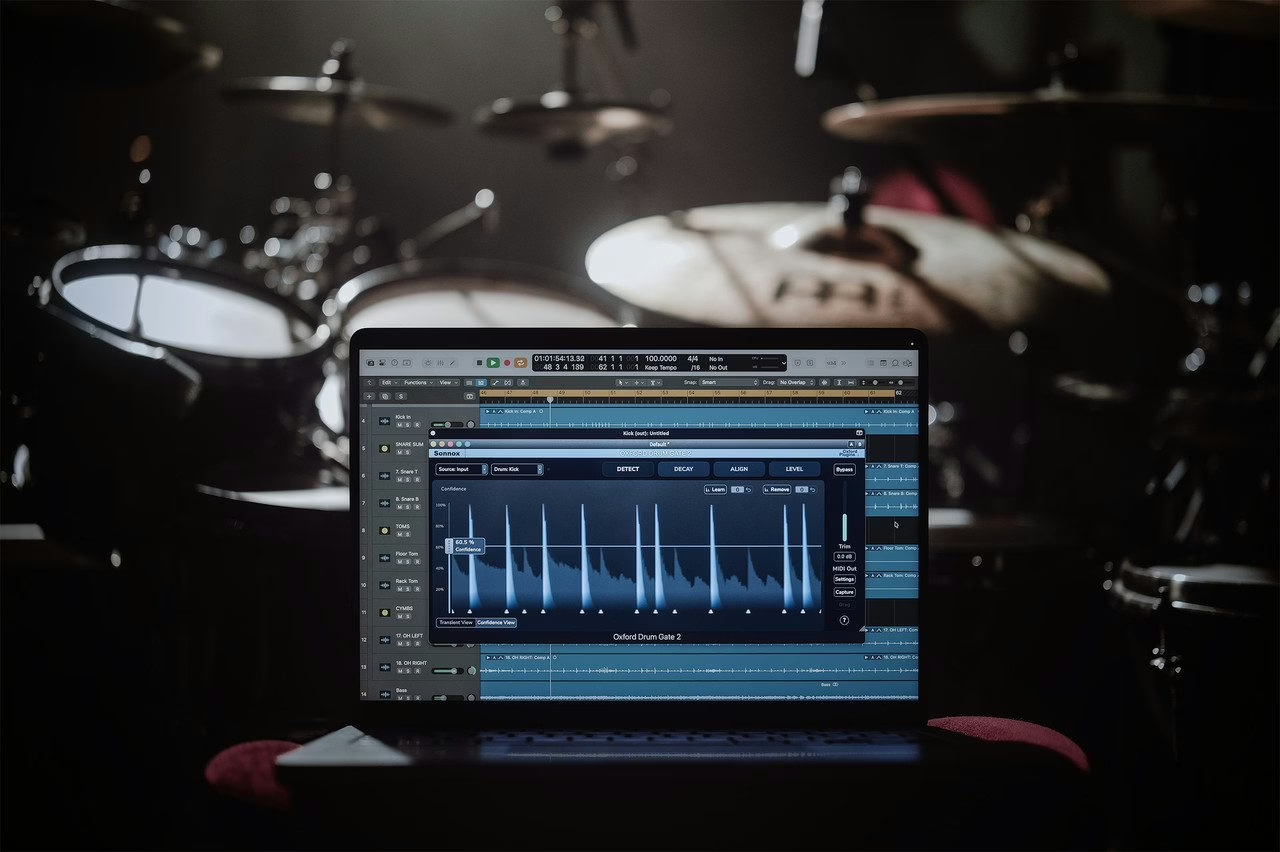
Gating a multi-mic drum kit by hand means fighting thresholds that either let spill through or eat the ghost notes. The Sonnox Oxford Drum Gate 2 comes at it from the other end: it’s neither a classic threshold gate nor source separation, but a detection engine built specifically to recognise drum hits. The second version widens the tool’s remit sharply — enough to make it far more than a gate.
A detection engine, not a threshold
The starting principle is unchanged: the plugin spots every intended hit with no false triggers, and lets playing nuance through — ghost notes included — while rejecting bleed from the rest of the kit. Where an ordinary gate makes you juggle threshold, attack and release, Drum Gate does the work by reading the nature of the drum signal itself. Whether you start from a live take spread across close mics, overheads and room mics, or shape a kit from stems, the tool hands you back control over elements that otherwise tend to work against the mix.
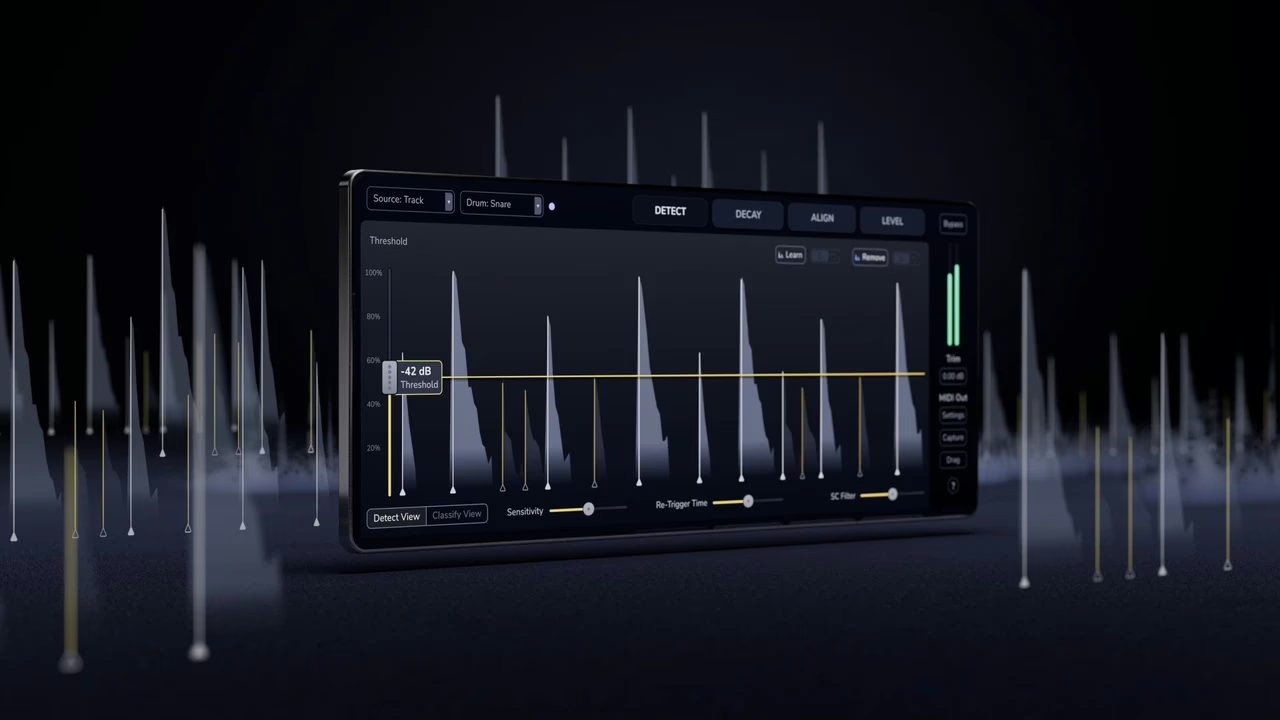
Detection, adaptive decay and Leveller
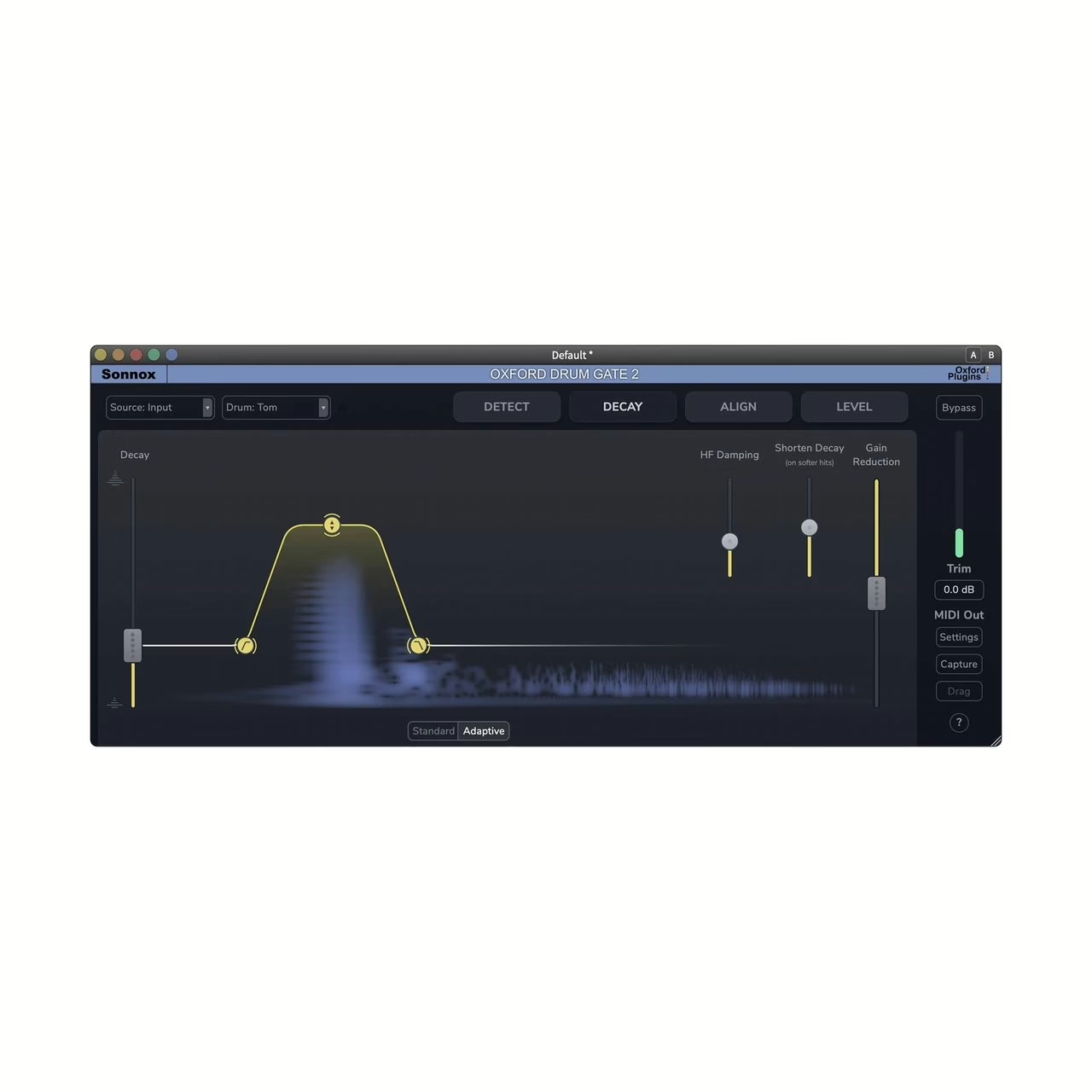
Once the hits are detected, three treatments combine. Adaptive decay lets the drum’s resonance die away naturally while attenuating spill, with none of the fiddly filter-tweaking or rubbery source-separation artefacts. The Leveller evens out dynamic inconsistencies without flattening the expressive playing. And MIDI export of the detected hits, aligned to the sample, lets you trigger a drum instrument or reinforce a drum with a perfectly synced sample.
What’s new in version 2
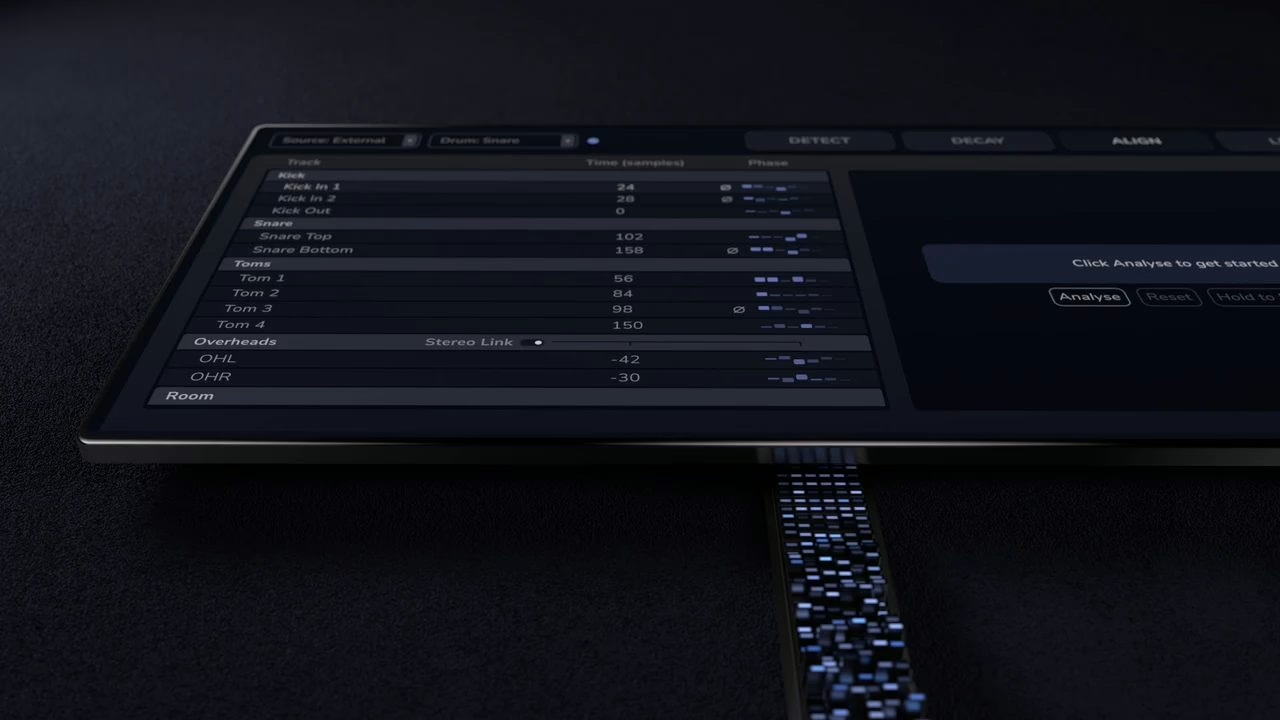
Version 2’s real leap is alignment. Drum Gate 2 aligns time, polarity and phase across any set of drum tracks, in one click, for a clean, punchy starting point before any mix decisions. Add a Hit Clipper that clips each hit consistently so drums cut through a dense mix evenly, the ability to enhance already-detected hits with Decay and Leveller without re-detecting, an external sidechain key input, and a fully redesigned interface.
The bottom line
People fixate on the gate, but it’s phase alignment between close mics that makes — or breaks — a drum sound. Recovering time, polarity and phase in one move, before you start mixing, saves the most thankless hours of drum editing. Sonnox putting that in the same place as detection and gating is coherent: sort the source once, then mix. It’s the kind of tool that earns its price on a single big drum session. For the external sidechain, the principles of sidechaining in the mix are worth revisiting, and anyone starting from a single drum file should look instead at drum stem separation.
Price and format
Oxford Drum Gate 2 sells for around EUR 172 as a perpetual licence (two activations, authorised with a free iLok account), in AAX, AU and VST3 on Mac and Windows, with a 15-day free trial. An upgrade path is offered to owners of the first version.
Frequently asked questions
How is Drum Gate 2 different from a classic threshold gate?
It’s neither a threshold gate nor source separation, but a detection engine built for drum hits. It recognises intended hits, preserves ghost notes and rejects bleed, without hand-setting a threshold.
What does version 2’s alignment actually add?
Drum Gate 2 aligns time, polarity and phase across drum tracks in one click. You get a clean, phase-coherent kit sound from the start, before any mixing decisions.
Can you trigger samples with it?
Yes. The plugin exports detected hits as MIDI, aligned to the sample, so you can drive a drum instrument or reinforce a drum with a perfectly synced sample.
What’s new compared with version 1?
Time/polarity/phase alignment, a Hit Clipper that clips each hit for even cut-through in a dense mix, the ability to apply Decay and Leveller to already-detected hits without re-detecting, an external sidechain input and a new interface.
Which formats and licence?
Oxford Drum Gate 2 runs as AAX, AU and VST3 on Mac and Windows, as a perpetual licence with two activations and iLok authorisation. It’s priced at around EUR 172, with a 15-day free trial.