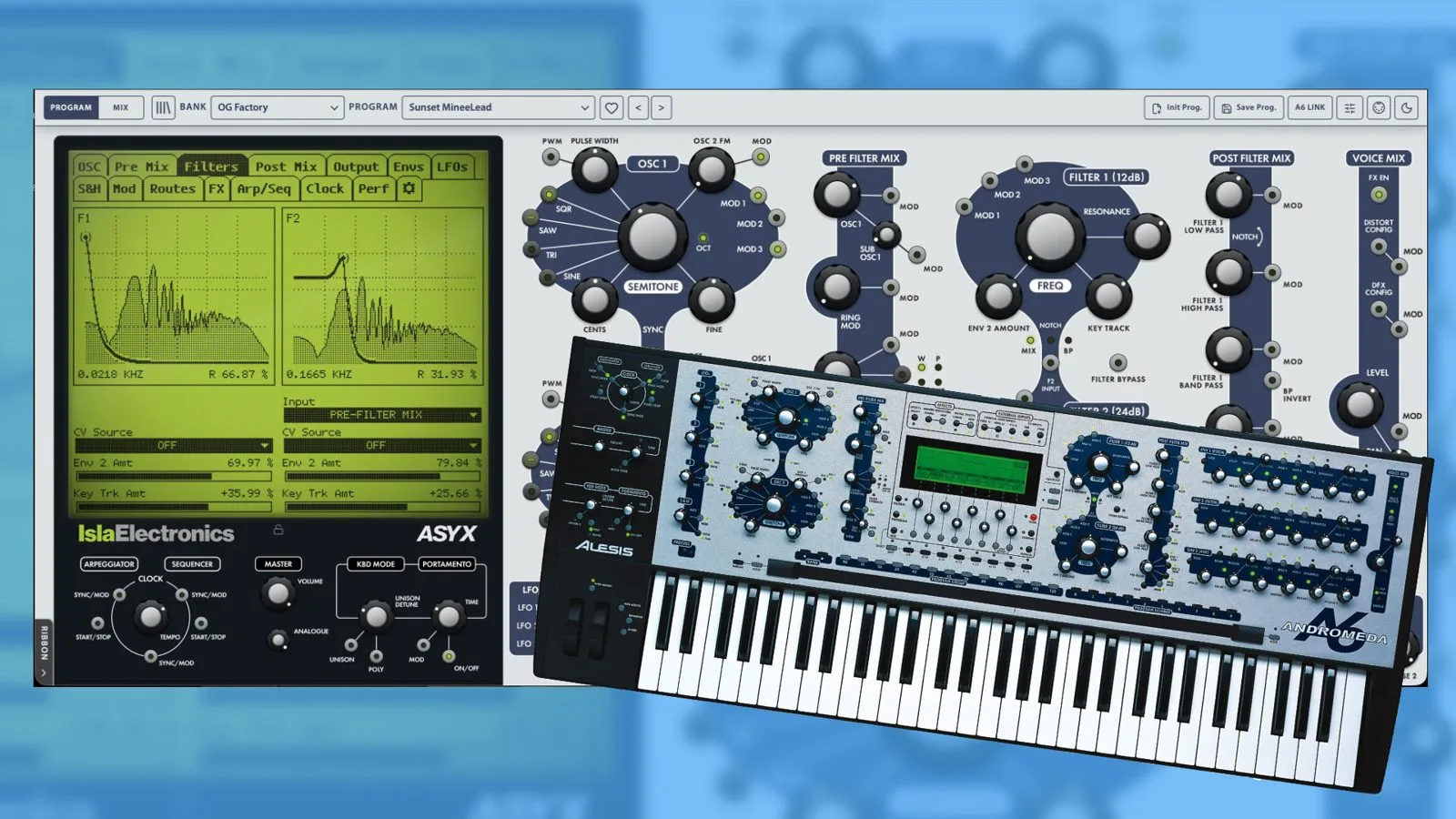
The Alesis Andromeda A6 is one of those synths everyone name-drops and almost nobody owns: sixteen analog voices, a sprawling architecture, production stopped in 2010 and a used price that keeps climbing. With ASYX, Isla Electronics does what no one had truly attempted before: a full software emulation of the instrument, modeled from the ground up rather than sampled.
Developer Brad Holland is clear about it: no samples, no Kontakt library, but a reconstruction of the A6’s behaviour, from its oscillators to its filters. ASYX runs as a standalone app and as a VST3 and AU plugin, on macOS (Apple Silicon and Intel) and Windows alike.
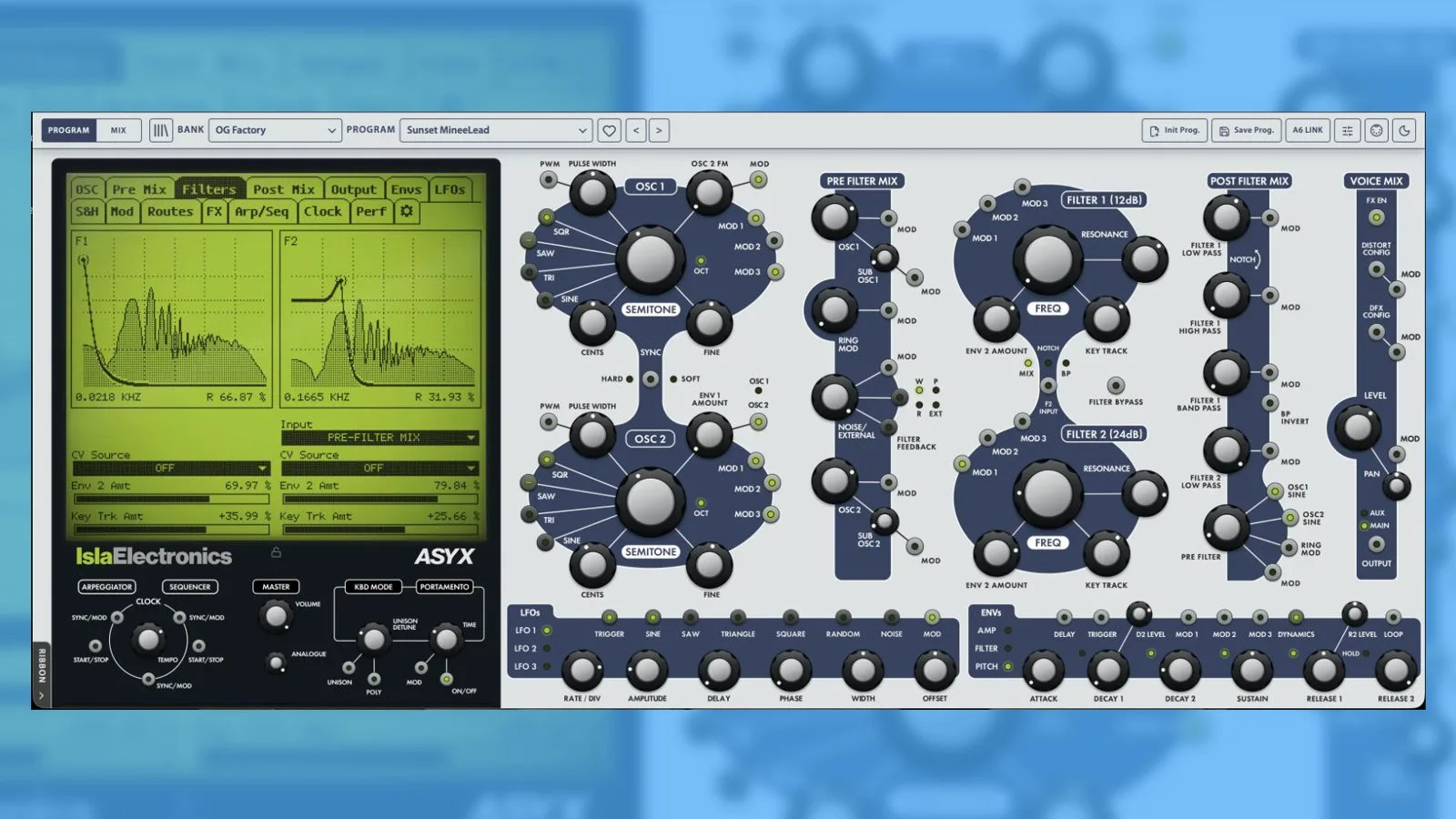
Sixteen voices, two oscillators modeled on the original ASIC
ASYX keeps the Andromeda’s 16-voice, 16-part multitimbral architecture, splits and layers included. Each voice carries two oscillators modeled on the A6’s custom ASIC, with simultaneous waveforms, sub-oscillators, PWM, hard and soft sync, and FM. The pre-filter mixer adds noise and ring modulation, exactly as on the hardware.
The dual filter stage is the heart of the Andromeda character, and ASYX restores it faithfully:
- Filter 1: derived from the legendary Oberheim SEM, 12 dB/octave multimode.
- Filter 2: derived from the Moog 904A, 24 dB/octave multimode (low, high, band, notch).
- Series or parallel routing, with independent pre- and post-filter mixing.
Modulation worthy of a semi-modular
Where many emulations simplify, ASYX keeps the original’s generosity. You get three multi-wave LFOs with offsets, start phases, delay and triggers, three seven-stage envelopes (DADDSRR-style) with nine curves, looping and retrigger, a sample-and-hold and a tracking generator. Routing stays open, in the semi-modular spirit of the original matrix, and independent variation settings for oscillators, filters and envelope timing bring back the small imperfections that made analog feel alive.
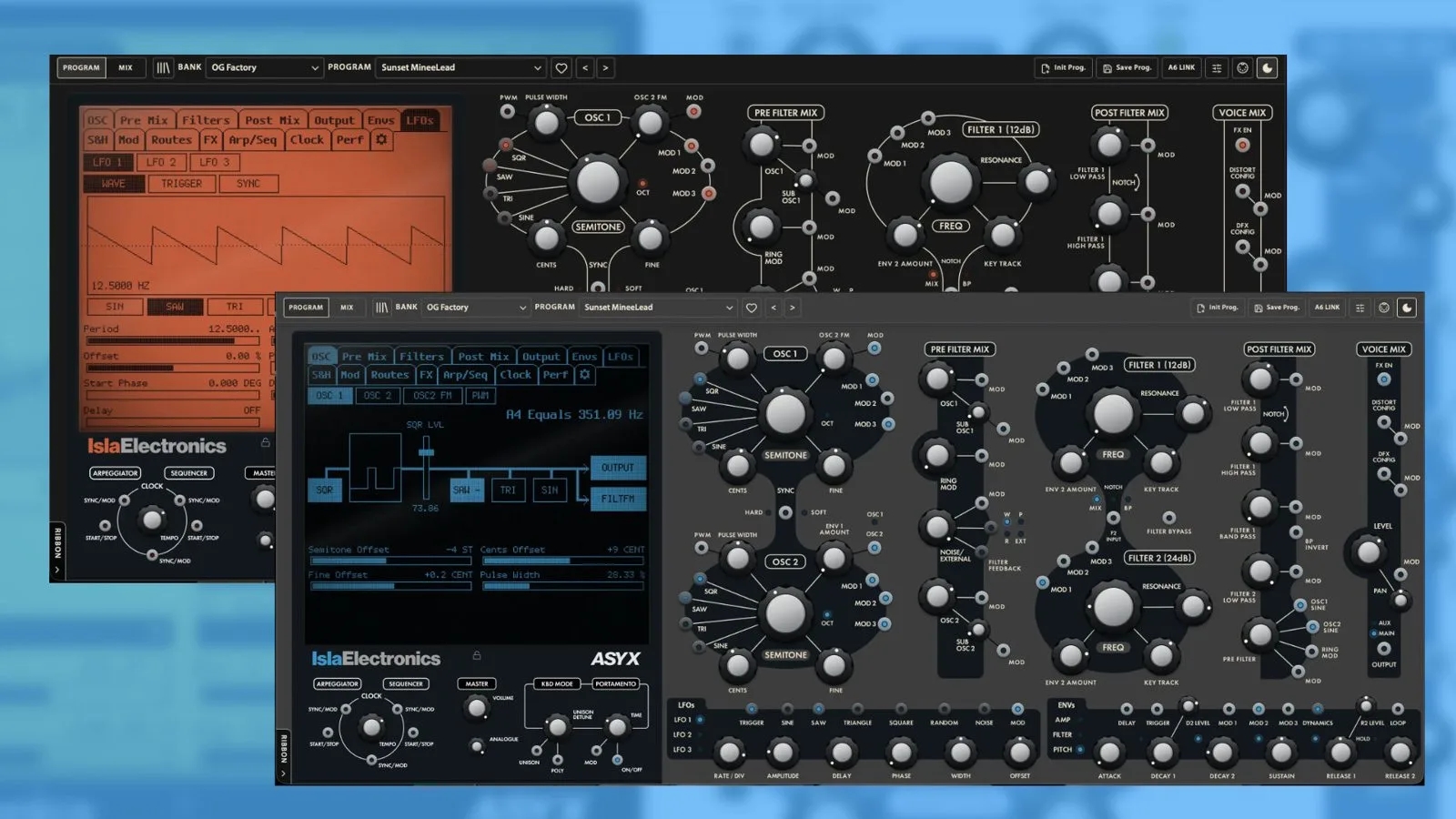
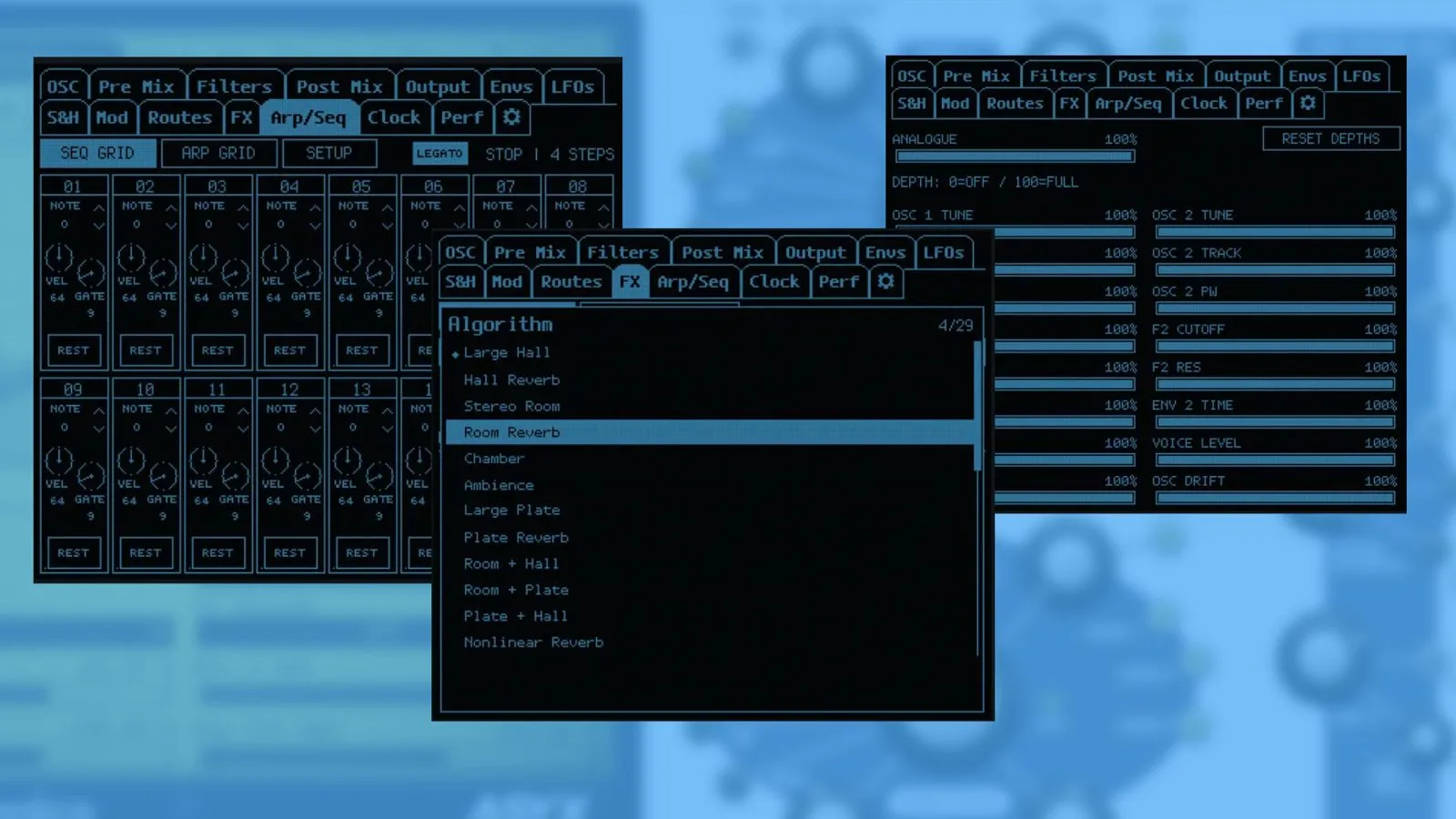
For playing and sequencing, there is a 16-step sequencer with per-step controls, an arpeggiator with its own grid, and a 29-slot digital effects section — chorus, delay, reverb and combined setups. Polyphonic aftertouch is supported.
1,200 programs and a dialogue with the hardware
ASYX ships with more than 1,200 programs, including the historic factory sounds and artist banks, served by a preset browser with search and filters. The detail that will speak to A6 owners: the editor is bi-directional. Software and hardware respond to each other’s changes, and ASYX imports the original SysEx programs and banks. In other words, the plugin doubles as a remote and a librarian for the hardware instrument.
Among modeled synths, ASYX plays a different game from hardware reissues like the Roland JUPITER-08 and n/vision: no panel to touch here, but the full depth of an analog monster inside a plugin. It is also the logical follow-up to Isla Electronics’ hardware work after the Caladan. And for anyone after a big, well-built all-software poly, it joins an already crowded family alongside the Rob Papen QUAD 2.
Price and availability
ASYX is available now at an intro price of 99 euros instead of 149, until November 5, 2026. The official page is at Isla Electronics.
My take
Modeling the Andromeda was close to an impossible brief: it is one of the most complex analog synths ever made, and the trap would have been to ship a watered-down version. ASYX does the opposite, keeping both filters, the modulation matrix and even per-voice drift. At 99 euros, the entry ticket is tiny next to the used price of a real A6. The real question, which only time behind it will settle, is whether the original’s sonic magic survives the jump to software. Early word is enthusiastic, and the two-way dialogue with the hardware is a classy touch for owners.