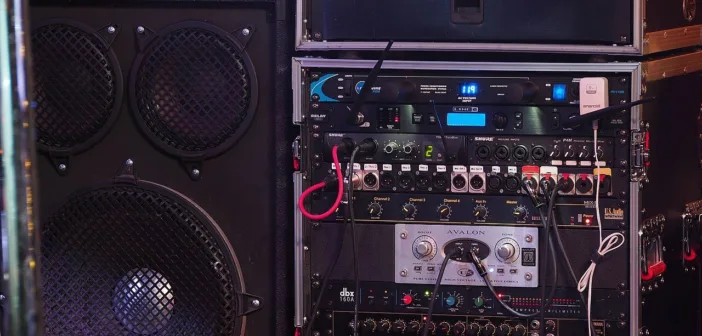
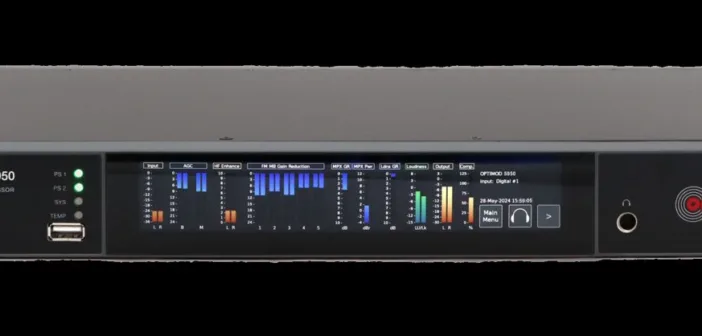
Look at a radio control room or a DAW’s metering window: needles, LED bars, numbers in LUFS. They all show the level of the same signal, yet they do not move together. That is normal: a level meter is not a single truth, it is a point of view. Some measure the feel, some the peak, some the perceived loudness over time. Knowing which one to watch, and when, is a basic broadcast skill.
The VU meter: feel, not peak
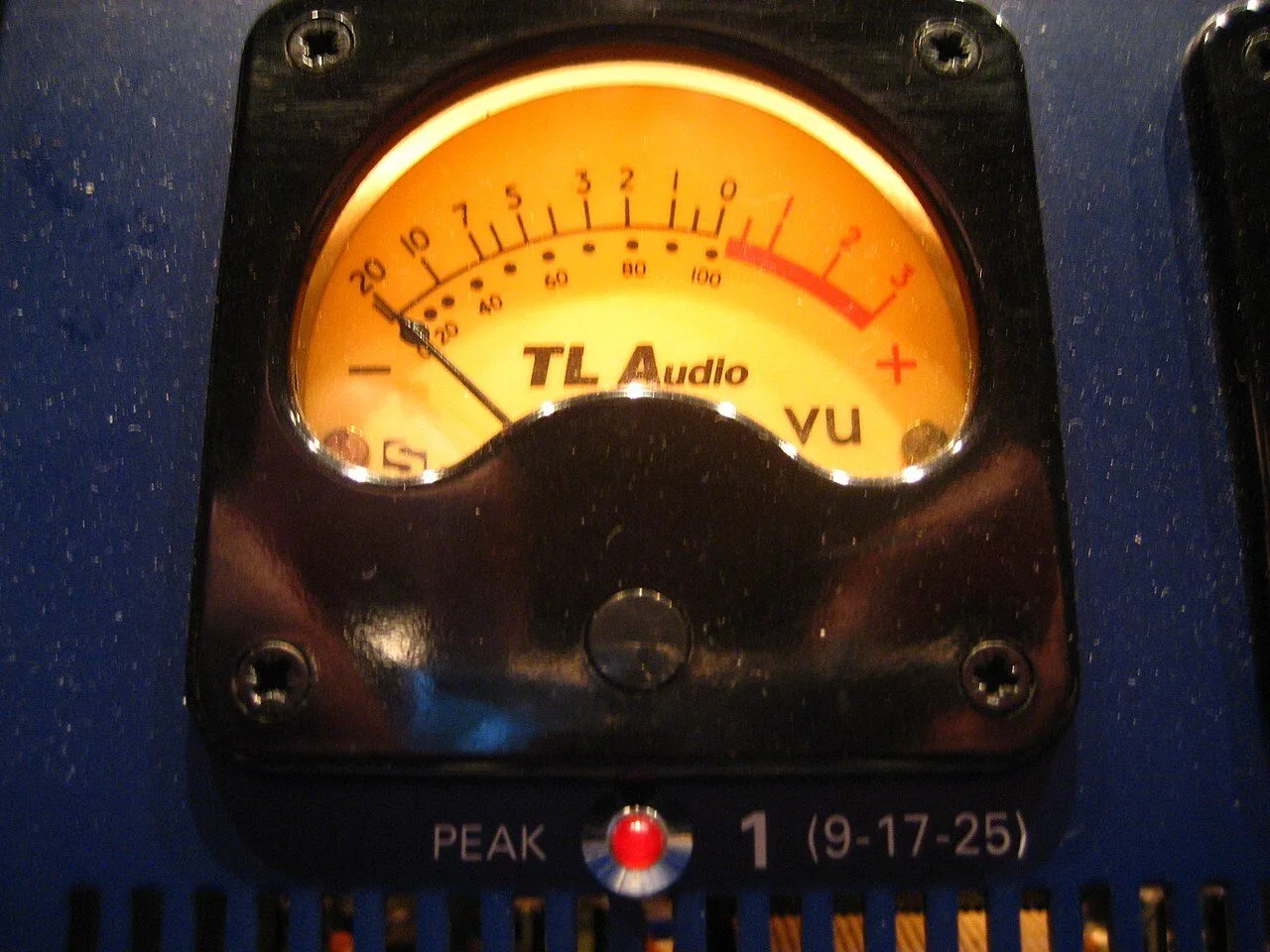
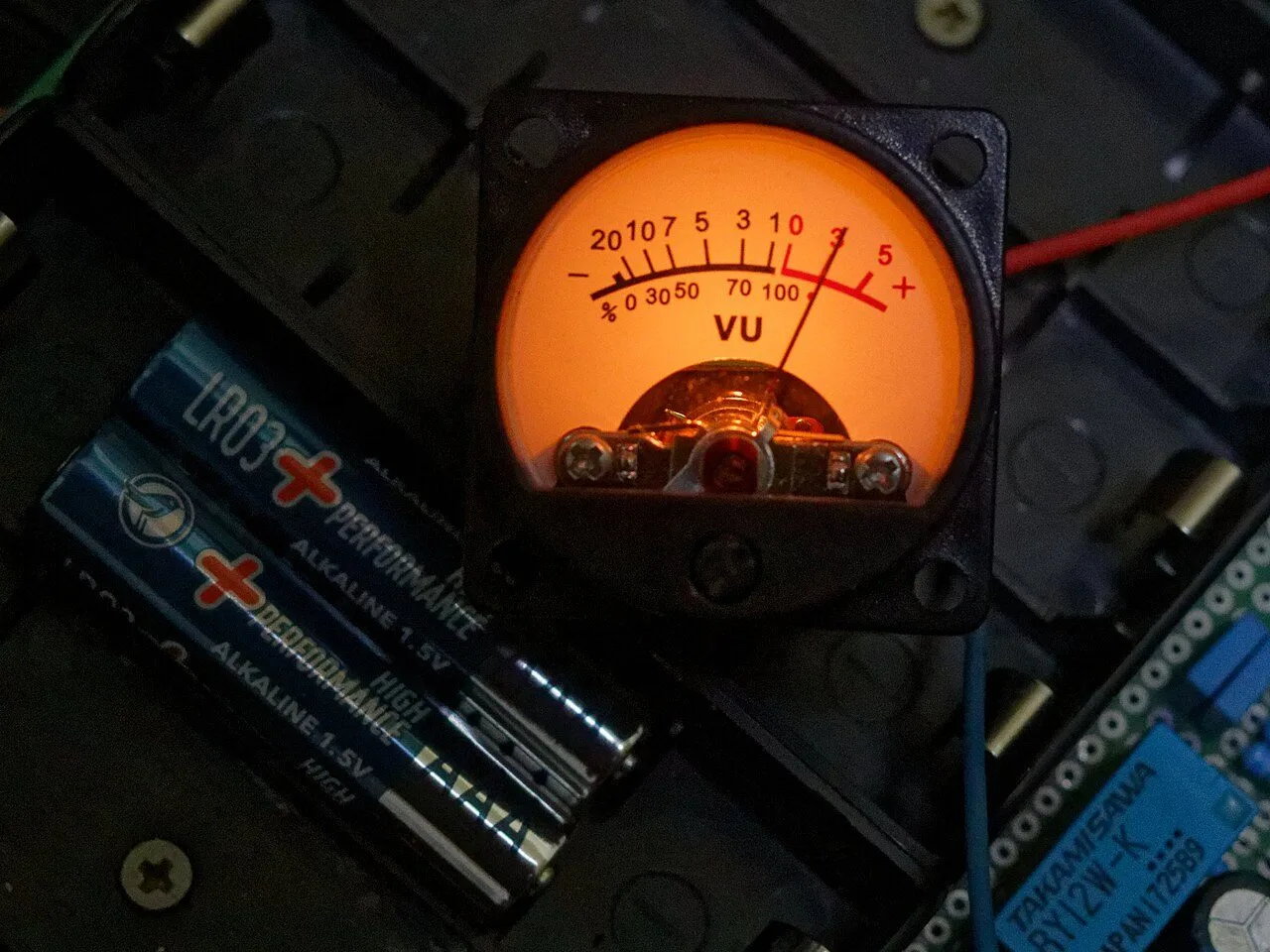
The VU (Volume Unit) meter is the oldest. Its needle responds slowly, with a ballistic of about 300 milliseconds: it integrates the signal and tracks the average level, the one closest to what the ear hears as volume. That slowness helps judge the body of a voice or a track, but it has a major flaw: it ignores fast peaks. A percussion transient can shoot well past 0 VU without the needle moving. The VU tells you if it is loud, not if it is clipping.
The PPM: watching the peaks
The PPM (Peak Programme Meter) was built for the opposite problem: avoiding over-modulation. It reacts fast, with an integration time around 5 to 10 milliseconds, and shows a value close to the signal peak, while keeping a slow fall-back to stay readable. Several standards coexist: the very fast DIN and Nordic PPMs, and the BBC PPMs (EBU Type I and II) with their 1-to-7 scale. In radio the PPM remains the reference for staying within the allowed excursion, a subject tied directly to the FM multiplex.
The digital peak meter: dBFS and true peak
In the digital world the reference changes. You measure in dBFS (decibels full scale), where 0 dBFS is the absolute ceiling: beyond it is digital clipping, far uglier than analogue saturation. The classic digital peak meter reads the sample value. But a signal can exceed that ceiling between two samples, after conversion: that is the true peak, in dBTP, which modern tools measure. Leaving headroom below 0 dBFS is the basics of gain staging.
The loudness meter: perceived volume, normalised
The newcomer measures perceived loudness over time, in LUFS, following the EBU R128 standard. It weights the spectrum like the ear, then integrates over three windows: momentary (400 ms), short-term (3 s) and integrated (the whole programme). It is the meter that counts at delivery: TV, radio and platforms normalise to LUFS, not to peak. We cover the targets in our guides to broadcast loudness and podcast loudness. A loudness meter does not replace a peak meter: watch both, LUFS for volume, true peak for the ceiling.
Which one to watch, and when
| Meter | What it measures | When to trust it |
|---|---|---|
| VU meter | Average level (feel) | Judging body, balancing two sources |
| PPM | Peak (slow read) | Avoiding over-modulation on air |
| dBFS / true peak meter | Absolute digital peak | Not clipping in digital, clean delivery |
| Loudness (LUFS) | Integrated perceived volume | Meeting the broadcast / platform target |
In practice you juggle. At tracking and mixing, the VU and peak meters guide the hand. At the on-air stage, on-air processing handles the excursion, but you keep an eye on the PPM. At delivery, LUFS and true peak are law.
Classic pitfalls
- Confusing average and peak: a signal hitting 0 VU can clip on peak. The two readings are complementary, never interchangeable.
- Reading LUFS as a peak: a programme at -23 LUFS can easily exceed the allowed true peak if you do not watch the ceiling.
- Tuning for loudest: pushing level to seem louder makes no sense once broadcast normalises to loudness. You lose dynamics without gaining volume.
My take
No single meter tells the whole truth, and that is exactly why we have several. The right instinct, on air as at the mix, is to know what each scale measures before trusting it: VU for feel, PPM and true peak for the ceiling, LUFS for delivery. Since broadcast started normalising to loudness, the loudness war is over. What is left is reading the right numbers at the right moment, and keeping some headroom.