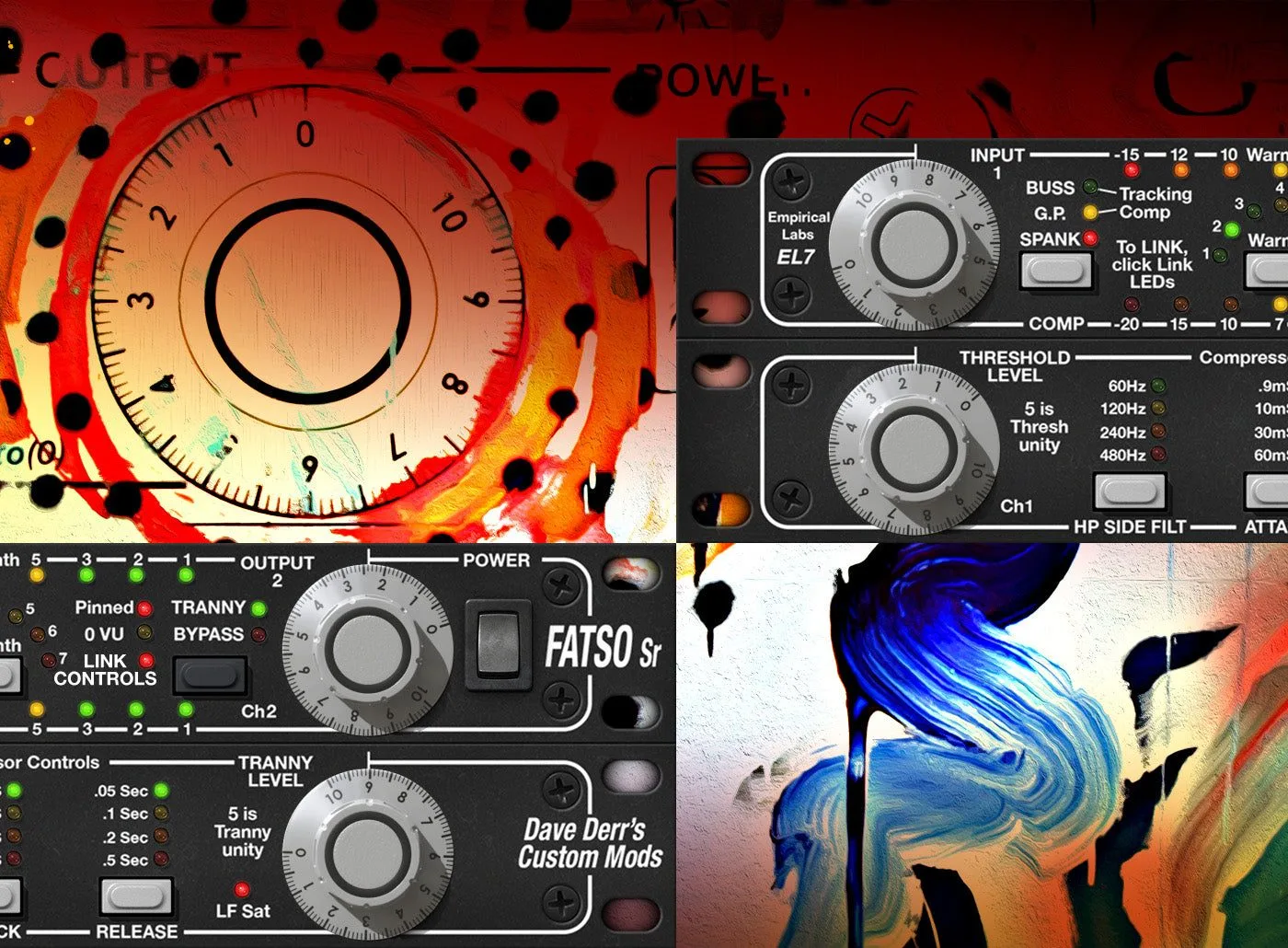
Some boxes you recognise by ear before you ever see them. The Empirical Labs FATSO is one of them: since the late 1990s, this tape-style compressor-saturator has left its grain on thousands of mixes. Universal Audio now offers it as a native plug-in, free of its in-house DSP cards, so the FATSO finally runs straight inside any DAW, on macOS and Windows alike.
So what is the FATSO?
The acronym says it all: Full Analog Tape Simulator and Optimizer. Designed by Dave Derr, founder of Empirical Labs and a former Eventide engineer, the FATSO hardware packed into a single rack what engineers were chasing from tape: progressive harmonic saturation, softened transients and a musical compression that thickens without crushing. Its Warmth control became a well-known shortcut for taming harsh digital highs.
A plug-in version already existed, but it stayed locked inside the Apollo and UAD ecosystem: you couldn’t use it without Universal Audio hardware. That’s exactly the lock that opens today.
“Native”: what actually changes
This isn’t yet another emulation, it’s a change of access. As a native plug-in, the FATSO installs like any VST3, AU or AAX and loads on as many tracks as your machine allows, with no card latency and no Apollo console. It joins the UAD Spark library and its subscription, alongside UA’s other native ports. For anyone working on an entry-level interface rather than a UA rack, this is the first time the processor is genuinely within reach.
Universal Audio stresses one point: development was carried out with Dave Derr himself, which makes this port the only emulation authenticated by the designer of the original.
Jr and Sr: two plug-ins in one
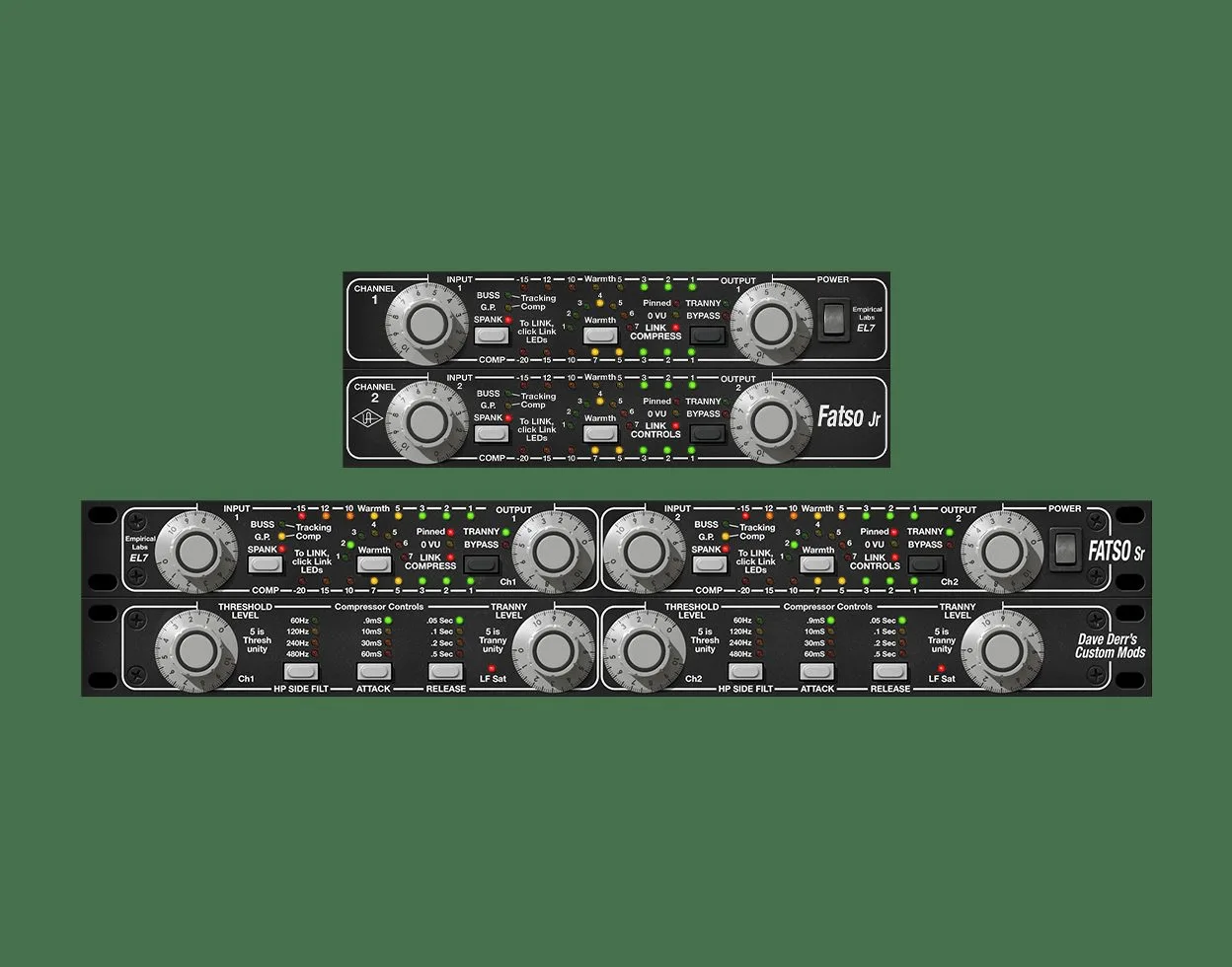
The FATSO ships in two versions, installed together. The FATSO Jr faithfully reproduces the hardware’s controls and behaviour: the original settings, with no extra layer. The FATSO Sr adds what Dave Derr could never fit into the box: variable transformer saturation, sidechain detection filtering and open compression parameters — threshold, attack and release, set by hand.
| Version | Spirit | What it brings |
|---|---|---|
| FATSO Jr | Faithful to the hardware | Original controls and tone, instant results |
| FATSO Sr | Extended by Dave Derr | Variable transformer saturation, sidechain filter, adjustable threshold / attack / release |
In short: the Jr for instant colour, the Sr when you want to understand and sculpt what the compression is doing in detail.
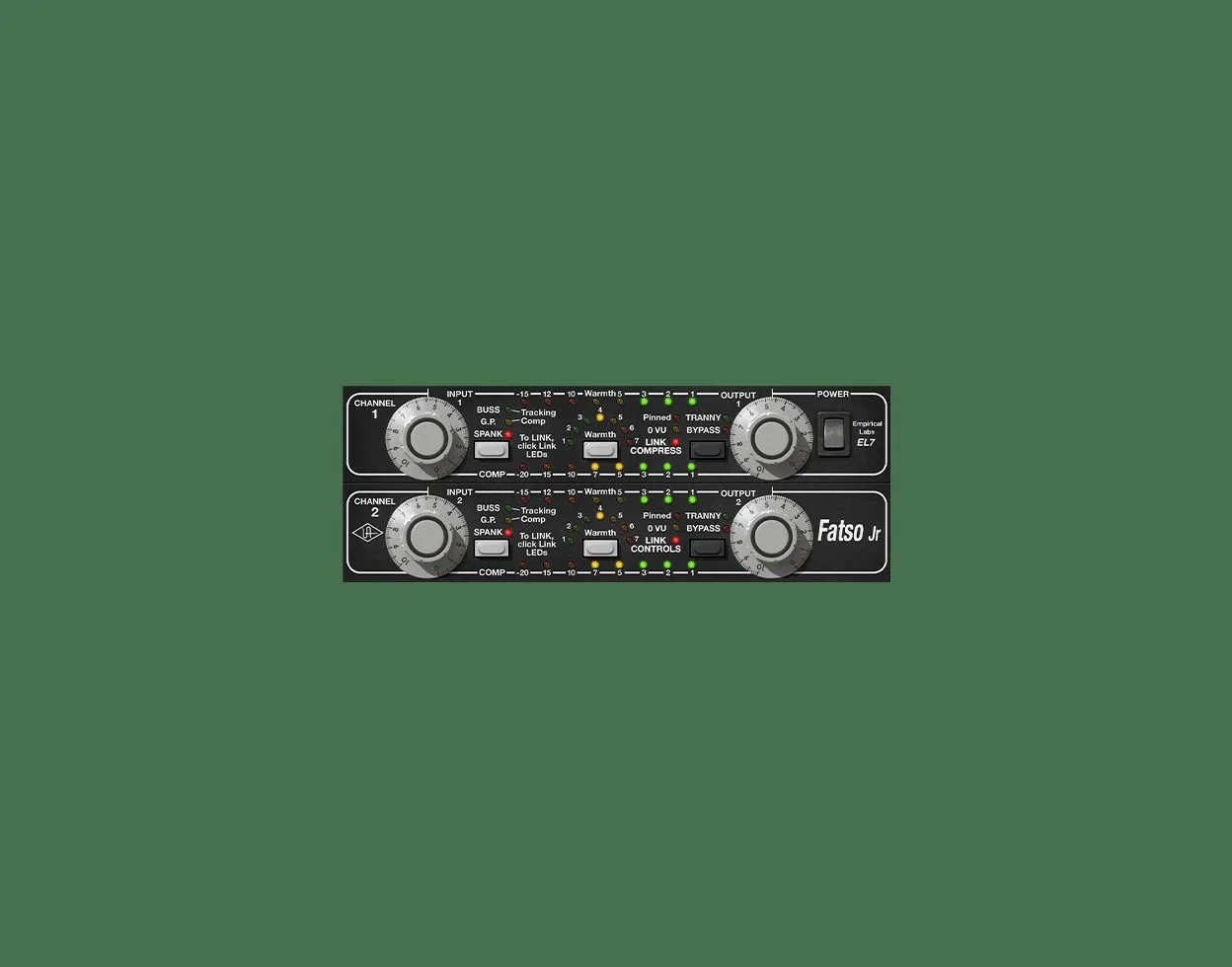
Warmth, transformer saturation and four compression modes
The heart of the FATSO is still its saturation stage. Warmth works like a soft clipper that gradually enriches the spectrum with harmonics and rounds off transients, while transformer saturation adds the density typical of iron-core stages. On the dynamics side, four modes cover the common use cases:
- Buss: gentle, glue-like compression for a mix bus or subgroup.
- G.P. (general purpose): the versatile, unobtrusive mode that suits most sources.
- Tracking: built to catch a take at the input without altering it.
- Spank: more aggressive, for stamping a drum bus with intent.
On a mix bus, the FATSO naturally sits at the end of the processing chain, where you’re looking to glue a whole together and give it body.
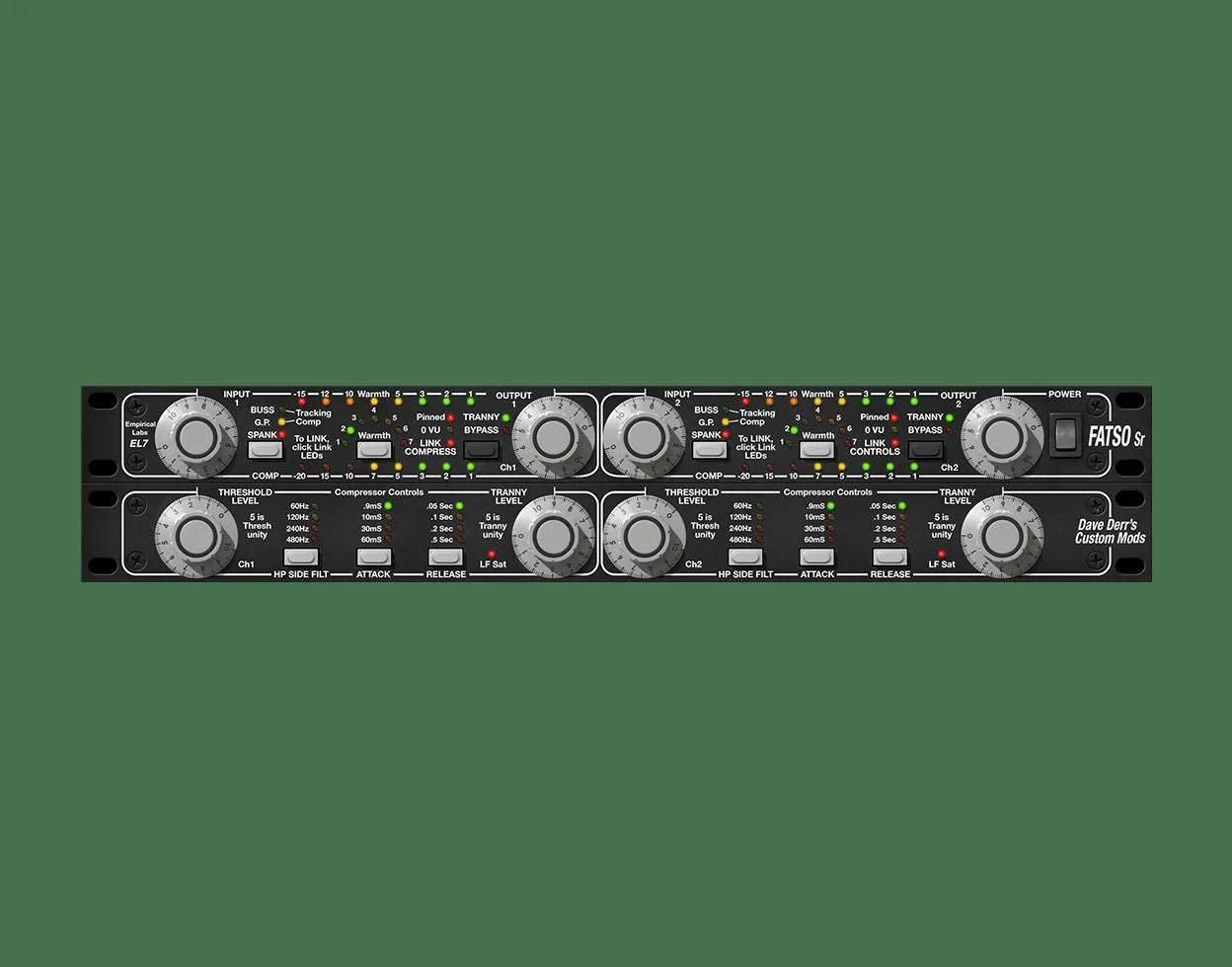
Price and availability
The native FATSO is available for Mac and PC at an intro price of $79 (regularly $149) through 31 December 2026. Owners of the Apollo/DSP version can move to native for a couple of dollars, and the plug-in is included in the UAD Spark Studio subscription. Full specs are on the Universal Audio product page.
My take
At last. The FATSO was one of the last great UA classics held hostage by the company’s own hardware, and seeing it arrive native at $79 opens a serious colour tool to people who never owned an Apollo. The Jr/Sr split is clever: start on feel with the Jr, and the day you really want to drive the compression, the Sr is right there. On a mix bus, two clicks are enough to understand why this box has lasted. At that launch price, there isn’t much to think about.