An audio interface is the bridge between your mics, your instruments and your computer: two converters, two preamps, a stable driver — and that covers most of what a home studio actually needs. The Universal Audio Volt put the category back in the spotlight with one clear pitch: a “Vintage” preamp mode modelled on the tube-driven 610, colouring your takes instead of capturing them flat. It is a tempting idea, but it is not the only way to do the job well.
So here are six 2-input interfaces that play in the same league as the Volt, sorted by what they genuinely bring to the table. Let us be blunt: in this segment, the raw sonic gaps are smaller than the marketing suggests. What really matters is preamp noise, gain headroom, output converter quality, driver latency and the bundled software. The Volt’s “character” stays its own party trick: only one unit here truly reproduces it, the rest bet on neutrality — which is often exactly what you want.
The reliable all-rounders
Three safe bets, priced close to the Volt, built for clean reproduction rather than colour. If you want an interface that will never make you second-guess it, start here.
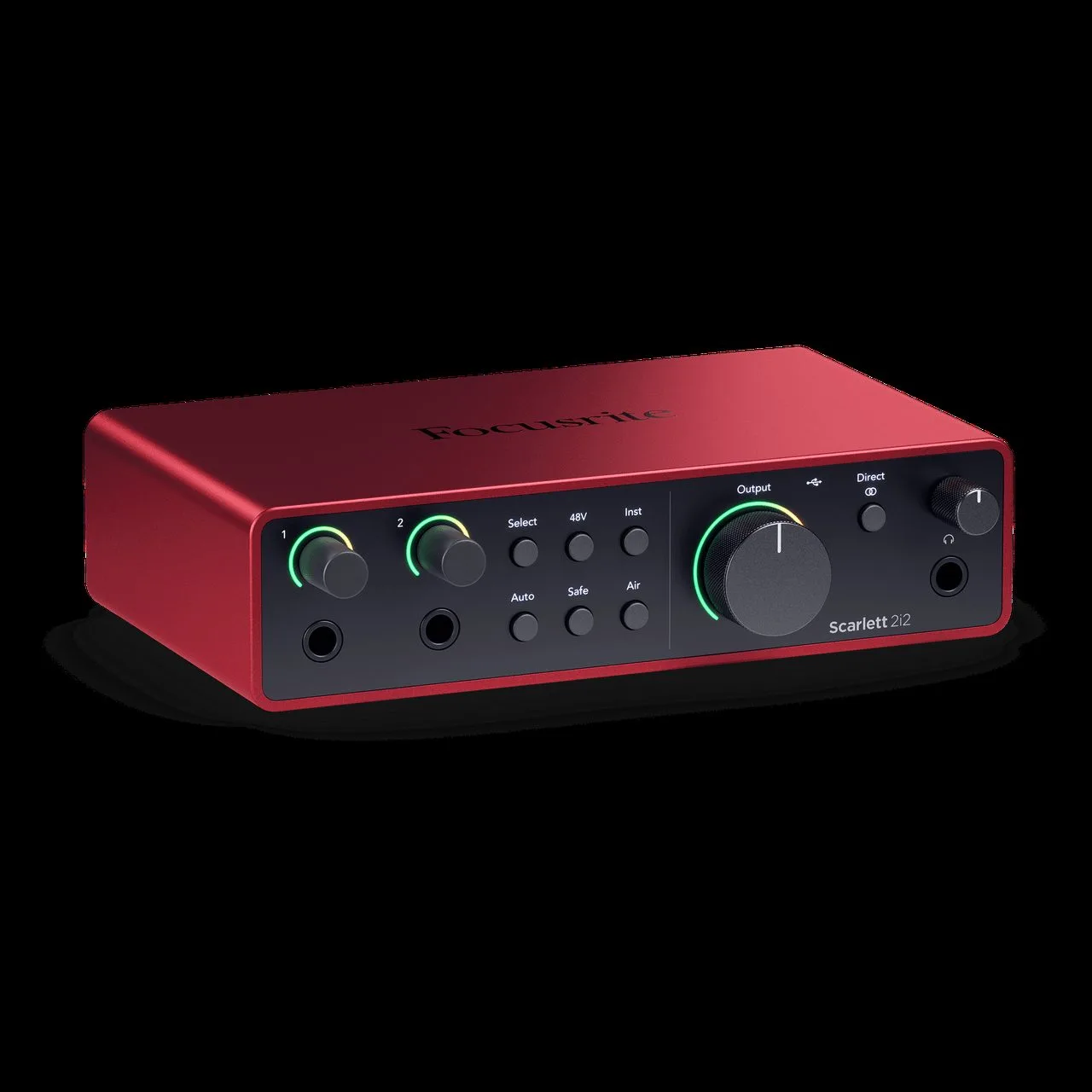
Focusrite Scarlett 2i2 (4th Generation)
The Scarlett 2i2 is the best-selling interface on the planet, and the 4th Generation earns that status: 69 dB of gain, generous dynamic range, and two Air modes (Presence to open up the top end, Harmonic Drive to add midrange harmonics) that add a hint of colour without going as far as the Volt. Auto Gain and Clip Safe set your levels for you: handy for beginners, unobtrusive for everyone else. 24-bit/192 kHz converters, USB-C bus power, and software Loopback to capture your computer’s audio. Nothing sticks out, everything just works.
At a glance — Focusrite · around $199 · 2-in / 2-out, 24-bit/192 kHz, USB-C, macOS/Windows.
MOTU M2
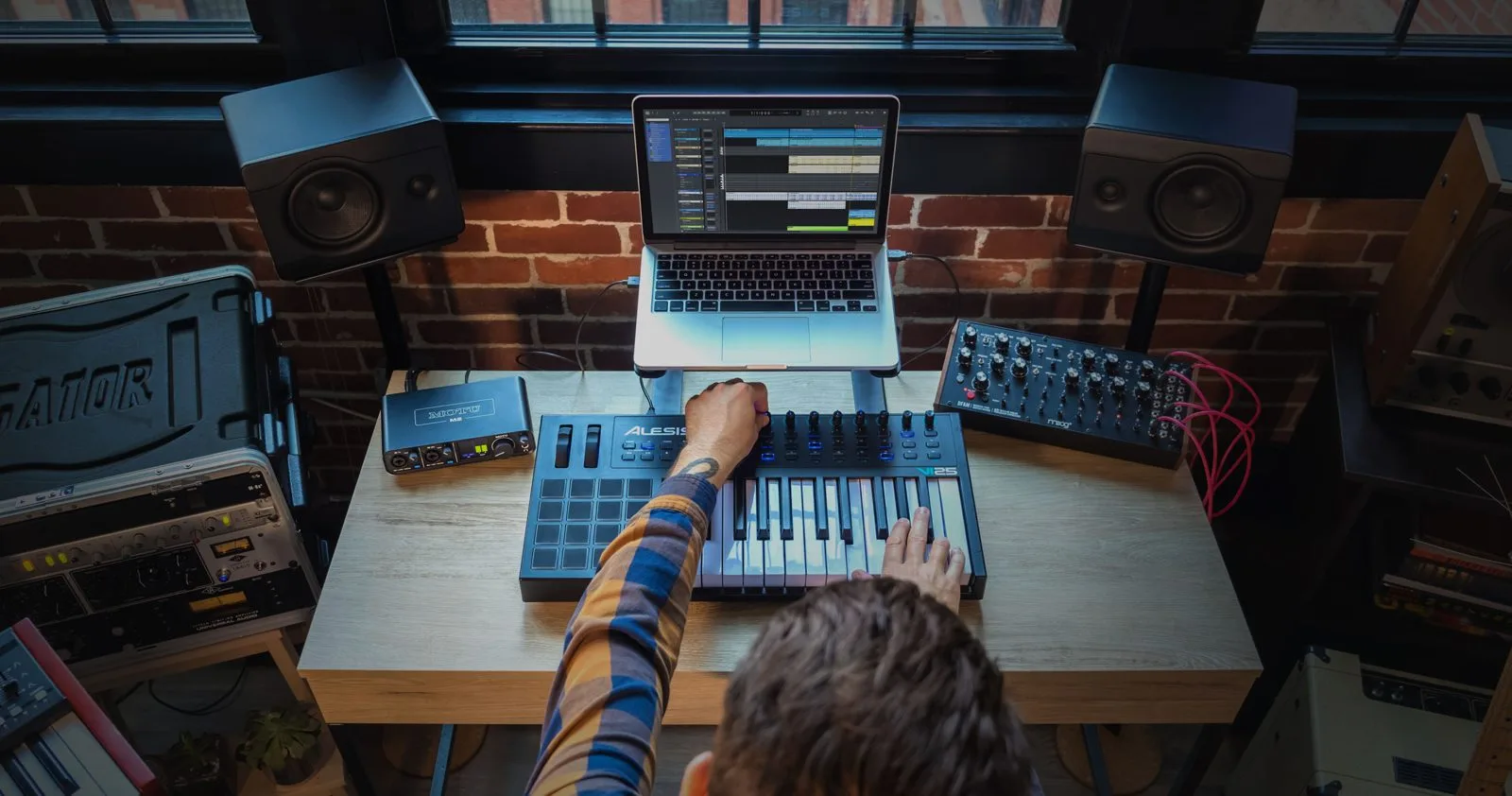
The M2 has one argument nobody disputes: its converters. MOTU dropped in an ESS Sabre32 stage — the kind of chip you find in audiophile DACs — with a claimed 120 dB of output dynamic range and -129 dBu of equivalent input noise on the preamps. On headphones and monitors alike, you can hear it. Add a colour LCD showing proper input and output meters (a luxury at this price), RCA outputs alongside the balanced jacks, MIDI and Loopback, and you get the most “studio” of this trio.
At a glance — MOTU · around $199 · 2-in / 2-out + RCA, MIDI, 24-bit/192 kHz, ESS Sabre32 converters, USB-C.
Audient iD4 MKII
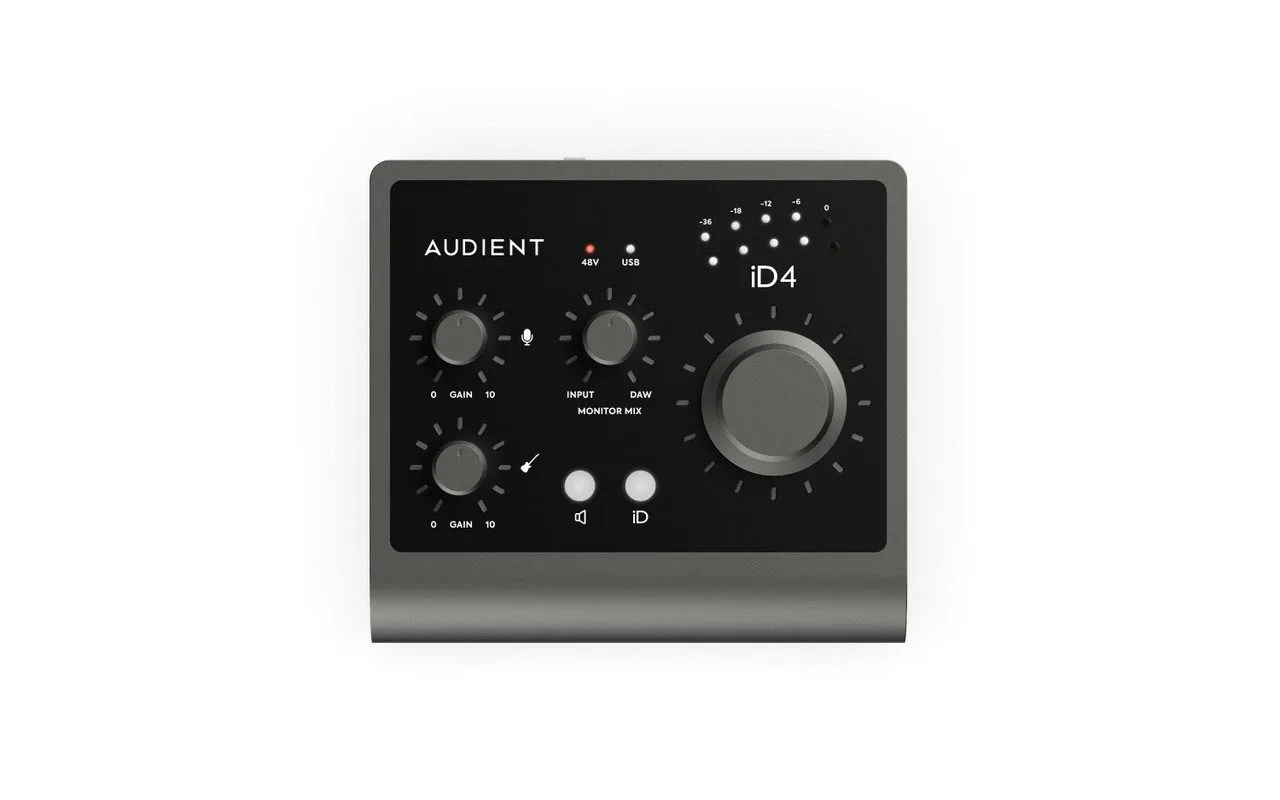
Audient builds consoles, and it shows: the iD4 MKII carries a mic preamp lifted from its discrete studio circuit, with 58 dB of gain, plus a JFET instrument input that does guitars justice. It has only one mic input — worth checking if you track two sources at once — but two independent headphone outputs and an iD dial that doubles as a parameter controller in your DAW (ScrollControl). For vocals and guitar in a home studio, the preamp-quality-to-price ratio is hard to beat.
At a glance — Audient · around $199 · 1 mic + 1 instrument input, 2 headphone outputs, 24-bit/96 kHz, USB-C, Cubase LE bundle.
The ones with a signature
Two interfaces that do more than convert: one colours like the Volt, the other turns into a small connection hub. This is where the choice becomes a matter of use, not quality.
Solid State Logic SSL 2+ MKII
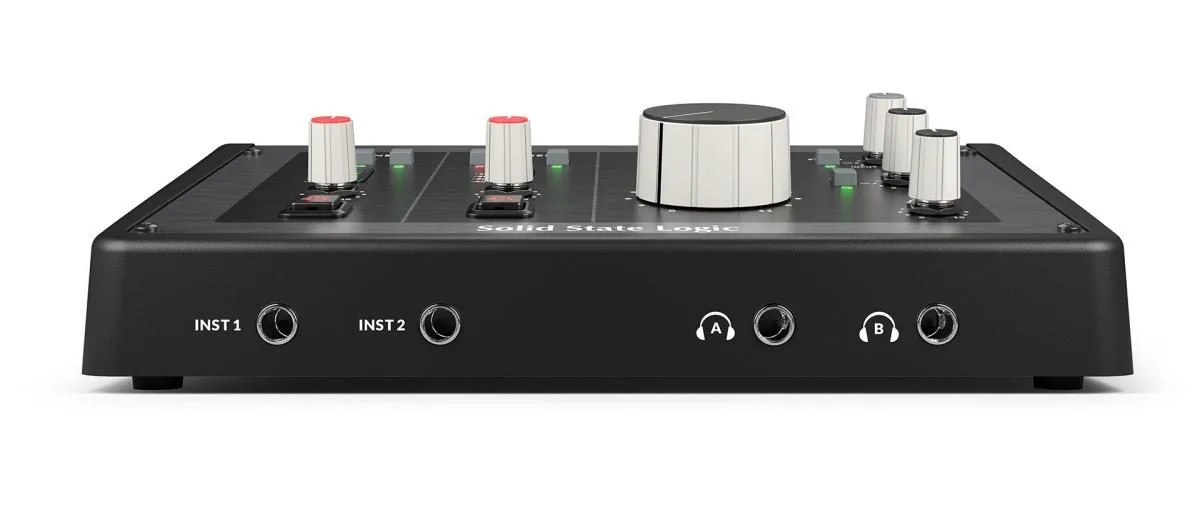
This is the only unit here that answers the Volt’s pitch head-on. Its “4K” circuit, inspired by the SSL 4000 consoles behind thousands of records, injects a measured dose of harmonic distortion and a gentle high-frequency lift — a different flavour from the Volt’s tube 610, more “British record” than “American warmth,” but the intent is the same. On top: four outputs, two independent headphone outs, MIDI, 32-bit/192 kHz converters and a hefty software bundle. If you are torn over the Volt for its grain, this is the real alternative.
At a glance — Solid State Logic · around $299 · 2-in / 4-out, 2 headphone outputs, MIDI, 4K circuit, 32-bit/192 kHz, USB-C.
Official Solid State Logic page
Arturia MiniFuse 2
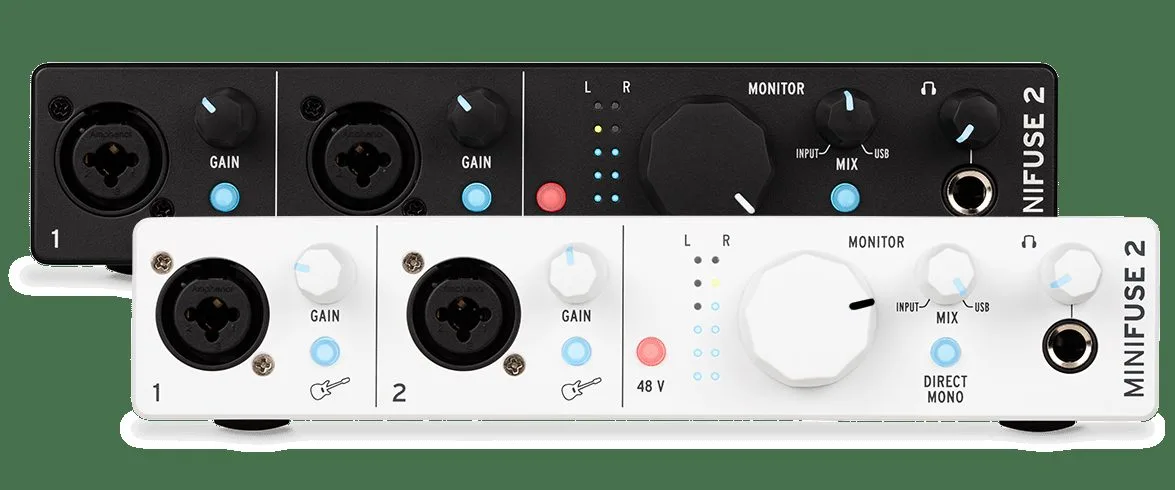
The MiniFuse 2 is not chasing colour, it is chasing a tidier desk. Its clever touch: a built-in USB port that lets you plug in a dongle, a MIDI keyboard or a flash drive without tying up a port on your computer. Add a proper 5-pin MIDI socket, a stereo Loopback channel for streaming and a generous Arturia software bundle, and you get the most practical interface of the bunch for a crowded setup. Clean preamp sound, serious build, contained price.
At a glance — Arturia · around $149 · 2-in / 2-out, USB hub, MIDI, Loopback, 24-bit/192 kHz, USB-C.
The budget pick that holds up
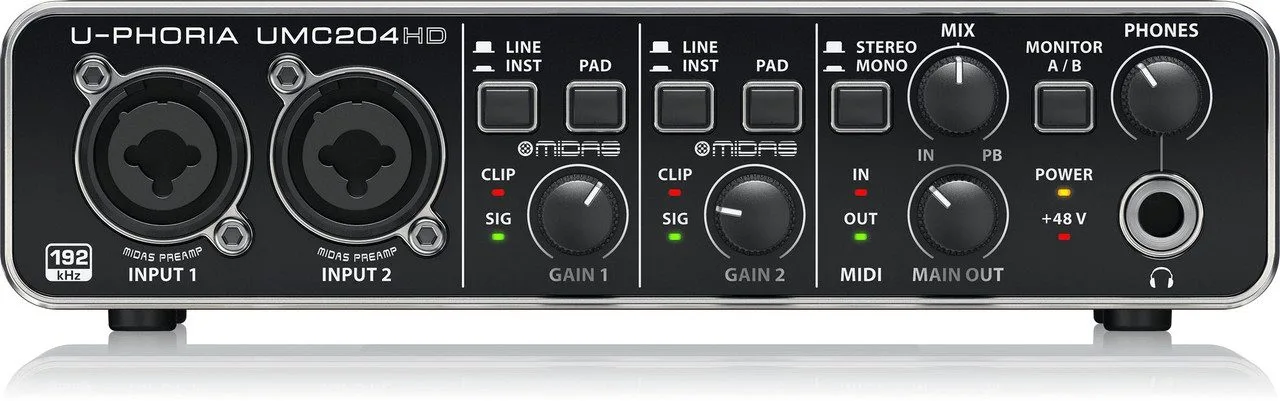
Behringer U-Phoria UMC204HD
Under a hundred dollars, the UMC204HD knocks down a stubborn prejudice: no, a cheap interface is not necessarily noisy. Its preamps are Midas-designed, it handles 24-bit/192 kHz, offers two inputs, four outputs and MIDI, all powered over the USB bus. You will not ask it for a MOTU’s converter finesse or an SSL’s colour, but to get started, to keep a spare on hand or to set up a second rig, it does exactly what you expect — and that is perfectly fine. Proof that a well-designed product is not judged by its price tag.
At a glance — Behringer · around $99 · 2-in / 4-out, Midas preamps, MIDI, 24-bit/192 kHz, USB.
| Interface | Maker | Ballpark price | Highlight |
|---|---|---|---|
| Scarlett 2i2 4th Gen | Focusrite | ~$199 | The safe bet |
| M2 | MOTU | ~$199 | The converters |
| iD4 MKII | Audient | ~$199 | The preamp |
| SSL 2+ MKII | Solid State Logic | ~$299 | The 4K colour |
| MiniFuse 2 | Arturia | ~$149 | The connectivity |
| UMC204HD | Behringer | ~$99 | The price |
Which one should you pick?
If you were eyeing the Volt for its tube grain, the SSL 2+ MKII is the only one that offers comparable colouring, through its 4K circuit — take it. If neutrality and reproduction quality are what count, the MOTU M2 settles the argument with its converters. For a first buy with no nasty surprises, the Focusrite Scarlett 2i2 remains the reference. Vocals and guitar above all? The Audient iD4 MKII and its console preamp. A desk already crowded with keyboards and dongles? The MiniFuse 2 and its hub. And if money is tight, the UMC204HD does the job without blushing. Whatever you choose, think first about what comes after the interface: a good pair of studio monitors will transform your takes far more than a converter costing $50 more.