Announced, teased, promised: the Behringer JN-80 had become one of those synths you half expected to stay stuck in limbo. It is now genuinely on dealers’ shelves across Europe. The name barely hides the tribute: this is Behringer’s take on the Roland Juno-60, one of the most loved analog polysynths of the 1980s, rebuilt its own way with eight voices, a 49-note keyboard and a price that fits a home-studio budget.
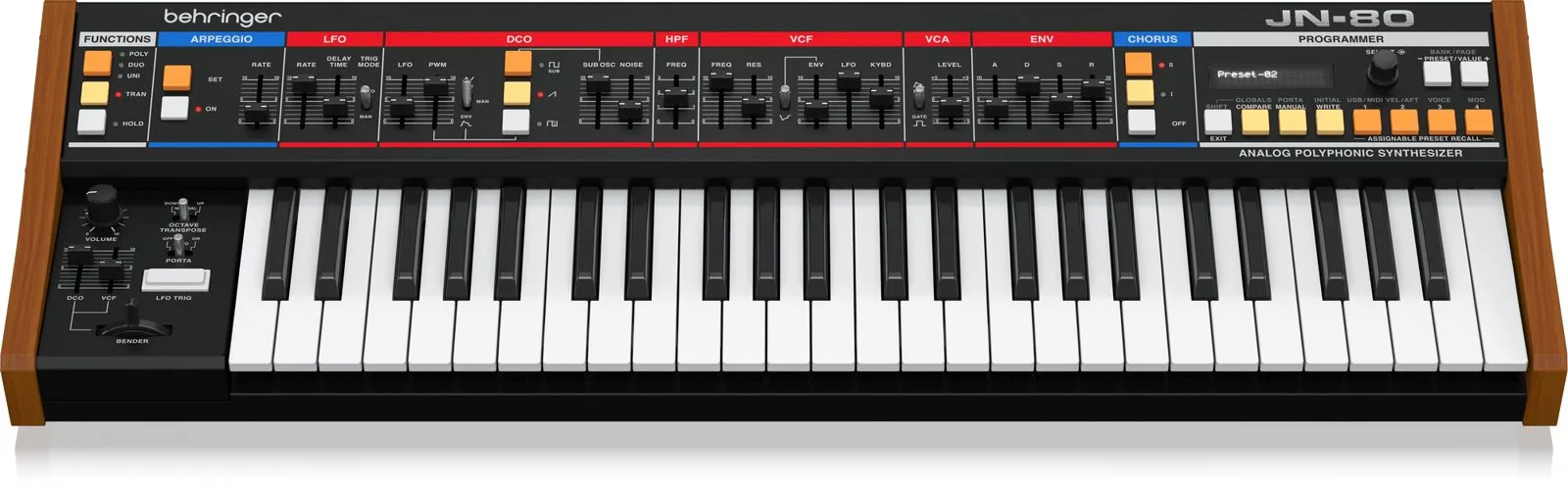
A Juno-60, rebuilt and expanded
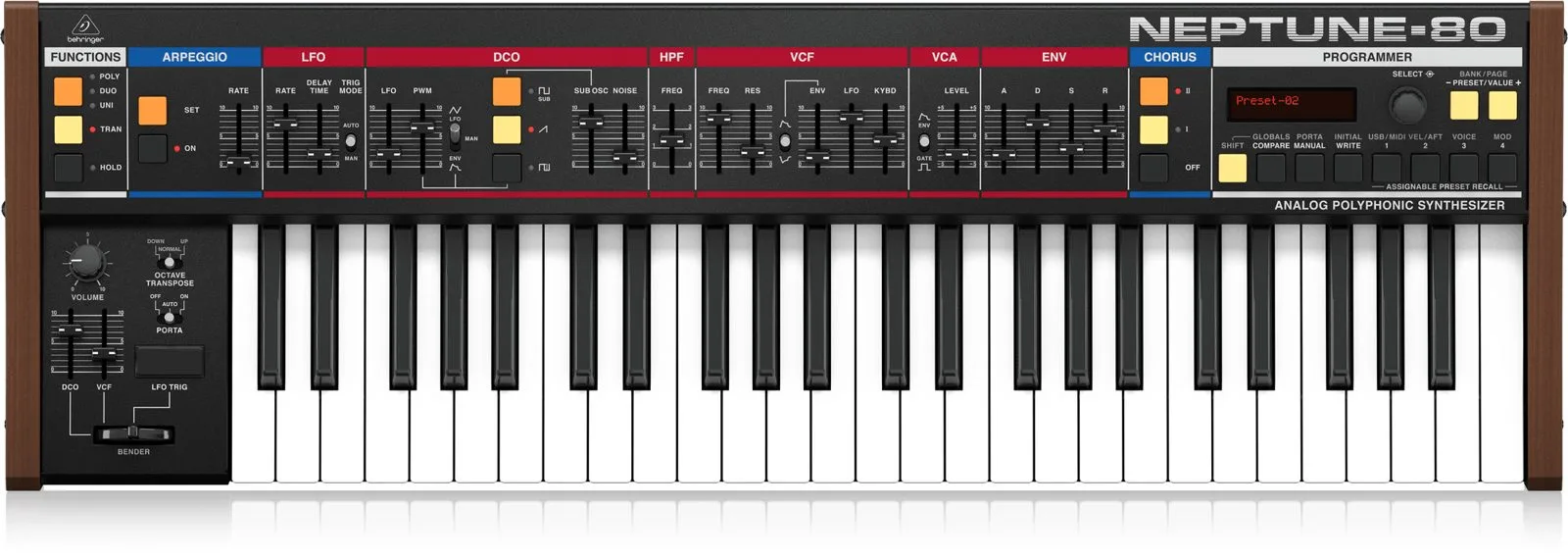
The architecture follows the recipe that made the original a classic: one digitally controlled oscillator (DCO) per voice, stable and precise, plus a sub-oscillator and a noise source. That DCO is the Juno signature, delivering analog warmth without the tuning drift that once had players constantly retuning VCO synths. Where the Juno-60 topped out at six voices, the JN-80 offers eight, with polyphonic, duophonic and unison play modes.
The heart of its character is the filter. Behringer has recreated the famous 3109 circuit, a resonant 24 dB-per-octave low-pass whose slope and self-oscillation account for much of the Juno colour. Paired with the envelope and LFO, it handles warm pads, round basses and acid leads alike.
The chorus, that secret weapon
You cannot talk about a Juno without its BBD chorus (bucket-brigade device). It is what turns a decent pad into a huge one, the gentle stereo movement behind countless synthwave and pop productions. The JN-80 carries that analog chorus section, with modes that thicken the sound at the push of a button. For many buyers it is the whole point: the rest of the synth could be flawless, but without that chorus it would not sound like a Juno.
What Behringer adds to the formula
The JN-80 is not a straight photocopy. Its 49-note keyboard supports aftertouch, which the original lacked, opening up expressive modulation under the fingers. There is an arpeggiator, plus a patch memory far more generous than the Juno-60’s original 56 presets. Connectivity moves into the present: MIDI DIN, USB and a modern implementation that drops the machine into any computer-based studio. If you are still getting to grips with synthesis, our guide to subtractive synthesis explains every section of the JN-80.

The specs that matter
| Item | Detail |
|---|---|
| Polyphony | 8 voices (poly / duo / unison) |
| Oscillators | 1 DCO per voice + sub-oscillator + noise |
| Filter | Resonant 3109 low-pass, 24 dB/octave |
| Chorus | Analog BBD section |
| Keyboard | 49 keys with aftertouch |
| Connectivity | MIDI DIN, USB, audio output |
Price and availability
That is the other heavyweight argument: the JN-80 lists at around 466 pounds at UK dealers, roughly 500 euros, true to the brand’s rock-bottom pricing. First units are now circulating in Europe, though restock times remain, as often with Behringer, something to keep an eye on. To drive it or round out your rig, our picks of BCR32-style rotary-encoder controllers and the brand’s Jam and Jam Play keyboard sequencers are a useful complement.
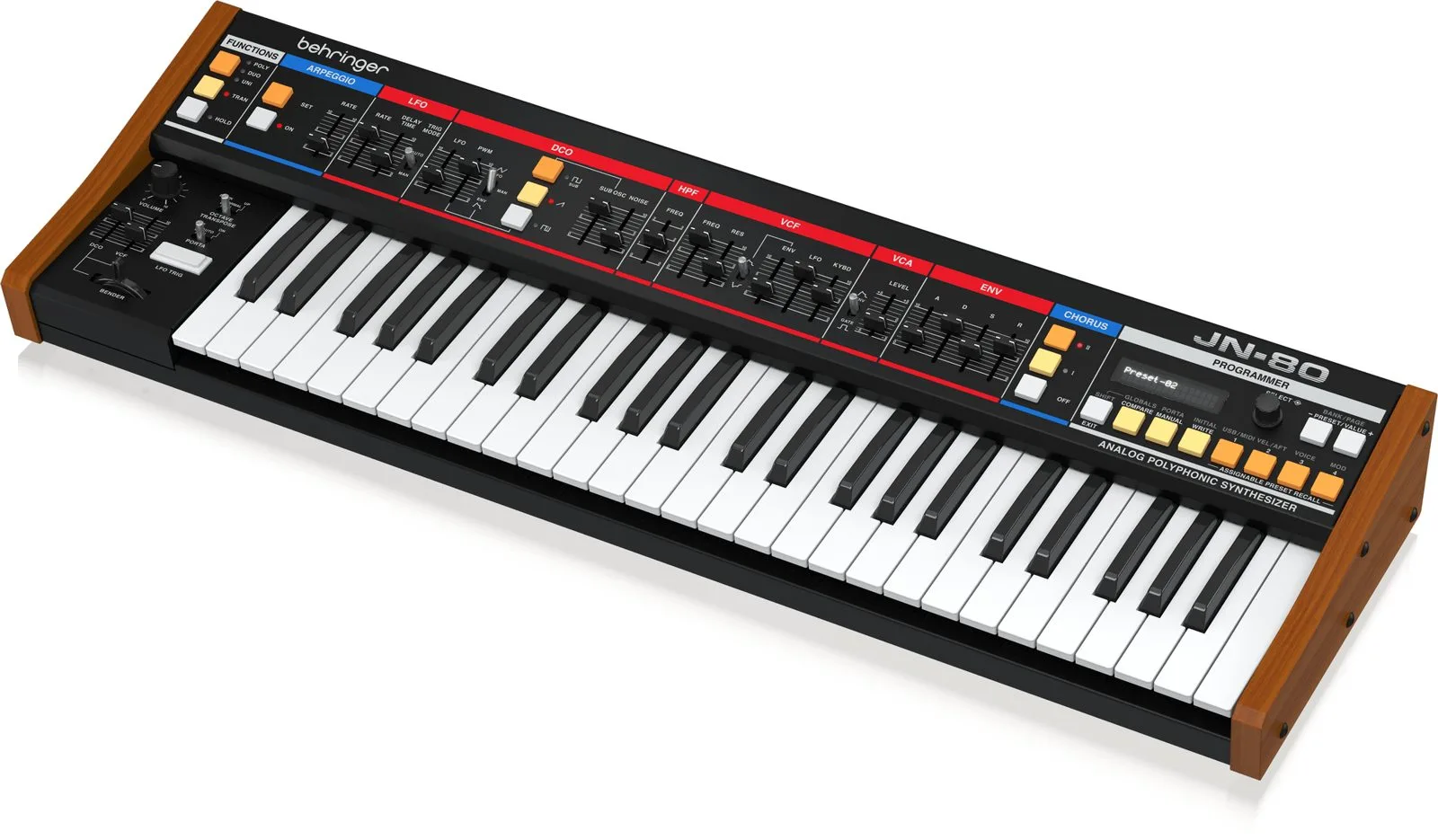
The official spec sheet is available on Behringer’s website.
My take
The Juno-60 remains a high point of sonic simplicity, and squeezing it back under 500 euros is almost a provocation. The JN-80 does not try to reinvent anything: it aims straight at the 3109 filter and, above all, that BBD chorus that carries the whole charm. Aftertouch and eight voices fix the original’s two real frustrations. The usual Behringer question still stands, about production consistency and long-term build. But for anyone who wants this exact sound without draining a savings account, the boxes that matter are ticked. At 500 euros, a lot gets forgiven.