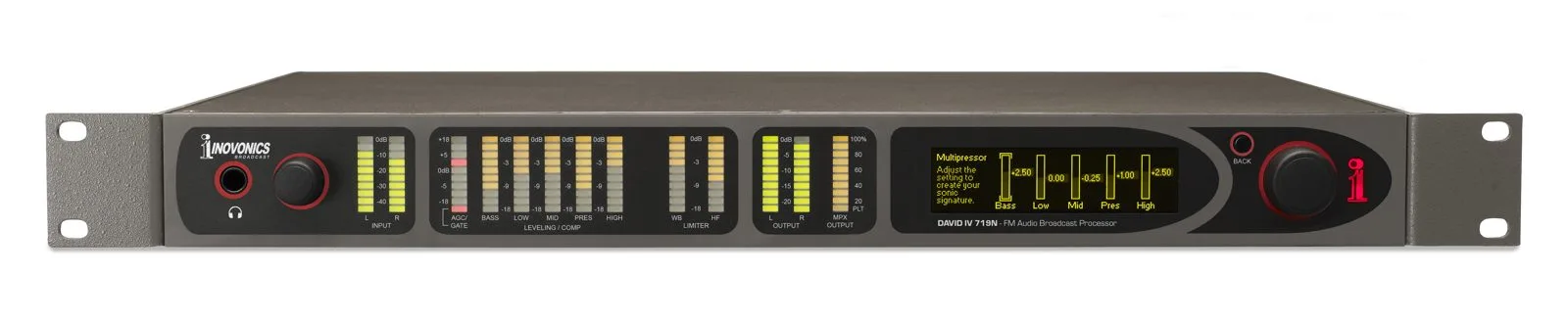
Two institutions of US radio gear are becoming one. Inovonics is acquiring Broadcast Tools (BTI), the quiet but ever-present maker of the “small boxes” that solve stations’ daily problems. The deal above all marks the retirement of BTI’s founder, after nearly forty years at the helm.
A deal between two radio houses
Inovonics, based in Felton, California, was founded in 1972. Its catalogue covers broadcast processors, modulation monitors, RDS products and streaming gear. Broadcast Tools, based in Sedro Woolley, Washington, was founded in 1989 by Donald Winget, then chief engineer at a Seattle station. “After nearly 40 years in business, I am finally ready to retire,” he wrote to his dealers. The deal was made public in early October 2026.
What does Broadcast Tools make?
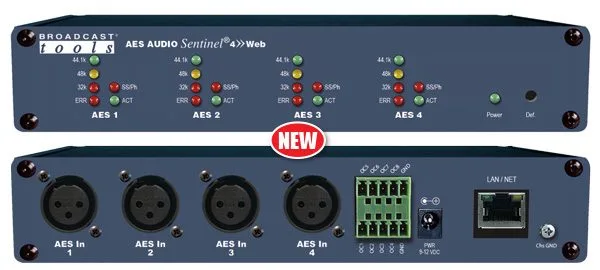
BTI built its name on “problem solvers”: analog and AES audio switchers and matrices, routers, remote controls, satellite channel controllers, distribution amps, and above all silence monitors that watch the air and switch to a backup source. That is exactly the kind of safeguard we described in our guide to dead air and silence detection. These boxes don’t turn heads on a trade-show floor, but they save live shows — and when one fails, you instantly remember what it was for.
What changes for stations
The good news for users comes in three parts. Inovonics is keeping the Broadcast Tools name and product line. Production moves from Washington to Inovonics’ California site. And Ben Barber’s team says it is “fully committed to maintaining the excellence” of the products and to dealer relationships. On the other hand, the price, structure and closing date of the deal were not disclosed, nor were any changes to pricing or warranty.
Two complementary catalogues
The industrial logic is obvious: Inovonics brings processing and metering — think of its broadcast processor, to be set against a competitor’s Omnia XII — plus loudness management and RDS. Broadcast Tools brings all the plumbing: routing, switching, GPIO, monitoring. Put together, the two catalogues cover a striking share of a station’s technical chain, from the automation studio to the transmitter.
This kind of consolidation has become common in a niche market where volumes are low and teams are small. Bringing two catalogues under one roof pools production, support and distribution, and secures the future of products few companies still make. For an air engineer, the point isn’t the badge screened on the front panel but the confidence that a failed box can be replaced tomorrow — and, ideally, that you can keep buying more without rethinking the whole installation. That is the yardstick for judging this deal, far more than the size of the cheque.
My take
This deal makes sense beyond a founder’s retirement. Inovonics brings processing, metering and RDS; Broadcast Tools brings all the small boxes that save a station’s air on a Sunday night — switchers, silence detectors, routers. Put together, they cover a striking share of a station’s chain. The reassuring signal is the promise to keep the name and the catalogue: the worst outcome in this kind of move would be losing bulletproof products nobody else replaces. The test will be real-world availability once production settles in California.