The Violet Audio dMix 128 was not done making headlines. Just weeks after its launch, the young brand releases a Firmware V2 that does far more than fix bugs: it reshapes how the console is operated. On the menu are an engine-partitioning feature, full user profiles and an offline editor — enough to move the dMix 128 from curiosity to credible touring tool.
A reminder: a console that dropped the surface
For context, the dMix 128 is a 128-channel digital mixing engine that relies on network control rather than a large physical surface. We dug into that choice when it arrived in our article on the dMix 128. It is precisely this software-first architecture that lets Firmware V2 open up new uses without touching the hardware.
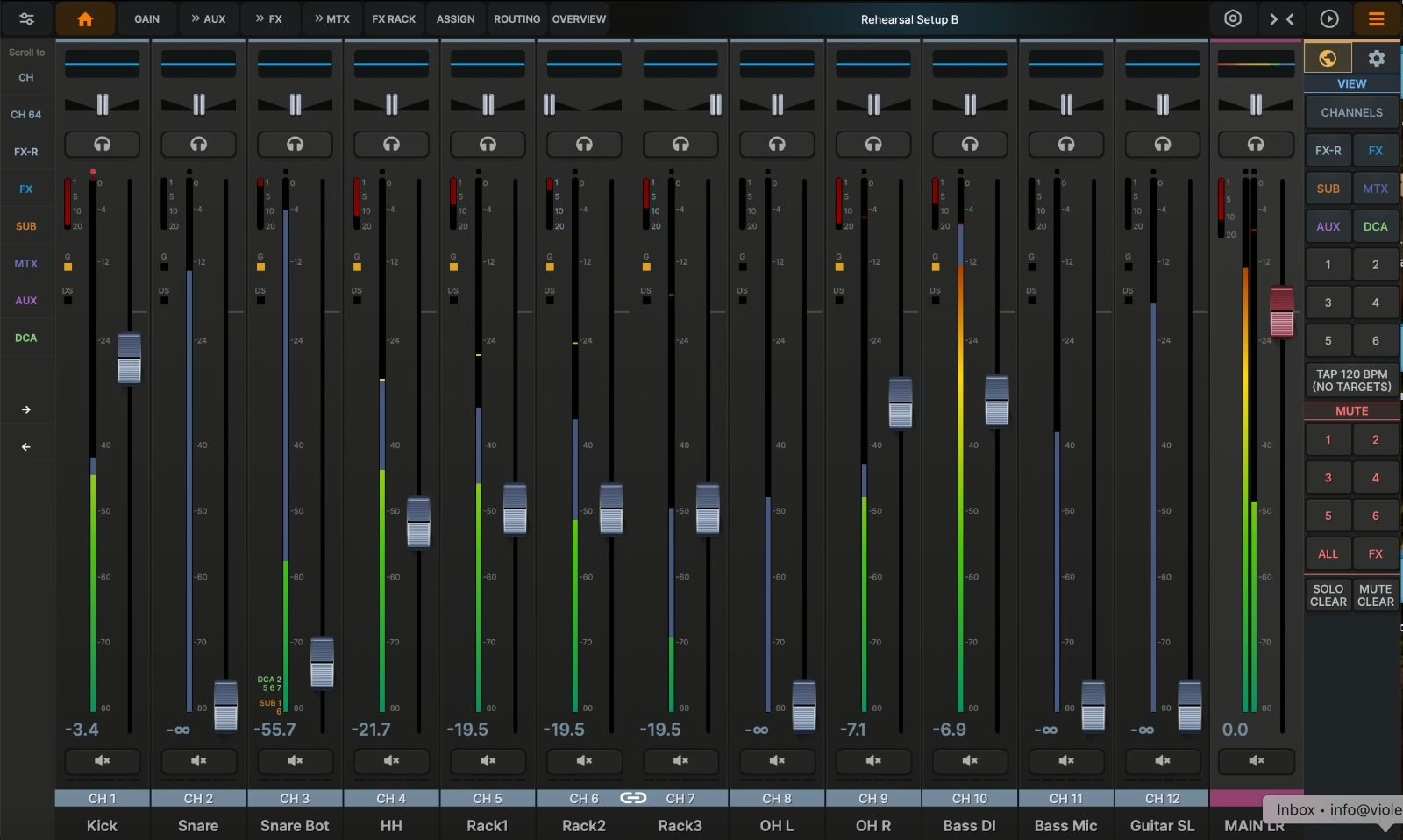
Mixer Split: up to four logical mixers in a single engine
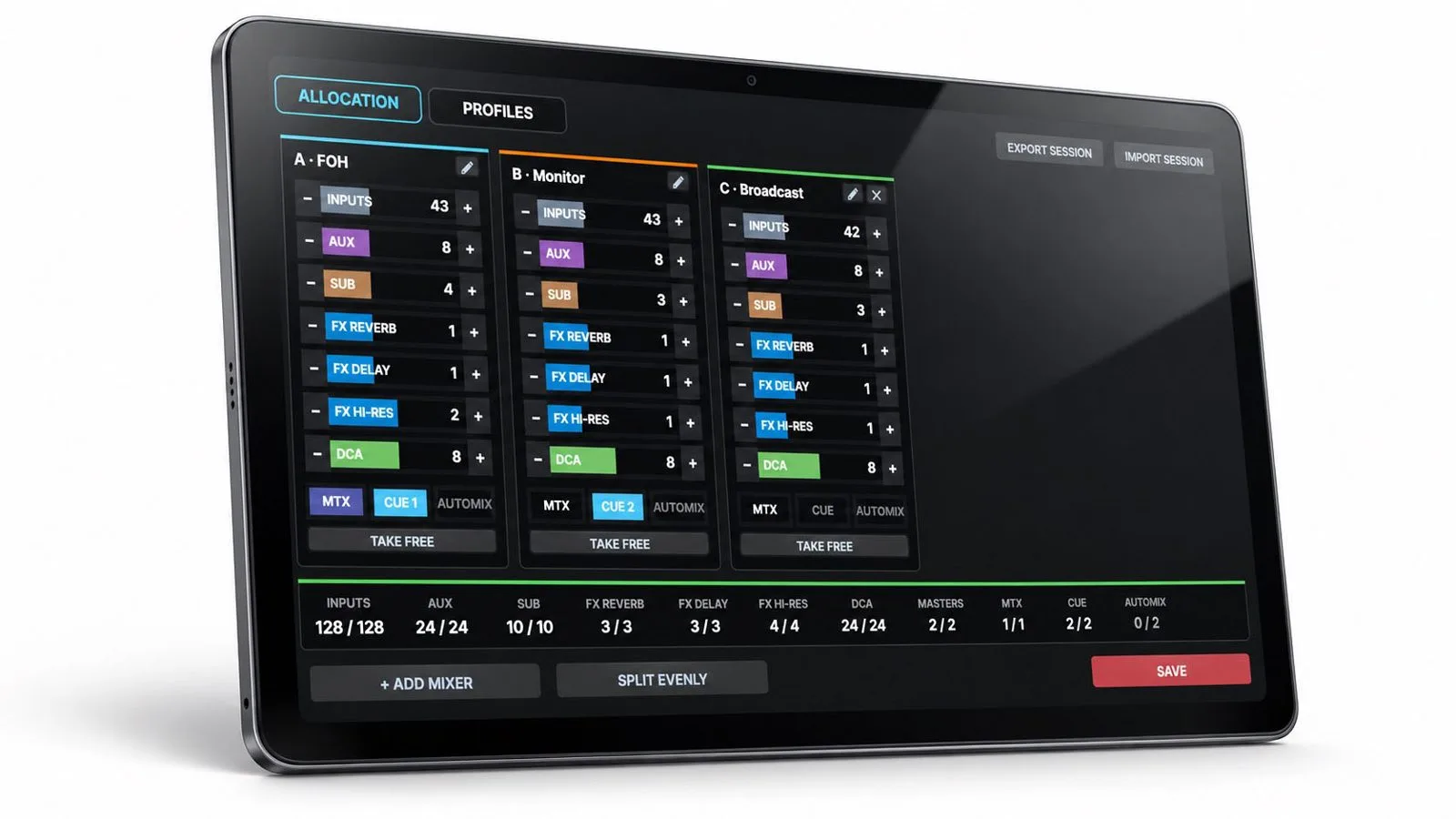
The headline addition is Mixer Split. A single dMix 128 can now be divided into four independent logical mixers, each with its own inputs, buses, effects, DCAs, Shows and Scenes. In practice, a FOH engineer and a monitor engineer can share one engine, or two rooms, or two operators, each managing their own resources without stepping on the other’s. The maker highlights splitting into two 64-channel mixers at 96 kHz — “an incredible customer value,” per its president. A shared-preamp gain tracking feature also lets several operators use one physical preamp while each keeps their own gain relationships, with an authorized user always able to take control.
User profiles and a personal mix for performers
V2 introduces real profiles and permissions: Admin, Mixer Operator and Personal Mix, with an optional four-digit PIN. Each role governs access to routing, configuration or preamp gain. The Personal Mix interface shows a performer only the channels and controls for their own monitor mix, in a simpler view, while the engineer keeps control of the wider system. It echoes the logic of groups and VCAs on a digital console: structure the surface so each person only sees what concerns them.
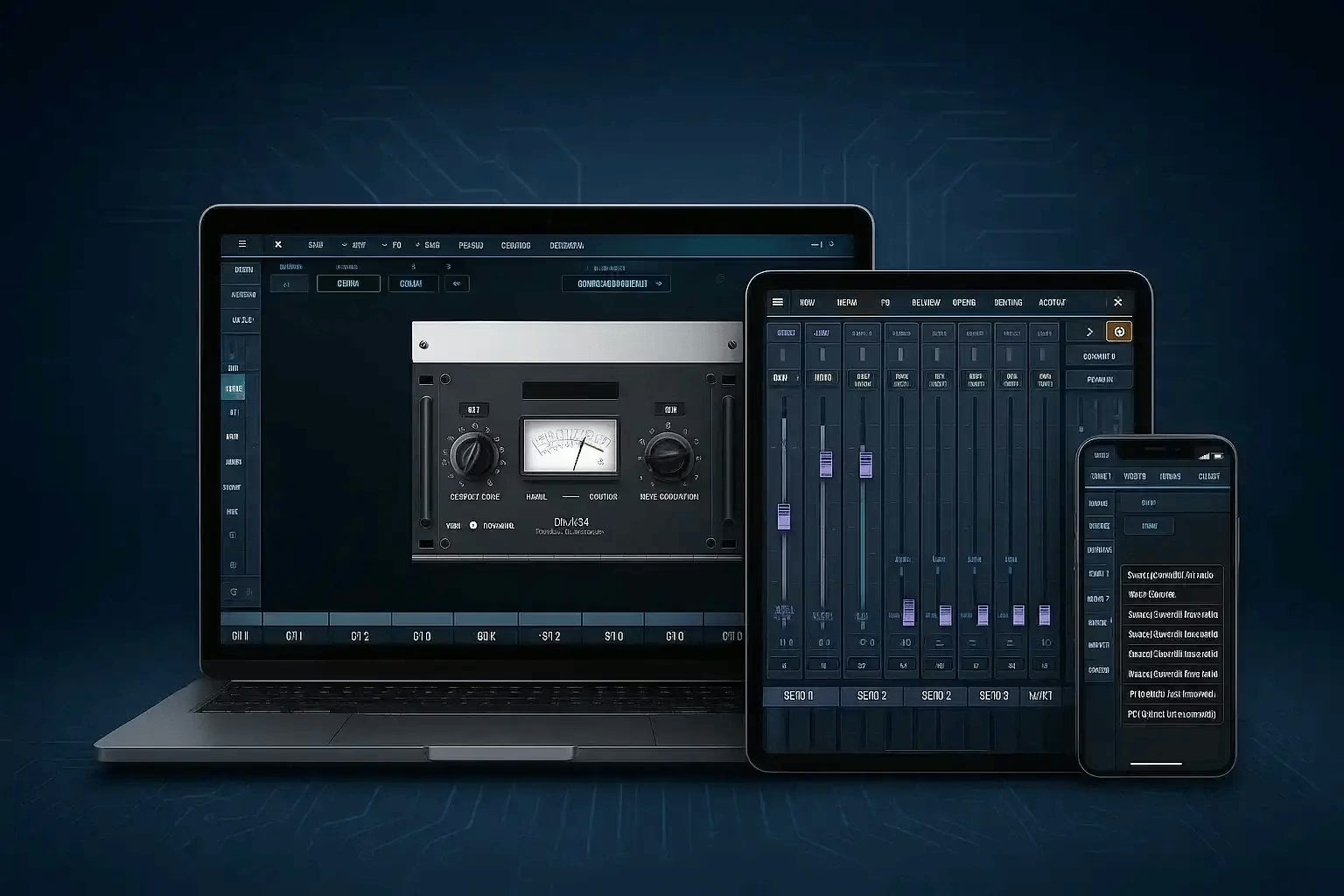
Offline editor, Network Manager and fleet management
On the prep side, the firmware adds an offline editor: you build and edit Shows with no console connected, then transfer them to the hardware — exactly the approach we recommend to prepare a console offline. A Network Manager finds dMix 128 units regardless of their IP address or subnet and helps name them, set their network parameters and adjust routing. An Equipment Match Wizard adapts a Show to different hardware or a different network, and session import/export backs up or restores allocations, profiles, streams, remote devices and preamp settings.
A wider matrix and processing transfer
The matrix grows from 8 x 8 to 12 x 12. You can copy and paste an aux mix to give several performers a comparable starting point, and transfer EQ, compressor, multiband compressor, gate, de-esser and graphic EQ settings from channel to channel. A companion app, dMix Studio, centralizes networking, recovery and Show editing. For such a young brand, the scope of this update says a lot about its ambitions, in a market where it rubs shoulders with established names like the DiGiCo Quantum638.
My take
Mixer Split is the feature that turns the dMix 128 from a curiosity into a credible touring tool. Sharing one engine between FOH and monitors without buying two consoles is exactly the kind of argument that lands with a rental company. User profiles with a PIN and a simplified personal mix for performers show a brand thinking about the field, not just the spec sheet. The catch is the network: the more roles you hand a single engine, the more flawless your IP infrastructure has to be. A firmware that says a lot about where this young brand is heading.