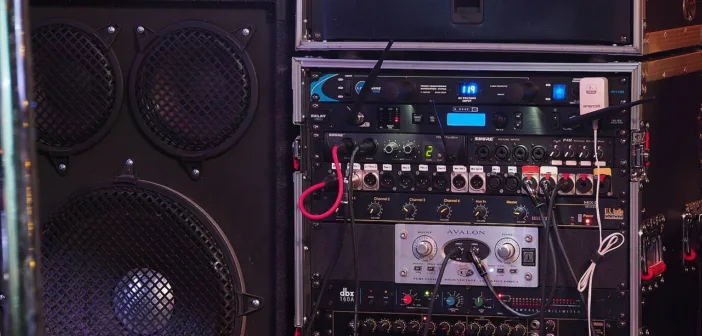
For twenty years live sound has lived with one certainty: a console is a surface. Channel strips, faders, a screen, an operator sitting behind it. Violet Audio flips that with the dMix 128, shown at InfoComm and pushed back into the light this week at London’s PLASA Show. Here the mix engine is a rack box, and the surface is gone: you drive the mix from a browser, a touchscreen or a third-party control system.
This is no gimmick. It goes to the heart of how control over an audio system is distributed across a room, a control room or a fixed install. And it arrives from a team that knows the trade from the inside, with a brief squarely aimed at demanding live, installation and broadcast work.
Split the processing from the control
The guiding idea of the dMix 128 fits in one line: signal processing and control over that processing are two different things, with no reason to share the same box. The engine stays in the rack, next to the converters and the network; control travels to wherever the operator needs it.
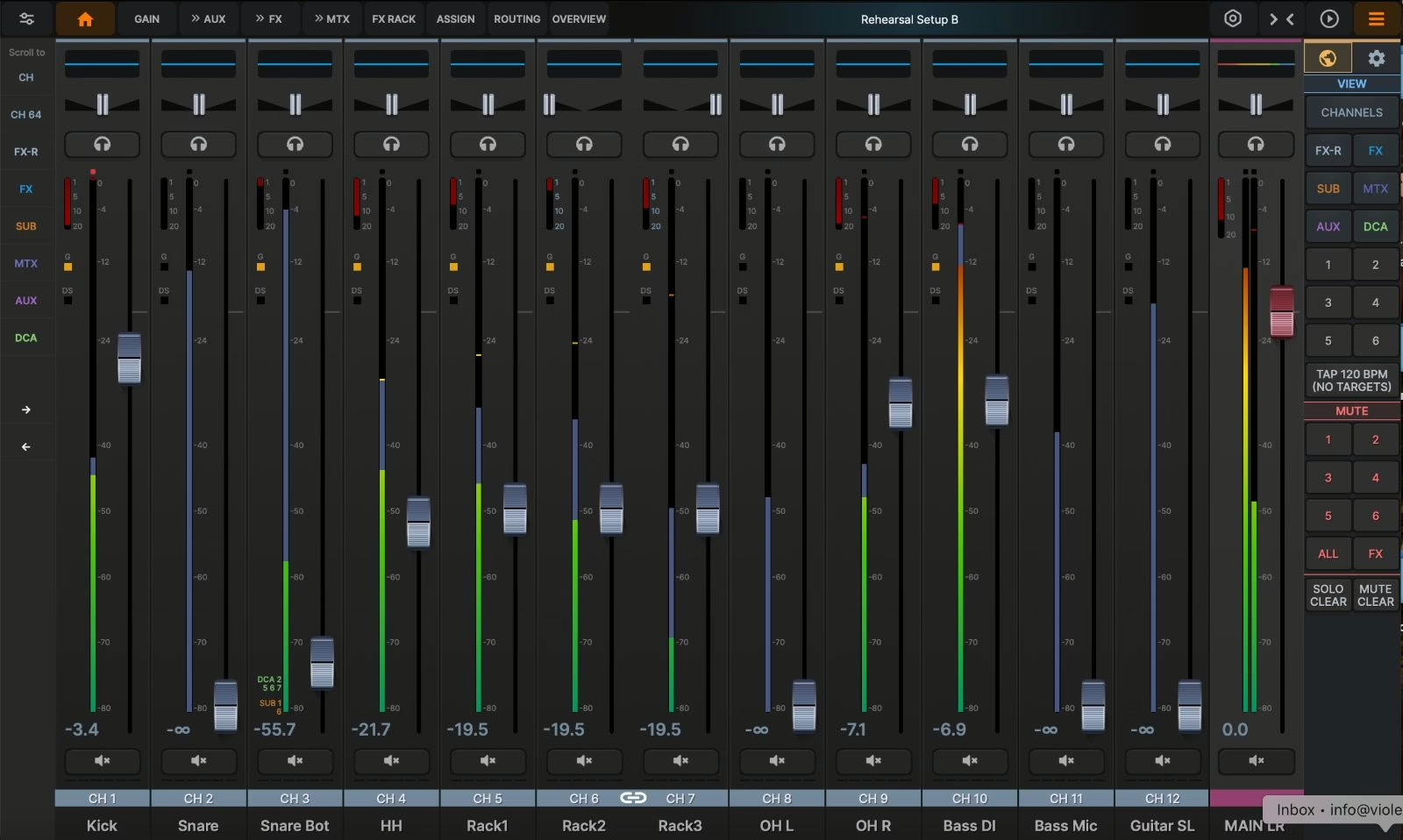
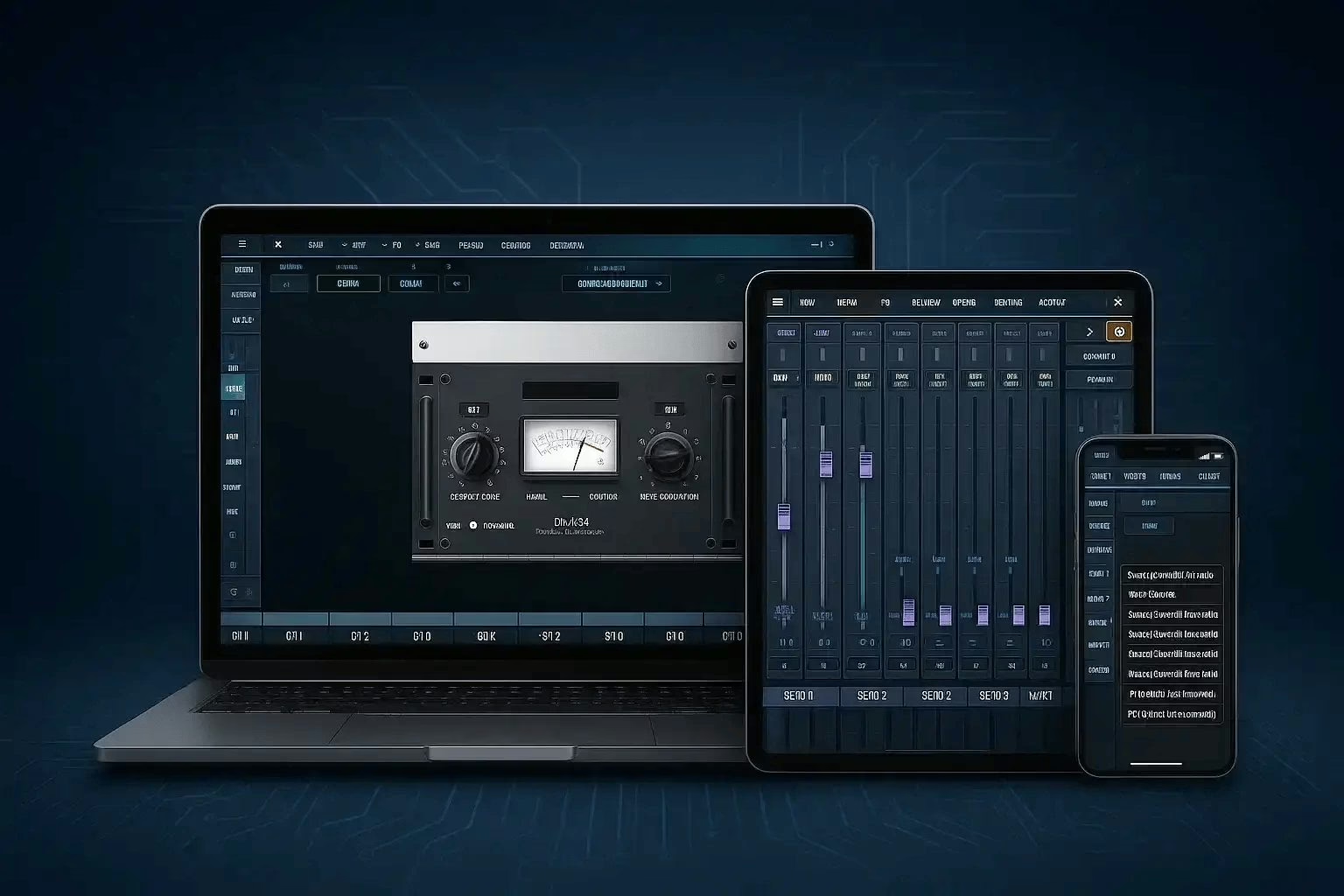
In practice the dMix Control software is fully web-based: any HTML5 browser becomes a console, with nothing to install. Better still, several stations can act on the same mix at once. The FOH engineer, the stage tech and the venue manager share one session, each with their own view. The system also opens up to the classic integration control ecosystems: it can be driven from Q-SYS, Crestron or a TouchOSC layout, and automated.
An FPGA engine built for latency
Under the hood, Violet Audio bet on an FPGA-centric architecture rather than a general-purpose DSP. The claimed result is a 128-channel, 96 kHz machine, with 128 x 128 routing and sub-millisecond system latency: around 0.3 ms analogue in to analogue out. On stage that figure is not a spec-sheet flex: it drives monitor comfort and phase coherence once you stack several processes and several boxes.
| Spec | dMix 128 |
|---|---|
| Channels / sample rate | 128 channels up to 96 kHz |
| A/A latency | about 0.3 ms (128 x 128 routing) |
| Analogue I/O per unit | 32 inputs / 24 outputs |
| Networking | AES67 as standard, ST 2110-30 on the roadmap |
| Control | HTML5 browser, Q-SYS, Crestron, TouchOSC, automation |
Each unit carries 32 analogue inputs and 24 analogue outputs, and leans on stageboxes and remote I/O for larger rigs. On the network side, the dMix 128 speaks AES67 natively, with SMPTE ST 2110-30 compatibility on the roadmap: enough to slot into a broadcast plant or a large networked install without an exotic gateway.
Who is it for, and against what?
The dMix 128 is not aimed at the band buying its first PA. It speaks to multipurpose venues, tech-heavy houses of worship, broadcast studios and installs where several people must act on the same audio without stepping on each other. In those contexts the physical surface is often a friction point: it costs money, eats space and locks the mix to a single seat. Moving control into the network solves a real pain.
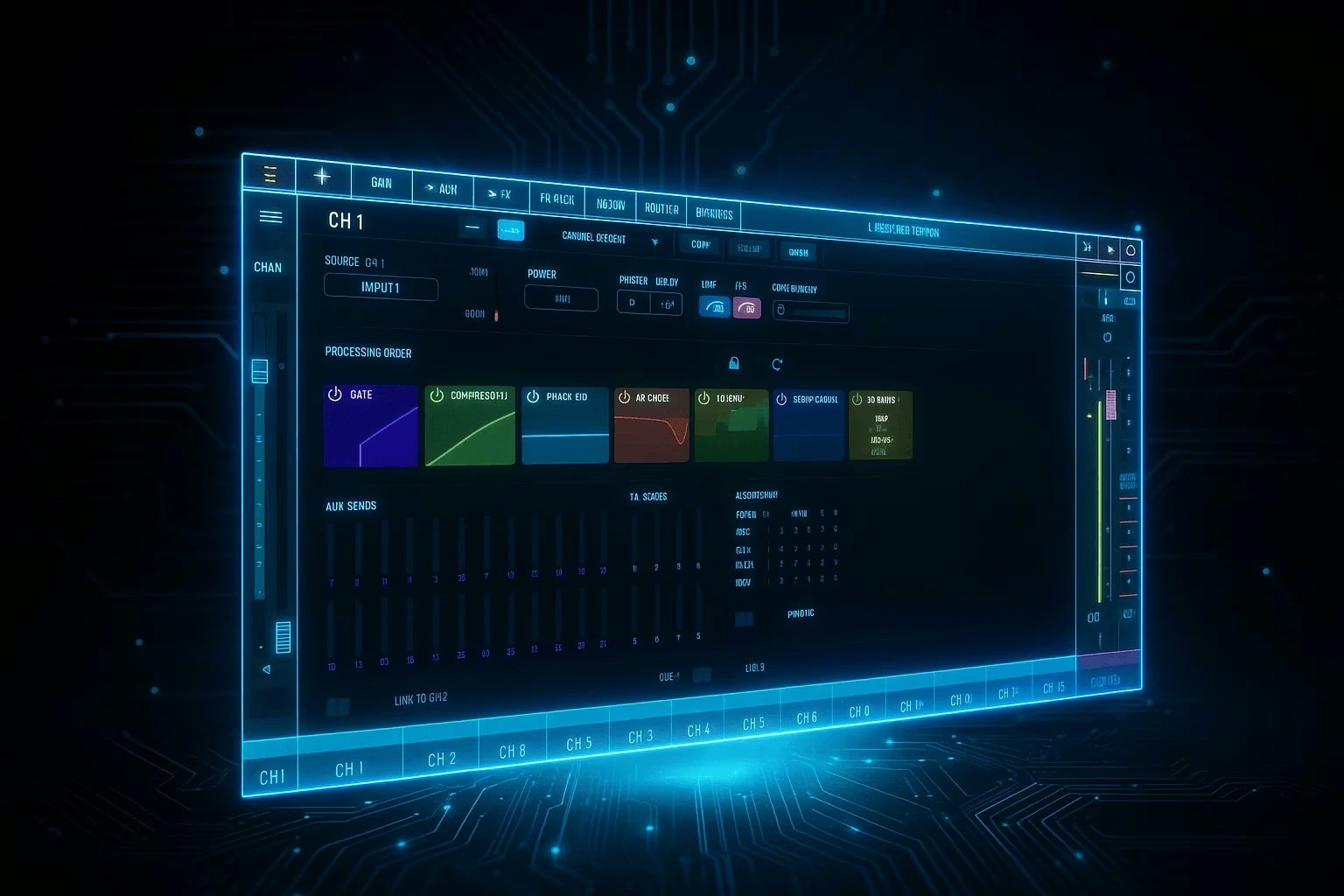
It is also where my reservations sit. I spent enough years behind the desk, in concert and in recording, to know that a fader under your fingers is no nostalgic luxury: when a monitor takes off mid-show, the hand beats a tablet slider every time. I have believed in fully digital mixing for a long time and I am not about to sniff at an engine this clean; but the tactile gesture still counts when the live clock is ticking. The dMix 128 likely knows it, since it closes no doors: nothing stops you hanging a third-party control surface on it. The real shift here is not dropping the fader, it is ending the idea that a console must be one object, in one place, for one person.
Then there is the network, which becomes central the moment you distribute control: the reliability of the mix rests entirely on the reliability of the infrastructure. We have covered that ground before around the stage monitoring chain and audio over IP: a mixer as flexible as the dMix 128 demands a flawless network and equally rigorous system alignment downstream. The console changes shape; the fundamentals of sound reinforcement do not.