Antares has set a new ceiling above its pitch-correction range. Auto-Tune Advanced is built on a rebuilt algorithm with one clear goal: to correct pitch automatically without flattening what makes a voice sound natural, starting with vibrato.
The plug-in is aimed at engineers and producers who want fast, transparent treatment without note-by-note editing. It complements Auto-Tune 2026, built for streamlined real-time correction, and Auto-Tune Pro 11, still the reference for detailed manual work in graph mode.
Preserving vibrato instead of flattening it
The big idea in Auto-Tune Advanced is how it handles vibrato. A dedicated detection engine identifies the singer’s natural vibrato and leaves it untouched, instead of shaving it off the way aggressive correction does. In parallel, a vibrato effect can add synthetic vibrato when a take lacks it.
It is a direct answer to the most common complaint about automatic correction: the frozen, mechanical result as soon as you push the retune speed. By treating the performer’s intended micro-variations in pitch separately, the tool aims to keep the expression while locking the tuning.
A low-latency Live mode
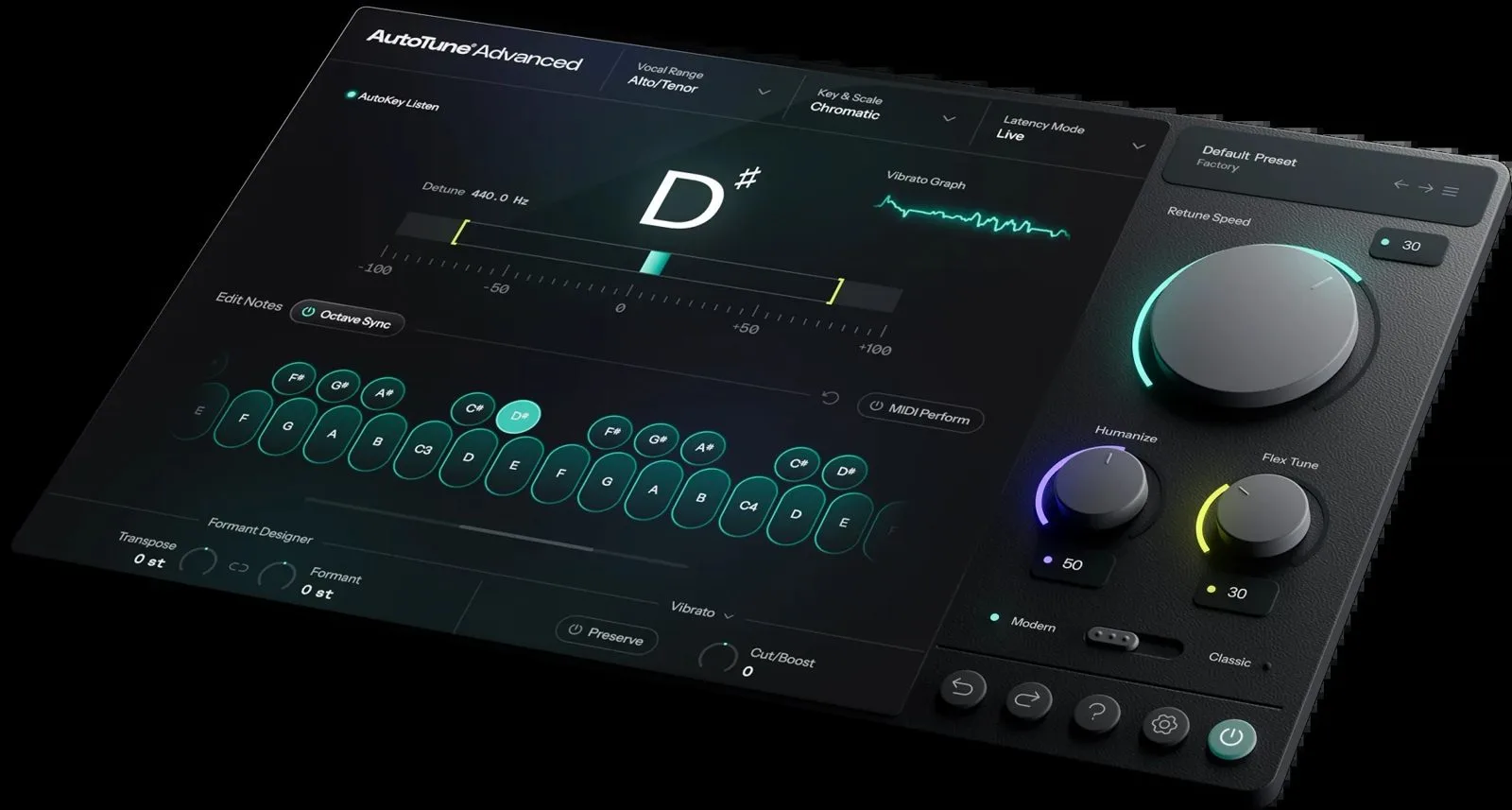
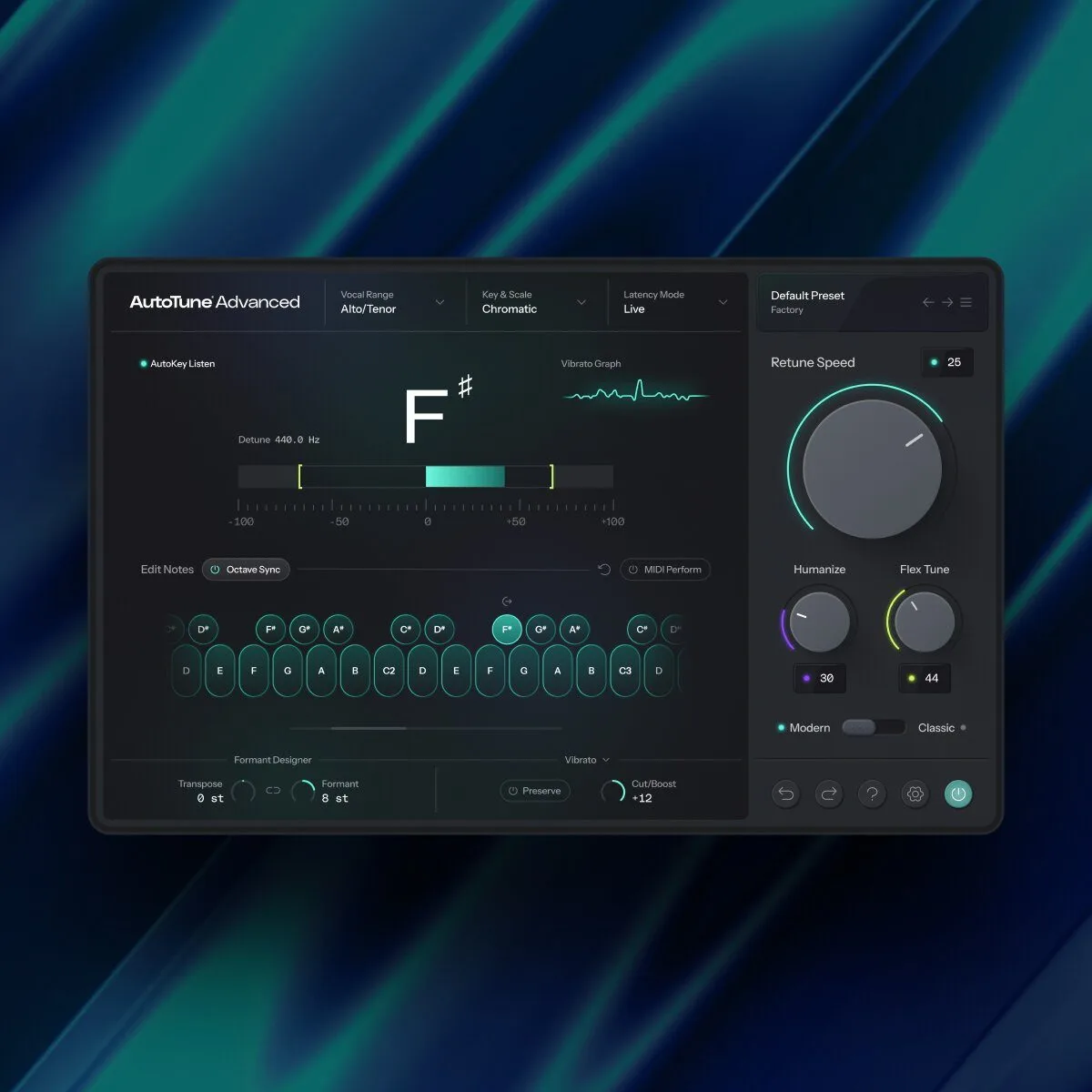
The other headline feature is a Live mode rated at under one millisecond of latency. The goal is obvious: make correction usable in monitoring during the take, or even on stage, without the lag that throws a singer off. The brand’s familiar controls are present — retune speed, Flex-Tune, Humanize, automatic key detection, a formant designer — arranged around a redesigned display.
For integration, Auto-Tune Advanced ships in VST3, AU and AAX on macOS and Windows. It is available as a perpetual licence or through the Auto-Tune Unlimited subscription, where subscribers get it at no extra cost.
Where it sits and what it targets
The positioning is clear: Auto-Tune Advanced is the top of the automatic tier. It does not replace the meticulous graph editing of Pro 11; it complements it with smarter correction, built to move fast on most takes without sacrificing the grain of the voice. Street price is around 450 dollars for the perpetual licence.
If pitch correction still feels murky, we broke down the core differences between the approaches in our guide to pitch correction, Auto-Tune, Melodyne and the vocal tuning workflow.
Full details are on Antares’ product page.
My take
The real promise here is not accuracy — Auto-Tune has nailed that for thirty years — it is keeping the vibrato. If the engine truly delivers, it fixes the one flaw that pushed demanding engineers toward manual editing.
The sub-millisecond Live mode is the other serious argument: correction you can play on headphones during the take changes how you track a vocal, because the singer hears themselves in tune and commits. What remains is to hear how it sounds on a hard take, a wide vibrato or a complex phrase — that, and nothing else, is where these tools are separated.
Frequently asked questions
How does Auto-Tune Advanced differ from Auto-Tune Pro 11?
Auto-Tune Advanced is the top of the automatic tier: it corrects fast and transparently while preserving vibrato. Pro 11 remains the tool for detailed manual editing in graph mode. The two are complementary rather than competing.
What does the vibrato engine bring?
A dedicated engine detects the singer’s natural vibrato and leaves it untouched instead of correcting it, which avoids the frozen result. A vibrato effect can also add synthetic vibrato when a take lacks it.
Can it be used in real time during tracking?
Yes. A Live mode rated at under one millisecond of latency makes correction usable in monitoring while recording, and even in stage situations, with no lag that would distract the singer.
Which formats and what price?
The plug-in ships in VST3, AU and AAX on macOS and Windows. It is sold as a perpetual licence, around 450 dollars, or through the Auto-Tune Unlimited subscription, which includes it at no extra cost for subscribers.