When you link a console to its converters, an OB truck to a stage or a studio to a machine room, one question keeps coming up: how do you carry dozens of channels without running an analogue multicore as thick as your arm? Since the early 1990s, one answer has dominated in broadcast and live alike: MADI. Standardised as AES10, it carries up to 64 channels of digital audio on a single cable. Thirty years on, it’s everywhere, and audio-over-IP hasn’t killed it.
What is MADI?
MADI stands for Multichannel Audio Digital Interface. It’s a point-to-point, unidirectional transport format: one cable carries the stream one way, a second for the return. On a single link it delivers up to 64 channels at 48 or 44.1 kHz, 32 channels at 96 kHz, and 16 at 192 kHz. The historical 56-channel modes still exist for compatibility.
Unlike a network, MADI isn’t addressed: there’s no IP address, no switch, no routing table. You plug a MADI output into a MADI input, and the 64 channels are there, in order, all the time. That simplicity is exactly what gives it its legendary reliability under live pressure.
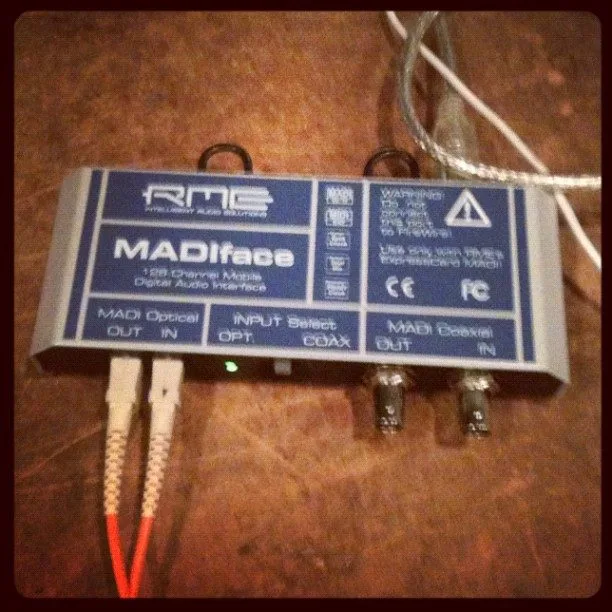
Why one cable changes everything
Before MADI, linking 64 channels between two points meant a heavy analogue multicore, costly, prone to interference and ground loops. A single coaxial cable, or a fibre, replaces all of that — and because the signal is digital, length doesn’t degrade the sound. The gain isn’t only practical: fewer connectors means fewer points of failure, a decisive argument when the air can’t wait.
Latency, meanwhile, is tiny and deterministic: MADI carries a continuous stream at a fixed rate, without the variability a shared network can sometimes introduce. For a live mix, that predictability is worth gold.
MADI or audio-over-IP?
The question is unavoidable today. Audio-over-IP protocols like Dante, AES67 or SMPTE ST 2110 offer flexible routing: any source to any destination, over a shared network infrastructure. MADI is fixed: point-to-point, 64 channels, in order. Where IP shines on flexibility, MADI shines on simplicity and robustness — no configuration, no VLAN, no QoS to set.
In practice, the two worlds coexist. Countless devices bridge them: a MADI card in a console, a MADI-to-Dante converter, a stagebox that speaks both. MADI often stays the short, safe link between a console and its periphery, while IP weaves the network across the building.
Clocking, the real thing to watch
Like all digital audio, MADI needs a common clock. The MADI stream can serve as the clock reference for the receiving device, which is enough for a simple link. But as soon as an install mixes several links and protocols, you distribute a master clock — word clock, or PTP on the IP side. We devoted a whole article to this, because timing is everything: unmanaged jitter is audible, and drifting clocks cause clicks.
Where do you meet MADI?
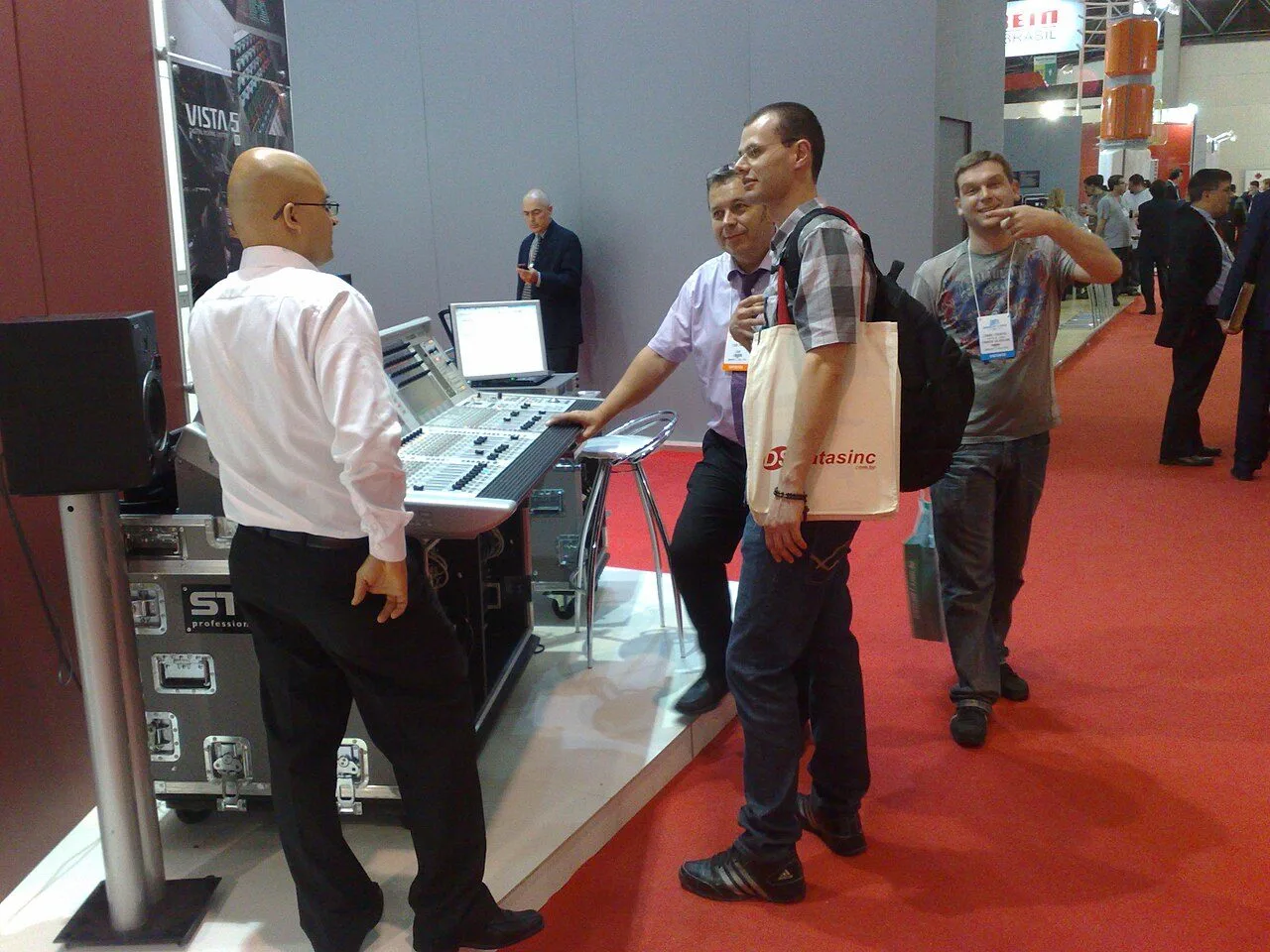
Everywhere you need many channels between two points. On the console side, it equips the big broadcast and live surfaces: the Calrec Argo, the Lawo mc²96 or the DiGiCo Quantum series all use it routinely alongside IP. On the periphery, you’ll find it in stageboxes and modular I/O platforms, such as the Calrec Apex M6 or the Lawo Edge One, which bridge MADI and IP networks. In TV production, it sits next to SDI embedded audio, the sector’s other great multichannel transport.
Coax or optical?
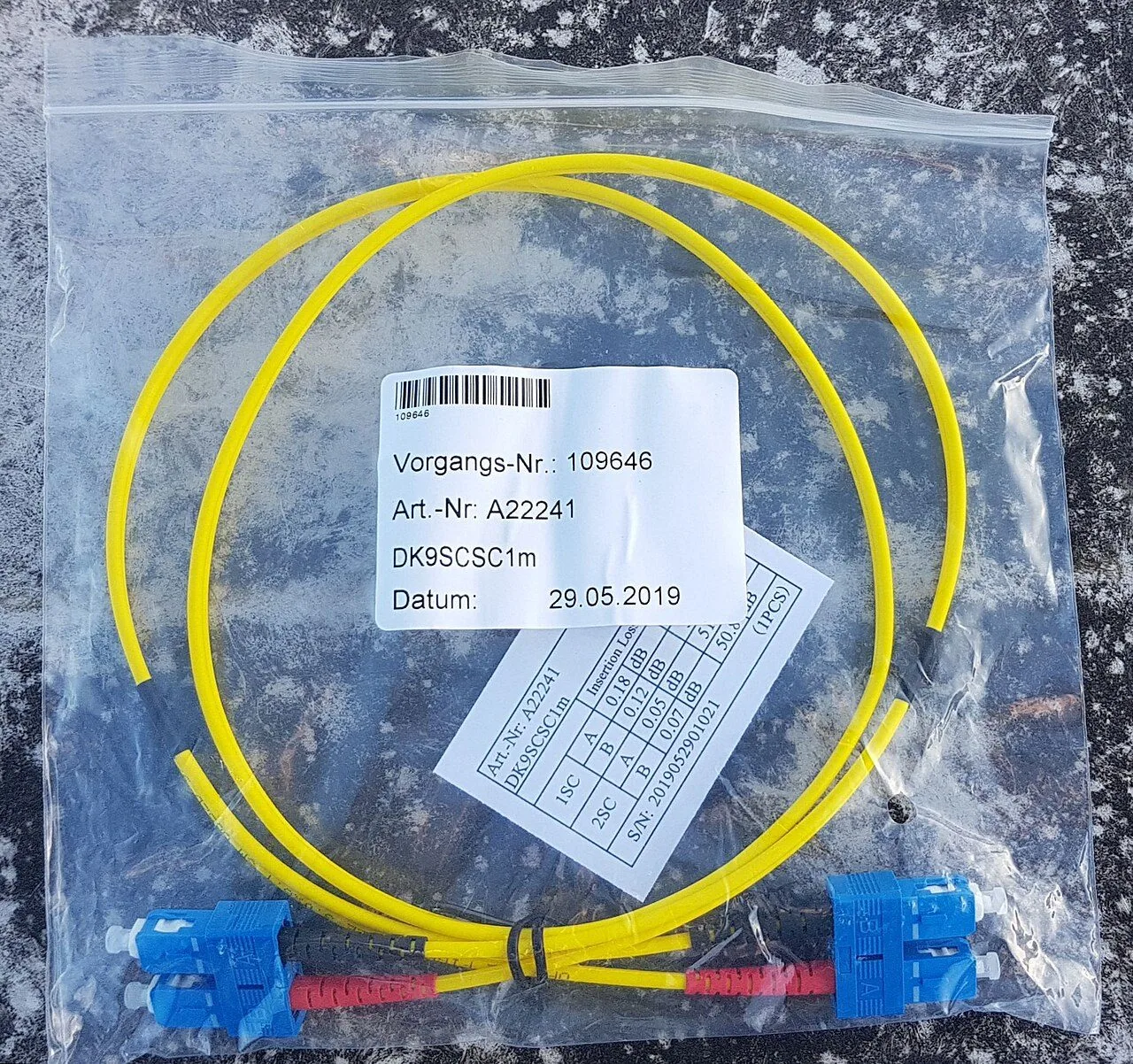
MADI comes on two physical media. Coaxial, on a 75-ohm BNC connector, suits links up to around a hundred metres: simple, cheap, it’s the most common format in studios and control rooms. Optical, on fibre, takes over whenever you need to cover long distances, electrically isolate two buildings or cross a whole site without worrying about ground loops. Many devices offer both and convert between them.
My take
MADI should have vanished when audio-over-IP arrived. It didn’t, and rightly so. When a link just has to work, all the time, without a network engineer watching over it, 64 channels on a coax remain unbeatable for peace of mind. IP won the routing battle at building scale, but for the short link between a console and its converters, old MADI keeps an edge on reliability. A good modern system often doesn’t choose: it uses both, each where it excels.