Lawo is using IBC 2026 to give Edge One its European debut — an edge device that packs into one chassis what broadcast usually handles in two separate worlds: video and audio. Natively SMPTE ST 2110-compliant and built for remote production, flypacks and venues, it chases a simple goal: cut the number of boxes, cables and part numbers at the edge of the network, where IP infrastructure still meets the physical signal.
A stagebox that merges video and audio
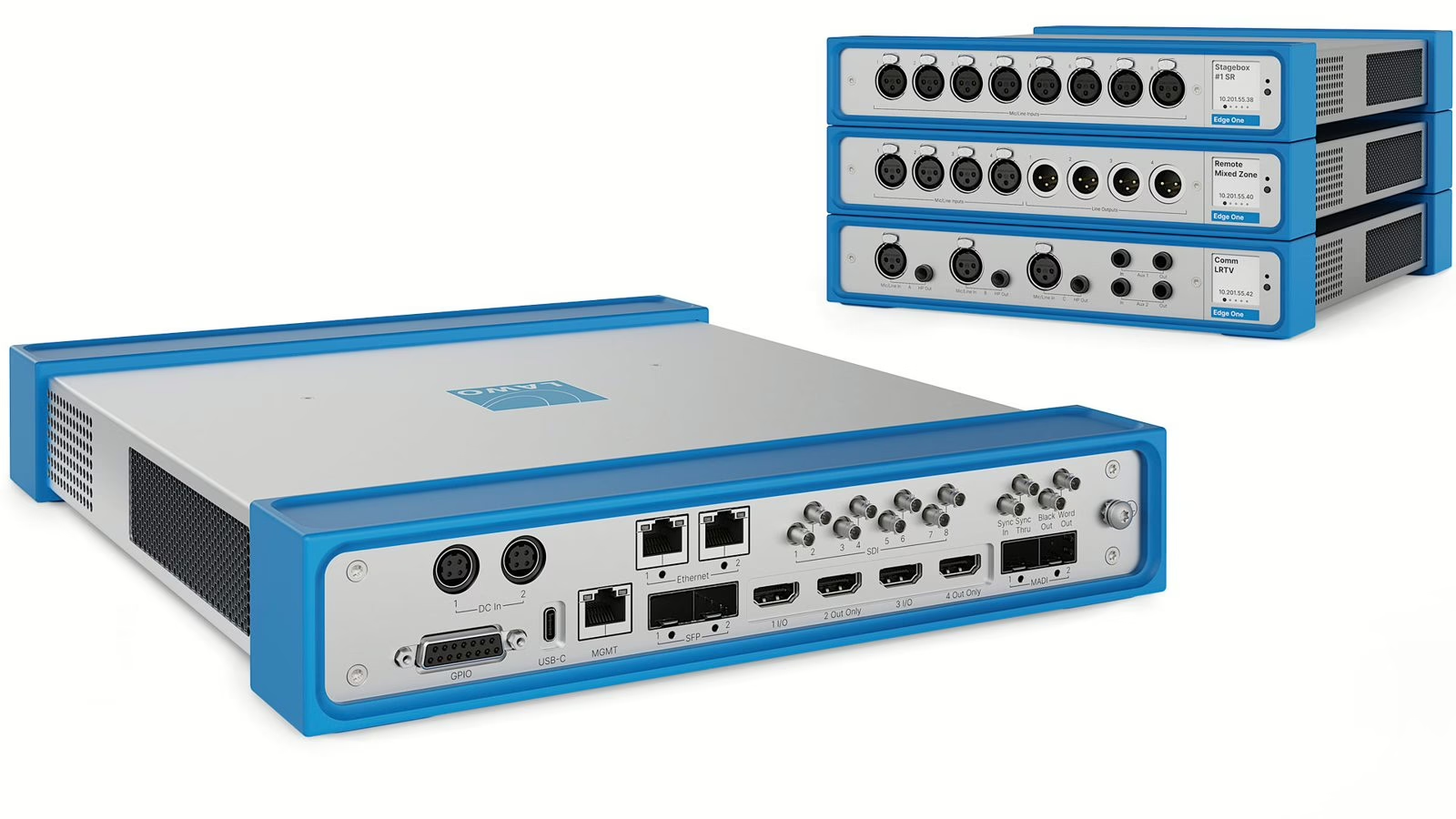
The Edge One idea fits in a sentence: a single, compact unit to convert and route both video streams and audio channels onto an ST 2110 network. Where a mobile setup normally stacks a video converter, an audio stagebox, an embedder and their power supplies, Lawo offers one entry point combining SDI, HDMI, MADI, USB-C and balanced analog connectivity, plus processing and networking. Less rack, less cabling, less deployment time: the maths speak for themselves for anyone who has rigged an OB truck against the clock of a live show.
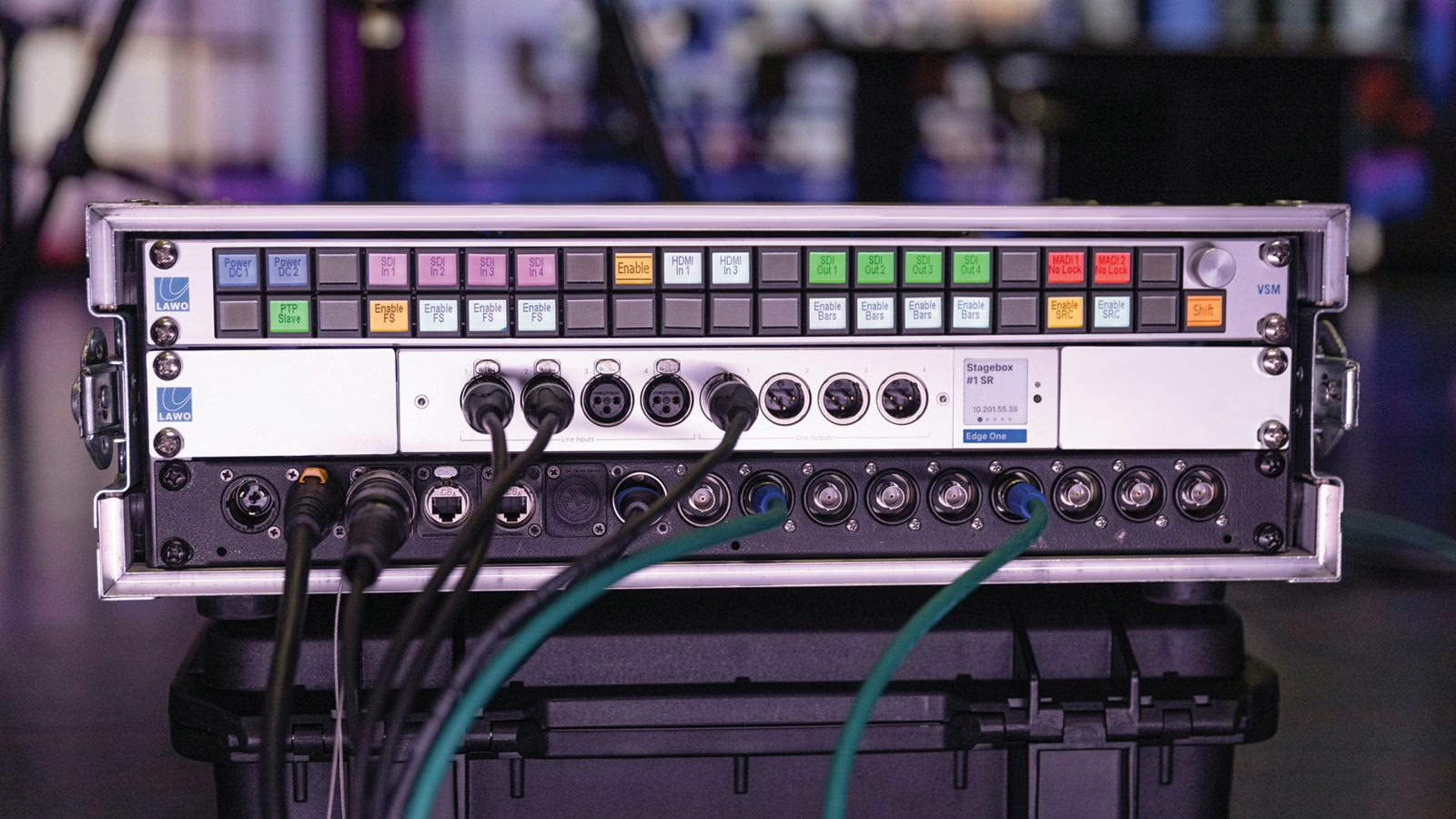
The connectivity in detail
The 1U chassis doesn’t do things by halves. On the video side, eight bidirectional micro HD-BNC connectors for SDI and four HDMI, two of which switch to inputs. On the audio side, eight analog XLRs with preamps, two MADI ports on SFP with sample-rate conversion, and a class-compliant USB-C audio interface with four inputs and four outputs. Add GPIs (two in, four out) and the essential sync, reference and word clock connectors.
The networking is built for modern IP: two copper Ethernet ports (1/2.5/5 Gbps with PoE++) and two SFP/SFP28 fibre cages (1/10/25 Gbps). Edge One is native ST 2110, capable of up to 25 Gbps of streaming bandwidth and supporting ST 2022-7 redundancy — non-negotiable the moment a signal heads to air. At its core sits a 32×16 audio mixer with mc²-grade DSP, the same lineage as the brand’s large consoles, plus JPEG XS encode/decode instances to carry video over constrained links.

Swappable modules and on-demand licensing
Edge One comes in three base configurations — Audio, Video, or Audio + Video — and, crucially, accepts field-exchangeable interface modules. Three options are announced: an eight-mic input module, a four-in / four-out module, and a commentary module with headphone outputs for up to three positions. That’s enough to turn the same box into a floor stagebox, a venue connection point or a commentary unit depending on the day’s job.

The flexibility plays out in software too. Edge One relies on Lawo FLEX licensing, which activates extra functions on demand — video frame syncs, JPEG XS instances, commentary features, MADI I/O, mc²-grade DSP processing. Perpetual purchase or subscription: the unit adapts to the broadcaster’s business model, and a single box can scale up for the duration of an event before dropping back to its base configuration.

Why it matters
For a few seasons now, broadcast infrastructure has been busy disappearing: the hardware matters less than its ability to slot into a flexible IP ecosystem where the location of the gear becomes secondary. Edge One is the very concrete expression of that shift at the edge — the part that resists most, because that’s where the camera, the mic and the commentator’s headphones still demand physical connectors. First shown at NAB in the spring, the box makes its European debut at IBC 2026 (11-14 September, Amsterdam).
I’ve spent enough nights cabling OB trucks and event rigs to know where it hurts: it’s not the mixing, it’s the edge — the runs of multicore, the converters piling up, the 3 a.m. troubleshooting. A single box that carries both audio and video, reconfigures by module and licenses on demand answers exactly that pain. The caveat is the model: per-feature billing is comfortable for smoothing a budget, but it demands that you know precisely what you’re activating — and what it costs once every box is ticked. That, not the spec sheet, is where adoption will be decided.
Full specs are on the Lawo site.